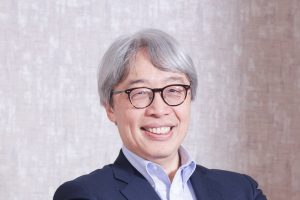
Built around an engineering mindset and a clear view of where a smaller biotech can compete, Pharmosa is pursuing a differentiated path in pulmonary hypertension and related rare diseases through drug-device combination therapies. In this discussion, Pei Kan outlines how scientific focus, selective partnerships, disciplined capital allocation, and early investment in manufacturing come together to support a globally oriented strategy rooted in Taiwan’s strengths in precision engineering and execution.
How did your academic and professional background shape the direction you ultimately took with Pharmosa?
I was trained as a chemical engineer and earned my PhD in chemical engineering from National Tsing Hua University in Taiwan. Early in my career, I became interested in how engineering principles could be applied to biological systems, rather than remaining within traditional chemistry or pharmacy. After completing my doctorate, I undertook postdoctoral research at the University of Tsukuba in Japan, where I was exposed to applied biomedical research. That experience was formative. While areas such as tissue engineering are scientifically compelling, they often involve very long development timelines before reaching patients. I wanted to work in fields where engineering innovation could translate more directly into clinical impact, which led me to focus on drug delivery technologies.
I then moved into applied research at the Industrial Technology Research Institute, or ITRI, within its Biomedical Engineering Center. ITRI has played a central role in Taiwan’s health and biotechnology ecosystem by providing funding, infrastructure, and an interdisciplinary environment that allows scientists to move beyond narrow academic boundaries. It has also acted as a major talent incubator, with many senior leaders in Taiwan’s biotech and medical technology sectors having passed through ITRI. This setting was instrumental in shaping my transition from academic research to industrial drug development. From there, I joined Taiwan Liposome Company (TLC), a commercially oriented biotech focused on lipid and liposome formulation technologies. That period gave me practical exposure to industrial execution, public markets, and the IPO process, including a listing on the Taipei Exchange and later capital raising in the United States. It also reinforced a clear lesson. If you want to pursue a distinct idea, you eventually need to build it yourself.
These experiences led to the creation of Pharmosa and our focus on drug-device combination products. A drug can be effective in principle, but delivery and device design often determine how much of that potential reaches patients in real-world use. Taiwan has strong capabilities in precision engineering and device manufacturing, rooted in its electronics and semiconductor industries. We chose to build on that strength by pairing our liposome-based drug delivery platform with advanced inhalation devices. Our approach combines sustained-release liposomal formulations with next-generation nebuliser technology, such as vibrating mesh systems that enable consistent and efficient pulmonary delivery. Taiwan is a small market, so we cannot compete by doing something generic. To compete globally against much larger players, we need a differentiated, device-enabled delivery strategy, and that logic sits at the core of Pharmosa’s focus.
How do you balance R&D priorities across drug development, device engineering, and multiple programmes as Pharmosa’s pipeline progresses?
We begin by being very clear about where we can compete effectively. As a smaller organisation, we do not try to mirror the scale-driven strategies of large pharmaceutical companies. Instead, we focus on niche and rare-disease indications where differentiation is meaningful and development paths are more predictable. That strategic choice provides a natural framework for prioritising R&D and allocating resources with discipline.
Our decisions are also shaped by Taiwan’s strengths. While the local talent pool is finite, Taiwan has deep capabilities in precision engineering and medical device manufacturing, including companies with experience in respiratory devices and established global regulatory track records. We build on that foundation. At the core of our work is our liposome-based inhalation platform, and because our products are drug-device combination therapies, close integration between formulation science and device engineering is essential. Working within the same ecosystem allows faster technical iteration, more direct problem solving, and more efficient prototyping.
Partnerships play an equally important role in maintaining balance. We concentrate internally on developing and protecting the core platform, while collaborating with partners such as Liquidia and Menagen to accelerate clinical development and global access. This approach allows us to validate our technology at scale without overextending our internal organisation. In parallel, we follow a staged capability-building model. We began as a largely virtual biotech, outsourcing most activities to remain focused and efficient, and we are now selectively bringing critical capabilities in-house, starting with fill-finish and related GMP operations, while strengthening the device side through targeted technology integration. Taken together, this step-by-step approach allows us to advance multiple programmes without diluting focus or committing resources prematurely. For us, effective R&D management is about sequencing decisions carefully, in line with our technological strengths and the realities of our scale, rather than trying to do everything at once.
Where does L606 stand today, and how does your partnership-led approach influence development and market strategy across regions?
L606 is now in Phase III development evaluating safety and tolerability in pulmonary arterial hypertension and pulmonary hypertension associated with interstitial lung disease. We developed L606 as a sustained-release, liposomal inhaled formulation and licensed the programme to Liquidia for North America and selected global territories. Under this collaboration, Liquidia leads late-stage clinical development, regulatory interactions with the US FDA, and future commercialisation in its licensed regions, while we continue to support the programme through manufacturing, formulation expertise, and supply.
The data generated to date have been encouraging and have been presented at international medical meetings. Liquidia has communicated confidence in the profile observed so far and is advancing a broader development strategy, including performing a global Phase III efficacy study in pulmonary hypertension associated with interstitial lung disease (Respire® Study), which could support registration across multiple regions. For us, this progress also informs our regional approach. We use the Phase III dataset generated through the partnership to engage with regulatory authorities in territories where we retain rights, and in a rare-disease, high-unmet-need setting, regulatory pathways can be more focused, depending on the jurisdiction.
This reflects how we think about partnerships more generally. For a company of our size, partnering is often the most effective way to access capital, credibility, and execution capacity in large markets. At the same time, we are careful about what we keep in-house. With L606, the model allows each party to play to its strengths, with Liquidia driving late-stage development and commercial execution, and us building long-term value through the platform, manufacturing capability, and selective regional commercialisation, including in Taiwan.
We apply the same principles across the pipeline. L608, which has completed a Phase I study and is advancing in systemic sclerosis-associated Raynaud’s phenomenon and digital ulcers, represents an opportunity for us to take greater ownership as the programme matures. Our approach remains deliberately staged. We focus first on development and on building the structures that allow us to scale later, rather than establishing full commercial organisations too early. In practice, this means advancing programmes internally through key milestones and then working with regional distributors or partners where appropriate. This structure-first, then-scale approach allows us to remain disciplined, flexible, and aligned with both the scientific and commercial realities of our portfolio.
How are you financing the clinical development of L608, and how do you approach fundraising as a Taiwan-listed biotech?
Clinical development inevitably requires careful capital management, so our priority is to balance short-term execution with the longer-term value we are building. With L606, licensing the programme allowed our partner to take on the cost and responsibility of late-stage development, regulatory engagement, and commercialisation in its territories. For us, that structure reduces direct cash exposure while providing development and sales milestone payments and, over time, potential royalty income, which helps stabilise the overall funding profile.
For L608, we have chosen a deliberately focused path. Rather than dispersing resources across multiple trials, we are running a single core clinical programme in the United States, with clearly defined internal decision points linked to interim data. This discipline is essential. We need to be able to advance a programme with confidence, adjust it if necessary, or stop it altogether if the data do not support continued investment. That willingness to make evidence-based decisions is critical for a company of our size.
Our Taiwan listing has provided a solid financial foundation. In 2024, we completed a capital increase alongside the IPO, raising approximately NT$965 million (~ USD 30 million), which supports general operations and near-term development, including the L608 programme. Beyond equity and partnerships, we intentionally diversify our funding sources. We apply for government-supported R&D and clinical programmes, such as Taiwan’s A+ innovation and industrial R&D schemes, and we maintain banking relationships to access credit facilities when appropriate. In practice, our funding model combines partnership economics, public equity, public-sector support, and conventional financing.
Being listed in Taiwan offers both advantages and constraints. Local investors can be willing to commit meaningful capital, but the healthcare sector has a shorter track record than other industries, and expectations around timelines and returns can be compressed. That places a premium on clear communication and realistic framing of risk. Looking ahead, we remain flexible. If international investors share our long-term perspective and understand the nature of biotech development, we are open to working with them alongside our Taiwan base.
What factors matter most to you when selecting partners for a programme like L606, and how do those choices affect timelines and outcomes?
L606 operates in a niche therapeutic area, and that context fundamentally shapes how we think about partnerships. In pulmonary hypertension, there are only a limited number of companies with the clinical expertise, infrastructure, and commercial focus required to operate effectively, and we engaged with essentially all of them. In markets of this size, partner selection is not about maximising scale or brand recognition. It is about strategic alignment. A large player can always choose to prioritise its own portfolio, so we needed a partner whose incentives were clearly aligned with the success of L606.
For us, motivation was the critical factor. We were not looking for a partner that would see licensing as a transactional endpoint, but for one that viewed it as the beginning of a sustained development and commercial journey. We wanted a partner willing to commit time, resources, and attention to advancing the programme as a priority. That is why we partnered with Liquidia. Their focus on pulmonary vascular diseases, combined with deep clinical and regulatory expertise, means L606 is treated as a core asset rather than a peripheral opportunity. In niche indications, success depends far more on focus and commitment than on scale alone.
Licensing out is therefore not about stepping back. It is a starting point. Securing the right first partner provides validation and momentum, and it gives us the confidence to invest further in areas such as supply chain and manufacturing to support both clinical development and future commercial demand. The timeline to market for L606 largely reflects this partnership structure. Liquidia leads late-stage clinical development, regulatory interactions, and commercial planning in its licensed territories, while we continue to support the programme through formulation expertise and supply. Based on public guidance from Liquidia’s management, if Phase III development and regulatory review progress as planned, L606 could reach the market within approximately the next four years, with the precise timing ultimately dependent on clinical outcomes and regulatory decisions.
Why did you decide to invest in in-house manufacturing ahead of product approval, and how do you plan to scale both drug and device production without losing control of cost or quality?
The decision to invest in manufacturing early reflects the specific nature of our products and the risks we wanted to manage over the long term. In the early stages, we relied on external partners, including CMOs, because that is the most efficient way to advance a programme. However, for highly specialised liposomal products, the number of capable suppliers is limited, and dependence on a single external source creates concentration risk. Any disruption can delay clinical supply and slow development, so we concluded that selective in-house capability was necessary.
Our approach has been deliberately targeted rather than expansive. We have completed an analytical laboratory that can perform GMP batch release and stability testing for both L606 and L608, and we expect the fill-finish facility to be completed by 2026. The objective is not scale for its own sake, but control. Internal scheduling of testing and production gives us greater flexibility, tighter quality oversight, and reduced reliance on single suppliers. This also fits naturally with our partnership model. Under our collaboration with Liquidia, we continue to supply clinical and future commercial material for L606 and support the development of a redundant global supply chain. Because L608 uses a similar liposomal manufacturing approach, these capabilities support multiple programmes and create efficiencies across the pipeline.
The manufacturing footprint itself is intentionally modest. We are not building a large, commodity-scale plant, but a boutique facility designed for high-value, low-volume products, where doses are small and precision matters more than throughput. This mirrors how complex biologic and specialty medicines are typically produced, and it aligns with our commercial strategy by improving scheduling flexibility, reducing external dependency, and creating the option to generate supply-related revenue alongside milestone income.
On the device side, scalability and cost control are grounded in supply-chain resilience. We aim to qualify at least two suppliers for critical components and manufacturing steps, reducing single-supplier risk while introducing competitive tension on pricing. Capability development is staged. We do not need to internalise every step from the outset, but instead focus on the most critical and cost-sensitive elements, bringing selected activities in-house only when volumes and funding justify it. This sits within a broader redundancy and quality framework, because cost savings are meaningless if they compromise reliability or compliance. The principle is straightforward. We reduce risk first, build capability where it adds the most value, and maintain tight control over quality as we scale.
From your perspective, what does it mean to build a global biotech from Taiwan, and what advantages does that environment offer?
For me, a global biotech is defined by where its products deliver value, not by where the organisation is based. From the outset, our ambition has been to develop medicines that can reach patients worldwide, working with partners who understand the clinical, regulatory, and commercial realities of each market. That global perspective needs to be embedded early in development, rather than layered on later.
When I think about what Taiwan contributes to this ambition, I often draw a parallel with Taiwan Semiconductor Manufacturing Company (TSMC). Its success is not only a function of technology, but of decades of consistent execution and a reputation built on reliability and trust. The foundry model depends on customers being willing to place highly valuable intellectual property in someone else’s hands, and that only happens when integrity and delivery are proven over time. Taiwan has developed under constant competitive pressure, which tends to reward credibility, consistency, and long-term relationships. In practical terms, when a Taiwanese team commits to a programme, partners can expect disciplined execution and a strong emphasis on trust, alongside technical capability. That combination provides a solid foundation for building a global healthcare business.
Looking ahead over the next three to five years, what are your key priorities, and how would you like Pharmosa to be perceived?
Our priority is to maintain speed while systematically reducing risk. We have already experienced delays and external shocks, and those lessons shape how we plan. Over the next three to five years, de-risking means building redundancy across the full value chain, from securing stable drug and nebuliser supply, to advancing device regulatory work in major markets, and supporting partners as they expand Phase III development and move toward global submissions. These priorities are fully aligned with what we have publicly set out, including continued support for late-stage development and the build-out of internal fill-finish capability to secure future supply.
Ultimately, we are not trying to be loud. We are focused on being reliable. If partners, investors, and readers take one message from Pharmosa, I want it to be this. We are a focused team from Taiwan, building specialised drug-device combination products for pulmonary hypertension and related indications, and we execute in a way that others can depend on.