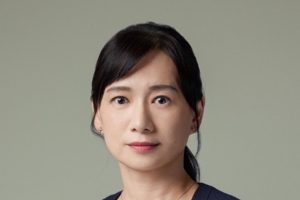
Pei-Jiun Chen, CEO and President of Mycenax, outlines the company’s evolution into a focused, end-to-end biologics CDMO with deep roots in development excellence and GMP manufacturing. She highlights Japan as Mycenax’s core market, expansion into Europe, disciplined capacity growth, automation-driven productivity, and a niche, customer-centric model supporting complex biologics and emerging modalities.
Dr Chen, you have stepped into the CEO role at a particularly dynamic moment, with global CDMOs expanding at double-digit rates. What vision have you brought to Mycenax, and what trajectory do you see for the company?
My background is firmly rooted in science. I entered biotech in 2009 at TPG Biologics, a specialist in cell line development, where I spent a decade building deep expertise across cell line development, upstream and downstream processing, and emerging technologies. As a small company, TPG allowed for focused technical development, and the timing was fortuitous, enabling us to establish a strong presence in Japan – today, our second-largest shareholder is Japanese.
This relationship began modestly in 2010, when I met a retired Japanese pharmaceutical executive who noted that Japanese companies were transitioning from small molecules to biologics. While antibody drugs were well established globally, Japan lagged behind, lacking capable service providers and GMP facilities. Between 2010 and 2019, TPG built relationships with 13 Japanese customers, and another Japanese customer became a shareholder. Japan rewards consistency and quality; once trust is earned, partnerships are long-lasting.
In 2019, TPG merged with Mycenax. Though the disappearance of the TPG name was personally challenging, the merger was strategically excellent, combining our development expertise with Mycenax’s GMP capabilities to create Taiwan’s first truly end-to-end biologics CDMO. We then committed fully to being a 100 percent CDMO, exiting all internal projects. At the time, CDMO work was not highly attractive in Taiwan, but Covid elevated the importance of GMP infrastructure and supply security.
After six years, Mycenax has reached a turning point. In 2025, we began manufacturing two commercial products. One is a global biosimilar that is being marketed across multiple countries globally, including 9 countries in Europe, Japan, Canada, and Korea; the other is a biosimilar launched in Japan.
I regularly tell employees that pharmaceutical manufacturing carries a unique responsibility – our products improve lives. In 2025, that aspiration became reality. Mycenax is now recognised globally, and commercial production has strengthened our credibility and financial resilience. Unlike early-stage projects, commercial manufacturing provides continuity, with our primary responsibility being a stable and reliable supply.
Mycenax is one of the few CDMOs in Taiwan to have secured PMDA approval for biologics manufacturing. Was this part of a deliberate long-term strategy, and how has it influenced your client mix and international focus?
Japan has consistently been our primary market, accounting for over one-third of our revenue for the past six years, so securing PMDA approval was an obvious priority. Both of our commercial products have received PMDA approval, and one is a global product, which has also resulted in inspections by the EMA, Health Canada, MHRA (UK) and MFDS (Korea).
While Japan remains our core market, client expectations have evolved. Ten or 15 years ago, Japanese pharmaceutical companies focused primarily on PMDA approval and the domestic market, which alone could generate substantial revenue. Today, biologics are far more expensive and riskier to develop and manufacture, and companies recognise that Japan-only strategies may not deliver sustainable profitability. As a result, they increasingly seek EMA and FDA approval.
At the same time, Japan has seen a rise in biotech companies developing new technologies and modalities. Rather than operating as fully integrated pharmaceutical companies, many aim to license products or co-develop with American or European partners. For these companies, a strong EMA or FDA inspection record is essential, and they value the fact that we hold PMDA approval alongside EMA approval and, soon, FDA approval.
Japan is known for its rigorous regulatory standards, and our long-standing collaboration with Japanese companies has strongly shaped Mycenax’s credibility. Our foundation remains what I describe as traditional biologics – antibodies and proteins – which continue to represent approximately 60 to 70 percent of the market. Building on this expertise, we are also actively collaborating with clients on newer modalities such as ADCs and more complex antibody constructs, including bispecifics and tri-specifics. This is where we have the deepest experience, with comprehensive capabilities spanning feasibility studies, cell line and process development, and GMP manufacturing from very early stages through to commercial production.
We operate two GMP plants in Taiwan and are collaborating with Japanese partners to establish a third facility in Japan with strong support from the Japanese government. Among the two GMP plants in Taiwan, our GMP-1 plant supports smaller-scale production, while our GMP-2 plant has over 10,000 litres of production capacity, enabling full commercial manufacturing of both drug substance and drug product. The GMP plant in Japan will have a similar capacity to the GMP-2 plant in Taiwan.
When reviewing your 2023–2024 annual report, development appears to be a central focus. Is this emphasis evolving, and how do you balance capacity expansion with specialisation?
I would characterise it as an evolution rather than a shift. Development has always been our foundation. When we announced our CDMO commitment in 2019, during every investor call, meeting, or press conference, everyone asked how we would compete. I consistently emphasised that development capability represents our strength. TPG invested many years in cell line and process development, and this becomes even more crucial for new modalities – bispecifics, tri-specifics, complex recombinant proteins, ADC, and cell therapies. These are substantially more complex than conventional antibodies and require deeper experience and capabilities in process development. Our clients genuinely appreciate this expertise.
You can construct a GMP facility with sufficient capital, but developing excellence in process development requires considerable intelligence and experience. That is our particular strength. Regarding manufacturing, our objective remains consistent. We currently have a maximum capacity of 14,000 litres. We may add another 10,000 litres in Japan, with potential expansion in subsequent years. However, we are not aiming to expand to, say, 100,000 litres. Consider WuXi or Lonza – they operate at half a million litres or more, essentially 50 to 100 times our production scale. I have no aspiration to achieve that magnitude.
I prefer to maintain an appropriate production scale because, in my view, new modalities are more potent and increasingly personalised. Therefore, I do not anticipate substantial demand for very large production volumes.
How have client needs evolved over the past 10 to 20 years, and which areas do you see driving future growth for Mycenax?
Because Japan is our primary market, these shifts are most visible there. Initially, approximately half to two-thirds of our clients focused on biosimilars, often using them to build experience by replicating originator products. That interest declined as companies recognised that biosimilars are complex to develop and highly competitive commercially.
This was followed by the emergence of many new biotech companies developing novel antibody drugs, supported by Japan’s strong scientific foundations, particularly between 2013 and 2016. These companies required extensive support in cell line and process development and progression into Phase I studies.
More recently, two trends have become clear. Biosimilars are returning, driven by Japanese government policy through MHLW initiatives aimed at reducing biologics costs, addressing reliance on imports, and strengthening domestic manufacturing following the Covid pandemic. At the same time, Japanese companies are advancing into new modalities. Around half of our antibody customers have moved into ADCs, either by converting existing antibodies or developing new products. Cell and gene therapy has also gained momentum, supported by dedicated regulatory pathways in Japan and aligned policies in Taiwan, enabling mutual recognition of clinical trial results.
In terms of future growth, ADCs are clearly established and represent a strong opportunity. We already support clients through development and manufacturing, with several programmes now entering clinical trials. Cell and gene therapy remains earlier stage. Globally, including in Japan and Taiwan, optimal technological approaches are still being defined, and regulatory frameworks continue to evolve. Progress is slower, but interest is substantial, and we continue to support clients as they explore and refine these modalities.
Given your experience in Japan, where regulatory and clinical approaches to cell therapy differ from many Western markets, how do you view the debate between autologous and allogeneic therapies, and how do you support clients navigating these developments?
In my view, while autologous therapies are highly personalised, allogeneic therapies represent the future of scalable and accessible medicine. That is why Mycenax has focused its strategic resources here.
Since Cell Therapy is still in its early stages, we have transitioned to a CRDMO model. By extending our support to early-stage development, we can partner with clients sooner, securing high-potential projects and building the resilience needed to accelerate their journey into clinical trials.
With over 20 years of experience in process development and GMP manufacturing, we foresee massive growth in allogeneic CGT products, which already represent 10 percent to 20 percent of development in markets like North America, Europe, Japan, and Korea. To capture this, Mycenax has proactively established standardised core platforms, covering critical technologies such as immune cells, stem cells, exosomes, and gene editing. Our goal is to bridge the gap between early-stage innovation and GMP manufacturing readiness, leveraging our proximity to the Japanese market and our deep technical expertise to provide the optimal scale for the next generation of medicine.
Talent is a major concern for CDMOs globally. How do you ensure Mycenax has the workforce to support growth, particularly in Taiwan?
Taiwan faces one of the lowest birth rates globally, coupled with fierce competition from the semiconductor sector for technical talent, which makes sourcing skilled GMP staff challenging. About two years ago, we recognised that simply hiring more people was not a sustainable solution. Instead, we shifted our focus to accomplishing more with fewer staff.
To address this, we have implemented automation and artificial intelligence across our facilities. R&D requires fewer people, so staffing is stable there, but GMP operations present more significant challenges. For instance, our older fill-finish line required significantly more people across multiple shifts due to limited automation and manual inspection. Our newly commissioned line, using isolator technology and full automation, can operate with many fewer people, supplemented by automated filling and inspection systems. This approach dramatically reduces manpower requirements while maintaining quality and efficiency.
These automation strategies are not limited to a single line or facility – they are being applied across all manufacturing and documentation operations, including our upcoming Japanese plant, to ensure scalable and reliable production.
Semiconductors often dominate in Taiwan, yet biologics manufacturing and supply security are now central to many governments’ resilience strategies. Has Taiwan’s government placed greater emphasis on CDMOs in recent years?
During Covid, awareness of CDMOs increased significantly across Taiwan. Previously, novel drug developers often captured the spotlight, but now the government and industry alike are paying more attention to the importance of manufacturing capabilities – a very positive shift.
At Mycenax, we’ve even drawn on Taiwan’s reputation in semiconductors to illustrate our strengths. Last year, we shared a book (Chip Champion: The Triumph of TSMC and Taiwan) with the story of TSMC’s rise to global dominance, with clients in Japan, using it as a conversation starter rather than the usual gift. The goal was to convey the culture and work ethic of Taiwanese people – diligence, precision, adherence to protocols – which underpins excellence in both chip production and biologics manufacturing. Many clients appreciated the message, understanding that the same principles driving Taiwan’s semiconductor success also apply to high-quality biologics manufacturing.
Given that you are listed in Taiwan, how supportive are financial markets for biotech companies such as yours seeking to expand and grow here?
Taiwan’s capital market has been supportive of biotech, allowing companies to list based on potential rather than profitability—a path Mycenax used 12 years ago. Recent fundraising rounds in 2020–21 provided sufficient support for the company’s repositioning as CDMO. In 2022, JCR Pharma, a Japanese pharmaceutical company and Mycenax’s customer, invested nearly $50 million in Mycenax, not just as a financial backer but as a strategic partner. This capital injection helped funding construction of the GMP2 facility for proteins and antibodies, a cell and gene therapy GMP plant, and the acquisition of a 20 percent stake in KriSan Biotech for forming an ADC alliance.
This year, we partnered with Alfresa, Kidswell, and Chiome to secure an MHLW subsidy for facility construction in May. More recently, we announced the establishment of a joint venture, Alfenax Biologics, in Japan, expanding our CDMO services and GMP capabilities with government and corporate support.
Essentially, we now focus on continuing commercial production and bringing new early- and late-stage projects into our facilities. EMA and PMDA recognition make Mycenax attractive for project transfers, leveraging our proximity to Japan, cultural alignment, and competitive pricing. By expanding into Japan, we provide customers with dual-site manufacturing for resilience and domestic supply.
Most Taiwanese biotech CEOs focus on the U.S., but you’ve built and expanded an international biotech from Taiwan. What does this mean to you personally, and what should an international biotech from Taiwan look like?
I see operating an international biotech from Taiwan as almost a default necessity, given the small domestic market – building a company that operates solely in Taiwan would be extremely difficult. All major companies, including CDMOs, must pursue global markets. Personally, I am pragmatic: I would like to leverage the geographic proximity and cultural affinities between Taiwan and Japan, as well as the customer foundation Mycenax has built in the past year, to Japan, our overseas base outside Taiwan. At the same time, the United States is a critical market that cannot be overlooked in the pharmaceutical industry. Therefore, at the appropriate time—and in the appropriate manner and pace—we will move forward with our entry into the U.S. market.
Taiwan’s appeal lies in meeting global standards – in quality, work ethic, intellectual property, confidentiality, and legal frameworks – and this enables international customers to trust and engage with us.
Perhaps for our readers who may be unfamiliar with Mycenax, what makes you a partner of choice?
I believe we occupy a distinctive niche positioning. There are enormous CDMO companies where you might become one of 200 customers. However, our scale is optimal – we possess strong capabilities and capacity to support projects from inception to completion, whilst maintaining flexibility to provide attentive, customised solutions. Whenever customers have needs, they are met with responsive, friendly, and supportive communication.. I believe this is exceptionally important for many small to medium-sized pharmaceutical companies. They genuinely recognise the flexibility and customer-first culture that we maintain, built upon our professionalism.
Equally important is how we cultivate the people behind these capabilities. By providing a stable, skilled workforce and clear career paths within Taiwan, we aim to retain talent locally and inspire the next generation of scientists and engineers. Expanding opportunities in CDMOs not only strengthens our company but also helps build a robust, self-sustaining biotech ecosystem that can compete globally.