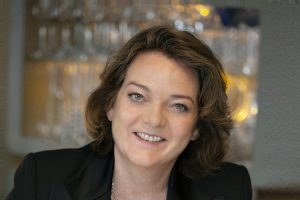
Pascaline Gervoson, CEO of PiLeJe, a family-owned French nutraceutical company, represents the second generation of leadership following her father's founding vision in 1992. With 27 years within the organisation and five years as Chief Executive, she oversees a EUR 180 million enterprise specialising in dietary supplements distributed through medical prescription and pharmaceutical counsel. Under her stewardship, PiLeJe has emerged as France's pharmacy channel leader whilst pursuing ambitious European expansion and pioneering preventive medicine protocols.
To begin, could you introduce PiLeJe and outline the company’s origins as well as the founding vision behind it?
PiLeJe was established in 1992 by Dr Christian Leclerc, a physician who experienced profound dissatisfaction with the therapeutic arsenal available for patient care. He recognised early that between disease states and optimal health exist intermediate health conditions where medical intervention proves highly efficacious. Research demonstrates numerous environmental risk factors contribute to the genesis of chronic, long-term diseases. PiLeJe rapidly developed health solutions – grounded in international publications and proprietary research – designed to reduce these parameters and risk factors, thereby extending healthy life expectancy. Our fundamental mission centres on maximising health span without dependency, optimising individuals’ physiological potential.
This mission emerged 30 years ago and was visionary for its time. The core principle holds that intervention is possible before disease manifestation by evaluating individuals’ physiological and nutritional requirements.
Your career spans nearly three decades within the organisation, culminating in your appointment as CEO. How would you describe your trajectory and the defining moments of your first years in leadership?
I am the founder’s daughter, making PiLeJe a family enterprise. My academic background encompasses biochemistry and nutrition sciences. I initially joined to lead research and development projects, becoming immediately passionate about both the domain and particularly the collaborators my father assembled – he uniquely worked alongside scientists and physicians through collegial models: round tables and collaborative discussions aimed at inventing the future. Collective intelligence represents a core PiLeJe value. I found this environment profoundly fulfilling.
My progression proved organic – from research and development, I established the scientific team, subsequently developed marketing capabilities where none previously existed, then advanced through sales, ultimately managing multiple departments. My career evolved through stages: Marketing Director, Operations Director, Deputy Managing Director for five years preceding my appointment, and now approaching five years commanding PiLeJe.
Could you give us a clearer view of PiLeJe’s operational footprint and the core activities that structure the business today?
We specialise in nutritional supplementation, specifically dietary supplements, across three integrated business verticals. First, we design and source our ingredients, developing cultivation protocols for raw materials – particularly botanical ingredients – enabling optimal active compound concentration and maximum ingredient efficacy with defined functionality. This represents PiLeJe’s first competency.
Our second capability encompasses industrial transformation: assembling ingredients into formulations and transforming them into various galenic forms – tablets, capsules, sachets. Our third competency involves health solution distribution, primarily dietary supplements through pharmacy channels. Our model centres on medical prescription of dietary supplements followed by pharmaceutical dispensation. PiLeJe operates across all domains where physician and pharmacist influence proves substantial within healthcare territories.
You took office during a period of global disruption. What have these past five years looked like from an industrial and strategic standpoint?
My nomination occurred post-COVID amid widespread disruptions – a baptism by fire. I confronted supply chain crises and raw material shortages that occasionally halted production – unprecedented challenges. Simultaneously, this proved extraordinarily formative, effectively providing accelerated industrial education. I became passionate about our industrial operations, having previously focused on product commercialisation and pharmaceutical distribution across France and international territories.
Assuming industrial leadership four years ago, the supply chain crisis revealed our raw materials – particularly excipients – remained heavily globalised and predominantly derived from chemical synthesis, presenting environmental concerns. Consequently, upon assuming leadership, I determined PiLeJe’s corporate social responsibility positioning must prove exceptionally robust. We launched comprehensive CSR initiatives, achieved B Corporation certification, and committed to Science Based Targets initiative alignment – establishing carbon reduction trajectories.
Our most significant climate impact stems from globally sourced raw materials, many chemically derived. For three years, we have pursued substitution and relocalisation strategies: sourcing raw materials produced within European territories whenever feasible, prioritising natural origins, and replacing excipients suspected of metabolic or microbiota disruption. We are developing genuine expertise in reformulating tablets and capsules towards completely natural compositions with the lowest possible environmental impact.
You mentioned several areas of application. Could you expand on the therapeutic domains where PiLeJe is most strongly positioned?
70 percent of our revenues derive from France, where we hold leadership positions in digestive health and mental wellbeing. Key areas include sleep management and mood disorders. We have additionally developed women’s health solutions, as our core expertise centres on microbiomes. Whilst gut microbiomes receive substantial attention, microbiomes exist throughout the organism, maintaining dialogue and influencing individual metabolism. Leveraging microbiome expertise, our ambition focuses on three domains: digestive health, women’s health, and mental wellbeing – each profoundly influenced by various microbiomes, whether vaginal, intestinal, or cerebral.
Do these areas also represent the company’s strongest growth potential over the coming years?
Our expertise represents accumulated internal and external capabilities developed over time. One cannot instantaneously become expert in digestive health – we have invested 20 to 25 years. Organisational reflexes, competencies, and capabilities exist. These three domains already represent substantial scope, given our reliance on global scientific research regarding microbiomes and ingredients influencing microbiome equilibrium. The field proves extremely broad, rich, and rapidly advancing – already representing significant challenges.
We maintain other solutions – conventional multivitamins, magnesium, fatty acids – but these do not constitute research investment priorities. I distinguish between our comprehensive dietary supplement manufacturing capabilities – we address essentially all segments and formulations given our industrial competency, producing both for ourselves and external clients including major pharmaceutical laboratories – and our focused research and development investments concentrated within these three strategic domains.
Does your portfolio business predominantly derive from PiLeJe brands?
Within our group structure, industrial fabrication for third parties represents merely ten percent – genuinely aimed at developing expertise and enriching capabilities through partnerships. Because these partners often constitute pharmaceutical laboratories, we maintain extensive exchanges regarding quality and safety standards. Though not pharmaceutical ourselves, we operate our facility as though we almost were, maintaining rigorous standards. Collaborating with these actors facilitates continuous improvement.
What does the company represent today in terms of scale, revenues, and growth?
PiLeJe currently represents EUR 180 million in revenues. We purchase market data for countries where we maintain subsidiaries: Belgium, Italy, Switzerland, Spain, Germany, and France. Across this six-country perimeter – among Europe’s largest dietary supplement markets – we consolidate data internally. Against purchased data, we rank as the fourth European actor in pharmacy channels with approximately EUR 240 million in pharmacy sell-out across this perimeter.
In France specifically, whether measured through IQVIA or GERS, we lead the pharmacy channel with EUR 184 million, maintaining a EUR 50 million advantage over our nearest competitor.
With subsidiaries across key European markets, what defines your international strategy and growth ambition?
Countries where we maintain subsidiaries enable deployment of our model: medical prescription coupled with pharmaceutical counsel. We train pharmacy teams to accompany patients through questioning regarding their primary needs. Consider fatigue: confronted alone with retail shelving, patients might select vitamin C or multivitamins. However, when counselled by trained pharmacists applying physiological reasoning, questioning reveals fatigue may stem from iron deficiency, sleep disorders, metabolic issues – numerous possibilities. The solution selected without proper counselling may prove entirely ineffective versus physician or pharmacist guidance employing physiological reasoning.
This defines our subsidiaries’ mission. Our status encompasses distribution and animation, but critically, we are certified educators. We constitute an accredited training organisation, delivering over 10,000 training hours annually to healthcare professionals in France alone. The approach combines three axes: solutions, products, and training – this triad proves essential. The third growth lever, elevation of professional practice, remains extremely important.
Your international network includes both subsidiaries and distributors. How do you adapt your model across different markets?
We deploy our brands through distributors, though models adapt to local contexts. Generally, we prioritise pharmacy distribution, though strategies vary depending on distributor exclusivity arrangements and multi-brand portfolios.
Our 2030 ambition emphasises substantial international development. We continue investing in subsidiaries where we believe market acceleration remains possible. Annual pharmacy market share gains prove critical, consistently deploying our model despite local specificities regarding regulation or commercial negotiation – always anchored in medical prescription and pharmaceutical counsel. We monitor each country’s progression in dietary supplement laboratory rankings. We rank first in France, sixth in Switzerland, seventeenth in Spain, eighteenth in Belgium – piloting market share capture across territories. Regarding international distribution zones, we identify optimal business partners for successful collaboration.
You recently expanded your manufacturing site in Allier. What does this investment represent in terms of capacity and capability?
We have invested EUR 25 million over seven years – approximately 13 million in facility redesign and infrastructure. Previously, production and industrial spaces proved limited. We have increased industrial capacity with potential near-doubling through these extensions and work organisation modifications. We now possess comfortable capacity for at least five to seven years, absorbing anticipated growth.
Three dimensions define this development. First, appropriate space, layout, and production flow – the industrial development programme’s objective. Second, equipment modernisation with contemporary technology. Third, conducting this transformation alongside teams, implementing work organisation changes to enhance efficiency, effectiveness, safety, and quality. We now possess a remarkable industrial tool with manufacturing specialisation for products requiring complete value chain mastery and fully integrated fabrication expertise.
Discussing market dynamics – these investments obviously reflect market growth, particularly for PiLeJe. What characterises the broader market landscape? It appears highly competitive.
The French dietary supplement market grew three percent in 2024 according to official figures from Synadiet, the French dietary supplement trade association. The market accelerated substantially during COVID across all countries, strongly developing dietary supplement consumption. France now represents nearly EUR three billion across all channels. Pharmacy commands 55 percent market weight, totalling approximately EUR 1.65 billion in French pharmacy dietary supplement sales.
The supplements market is becoming increasingly competitive. How would you characterise today’s market environment?
Regulatory frameworks for ingredients have evolved substantially over recent decades, imposing genuinely significant requirements. Today, complete documentation proves mandatory – ingredients require full traceability, functionality documentation, safety dossiers, and quality control protocols. Working with natural products presents reproducibility challenges across batches.
PiLeJe has developed a distinctive industrial characteristic: analytical research capabilities ensuring that despite working with natural raw materials or ingredients, every batch entering our product compositions undergoes analytical verification confirming proper active dosage, correct material, and botanical identity. This constitutes genuine differentiation, as such verification is not mandatory for dietary supplements. Significant falsification occurs when sourcing ingredients. Saffron, for example, costs extraordinarily per kilogram. Sourcing from China, India, or similar origins risks falsification or components lacking expected ingredient activity. Ingredient security proves fundamental, determining product functionality and efficacy. This analytical verification forms integral components of our industrial and quality processes.
What perception do healthcare professional partners hold regarding this approach?
Patient satisfaction fundamentally. In Europe, five brands exceed EUR 90 million. Lactibiane is one of them. Among the other brands in our portfolio, three exceed EUR 20 million, and our brand dedicated to women’s health will soon reach this threshold. They enjoy strong French recognition, though perhaps not European-wide awareness.
As CEO, what cultural principles or leadership values are you most intent on embedding across the organisation?
What unifies all company personnel – revealed through employee surveys – is extraordinary pride in PiLeJe products. This proves formidable because individuals can genuinely declare “I am PiLeJe” due to product quality, not merely positive atmosphere. This pride in our products remains paramount.
Looking forward two to three years, what strategic priorities and major ambitions define your agenda?
Our first strategic priority, particularly concerning France, centres on substantially expanding preventive medicine presence. We have developed a medical programme called EIMS – Medicine of Intermediate Health States – currently training physicians and pharmacists in patient evaluation and accompaniment using functional questionnaires and functional biology. Today, approximately one hundred physicians consult using the EIMS programme. If within three years, 500 physicians employ EIMS protocols, I can concretely demonstrate advancement of prevention in France.
France can reverse disease trajectories through risk factor management – critically important given approximately 50,000 annual sudden deaths linked to cardiovascular issues. With proper health state evaluation, individuals receive alerts regarding risk factors or metabolic dysfunctions assessable through biological testing. Medical management can delay or prevent such events – an absolutely major challenge constituting our first ambition.
Our second ambition involves continued innovation across three strategic expertise domains, advancing research in women’s health, digestive health, and mental wellbeing whilst developing proprietary formulations and ingredients to achieve disruptive health solutions. Whilst major innovations do not occur annually, genuine health domain breakthroughs remain possible.
Our third objective continues international development, progressing market share internationally and conquering new territories whilst training healthcare professionals. For 30 years, our strategy has remained unchanged – because it proves sound, and the visionary prevention aspect now gains universal recognition. Global investment increasingly focuses on preventive health approaches.