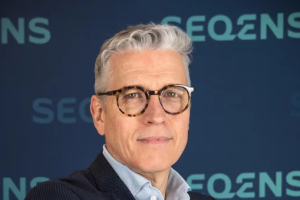
With over 25 years of experience at the crossroads of science and business, Pascal Villemagne, CEO of SEQENS, shares his vision for steering the French CDMO into a new era of innovation, sustainability, and global partnership. From expanding into advanced therapies and accelerating pharmaceutical development to championing France’s industrial renewal, Villemagne reveals how SEQENS is redefining the boundaries of chemistry and life sciences.
What inspired your move from CARBOGEN AMCIS to SEQENS, and what were your first impressions upon taking on this new leadership role?
I am a chemist by training and, from an early age, aspired to become a scientist. Yet once I began working in research, I realised that my real interest lay in the business, understanding how innovation translates into impact. Over the past 25 years, I have built my career at this intersection, spending 14 years with CARBOGEN AMCIS, first leading global sales and marketing before serving as CEO. After a fulfilling cycle of growth and transformation, I felt it was the right moment to hand over the reins and take on a new challenge.
SEQENS represented a rare opportunity to apply my pharmaceutical experience within a group whose scope extends far beyond traditional CDMO activities. Alongside our core pharmaceutical operations, we have a thriving speciality ingredients business serving sectors such as pharmaceuticals, cosmetics, batteries, coatings and lubricants. This breadth, combined with the group’s scale, international reach, and clear ambition to accelerate innovation and digitalisation, made the role both intellectually and strategically compelling. Taking over from Pierre Luzeau after his remarkable 18-year tenure was certainly a responsibility, but also a privilege, the chance to build on a solid legacy while helping shape the next chapter of SEQENS’s evolution.
From the outset, what impressed me most was the calibre and commitment of our people. During my first weeks, I visited many of our sites and saw first-hand the depth of expertise, professionalism, and pride that runs through the organisation. Whether in laboratories, analytical departments, or production areas, there is a tangible sense of purpose and belonging. That collective competence and engagement form SEQENS’s greatest strength, the foundation on which we will continue to grow, innovate, and deliver value across all the industries we serve.
How would you describe SEQENS’s global footprint and the balance between its pharmaceutical and speciality chemicals activities?
SEQENS operates 14 production sites worldwide – 10 (ten) compliant with Good Manufacturing Practices (GMP) standards and four non-GMP – supported by R&D centres in Europe, Asia, and the United States. While France remains the group’s historic base, our operations extend across Germany, Finland, the United Kingdom, India, China, Thailand, and the US, giving us both a solid European foundation and a truly global reach.
Our activities rest on two complementary pillars. The pharmaceutical division combines a strong product base with a comprehensive service offering. On one side, we manufacture a broad range of generic active pharmaceutical ingredients (APIs) – from well-known molecules such as paracetamol and aspirin to more complex high-value compounds – representing one of the largest portfolios in Europe. On the other, we act as a fully integrated CDMO, supporting clients from early-stage research through clinical development to commercial-scale production, ensuring seamless continuity across the entire product lifecycle.
The speciality chemicals division mirrors this dual structure. It includes both proprietary products and tailored services across diverse markets such as pharmaceuticals, cosmetics, batteries, coatings and lubricants. Few realise that SEQENS is among the leading producers of lubricant additives, supplying high-performance chemical components essential to greases and metal-working fluids. This breadth reflects our core philosophy: wherever chemistry creates value, SEQENS has a role to play.
In terms of scale, pharmaceuticals generally represent around 60% of our business and speciality chemicals 40%, although this balance can shift with market dynamics, closer to parity this year, given a temporary slowdown in pharma. This diversification is a genuine strength, enabling us to adapt swiftly to industry cycles while sustaining a culture of innovation and long-term resilience.
How do you perceive the evolution of the CDMO industry, and what major forces are shaping its current trajectory?
The CDMO landscape has evolved dramatically over the past two decades, driven by two fundamental shifts. The first is the gradual withdrawal of large pharmaceutical companies from early-stage R&D, giving rise to a model where innovation is increasingly led by nimble biotechnology firms. These smaller, more agile organisations are adept at advancing early programmes quickly, often taking them to proof of concept before being acquired or partnered by big pharma. This evolution has transformed the innovation ecosystem, particularly as major players now face a wave of patent expiries and seek to secure new assets to sustain growth. As highlighted at the recent J.P. Morgan Healthcare Conference, capital availability is not the issue; what is missing today are high-quality projects, as geopolitical tensions and financial constraints have slowed the emergence of new opportunities.
The second structural trend is the rebalancing of global manufacturing networks. The pandemic exposed the vulnerabilities of excessive dependence on Asia, prompting a clear move toward regionalisation. Cost efficiency remains vital, but supply security, innovation capacity, and intellectual property protection have become equally decisive. Rather than a full reshoring of production, what is emerging is a hybrid model that combines the competitiveness of Asian manufacturing with the resilience and proximity of regional partners in Europe, the United States, and Japan. For SEQENS, this shift aligns perfectly with our positioning: a globally integrated organisation with strong local presence, capable of combining flexibility, quality, and security of supply, precisely what our clients now value most in a strategic CDMO partner.
As SEQENS continues to grow, what opportunities are you focusing on to strengthen your position and better serve an increasingly diverse client base?
In our industry, time to market is perhaps the single most critical factor for success. For companies developing new chemical entities, accelerating development by even a few months can have a profound impact, not only commercially but, more importantly, for patients awaiting treatment. At SEQENS, we see ourselves as an enabler of that acceleration. By combining advanced technologies, strong scientific expertise, and a globally integrated manufacturing network, we help our partners move efficiently from early development to commercial production. This capacity to shorten timelines while ensuring quality and supply reliability is where we bring tangible, differentiated value, positioning SEQENS as an accelerator of innovation rather than a conventional CDMO.
Our client portfolio is evenly balanced across large pharmaceutical companies, mid-sized players, and biotechs. Each relationship is distinct. With biotechs, collaboration tends to be closer and more hands-on; we often act as an extension of their internal teams, supporting them as a true development partner. These partnerships are particularly rewarding, as they foster genuine scientific exchange and shared ambition. Larger pharmaceutical companies, by contrast, operate within more structured processes, but meaningful collaboration is still built on trust and technical excellence. While early-stage biotech activity has slowed recently due to tighter venture capital funding, we remain confident in the segment’s resilience and long-term dynamism. Across all profiles, our guiding principle is the same: to listen carefully, adapt swiftly, and deliver solutions that help our partners reach patients faster and more securely.
SEQENS’s acquisition of CELLforCURE marked a milestone in your expansion into biologics and advanced therapies. What does this step represent, and how do you view the outlook for this field?
The acquisition of CELLforCURE – the former Novartis cell and gene therapy manufacturing site in Les Ulis (near Paris) – represents a pivotal step for SEQENS, marking our entry into the biologics and advanced therapy space. While our heritage and expertise are deeply rooted in chemistry, this move allows us to extend our capabilities into a fast-evolving domain that complements our existing strengths. CELLforCURE is a highly specialised facility with exceptional technical know-how, and although integrated within our pharma division, it operates as an independent business unit with its own commercial focus, given the unique demands of the field.
The cell and gene therapy landscape is currently undergoing a period of adjustment. Several large pharmaceutical companies have recently scaled back investment in allogeneic CAR-T programs – where donor-derived cells can trigger immune rejection – to prioritise modalities with shorter development timelines. However, this should not be seen as a withdrawal but rather as a natural phase of technological maturation. At SEQENS, we remain confident in the long-term potential of this space and are concentrating on autologous therapies, which use a patient’s own cells and therefore avoid rejection issues altogether. These treatments require exceptional precision and coordination: patient samples are collected, transported to our site, transformed within hours, and reinfused shortly after, a process in which CELLforCURE excels.
While the allogeneic model will take time to evolve, the autologous segment continues to progress, and we are already supporting several promising biotech partners. For SEQENS, this acquisition is far more than an expansion of scope; it represents a bridge between chemistry and biology and a strategic commitment to shaping the future of advanced therapeutics.
How do you build lasting trust with your partners as SEQENS evolves beyond its chemical heritage into new scientific domains?
Earning trust starts with genuine listening, a principle that may seem obvious but is too often neglected. Many organisations tend to anticipate rather than understand their clients’ needs, offering ready-made solutions that do not always address the real challenges at hand. At SEQENS, we take a more deliberate approach. We begin by engaging deeply with our partners to grasp where their priorities lie, what obstacles they face, and how we can best support them, whether through chemical or biological development, analytical expertise, regulatory guidance, or broader CMC support.
Time to market remains the defining factor for success in our industry, and our contribution lies in helping clients navigate every complexity that could delay progress. We involve our experts from the very beginning, ensuring they work closely, often directly, with client teams to provide targeted and actionable input. This early collaboration not only accelerates problem-solving but also demonstrates that our capabilities are real, practical, and immediately valuable. Ultimately, trust is built through consistency and delivery: by listening carefully, acting transparently, and proving reliability over time. Once that foundation is established, long-term partnerships naturally follow.
SEQENS has set ambitious sustainability targets, including sourcing half of its energy from renewables by 2025. How are you advancing this agenda across your operations?
Sustainability is at the heart of our strategy and a defining responsibility for any modern chemical and pharmaceutical manufacturer. At SEQENS, Corporate Social Responsibility is not simply a reporting exercise but a driver of innovation, pushing us to rethink how we produce, use, and protect resources. This commitment was firmly established under my predecessor and continues to guide our actions today. I am proud that SEQENS is already recognised among the more advanced players in our sector, but we remain determined to go further.
We have launched a series of ambitious programmes to continue reducing our carbon footprint through 2028 and beyond, as part of our 2030 roadmap. Yet, environmental performance extends well beyond CO₂ reduction. Water use and treatment are equally critical, and managing how we consume, recycle, and preserve this resource across all our sites is a key priority. Our goal is to unite technological innovation with environmental responsibility, ensuring SEQENS continues to lead the way toward a more sustainable industrial model.
France has made industrial sovereignty and reindustrialisation national priorities. How does SEQENS fit into this effort, and what advantages does being based in France bring?
I am a strong advocate for France’s reindustrialisation, and more broadly, for rebuilding Europe’s industrial footprint. Reviving manufacturing capacity in France is vital, but real progress depends on a collective European effort. In my previous role, I had already begun supporting the return of production to France, and this commitment continues at SEQENS. My predecessor launched several significant investment programmes aimed at modernising and securing the long-term future of all our sites, ensuring they remain competitive and fully aligned with this wider industrial renewal.
A flagship example of this strategy is our paracetamol (Acetaminophen) project in Roussillon, near Lyon, where we are finalising the construction of a new API plant, a public investment exceeding €100 million. Production is expected to begin by the end of 2026, with first deliveries to our partners in early 2027 and finished products reaching pharmacies shortly after. Beyond its scale, this project embodies our contribution to France’s and Europe’s industrial sovereignty, reinforcing local manufacturing capabilities and restoring strategic autonomy in the production of essential medicines.
Looking ahead, what are your main priorities for SEQENS’s next phase of growth, and what message would you like to share with the international life sciences community?
In the immediate future, my focus is on deepening customer centricity across SEQENS. It is one of our fundamental values, yet it must be continuously reinforced to remain meaningful. True customer focus cannot reside solely within commercial teams; it must extend to every part of the organisation, from operations to support functions. Everything we do, every decision we make, should ultimately create value for our clients. This is the principle guiding our ongoing organisational adjustments, ensuring that SEQENS remains agile, responsive, and fully aligned with the needs of those we serve.
From an investment standpoint, the coming years will be about execution and delivery. We have already committed significant resources – from the new paracetamol API facility in Roussillon to our expansion into cell and gene therapy through CELLforCURE – and our priority now is to see these investments bear fruit. Beyond these projects, we are closely observing two key areas of growth within the pharmaceutical landscape: biologics and high-potency APIs. Both represent exciting long-term opportunities, though they will require thoughtful timing and strategic preparation.
Ultimately, SEQENS today is much more than a CDMO. Our model is built on genuine partnership and innovation, combining decades of chemical expertise with advanced technologies to accelerate development and secure a reliable supply for our partners. This unique foundation enables us to bring tangible value at every stage of the product lifecycle. Our ambition is clear: to stand as a trusted partner of choice for the global pharmaceutical industry, defined by excellence, reliability, and a shared commitment to advancing science for patients.