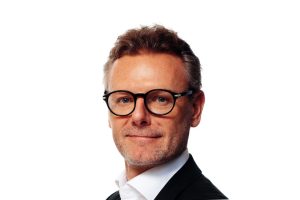
Pascal Houdayer, recently appointed CEO and the first non-family investor of Boiron, brings three decades of global leadership experience to one of France’s most iconic healthcare enterprises. In this conversation, he reflects on Boiron’s evolution from a pioneer in homeopathy to a global advocate of integrative health, its diversification into CBD and medical cannabis, and its expanding footprint in the US, Latin America, and China. Rooted in French heritage yet outward-looking, Boiron is positioning itself at the forefront of longevity and wellbeing.
How would you describe your professional journey and what ultimately led you to take on the role of CEO at Boiron in 2025?
I began my career in 1992 with Procter & Gamble (P&G) as a pharmaceutical sales representative in Normandy, promoting over-the-counter products such as Rogé Cavaillès, Blend-a-med, and Clearasil. Over the next two decades, I progressed through roles in France, Switzerland, and the United States, culminating in my position as CEO of North Africa, based in Casablanca. I then joined Henkel in Düsseldorf, first leading the Global Home Care division and later serving as CEO of the Beauty Care business, where I oversaw international brands including Schwarzkopf.
Following this, I became CEO of NAOS, the dermo-cosmetic group behind Bioderma, Institut Esthederm, and Etat Pur, before moving to New York to co-found Orveon Global, bringing together bareMinerals, Laura Mercier, and Buxom Cosmetics. In 2024, I was approached by the Boiron family, whose entrepreneurial vision and commitment to public health resonated deeply with me. I initially joined as advisor to Thierry Boiron before formally becoming CEO in January 2025. At the same time, I became the first non-family investor in Boiron in its 93-year history, taking a seat on the board alongside the family. For me, leadership requires courage and personal commitment, which is why I chose to invest directly in the enterprise I now have the privilege to lead.
What makes homeopathy such a compelling field for Boiron, and why has it remained central to your strategy?
Over the years, Boiron has established itself as the global leader in homeopathy, a field once served by many laboratories but today represented by only a handful on an international scale. We now generate close to EUR 500 million in revenues, employ 3,000 people, and operate across 50 countries. What differentiates us is that, while most laboratories focus on allopathic or phytotherapeutic solutions, we have built a distinctive expertise in homeopathic medicine.
The principle is straightforward yet powerful: by mimicking natural processes, homeopathy stimulates the immune system to defend itself. It is not a vaccine – we are firmly pro-vaccine – but a complementary approach that strengthens the body’s own ability to resist disease. Homeopathy continues to represent around 90 percent of our revenues, with the remainder drawn from dietary supplements and a small range of creams and gels.
At the same time, our ambition extends beyond homeopathy alone. We aim to be a global leader in integrative health, combining conventional and complementary approaches to give people genuine freedom of choice in how they care for themselves. This is particularly relevant in a world where self-medication is accelerating, with individuals increasingly shaping their own care decisions through both medical consultation and digital platforms. In this context, our strategy rests on three pillars: first, consolidating our leadership in homeopathy; second, expanding into vitamins, minerals, and supplements, illustrated by the recent launch in France of Oscillo’, a new range designed to support vitality and immunity across different age groups; and third, advancing medical cannabis, a prescription alternative for patients who tried every drug available to decrease the symptoms associated with their disease without results. Together, these pillars provide the foundation for Boiron’s evolution into a broader integrative health leader.
As the global leader in homeopathy, how do you view Boiron’s role in shaping the market, and where are you taking the lead?
I would not claim that we are the leader, but certainly one of the key players with a responsibility to influence the future of healthcare. For us, this means advancing integrative health, where conventional and complementary approaches work hand in hand. A powerful example is integrative oncology: when a woman undergoing chemotherapy for breast cancer suffers from side effects such as insomnia, ulcers, vomiting, or pain, homeopathy can be introduced alongside treatment to ease these symptoms. This not only helps her endure the therapy but may also allow her to complete additional cycles, ultimately improving the likelihood of success.
This philosophy goes beyond medical outcomes. We aim to treat individuals as people, not simply as patients. Recognising someone by their name and identity rather than their illness reframes the approach to care. Our vision is therefore holistic, delivering not just the cure, but also the care that supports wellbeing throughout the journey. This perspective is central to how we see our role in shaping the evolution of healthcare.
How do you assess Boiron’s international positioning, and which markets are becoming priorities beyond France?
France remains our home base, accounting for around 40 percent of turnover, yet the majority of our revenues now come from abroad. We are active in 50 countries, with approximately half managed through our own affiliates and the remainder through distributor partnerships. Our second-largest market is the United States, which now represents close to 30 percent of our business and is expanding at double-digit rates. France, despite a challenging consumer healthcare environment, remains our first priority, with the US firmly established as the second.
Beyond these two anchors, significant opportunities are emerging in Asia and Latin America. In Brazil and Colombia, where we recently launched, performance has already exceeded expectations, supported by strong medical engagement; in Colombia, for example, more than 400 homeopathic doctors attended a national meeting to receive training and guidance on therapeutic practice. In China, we have just established a subsidiary in Hangzhou, the country’s technology hub, where we immediately recruited 70 colleagues. What makes this launch distinctive is our consumer-to-consumer (C2C) approach, whereby individuals promote our products directly via livestreaming on Douyin, the local version of TikTok. This stands alongside our traditional pharmacy-based business model in France (B2B) and the direct-to-consumer model in the US (B2C) enabled through platforms such as Amazon. Together, these three approaches – B2B in France, B2C in the US, and C2C in China – illustrate how we adapt to local market dynamics while advancing our broader mission to expand access to homeopathy worldwide.
What do you see as the key opportunities for Boiron’s expansion, and where do you need to remain cautious?
I tend to frame our opportunities in three dimensions: geography, category, and channel. Geographically, the United States clearly sets the pace. Consumers there are increasingly combining medicines and supplements in their daily routines, with self-medication now a widespread reality. Where once people might have turned to “Dr Google,” today they are just as likely to seek advice from tools like ChatGPT. The rising cost of healthcare has only reinforced this trend. Our role is not to dictate how people should manage their health, but to support them, recognising that the line between health and wellness has largely disappeared. People want to feel well and in control of their choices, and this mindset is spreading rapidly across Europe.
From a category perspective, medical cannabis represents the most compelling opportunity. For patients living with acute pain, cortisone has long been the standard treatment, but its effectiveness diminishes over time as tolerance builds. Medical cannabis offers a valuable alternative, and the improvement it brings to patients’ quality of life is striking. In France, we are one of only three laboratories participating in the official pilot programme, and we expect legislation to move forward soon to enable prescription use in hospitals and clinics. We already distribute medical cannabis in markets such as Poland, where the results have been highly encouraging, and we believe this experience positions us well for broader European adoption.
Finally, from a channel standpoint, regulatory evolution will play a decisive role. In Europe today, unlike in the US or China, companies cannot communicate directly with consumers about medicines. This could eventually change in the long-term, creating opportunities for closer, more transparent engagement. This will allow us to provide people with accurate information and help them make informed decisions about how best to combine conventional treatments with homeopathy.
The US is central to your strategy, but it is also a complex and costly market. How do you manage this reality?
It is certainly more complex than France. At home, our model is straightforward: sales go exclusively through pharmacies. In the US, however, we operate across a wide range of channels, traditional pharmacies such as CVS and Walgreens, mass retailers like Walmart and Target, specialist outlets including vitamin and natural product shops, and e-commerce, both through Amazon and our own direct-to-consumer platform.
This multi-channel landscape is demanding, but it makes the system more patient-centric, giving people greater choice and convenience. If someone in New York can order a product online and have it delivered within two hours, that immediacy is often more valuable than waiting two days to collect it in person. I believe this kind of patient-centred model will expand globally, and while it requires strong local expertise, we are fortunate to have a highly capable team in the US to navigate this complexity.
Medical cannabis is still a relatively new and evolving field. Where does it stand today, and how have different countries and stakeholders responded to its potential?
Medical cannabis is already authorised in 21 of the 27 EU member states, which leaves France among the last to move forward. The delay reflects the need for new legislation and European regulatory approval before national implementation can take place, but progress is clearly underway.
Our experience in countries such as Poland has been very positive, and it shows just how transformative this therapy can be. Its strength lies in the flexibility of its active components – CBD (cannabidiol) and THC (tetrahydrocannabinol) – which can be prescribed in different proportions depending on the level of pain. Lower concentrations of CBD can address mild cases, a balanced CBD/THC mix is effective for acute pain, and for extreme or palliative situations, formulations with up to 50 percent THC are used.
In France, we have been working closely with hospitals, clinics, and general practitioners to support them in adopting this new treatment, and the results so far have been excellent. Patient associations have also become strong advocates, calling for broader access and pressing for France to align with the rest of Europe. Beyond entering a new therapeutic area, the real significance lies in offering patients an alternative that can genuinely enhance quality of life where conventional options no longer suffice.
France continues to represent a substantial part of Boiron’s business. What role does it play for the enterprise, and what does Boiron contribute in return?
Boiron is, above all, a French enterprise, deeply rooted in the Lyon region, and we attach great importance to the “Made in France” label, which embodies three essential dimensions. The first is sovereignty and quality. Producing locally gives us full control over every stage of manufacturing, from the sourcing of ingredients and packaging to production in clean rooms under medical-grade conditions, all under the supervision of the Agence nationale de sécurité du médicament et des produits de santé (ANSM) and the Haute Autorité de Santé (HAS). This proximity safeguards both the quality of our medicines and the sovereignty of our processes.
The second is employment and economic impact. We employ more than 1,500 people in France and operate four to five production sites covering a wide range of formats, from homeopathic granules and globules to creams, gels, tablets, and pills. Our Montévrain facility specialises in sterile single-dose units using BFS technology, including eye drops and paediatric unidose medicines. This industrial footprint makes us a major employer and a strong contributor to the national economy.
Finally, “Made in France” has become a recognised symbol of trust internationally. In markets such as China, Brazil, and Colombia, the fact that our products are manufactured in France carries considerable weight with doctors and healthcare professionals. For us, it is not only a mark of quality but also of credibility.
Boiron’s governance model is quite unique, combining a public listing with strong family ownership and private equity involvement. How does this structure influence the way you operate?
Boiron is indeed a distinctive hybrid. Boiron SA is publicly listed, with around 20 percent of its shares floating on Euronext, while the other 80 percent is held by Boiron Développement, our financial holding company. Within this structure, the Boiron family retains a majority stake of around 70 percent, our American private equity partner EW Healthcare Partners holds 20-25 percent, and the remainder is owned by employees and myself, since I also chose to invest personally. In practice, this makes us at once family-owned, listed, and private equity-backed.
This balance brings together the advantages of each model. The family ensures a long-term vision, thinking in terms of generations rather than years, and we already have the second and third generations engaged, with the hope that future ones will follow. Being publicly listed brings discipline and transparency, with quarterly reporting that reinforces our belief that there can be no long term without consistent short-term performance. At the same time, our US partner contributes valuable external insight and international perspective, which strengthens our global outlook.
As both CEO and board member, and as someone personally invested in the enterprise, I “eat what I cook.” To me, this governance model provides the best of all worlds, combining stability, accountability, and global perspective, and so far we have experienced its advantages without any drawbacks.
You have led teams across different markets and cultures. What kind of leadership and culture do you want to foster at Boiron?
I joined Boiron knowing I was stepping into an organisation with more than 90 years of history and a remarkable entrepreneurial heritage. My role is not to drive a revolution but to guide an evolution, building on what has already been created. When Jean and Henri Boiron founded the enterprise in 1932, homeopathy was virtually unknown in France, yet they transformed a single Lyon pharmacy into the global leader we know today, present in 50 countries. That pioneering mindset still defines us. For me, entrepreneurship means having real “skin in the game,” which is why I invested personally in Boiron: it was important to demonstrate that I share both the responsibility and the risk.
Two values, deeply ingrained in our DNA, also guide my leadership: demandingness and benevolence. I hold myself to high standards, and because my colleagues see this, they accept that I expect the same from them. But demandingness must be balanced. Benevolence, for us, is about improving lives, being approachable, and remaining human-centred in everything we do. This combination of rigour and care is what I strive to embody with my leadership team, ensuring that Boiron continues to grow while staying true to its founding principles.
As you near your first year as CEO, what excites you most about the future, and what do you hope to achieve?
What excites me most is the possibility of taking the strength of our 3,000 colleagues and bringing them together into the future of health. I have introduced a simple but powerful motto – one team, one dream, one mission – that reflects our collective purpose. Looking ahead, I see Boiron at the heart of the growing focus on longevity. People today are not only seeking to live longer, but to remain healthier and happier throughout their lives. It is no longer only about life span, but about health span, and what I like to call “joy span.” That sense of wellbeing must also start within our own organisation. My ambition is not only for us to succeed as a business, but for us to succeed while enjoying the journey together.