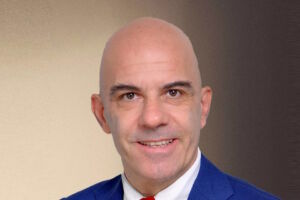
Olivier Dessajan, CEO of Colisée China and Co-President of the French Healthcare Alliance, discusses Colisée’s long-term investment strategies in China, the challenges of navigating the local regulatory environment, and the importance of French-Chinese healthcare collaborations.
What is Colisée Group and how have you put in place the infrastructure required to be a player in the silver economy across residential care & medical facilities?
Colisée group is the fourth-largest player in Europe in medical nursing homes and residences for elderly people, and is supported by two significant investment funds. One is a Swedish equity fund, and the other is a Canadian retirement pension fund. The importance of these funds lies in their long-term investment strategy. Unlike typical private equity models that seek exits every few years, these funds provide the stability and longevity essential for our operations.
In China, we operate through a joint venture with China Merchant Group, one of the country’s largest and oldest state-owned enterprises. This group has an extensive banking network, significant real estate holdings, and major transportation and maritime logistics operations. Their investment in our industry is driven by both societal needs and government priorities. Our joint venture model in China allows Colisée to focus exclusively on operational management, akin to the hotel industry. We partner with facility owners through management contracts, enabling us to concentrate on delivering high-quality care while the ownership responsibilities remain with our partners. This approach allows us to maintain our standards and expand our reach without the added pressures of asset ownership.
Regarding our initial steps is important to note our industry demands a long-term commitment, both to the residents we serve and the countries we operate in. Our primary goal is to provide a longer and better life for our residents in our facilities. This process begins with finding a suitable location to build our facility. Then, we establish an ecosystem involving the medical network, hospitals, local clinics, and local authorities. Once the facility is built, it takes time to bring in residents—it can take up to a year and a half to reach full capacity, unlike a hotel that can fill up in a month.
The long-term nature of our investment is evident. It takes about four years to build a facility and another two years to achieve full occupancy. Currently, we have five operational projects in China, three of which are already full. This extensive timeline underscores our commitment to the country. Additionally, we have a profound understanding of China’s future. The country is rapidly becoming a super-aging society, necessitating more senior living facilities like ours. At the first stage, our focus was on understanding the business model and standards required to succeed and be able to differentiate ourselves from local competitors. Despite the challenges posed by COVID-19, we have designed a model that demonstrates our added value and uniqueness. We hope that China will adopt our model to ensure the best health and life conditions for its elderly population.
If looking at the challenges, there are indeed numerous. Firstly, the regulations and standards for our industry in China are still evolving. This is true across the healthcare sector, where regulations can change annually. Our industry is relatively new, requiring us to anticipate and design our ecosystem ahead of government directives. Staying ahead necessitates a team that comprehends the country’s direction and vision.
How do you ensure your long-term business plans are aligned with how the fast pace at which China’s economy and society are evolving?
Navigating China’s strategic landscape involves understanding its long-term vision while adapting to frequent short-term changes. For example, from 2018 to 2020, the focus was on medical nursing homes. From 2020 to 2024, the emphasis shifted to security and currently, the focus is on home care in order to absorb the fast growing number of elderly people. The direction of the silver economy is continually evolving, impacting both focus areas and standards. To manage these changes, we have established a team of experts, many of whom were trained in France and have been with us for over a decade. These experts are well-connected with medical authorities at local, city, and provincial levels, enabling us to anticipate trends and regulatory shifts. Our approach relies heavily on building relationships and understanding the market through these networks.
How do you address the misconception that Chinese consumers are unwilling or unable to invest in premium elderly care services?
The primary challenge in China is education. In Western countries, there is a clear understanding of medical nursing homes and when it is appropriate to use them. In China, there is limited awareness of geriatric diseases like Alzheimer’s and Parkinson’s, leading families to rely on hospitals that are not suited for long-term care. Our foremost task is to educate the public about these diseases and the advantages of specialized care facilities. Moreover, we face competition from local providers who prioritize quantity over quality. These providers may place six residents in a single room, which starkly contrasts with our approach. At Colisée, we emphasize individualized care: each resident enjoys a private room, a personalized healthcare plan, a customized nutrition program, and tailored care.
To address these challenges, we undertake extensive education and marketing efforts. We offer short stays at our facilities and conduct home assessments to showcase the quality of our care. Additionally, we collaborate with hospitals to share best practices for managing Alzheimer’s and Parkinson’s, demonstrating that a fulfilling life is possible even with these conditions. Our strategy includes promoting experiential learning, similar to the hotel industry, where we develop and market experiences that highlight our expertise. Through these initiatives, we aim to inform and educate Chinese consumers about the value of premium elderly care and the comprehensive solutions we provide.
Your facilities focus on elderly individuals with chronic conditions that necessitate particular medical support rather than solely on age-related needs. Could you elaborate on this approach and how the issue of affordability can come to play?
Our facilities in China are distinguished by a robust medical team, comprising more doctors and nurses compared to similar facilities in other countries. We provide a comprehensive range of services similar to those found in Florida, including senior apartments for independent living and assisted living with full-time care. The Chinese model typically involves larger facilities with around 200 to 300 beds, while in France, facilities are smaller and primarily cater to individuals in the final stages of Alzheimer’s. Our approach in China is to offer solutions for a broader demographic, which is why we draw parallels with the Florida model.
We address this challenge by offering both premium and more affordable options. For example, in Shenzhen, we operate the most expensive nursing home in China, a fact confirmed by a study conducted by one of our competitors. Simultaneously, we recognize the government’s mandate to develop affordable solutions, which is why we have established smaller, more accessible projects nearby. Just 200 meters from our premium facility in Shenzhen, we have a more affordable project. This dual approach enables us to cater to a diverse range of Chinese elderly individuals, providing high-quality care at various price points.
Besides end-customer attraction and retention, what are the infrastructural challenges of your business?
The challenge in our industry is multifaceted. Firstly, while there is a substantial demand in Hong Kong and China, identifying the right market is crucial. Secondly, securing the ideal location, preferably in affluent areas, is essential. However, the high cost of land, particularly in urban centers, poses a significant challenge. Additionally, the financial support from the government varies greatly between regions. In France, the government is quite generous, and in Spain, there is some support, though less so. In China, however, there is minimal government funding for healthcare and elder care costs, and even obtaining social security reimbursements is difficult. This contrasts sharply with places like Singapore, where the government covers more than 40% of residents’ costs and invests heavily in facilities.
Understanding the ecosystem, including location and demand, reveals that China’s market, while rapidly growing—with 15 million new elderly individuals each year—is also fraught with challenges. The high cost of land and the financial burden on families make it a complex environment. As the WHO has noted, China is aging rapidly without becoming wealthy, which adds to the difficulty of operating in this market.
Could you elaborate on the French Healthcare Alliance that you represent in China alongside other French companies? What distinguishes the relationship between France and China in terms of political, economic, or societal aspects?
The relationship between France and China is notable for its longevity, as this year marks the 60th anniversary of diplomatic relations. Healthcare has always been a significant topic in our bilateral interactions. France is renowned for its innovation, patents, and robust healthcare system, which serves as a model for China as it develops its own healthcare infrastructure.
The French Healthcare Alliance, established in 2013, aims to promote French healthcare companies in China. We recognized that to be impactful with Chinese authorities and stakeholders, whether private or public, hospitals or investors, it is essential to present a united front. This alliance allows us to offer comprehensive solutions by combining expertise from various sectors. For instance, in our industry, collaborating with architects, furniture suppliers, operators, and training institutions enables us to provide a complete package. We also highlight France’s excellence and best practices while offering integrated solutions through the collaboration of all necessary players. This collective approach enhances our relevance and effectiveness in the Chinese market, showcasing the strength of French healthcare innovation and comprehensive service offerings.
How does the French Healthcare Alliance present itself collectively, and what are the key points on its agenda that you highlight when engaging with stakeholders?
The French Healthcare Alliance focuses on a collective approach to effectively engage with stakeholders. We recently authored a position paper, detailing our perspectives across various sectors such as medical devices, oncology, pharmaceuticals, and elderly care. Each CEO contributed an article discussing market trends and key messages aimed at accelerating the development of these markets in China, ideally with the involvement of French players.
Our agenda includes promoting better healthcare solutions and fostering collaboration between France and China. We achieve this through various initiatives, including creating articles to highlight significant healthcare advancements and opportunities for cooperation.
Who are the primary stakeholders that the French Healthcare Alliance engages with in Chinaand how do you maintain high-level relationships?
Our organization leverages its strength by organizing two major events annually. For instance, we have an upcoming event called Medical Day, where we bring together top medical academicians and healthcare experts from France to engage with their Chinese counterparts, including government officials and hospital representatives. These events serve as platforms for discussing challenges and sharing solutions, thereby promoting our member companies. Additionally, we hold plenary sessions that focus on specific topics and involve city officials and healthcare administrators. These sessions help us demonstrate the value and solutions we offer while fostering understanding and collaboration at the municipal level.
Our position paper also plays a crucial role in our advocacy efforts. It was reviewed by the French government prior to discussions with Chinese officials in Paris, helping to align visions and key messages between the two governments. This form of soft power and strategic messaging is vital for creating a bridge between political entities, governments, and companies, ensuring a mutual understanding and cooperation between France and China.
Within the Chinese healthcare environment, does France hold any particular brand recognition? Are French healthcare companies well-regarded in China?
There is indeed significant demand and interest from the Chinese side for partnerships with French healthcare companies. The Chinese market is eager to engage more globally and foster collaborations. However, the political climate over the past few years has required us to be selective in our engagements. We strive to ensure reciprocity in our partnerships, aiming for mutual benefit.
The Chinese government is keen to open more opportunities, and the French government aligns its strategies with the broader European community’s vision. Recent challenges in sectors like electric vehicles and photovoltaic technology highlight the need for strategic selectivity in healthcare as well. For instance, Chinese biotech companies are making substantial innovations and will soon enter the European market. Thus, we must carefully balance openness with necessary controls to protect both our interests and those of our European partners.
Given the current geopolitical climate and strained relations between China and the US, there is increasing interest in European markets. How do Chinese companies perceive opportunities in Europe, and what advice do you have for them as they navigate this landscape?
The Chinese market remains incredibly important, both in terms of value and volume. It is imperative for global companies, especially in the pharmaceutical and healthcare sectors, to establish a presence in China. The market is vast, and consumer demand for high-quality products is steadily increasing. Moreover, there is a significant focus on innovation in China. The government is investing heavily to improve the quality and innovation of products across various industries, including pharmaceuticals, medical devices, and healthcare. This makes China not only a crucial market for sales but also a valuable partner for innovation and development.
For Chinese companies looking at Europe, the key is to recognize the immense opportunity and the need for strategic partnerships. Europe, with its diverse markets, offers a unique canvas for growth. Companies should consider collaborations that enhance innovation and quality, leveraging the strengths of both regions. Healthcare, in particular, is a critical area where mutual growth and advancements can be achieved through such partnerships.
Based on your experience, what strategies have proven effective in China?
Navigating the Chinese market requires a thorough and well-prepared approach. First and foremost, it is crucial to conduct comprehensive market research to understand if there is a viable market for your products or services and whether you can generate value and gain market share. This involves assessing not only consumer demand but also potential regulatory hurdles and competitive dynamics. Ensuring that your intellectual property is protected and that you can navigate the bidding processes within Chinese hospitals is vital. The regulatory environment in China is unique and can be challenging, so thorough preparation is essential.
Entering the Chinese market demands serious investment and detailed feasibility studies. Companies must understand the local market dynamics and be prepared to commit the necessary resources. This includes time, as the timeline for product authorizations and regulatory approvals in China can be longer compared to other countries. Sufficient capital is also necessary, not only for building infrastructure but also for implementing an effective marketing strategy to grow your presence. While initial margins may be lower, the large market volume in China can provide a substantial platform for long-term success if positioned correctly.
Success in China demands a long-term commitment. Companies must be prepared for a different timeline and be patient as they work through the regulatory and market entry processes. By adhering to these strategies and preparing adequately, companies can navigate the complexities of the Chinese market and position themselves for sustainable growth and success.
What are your thoughts on the future of French-China relations and the role of French companies in the Chinese market?
Discussing the political situation is challenging due to its volatility. What I say today might be completely different in a few weeks. However, it’s important to highlight that French companies have made long-term investments in China. This commitment underscores the significance of the Chinese market to us. French companies, such as Ipsen, Biomérieux, Servier, Sanofi and many others focus on offering products and solutions that provide distinct advantages over local competitors. These companies, including Colisée, have already demonstrated their added value in the Chinese market. The primary challenge we face is the instability of the regulatory environment in China, including fluctuating regulations and bidding processes.
The key message is that French companies are dedicated to the Chinese market and offer superior products and solutions. Enhancing the relationship between our countries is crucial to creating a win-win situation for consumers, businesses, and both governments. This cooperation is essential to ensure mutual benefits and sustainable growth in the healthcare sector.