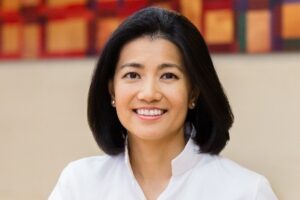
Adept at identifying promising biotechs, Qiming Venture Partners-backed companies saw no less than eight IPOs last year. Managing Partner Nisa Leung provides an update on the firm's activities in light of current China-US geopolitical tensions and the evolving business development models that have become more focused on licensing innovative drugs from China to global markets.
When we spoke last year, Qiming Venture Partners had completed the fund-raising cycle for two funds. Since then, unfortunate tensions between China and the US have escalated, leading many limited partners (LPs) to reconsider their China allocation capital. What new developments has the firm seen over the past year and what impact has the geopolitical situation had?
We raised two funds of a total of USD 3.4 billion about 14-20 months ago. In the last two years, we have been investing steadily but slowed down compared to previous years similar to everyone else.
We were lucky last year with eight initial public offering (IPOs), five of them on NASDAQ, including Structure Therapeutics. The CEO, Ray Stevens, was the co-founder of Receptos, which was acquired by Celgene. Structure Therapeutics shares surged 54.2 percent in June this year after positive clinical trial results for its experimental weight-loss pill, GSBR-1290.
In total, we have had 41 IPOs since the COVID-19 pandemic. It is still possible to have IPOs, but investors have become more selective and GLP-1 is one of the few areas investors are interested in.
Last year, we probably had more IPOs than some of the major players in the industry. While the market has been relatively inactive, it has come back this year with a notable increase in M&As. We have also been actively involved in many licensing deals.
Were the majority of the IPOs you mentioned in Hong Kong?
We have different companies filing for different markets. Some in Hong Kong, some in the US, depending on the sectors and investor interests. We are indifferent as to which exchange the company prefers so long as it can maximize the potential return and create enough investor traction for the company. Therefore, companies can talk to bankers and investors and decide and we are available to help in any way we can with the process.
The number of in-licensing deals from China’s homegrown biotechs to multinationals is advancing with many of the out-licensors being part of the Hong Kong Stock Exchange’s Chapter 18A that allows biotech companies with no revenue to list. Can you share any insights into current dealmaking trends?
I would say that these days business development (BD) deals are more focused on licensing innovative or best-in-class drugs from China to global markets. Many are surprised that China is able to develop so many best-in-class drugs for global markets. Since the SPDR S&P Biotech ETF (XBI) has dropped so much and the valuations of US biotechs have declined, you would think multinationals would solely focus on US companies instead. But interestingly enough, due to the faster turnaround and cost effectiveness, China-based companies have developed best-in-class drugs and many multinationals feel there are cost benefits to licensing them.
Besides HKEX 18A-listed companies, there are a fair number of innovative companies that are still private, which makes the future of biotech development in China attractive. There are many next-generation companies, and they are able to reiterate much faster and more cheaply, allowing them to reach a better class more quickly for some of the new modalities. Even five years ago, we would not have imagined that this could be achieved.
We are early investors in MediLink, for example. This is the team that built an entire antibody-drug conjugates (ADC) basket, which was licensed to Merck for around USD 9 billion. About four and a half years ago, the team decided to set up their own company focused on next-generation ADCs, which we invested in. Even though the company is still relatively young, they have been able to license drugs to Pfizer, Roche and BioNtech.
Within our portfolio alone, we have more than 300 drug assets, and about 120+ in clinical development in the US, China, and globally. And that number is increasing as we speak, because every week we are evaluating investments in more companies and more pipelines.
Five or ten years ago Chinese biotech entrepreneurs were returnees who had gained experience abroad in multinationals. Now that the ecosystem is more mature, how has the industry’s talent pool evolved?
Big Pharma has built many R&D centres in recent years, which have employed thousands of scientists. Many have started companies that have raised funding in the past five to seven years. These companies have subsequently hired hundreds and thousands of people. And this next generation is also starting companies.
China has around 5 million new science, technology, engineering, and mathematics (STEM) graduates every year. That represents a tremendous workforce, and they are dedicated to working very hard and are eager to develop. As a result, there is no lack of home-grown talent.
These scientists and entrepreneurs are starting companies globally in the US and Europe. I believe it is important for talents to move around and cross pollinate ideas and collaborate for the better good.
Chinese biotechs remain reliant on global markets because pricing for innovative therapies comes with higher returns. How are they accelerating their global outreach?
The business development model has changed. Our portfolio companies received term sheets from many top funds in the US, and they conduct multi-regional clinical trials (MRCT) globally, which has helped to expedite their global outreach.
Over the past few years, companies would initiate clinical trials in China, and would list under Chapter 18A in Hong Kong once they had phase II clinical data. And, those who raised more funding would also start clinical trial in US in parallel. Now companies prefer to engage international investors early on. Companies that are doing this, if truly innovative, can go public in Hong Kong or the US.
I recommend our companies establish manufacturing in different regions for sustainability reasons if they can reach a certain scale and have R&D centres outside of China. That allows them to work with local talent and key opinion leaders, which helps them learn and improve.
Every company develops its own partnership business model, but as I mentioned, depending on the company itself and where they see their potential market and how they have grown, some of them have decided to move to the US or elsewhere.
For example, I invested in a one-person company in Shanghai 7 years ago and now the company is operating in 23 countries worldwide, 85 percent of their business is from outside of China with 60 percent from the US, and they recently moved their headquarters to the US based on their customer base. We are very happy to see they have become a global player.