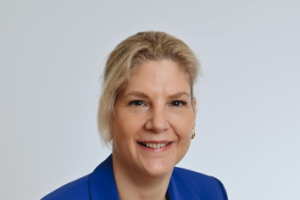
From Hungary to Poland and now France, Nienke Feenstra has navigated some of Europe’s most complex healthcare landscapes. Today, as GM of Takeda France, she reflects on the country’s scientific strengths, its vital early access frameworks, and the evolving challenges of sustainability and digital transformation, always with patient value at the centre of her leadership philosophy.
What has been your career journey since we last met in Hungary in 2015?
When we last met, I was serving as country head in Hungary, a role I held for two years. It was an inspiring experience that underscored the purpose of our work: in Eastern Europe, where healthcare systems are less mature, the impact on patients is often more direct and tangible. That period strengthened my conviction to continue building my career at Takeda and also made me curious to see how the organisation operates from a broader perspective. I therefore set my sights on a regional or global role, not only to understand the company inside out but also to develop my influencing skills alongside the leadership of teams.
This led me to take on a regional HR position as Business Partner for South and Central Europe. While not the most conventional step for a General Manager, it proved invaluable in deepening my understanding of people, culture, and influence. Around the same time, I contributed to Takeda’s integration of Shire, combining my HR experience with the business insight I had gained over the years.
After that, I returned to an operational role in Poland to oversee the integration on the ground. The years that followed were exceptionally demanding, marked not only by the merger but also by the pandemic and the outbreak of war in Ukraine. These circumstances required decisive action and crisis management, and they compelled me to remain longer than originally planned. During this period, I also served as President of INFARMA, Poland’s association for innovative pharmaceutical companies, which added another layer of responsibility at a time of significant turbulence. Both roles were formative experiences, and eventually, I transitioned to my current position in France.
What were your first impressions of the French market as a non-French executive?
France distinguishes itself through its strong scientific base and long-established healthcare system. Whenever I arrive in a new country, I begin by looking at key OECD health indicators to gauge the system’s overall performance. On these measures, France has much to be proud of, with patients benefiting from high-quality care and scientific expertise present across virtually every therapeutic area. The innovation landscape is equally impressive. Initiatives such as Article 51 projects and early access mechanisms for digital solutions (PECAN) demonstrate a clear recognition of the need to innovate to ensure sustainability. While full implementation still lies ahead, the intent and momentum are unmistakable.
Beyond the professional context, I greatly value French culture, from literature and the visual arts to fashion as a means of self-expression, as well as the beauty of the cities and, of course, the cuisine. The regulatory environment may be more complex than in some other markets, yet there is a great deal to admire and appreciate.
How is Takeda positioned in France today in terms of assets and strategic priorities?
Takeda has been present in France for more than four decades, making it one of our earliest European affiliates and a market of considerable strategic importance. Our work here mirrors the company’s global priorities, with a strong focus on gastroenterology, oncology, and rare diseases, alongside preparations for the introduction of our dengue vaccine.
What makes France particularly significant within our network is its early access framework. Through AP1, which allows access before marketing authorisation, and AP2, which provides access after authorisation but before reimbursement, patients with serious unmet needs are able to benefit from innovation much earlier. This is especially critical in rare diseases and oncology, which remain central to Takeda’s mission globally. Importantly, these pathways also generate real-world data of great value. France is not only an international reference point for pricing but also for evidence that can help build confidence in other markets. During my time in Poland, for instance, we were able to use data from the former ATU system – the predecessor to AP1 and AP2 – to demonstrate the real-life impact of one of our therapies, which was instrumental in reassuring payers.
It is precisely this combination of early patient access and meaningful data generation that makes France stand out, and both AP1 and AP2 must be preserved. While there are discussions about possible changes to AP2, it would be a real setback if this mechanism were weakened. France’s ability to translate scientific excellence into tangible patient benefit, both domestically and internationally, is one of its defining strengths, and one we should work to protect.
What does Takeda’s portfolio in France look like today, and what are the key growth drivers?
In gastroenterology, ENTYVIO (vedolizumab) remains the principal growth driver. Since its approval in 2014 for Crohn’s disease and ulcerative colitis, it has become a cornerstone of our GI portfolio and continues to meet important unmet needs.
Within rare diseases, we manage a broad portfolio that includes plasma-derived therapies and immunoglobulins. This year saw the launch of LIVTENCITY (maribavir) for patients in post-transplant settings, while TAKHZYRO (lanadelumab) has established itself as a preventive treatment for hereditary angioedema (HAE), aiming to reduce the frequency of debilitating attacks. We were also very proud to obtain in 2025 a high recognition for ADZYNMA (ADAMTS13r) through an “ASMR 3” by the HAS (French Health Authority). ADZYNMA is a recombinant ADAMTS13 therapy for patients with congenital thrombotic thrombocytopenic purpura (cTTP) designed to address its root cause.
We are also preparing for the introduction of QDENGA, our live-attenuated tetravalent dengue vaccine, which is currently approved in the European Union. In France, the situation is highly heterogeneous: our overseas territories have been facing arboviral diseases such as dengue for decades, with some areas where dengue is now becoming endemic. At the same time, on the mainland, climate change is accelerating the spread of mosquito vectors, leading to increasing autochthonous transmissions. This evolving landscape makes QDENGA a timely and relevant innovation for both tropical and temperate regions.
Oncology represents another major pillar for Takeda globally, spanning both haematological malignancies and solid tumours. While in France oncology is overseen by a dedicated leadership team, my previous roles in Poland and Hungary gave me direct responsibility for larger oncology portfolios, which has reinforced my appreciation of its centrality to Takeda’s strategy.
In neuroscience, although some of our established brands available in the US, Nordics, and the UK are not yet present in France, the pipeline is interesting. In narcolepsy, for example, oveporexton, our oral orexin-2 receptor agonist, has delivered encouraging Phase III results. These data were recently presented at the World Sleep Congress in Singapore by Professor Yves Dauvilliers of Montpellier, highlighting both the scientific French expertise and its contribution to advancing innovation in this area.
Beyond its core areas, Takeda remains strongly committed to developing life-saving solutions across a wide range of therapeutic fields, such as dermatology, by consistently investing in research and innovation to meet the diverse and evolving needs of patients.
Finally, I would underline our longstanding engagement in lysosomal storage disorders (LSDs) such as Fabry, Gaucher, and Hunter syndromes. Despite many years of activity, unmet needs remain substantial, and our commitment to these patients continues to be strong.
How would you characterise the access environment for innovative therapies in France, and what changes are most urgently required?
When we can use the Early Access pathway, the difference is striking. Patients with pressing unmet needs can obtain treatment much sooner, and at the same time, we generate valuable real-world data that support access decisions both in France and internationally. This mechanism is of clear strategic importance. When it is not available, however, the process becomes extremely cumbersome. The French system is often described as a “millefeuille” of regulation, and the term unfortunately fits: once a medicine has been reviewed by the HAS Transparency Commission, it must still undergo price negotiations with CEPS and other procedural steps. Each stage adds time, and those delays mean patients are left waiting for therapeutic progress. The consequences extend beyond patients. They also affect France’s standing as an attractive market, since medicines may be launched years earlier in countries like Germany. For a healthcare system built on solidarity, to guarantee that people receive what they need when they need it, this outcome is difficult to accept.
The rigidity of the one-year budget cycle compounds the problem. Healthcare is not something that can be managed in short bursts; prevention and the treatment of chronic disease require continuity across a patient’s lifetime, which by definition demands a multi-year approach. This view is widely shared by stakeholders, and even highlighted in parliamentary reports, yet reform has proven elusive. Political fragmentation makes it difficult to move from recognition to implementation. If France is to fully benefit from therapeutic progress, it must simplify procedures and adopt longer-term planning, ideally in closer alignment with European practices. Such changes would not only accelerate access to innovation but also create wider benefits for society: helping patients return to work sooner, reducing hospital stays, and easing the burden on caregivers. The need for a multi-year perspective is well understood; the challenge now lies in finding the political will to make it happen.
How is Takeda working beyond its medicines to build value-based partnerships and contribute to a more sustainable healthcare system?
With more than 240 years of history, we feel a responsibility not only to deliver therapies for patients today but also to prepare for the future. That requires us to look beyond immediate performance and ask how we can best contribute to the sustainability of healthcare systems over the next decade. One certainty is that care will become increasingly digital. Patients will expect it, as digitalisation permeates every aspect of society, and healthcare professionals will need it, as shortages of doctors make it impossible to meet the demands of ageing populations without additional support.
For Takeda, this means ensuring that every new therapy is accompanied by a digital solution tailored to the specific therapeutic area, whether that is in diagnosis, guiding patients through their treatment journey, or supporting caregivers. Crucially, these solutions cannot be defined by us alone; they must be co-created with stakeholders to identify the real pain points and build responses that add genuine value.
Our ambition goes further: to see the combined value of medicines and digital solutions recognised by the healthcare system. Recognition does not always equate to reimbursement. It may mean hospitals including such solutions in tenders, for example, when they optimise scarce human resources, or clinical guidelines recommending the combined use of a medicine and a digital tool to achieve optimal outcomes.
We are realistic: Takeda alone cannot transform the system. Yet if no one makes the effort, nothing will change. By piloting initiatives, learning from them, and demonstrating what is possible, we aim to stimulate debate and move the system closer to value-based care. Even if each project represents only a drop in the ocean, it still contributes to building a more sustainable model of healthcare, and that is the philosophy that guides our approach.
How would you evaluate the digital maturity of the French healthcare ecosystem compared with other markets?
It is still quite dispersed. Among healthcare professionals, for example, there is some distance to go compared with other countries, but that is not unusual. Every system, sector, and individual adopts digital solutions at its own rhythm, and that is entirely natural. What is important is that once the shift begins, it tends to accelerate quickly. Just as people who first experimented with internet banking soon moved on to booking travel online, once the healthcare system requires more digital tools to deliver care, I believe the ecosystem will become much more open to adopting them broadly, whether for diagnosis, patient management, or the way pharmaceutical companies engage with doctors. The change will come; the only uncertainty is how quickly.
On the government side, there is already a strong acknowledgement of the role that data and digital solutions will play in shaping the future of healthcare. Initiatives such as Plan Innovation Santé 2030 highlight this ambition clearly, which is very encouraging. At the same time, France would benefit from greater coherence. There are many initiatives and layers of regulation, which, from my perspective as someone who is not French, can make the landscape difficult to navigate. The ambition and political will are clearly articulated, and that is excellent, but the real challenge lies in translating these ambitions into reality in the most agile and coordinated way possible.
How do you assess France’s position in clinical research today, and how has Takeda’s footprint evolved in this area?
We would ideally like to see all our trials conducted in France. The country’s scientific excellence is undisputed, and it is important for us that French investigators and centres are actively engaged in developing our pipeline. This ensures that patients with high unmet needs gain earlier access to therapies through trial participation while allowing clinicians to contribute directly to innovation.
That said, France’s relative position has declined in recent years. This is not because its science has weakened, but because other countries have pursued clinical research more proactively, deliberately simplifying procedures and strengthening their ecosystems. Catalonia, for example, has built a dynamic digital health environment with integrated data systems, while Germany now involves around five percent of its patient population in clinical trials, which also strengthens its hand in price negotiations. These examples illustrate that when the environment is favourable, industry responds swiftly. France could certainly recover lost ground, but it requires clear political will to do so.
At Takeda, our clinical research footprint in France has nonetheless grown. While our portfolio differs from that of other affiliates, making comparisons difficult, France has taken a leading role in certain areas. In our narcolepsy programme, for instance, the country achieved the highest patient enrolment thanks to the strength of its specialist centres. We continue to aim for French participation across all our studies, even though the local environment does not always make this easy. Our ambition remains to anchor as much of our clinical research in France as possible, reflecting both the calibre of French science and the tangible benefits this brings to patients.
With more than 40 assets in Takeda’s global pipeline, is France considered a priority market for upcoming launches, and how are you preparing for them?
In rare diseases, France continues to be a priority market, largely thanks to its Early Access mechanisms, which remain highly valued and which we hope will be maintained. Narcolepsy is another area where France holds particular importance, not only because of the strength of its scientific community but also given the large number of patients already enrolled in our clinical trials. This has created significant anticipation, with both clinicians and patient organisations eager to see these therapies reach patients as quickly as possible.
Yet France’s position ultimately depends on whether these early access routes can be used. If they are available, France can remain at the forefront of global launches. If not, the reality is that lengthy procedures, complex requirements, and protracted price negotiations will inevitably delay access, with other countries moving first. This situation is a direct reflection of the current access environment, rather than of the scientific excellence or patient demand that clearly exist.
Takeda has announced that Julie Kim will succeed Christophe Weber as CEO in 2026. How do you view this transition and the broader environment for leadership diversity in France?
I feel proud to work for an organisation that develops its leaders internally and approaches succession planning so deliberately. Julie Kim is an inspiring choice. She has built an excellent track record leading both the Plasma-Derived Therapies and US Business Units, and she has already begun a listening tour to understand the priorities of colleagues across the organisation. That kind of empathetic and authentic leadership is particularly important in a world that is increasingly complex and polarised. It is also reassuring that she brings a true international perspective. While the US understandably accounts for half of the global market, she also understands Europe and other regions, which is critical at a time when American policy decisions have clear global repercussions.
In the French context, I do not see barriers to diverse leadership beyond language. Fluency in French is essential, and that naturally limits the number of international executives. But in terms of gender, I do not perceive obstacles. Within the trade association, for example, there is a significant number of female General Managers, and equality is reflected in practice.
How would you describe your leadership style, and what kind of culture are you aiming to foster at Takeda France?
For me, healthcare leadership must always start with the patient. As a pharmacy student, I once interviewed two patients about the impact of their treatments on daily life. This was unusual at the time, since most of my peers were in the lab, but it left a profound impression. I realised that no one is better placed than the patient to assess the true value of a medicine. That perspective has shaped my career and is something I recognise strongly in Takeda’s PTRB (Patient-Trust-Reputation-Business) decision-making model, which is deeply embedded in the organisation and will remain central regardless of leadership changes.
Patient centricity also means working to ensure that every innovation reaches patients as quickly as possible. In today’s complex environment, that requires strong cross-functional collaboration, because no individual or team can succeed in isolation. It calls for a culture built on empathy, authenticity, and inclusion, where colleagues feel able to contribute openly, and where solutions are found collectively even when challenges are considerable. At the same time, it requires leaders who are capable of taking difficult decisions when needed, while remaining caring and authentic in their approach.
My time in HR reinforced these convictions. It taught me that authentic leadership – staying true to who I am while adapting with empathy to those I work with – is fundamental. This is the culture I want to strengthen within Takeda France: inclusive, collaborative, and consistently focused on ensuring that therapeutic progress benefits patients as swiftly as possible.
Looking ahead, what are your aspirations and priorities as General Manager, and what continues to give you the greatest sense of purpose in leading the affiliate?
For me, it always comes back to access. Being able to secure access and deliver therapeutic progress to patients remains the most meaningful and emotional part of this role; it is why we come to work every day. I often think back to the patients I interviewed as a student, and to my early work in health economics in the late 1990s, when the discipline was only just emerging. Even then, the central question was clear: what is the real value a medicine provides, and what is the broader contribution our industry makes to patients and to society?
That notion of value has evolved considerably, and it will continue to do so. The world we live in today is not the same as when I began my studies, which means we must constantly redefine not only the value we deliver, but also how we deliver it and in partnership with whom. Our responsibility is twofold: to ensure that patients today have timely access to therapeutic advances, and to contribute to building a healthcare system that can remain sustainable in the future.