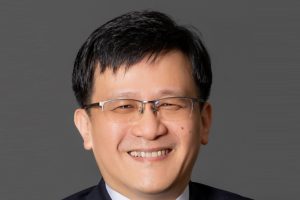
Nick Wang, General Manager of Daiichi Sankyo Taiwan, has more than 25 years’ experience across clinical research and commercial leadership. Since joining the company in 2020, he has led the build-out of its oncology business while steering the affiliate’s transition to a full-function organisation, with a clear focus on lifecycle management and long-term sustainability.
Having been in pharma since 1999, how did your career lead you to Daiichi Sankyo?
My pharmaceutical career began on 16 September 1999. I remember the date clearly. I joined what is now the world’s largest pharmaceutical company and started in clinical research, which at the time was a newly introduced function in Taiwan and also my graduate school major.
I spent around seven years in clinical research and medical affairs. During this period, the most critical and lasting principle I learned was the idea of “starting from the end” thinking backwards from patient outcomes and strategic goals. I then decided to move into the commercial side, motivated by a desire to better optimise the value of innovative medicines for Taiwanese patients.
I transitioned into oncology marketing and worked on the launch of a new oncology product. Performance was very strong, and through close collaboration with international colleagues, I was offered a five month short-term assignment in Turkey in 2012 to support business planning and execution. Working as a foreigner in another country sharpened my sensitivity to non-verbal communication and deeply shaped my understanding of diversity and inclusion.
After returning to Taiwan, I moved across several management functions. These included a Six Sigma Black Belt assignment, a leadership role without formal authority, and later an associate sales director position with responsibility for three therapeutic areas. In 2015, I became marketing director. Over four years in that role, we launched nine new products or indications without adding headcount. It was a period of strong growth, but also extremely demanding, and by 2019 I decided to take a break.
Daiichi Sankyo had established its proprietary, cutting-edge antibody drug conjugate (ADC) technology platform, supported by a strong DXd-based pipeline. In 2020, I had the opportunity to join Daiichi Sankyo Taiwan as Head of the Oncology Business Department. At that time, the affiliate was focused entirely on primary care, particularly cardiovascular and antibiotic therapies. My role was to build the oncology organisation from the ground up, and we successfully launched our first oncology therapy in Taiwan in 2022.
Following the global success of its ADC pipeline, Daiichi Sankyo began accelerating its globalisation and transformation agenda. Drawing on my diverse career experience, I was given the opportunity to lead Daiichi Sankyo Taiwan and support this transformation from July 2024 onwards.
Looking back, one of my most formative experiences was the year I spent on the Six Sigma Black Belt assignment. Much of what organisations describe as transformation ultimately comes down to execution. That role involved leading cross-functional projects focused on improving performance, whether through revenue growth, cost reduction, or efficiency gains. If given the opportunity, I would gladly do it again. It fundamentally reshaped how I think about organisational performance.
Daiichi Sankyo is transitioning from a primary care–focused company to one that is increasingly oncology-driven. How do you view this shift in Taiwan, and how do you set strategic priorities?
Fundamentally, I would say that nothing has really changed. The pharmaceutical industry is always lifecycle-driven. Even in oncology, and even for companies with strong pipelines, patent expiry is inevitable. Some of our oncology assets have patent horizons around 2035 or 2036. I often remind my team that while oncology feels exciting today, we already need to be thinking about what comes after 2030. Lifecycle management never stops.
Primary care therefore remains important for us. We expect reimbursement approval for a new product in this space next year. While it will not be a blockbuster, it will still contribute meaningfully to our bottom line, especially as patents in our existing primary care portfolio begin to expire from 2027 onwards. As a result, we are reshaping the business, reallocating resources, and continuing to invest across both oncology and primary care.
How significant is oncology today within Daiichi Sankyo Taiwan, and how do you expect that to evolve?
Oncology effectively started from zero in 2022 and now accounts for approximately 25 percent of our revenues in Taiwan. After three years, that is a solid result. Over the next three years, we expect oncology and primary care to reach roughly a 50–50 split, and beyond that oncology should exceed 50 percent of total revenues. We are forecasting double-digit year-on-year growth in our oncology business over the next five years.
This is not driven by strategic ideology. It simply reflects where we are in the product lifecycle today. At the next stage, we will also need to prepare our oncology portfolio for its own lifecycle challenges.
It is clear that the company’s oncology portfolio has gained momentum. How do you see the pipeline evolving from here?
Our lead oncology asset is distinctive in that it has more than five new indications. In addition, we plan to launch two further antibody drug conjugates, one next year and another in 2027. These products have long indication runways. Beyond that, next-generation ADCs and additional assets are under development at Daiichi Sankyo’s global headquarters.
Taiwan has expanded its Cancer Drugs Fund with the goal of reducing cancer mortality by 30 percent. How does this align with your access strategy?
The government’s ambition is clear: to reduce cancer mortality by 30 percent by 2030. Our products are well aligned with that objective. However, budget management remains a core constraint within Taiwan’s National Health Insurance system.
In fact, we have faced challenges entering the reimbursement system precisely because our product performance is strong. Strong clinical outcomes translate into a high budget impact. The Cancer Drugs Fund can provide temporary access, but after two years, uncertainty returns. Once patients are on treatment, it is not realistic to withdraw therapy simply because long-term pricing cannot be sustained. To date, we have not yet seen many strong examples of products exiting the Fund with stable, long-term reimbursement in place.
Negotiations therefore remain challenging. For new indications, the authorities are seeking additional price erosion, even when current prices are already below international reference levels. This is extremely difficult to accommodate. While the policy ambition is clear, the financial mechanisms to support it still need to be fully worked through.
Beyond oncology, how are you managing the balance between legacy primary care products and new innovation, particularly in light of upcoming pricing reforms?
In the near term, we are maintaining our investment in primary care. We will be launching a new primary care product next year, so this is not an area we are withdrawing from.
That said, 2027 represents a major inflection point for the entire Taiwanese pharmaceutical industry. From April 2027, the government plans to benchmark prices against the lowest price across ten reference countries. Under this new system, some products could see prices fall to around 30 percent of their current levels. As a result, many companies will need to reassess whether Taiwan remains a commercially viable market.
A particular challenge lies in the way international reference pricing works. In some reference countries, such as Australia or Canada, Daiichi Sankyo Japan licenses certain products to local partners at significantly lower prices, over which we have no control. If those prices are referenced in Taiwan, the resulting gap becomes very difficult to absorb. The industry is still exploring whether any adjustments to this mechanism may be possible.
Some argue that this reform could free up budget for innovation. Do you find that convincing?
In practice, this is difficult to foresee. National Health Insurance revenues are under increasing pressure. Contributions are largely derived from the working population, and the under-65 demographic is shrinking. In recent years, the government has reallocated funding from other public budgets to support the health insurance system, but it is unclear how sustainable this approach will be over the longer term.
That said, the environment has improved compared with several years ago. When a new product is included in international treatment guidelines, the government is now more willing to provide reimbursement. It is a step forward, but the overall environment remains challenging.
What strategies are you using to manage access in this environment, including risk-sharing arrangements?
Managed Entry Agreements (MEA) and price-volume agreements (PVA) are the most commonly used risk-sharing mechanisms. Under PVAs, if volumes exceed agreed thresholds, a significant proportion of revenue must be returned to the government. This requires very precise forecasting to avoid taking on excessive pricing risk.
In practice, success depends on maintaining international list prices, demonstrating inclusion in global clinical guidelines, securing endorsement from local medical societies, and carefully managing budget impact through these agreements.
In our case, our oncology therapy is co-promoted with another pharmaceutical company, which adds an additional layer of complexity. Pricing and access strategies must be fully aligned between both partners.
If the system were more predictable, we could invest more aggressively and introduce innovative therapies more rapidly for Taiwanese patients. Given the current level of uncertainty, we are instead taking a more conservative, long-term approach, with a strong emphasis on sustainability.
How do you maintain motivation and resilience within your team in this environment?
Culture is critical. At Daiichi Sankyo Taiwan, we set targets that are both challenging and achievable, so people genuinely believe they can succeed. Last year, our employee engagement score was 84, compared with a global average of 76. On this scale, 50 is considered neutral and 75 indicates satisfaction. A score of 84 suggests that many employees feel genuinely happy at work.
We place strong emphasis on respect and recognition. This year, we introduced a peer-recognition system using LINE points, allowing employees to recognise colleagues for collaboration or achievement. The monetary value is modest, around USD 20 to 45 per person per year, but the impact has been meaningful. Since July, more than 1,000 recognition messages have been exchanged across our 200-employee organisation.
From a multinational perspective, where do you see Taiwan’s strengths for investment, particularly in clinical development?
Taiwan has already established a strong environment for conducting clinical trials, combining high quality with good speed. Within Daiichi Sankyo globally, Taiwan is considered a tier-one country for clinical development investment.
The Taiwanese government actively encourages meaningful clinical investment in new medicines. Incentives include patent term extensions, data exclusivity, reimbursement price premiums, minimal requirements for Certificates of Pharmaceutical Product (CPP), the inclusion of clinical trial data in bridging study evaluations, and the opportunity to apply for breakthrough regulatory review designation.
Daiichi Sankyo places Taiwan in its second wave of regulatory submissions, following the United States, Europe, and Japan, making Taiwan second in Asia after Japan. As an example, for our first oncology therapy, US FDA approval was granted in December 2019, with Taiwan approval following in December 2021. For our next oncology product, the gap between US and Taiwan approvals will be reduced to just ten months in 2025.
Overall, the environment for clinical development and regulatory approval is strong. Reimbursement, however, remains the most challenging hurdle.
How do you advocate for Taiwan internally within the organisation?
Taiwan has strong people, and that has always been the case. Our teams consistently show a positive attitude when facing challenges. We are also strengthening our capabilities in out-of-pocket markets. In oncology, for example, around 15 to 20 percent of patients can afford self-pay. To address this, we have designed comprehensive patient support programmes to help more patients access our therapies. Operating in this environment has sharpened our commercial capabilities and strengthened our stakeholder engagement.
Looking ahead, what are your priorities over the next 24 to 30 months?
Our priorities over the next 24 to 30 months focus on three areas.
First, our people. We want our teams to feel confident and competitive, even if market conditions become more challenging. This means ensuring they can continue to perform and develop regardless of external pressure. In parallel, we are exploring business development opportunities to sustain future product flow, while aligning with broader corporate priorities such as carbon neutrality and digitalisation. This includes taking a pragmatic approach to transitioning parts of our operations towards hybrid or electric solutions, improving efficiency, and keeping the organisation fit for the future.
Second, efficiency. We are actively exploring internal artificial intelligence tools to help us prepare for a more constrained environment and to enable smarter, leaner ways of working.
Third, sustainable growth. This will be driven by continued expansion in oncology, internal reallocation rather than downsizing, and the development of talent with regional and global exposure. We already have colleagues contributing to clinical development in the United States and working in medical roles in Japan, which reflects this ambition.
We employ more than 200 people, and while primary care still represents over TWD 3 billion in business, some adjustment will be necessary. These changes will not be dramatic. Developing our people remains our core focus. Investment in training is significantly higher than earlier in my career, and for me, that is the most meaningful change.