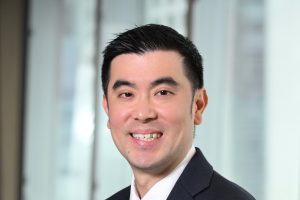
GSK Hong Kong’s first year under Nicholas Teo marks a period of rapid evolution in the city’s healthcare system, from the strengthening of primary care to a deeper reliance on real world evidence and closer collaboration across government, academia and insurers. The affiliate is advancing a balanced portfolio in specialty medicines and vaccines while contributing to Hong Kong’s broader ambitions in adult immunisation, cross-border research and future primary regulation. What emerges is a shift toward a more integrated role for industry, one defined by partnership, data and long-term value for the population.
How have your first twelve months in Hong Kong shaped your view of the healthcare system and your role leading GSK Hong Kong?
I came in with a strong grounding in how the system works because Hong Kong and Singapore share clear structural roots. Both grew out of British healthcare traditions, with robust public hospitals, a disciplined approach to medical training and a primary care model that relies heavily on out-of-pocket payment supported by government safety nets. That familiarity helped me understand the environment quickly.
What has defined this first year is the pace at which the landscape is evolving. Hong Kong is moving with purpose to strengthen primary care, enhance its capabilities and align more closely with developments across the Greater Bay Area. At the same time, there is a growing recognition of the role that data and evidence can play in shaping better decisions. The willingness to collaborate has also increased. We see more openness from insurers and other partners to work together on broader health priorities, which was less evident in the past. Pharma used to operate in a relatively contained space, but that space is widening and creating new opportunities for us. This first year has made it clear that Hong Kong is entering a period of meaningful change, and it positions us at GSK Hong Kong to contribute more directly and constructively to the direction the healthcare system is taking.
How is GSK’s global portfolio reflected in Hong Kong, and which therapeutic areas carry the greatest relevance for this market and the broader region?
Hong Kong remains closely aligned with our global portfolio, largely because the market has a long history of bringing innovation in at pace. That speed of adoption allows us to maintain a footprint that reflects our worldwide priorities while tailoring our efforts to the needs of the region. Our general medicines portfolio provides a stable foundation, spanning long established treatments in anti-infectives, antivirals and respiratory care. We retain a small legacy CNS segment, although it no longer plays a central role in our local strategy. The strongest momentum now sits within our specialty medicines, particularly oncology and hepatology. Hepatitis B continues to affect Hong Kong, Mainland China and Taiwan at rates far higher than in many Western markets, which makes our global work in chronic hepatitis B and other liver diseases especially pertinent to this region. We see this as a meaningful avenue for future growth.
Vaccines form another major pillar of our presence. We have a long heritage in paediatric immunisation, and in recent years we have strengthened our position in adult vaccination as well. Shingrix, which protects against shingles, and Arexvy, which protects older adults against respiratory syncytial virus, are two examples of high efficacy vaccines that address longstanding gaps in prevention and have seen strong uptake. Across these areas, we are experiencing robust growth, including significant expansion in oncology. The overall mix of general medicines, specialty care and vaccines reflects both who we are globally and what matters most for the health needs of Hong Kong and its neighbouring markets.
How would you describe Hong Kong’s approach to adult vaccination, and how is GSK contributing to greater awareness and uptake?
Hong Kong has a long established foundation in paediatric immunisation, and that part of the system is deeply understood and widely trusted. Adult vaccination, by contrast, is still developing. Awareness certainly increased during the Covid period, yet the step from awareness to action remains limited. Shingles is a clear example. Our internal estimates suggest that only about 4 to 5 percent of eligible adults are vaccinated. That level is higher than what we typically see in similar out-of-pocket markets, but it still means that most adults who would benefit from protection remain unvaccinated. In many cases, people recognise the name of the disease but do not fully appreciate its burden or understand the degree of protection that newer vaccines such as Shingrix can offer.
Improving this requires a balanced and coordinated effort. In a system driven largely by private spending, our responsibility is to strengthen disease education so that people understand their risks and engage their healthcare professionals with better questions. Those discussions are where vaccination decisions are ultimately made. Older adults and individuals with underlying conditions such as cardiovascular disease or diabetes often underestimate how vulnerable they are to severe infections, and the same pattern applies to RSV. It is still commonly viewed as a paediatric concern, even though the impact on older adults is considerable.
Government guidance is the other essential element. Hong Kong’s national immunisation protocols rely on a rigorous review of efficacy and cost effectiveness, and these assessments will determine how adult vaccination evolves in scale and scope. Reimbursement for shingles vaccination is not available today, but it remains an important goal for us. Achieving it depends on robust real world evidence, which will be critical in demonstrating not only clinical benefit but also broader value for population health and long term system sustainability.
What approaches are you taking to build the real world evidence required to support future vaccination policy, and how do collaborations across Hong Kong and the GBA contribute to this effort?
We have the advantage of drawing on a wide body of international evidence, as many healthcare systems already subsidise shingles vaccination and have made their decisions public. Markets such as Singapore and several European countries, including Greece, provide useful benchmarks for value and cost effectiveness, and these precedents help inform the discussions taking place in Hong Kong.
Local data, however, is essential. We are conducting studies to understand the burden of disease within Hong Kong, and we have been working closely with government and academic partners to establish a more structured approach to evidence generation. A significant step forward was the tripartite MOU facilitated by the Office for Attracting Strategic Enterprises (OASES) and signed with the Greater Bay Area International Clinical Trial Institute (GBAICTI) and the Department of Pharmacology and Pharmacy, LKS Faculty of Medicine, The University of Hong Kong (HKUMed). The aim is to integrate real world data and clinical research across Hong Kong and the GBA so that decisions are supported by evidence that reflects both local needs and regional scale. This framework enables us to examine outcomes that go beyond direct efficacy, including cardiovascular, metabolic and even psychiatric dimensions, as well as wider impacts on well-being and productivity. These broader effects are increasingly important in understanding the full value of vaccination, including for shingles and RSV.
Hong Kong already has strong foundations to support this work. The Clinical Data Analysis and Reporting System (CDARS) contains decades of hospital data and represents one of the richest real world datasets in the region, even if it has not been fully utilised in the past. Recent policy efforts encouraging private primary care clinics to link their records to the eHealth system are beginning to change this, creating the possibility of a connected dataset that spans the entire patient pathway. When primary and secondary care records can be viewed together, the city will have a far more complete picture of health outcomes.
Our intention is to establish high quality protocols in Hong Kong and extend them into the GBA, where larger patient populations will allow the evidence to mature further. This will support decision making for the Health Bureau, offer insights relevant to Mainland China given the shared population characteristics and provide a model for international markets. There is strong interest among regulators and academic partners to advance this work, because robust real world evidence is essential to determining which innovations deliver meaningful and sustainable value for the population.
How would you characterise the evolution of GSK’s specialty medicines portfolio in Hong Kong, particularly in oncology, amid current economic and policy trends?
Our specialty portfolio is at a meaningful point of evolution. There is clear recognition of the clinical efficacy our innovations deliver, yet the broader value they create across the healthcare system is not always fully reflected in current assessment processes. Evaluations still tend to concentrate on the direct therapeutic effect, which remains fundamental, but innovation often brings wider benefits that deserve equal consideration. These include reductions in hospitalisations, avoidance of more intensive and costly interventions later in the care pathway and, in some cases, improvements in patient well-being and productivity. As Hong Kong progresses toward primary evaluation, a more rounded understanding of these dimensions will become increasingly important in determining how innovation is prioritised.
From a performance standpoint, specialty medicines continue to be one of our most important growth engines. Oncology illustrates this well. These therapies address smaller patient populations but carry significant value, and differentiation is essential. Traditional endpoints such as overall survival and progression free survival remain central, yet stakeholders are increasingly interested in what additional impact a therapy brings. In this context, we see strong momentum. Our data indicates promising results in multiple myeloma management, and our work in gynaecologic and other solid tumours is advancing. These developments reinforce the strength of our pipeline and the relevance of our specialty strategy in Hong Kong.
Sustaining this trajectory requires a shared view of what constitutes value. Developing these treatments involves considerable investment, not only in research and clinical development but also in generating the evidence that allows regulators and payers to understand their full impact. For the system to remain sustainable, innovations that deliver meaningful clinical benefit and broader system advantages need to be recognised accordingly. As Hong Kong refines its regulatory and evaluation frameworks, taking this wider perspective will be essential to ensuring that patients receive timely access to therapies capable of significantly improving outcomes.
What role do Hong Kong’s clinical experts play in advancing innovation and shaping how new therapies are assessed for local use?
Hong Kong has a strong base of clinical expertise, and that strength plays a central role in how innovation moves through the system. Clinicians here are willing to work with new therapies early, which gives them practical experience while ensuring that patients gain access to promising treatments without unnecessary delay. This early exposure helps them build a deep understanding of how an innovation performs in real clinical settings, and that perspective becomes invaluable when the system later evaluates its place in practice.
Several of our external experts are active internationally and take part in global trials. Hepatitis B is one clear example, where a principal investigator for our international studies is based in Hong Kong. Their involvement ensures that global evidence incorporates insights relevant to this region, and it gives local regulators a clear view of how a therapy aligns with clinical needs in Hong Kong. Their judgement is crucial when new treatments are assessed. They help determine whether an innovation delivers the outcomes it promises, how it compares with established options and whether the benefits justify its use for local patients. This matters because no one is better placed to interpret the relevance of new evidence than clinicians who understand the population they serve.
Because data evolve quickly, especially in oncology, we maintain regular scientific dialogue with these experts. We invest in ongoing exchanges, updates on emerging evidence and discussions about how new data compare with current practice. This engagement keeps them fully informed, supports more consistent decision making and strengthens the link between clinical insight, regulatory evaluation and patient care.
How competitive is Hong Kong today as a clinical research hub, especially when compared with Mainland China and other markets in the region?
Hong Kong offers a strong platform for clinical research, largely because of the calibre of its clinicians and the discipline with which trial sites operate. The expertise is well established, and studies are often executed with a high degree of rigour and efficiency, even if the cost of operating here is higher than in neighbouring markets. The real structural challenge is scale. With a population of seven and a half million, Hong Kong cannot enrol at the volumes available in markets with much larger populations. This is precisely where the Greater Bay Area becomes important. The ability to connect Hong Kong’s clinical expertise with a population base of roughly 85 million creates an opportunity to pair quality with scale in a way that neither side could achieve alone.
Another area that deserves continued attention is the alignment of local work with international regulatory expectations. The trial capabilities here are strong, but ensuring that data meet the requirements of agencies such as the EMA or FDA demands ongoing access to global scientific and regulatory experience. Equally, it is vital that innovations researched in Hong Kong are used meaningfully in Hong Kong. When the market visibly values the therapies it studies, it reinforces confidence in the quality of the data generated and reinforces the case for investing further in research here.
What recent developments are helping cross-border clinical trials within the GBA become more workable in practice, and how do you see this progressing?
The GBA framework has always had clear potential, but for a long time it lacked the structure and clarity needed to function smoothly. That has begun to change. The establishment of the GBAICTI in Hong Kong, together with its counterpart, the Shenzhen Bay Trial Centre on the Mainland side, has created a more coherent architecture for cross-border work. There are now clearer channels, better defined responsibilities and a more predictable process for companies that want to run integrated studies across the region.
Previously, the framework existed in theory but was difficult to navigate. With stronger coordination from both governments, the system is now gaining traction, and more stakeholders understand how it is meant to operate. Challenges remain, particularly around data flow and access for foreign researchers, but the overall direction is positive. As more companies use the pathway, and as the actors involved build a shared understanding of what works in practice, the system will mature and become a far more credible mechanism for giving Hong Kong the scale it needs in clinical research.
How is GSK approaching Hong Kong’s ambition to establish a primary regulatory pathway, and where can industry add value as this capability develops?
We view the Centre for Medical Products Regulation (CMPR) as a significant and encouraging development. The direction is similar to what Singapore has built, with a full primary evaluation pathway operating alongside streamlined routes for products already approved by trusted regulators. Hong Kong’s acceptance as an observer in the ICH is an important milestone and signals a clear intention to build the capabilities required for international recognition.
Moving toward primary regulation will require a deeper understanding of value. Beyond clinical efficacy, regulators will need to assess cost effectiveness, broader health outcomes and longer term system impact. As these capabilities develop, Hong Kong will increasingly be able to make decisions that reflect its own population’s needs rather than relying entirely on assessments shaped by the priorities of the EMA, FDA or other external agencies.
Industry can contribute meaningfully to this process. We share insights from our global regulatory interactions so that Hong Kong can understand how primary regulators evaluate innovation in practice. We also see a strong case for piloting primary evaluations in areas of particular relevance to Hong Kong, such as hepatitis, where disease prevalence is significantly higher than in many Western markets. These early experiences can help the system build confidence, refine its processes and accelerate its path toward full capability. Singapore shows that small markets can succeed in this transition, and we believe Hong Kong is well positioned to follow a similar trajectory.
How is GSK navigating the leadership transition at the global level, and what implications does this have for your priorities in Hong Kong?
Dame Emma Walmsley has provided strong and consistent direction during her tenure as CEO. One of her most significant achievements has been revitalising our pipeline, particularly in oncology and vaccines, where we have seen a steady stream of approvals and a clear pathway of innovations still to come. That momentum has shaped the company’s identity, and I do not expect the strategic foundations she established to shift. Our global focus on specialty medicines and vaccines remains central, and it guides how we operate in Hong Kong.
Even with a change in leadership, the fundamentals are stable. Here, we continue to invest in the growth of our specialty and vaccines portfolios while maintaining the strength of our established general medicines. What is evolving is how we work with the healthcare system. We are moving beyond the traditional model of supplying and educating to acting as partners who bring evidence that supports decision making, sustainability and broader health outcomes. That is increasingly what stakeholders expect, and it reflects where GSK is heading as an organisation.
After nearly two decades in this industry, it is clear that conversations are shifting. They are less about the technical merits of individual products and more about how an innovation fits Hong Kong’s needs, how it strengthens long term health outcomes and how it contributes to a more resilient system. That is the direction of travel for GSK globally, and it is the role we are committed to advancing in Hong Kong.
As you look ahead, what would a meaningful legacy in Hong Kong look like for you, and how do broader partnerships support that vision?
When I think about legacy, I return to the idea of partnership. If, when I eventually leave Hong Kong, GSK is recognised as a trusted and constructive partner in shaping policy and supporting system development, that would be a meaningful outcome. The goal is to move beyond the traditional, transactional model that often defines pharma engagement and build relationships based on evidence, shared priorities and long term value. If this work helps Hong Kong not only maintain its position as the longest living population in the world but strengthen the quality of those additional years, then the impact becomes concrete. The goal is to help Hong Kong not only live longer, but live well. Healthier ageing, better disease prevention and more stable long term outcomes are the kinds of results I would hope to look back on.
Partnership, however, cannot sit only with government. We are broadening this approach across other stakeholders. A recent example is our initiative with FWD and the patient group Care for Your Heart to raise awareness of shingles among older adults and people with comorbidities such as cardiovascular disease, diabetes and kidney disease. These groups face a higher risk of severe infection, and proactive vaccination can prevent complications that place pressure on both individuals and the system. The model works because it creates shared benefit. Patients receive better protection, insurers support a healthier population with fewer expensive interventions over time, and we advance a broader prevention agenda.
This type of collaboration will become even more important as the government directs more resources toward underserved patients and encourages others to make fuller use of private options. It places a greater responsibility on individuals to manage their own health, stay active, adhere to treatment and keep vaccinations up to date so conditions remain stable. If citizens, insurers, clinicians and industry all move in the same direction, the system becomes more resilient. That is the ambition that guides us, and the kind of outcome I would consider a meaningful legacy.