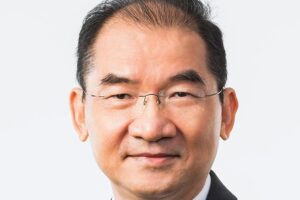
The City University of Hong Kong (CityUHK) has a well-earned reputation as an innovative hub for research and professional education. Michael Yang, Senior VP of Innovation and Enterprise, professor of biomedical sciences, and director of the Tung Biomedical Sciences Centre at CityUHK, explains some of its pioneering iniciatives, such as the entrepreneurship programme, Hong Kong Tech 300, which has already incubated over 700 start-up projects in three years, and the Institute of Digital Medicine, a research institute geared towards integrating health technologies into medical science and public health.
Can you give us an update on the progress of Hong Kong Tech 300, the innovation and entrepreneurship programme CityUHK launched in 2021?
In the first three years of the HK Tech 300 programmeme, we have already incubated more than 700 start-up projects with seed funds from us and the Hong Kong Science and Technology Park (HKSTP). About 150 of which have received angel investment of over HKD 1 million. Right now, HK Tech 300 is the largest university-based entrepreneurship programme in Hong Kong and perhaps in Asia. The programme is the largest supplier of start-ups to HKSTP that has various incubation programmes with funding ranging from HKD four to eight million (roughly USD 500,000 to one million).
The biotech/health-related projects in our portfolio, which account for about 20 percent of the total, go beyond drug discovery to encompass what we refer to as “life and health technology.” This includes everything from wearables to diagnostics, vaccines, and traditional Chinese medicine (TCM).
What can you tell us about the RAISE+ scheme, aimed at fostering collaboration among industry, and the academic and research sectors?
The Research, Academic and Industry Sectors One-plus Scheme (RAISe+) is another government initiative of HKD 10 billion with the objective of encouraging university professors to take their IP and, along with their teams, set up companies. If the start-up is able to attract outside investment, the RAISe+ will match it with a 2:1 or 1:1 ratio, depending on the stages of the start-up, up to HKD 100 million per project. This RAISe+ funding is an incentive for potential investors and is also spurring on academics to become more entrepreneurial.
How feasible is it to scale up a health technology business in Hong Kong?
The situation is improving with more people, projects, and funding. Greater integration across the Greater Bay Area is providing a lot of opportunities and the Hong Kong government has a new immigration policy in place that last year attracted over 100,000 high-level people to the city. It will take time, and we must remember that Rome was not built in a day, but I am optimistic.
What factors led to the creation of CityUHK’s Institute of Digital Medicine, which is geared towards advancing research into integrating health technologies, data science, and artificial intelligence into medical science and public health?
Firstly, we saw the many challenges facing the healthcare system, especially in the context of a global pandemic, an ageing society, and limited resources. These challenges require new solutions, whether they be in terms of big data-driven prediction and prevention tools or homecare using robots that feed user data directly into the system.
Hong Kong already has a well-established healthcare system, with two medical schools training over 400 doctors every year. Our strategy is to empower medical doctors and healthcare professionals with new technology – be it in engineering, AI, big data, or the life sciences – via our Institute of Digital Medicine. This is a research institute, rather than a medical school, that brings together engineers, scientists, data scientists, AI specialists, medical doctors, and other healthcare practitioners to identify challenges and develop innovative solutions to solve them.
Given the shortage of doctors in Hong Kong, would a new medical school be beneficial?
It is all about cost and benefit. According to media reports, a series of measures by the Hospital Authority (HA) to train and retain medical staff has been implemented, with more doctors serving in the public sector and a drop in the resignation rate. The HA is also hiring medical practitioners from outside Hong Kong to alleviate the burden on the public healthcare system, where the government has recognized medical qualifications under the Medical Registration Ordinance involving dozens of non-local universities from Australia, Canada, China, the UK, and the US.
The Institute of Digital Medicine looks to create global partnerships with other institutions and with industry. What can you tell us about these partnerships?
The issues that we are trying to address, such as preventing the next pandemic, or better serving an aging population, are not just for the seven million people that live in Hong Kong. The problems we are facing are the same around the world, we need to develop global solutions with a global partnership network to address these global challenges.
Our Institute of Digital Medicine currently has strategic partnerships with the National University of Singapore Medical School as well as the Tsinghua University Medical School in Beijing. We are also collaborating with Exeter University in the UK, the Hebrew University of Jerusalem, and Cornell University Medical School in the US. All these academic partners share the same vision, and we want to work together.
On the clinical side, we are working with two of the largest hospitals in Shenzhen as well as the 43 hospitals under the HA, through which we can access certain data.
We are also working with industry leaders in the digital medicine space. For example, we have established a partnership with JD Health, the healthcare platform on JD.com, often referred to as the Amazon of China. JD Health is the largest online drug and healthcare product distributor in China, with over half a million patients consulting online every day. Our partnership also includes YiDu, the biggest digital solution provider for hospitals in China, and Marathon Venture Partners, the leading venture capital firm specialized in digital medicine.
Do you see Hong Kong potentially becoming a hub for new drug discovery?
The Hong Kong government has identified life and health technology as a key focus sector in its Innovation & Technology blueprint. Drug discovery takes a long time and requires a diverse set of people and teams, as well as the strong presence of multinational pharmaceutical companies. Hong Kong is working on improving these elements. Another focus should be on medical device development and manufacturing, as well as areas like AI and big data, which can better leverage the strength of Hong Kong and the Greater Bay Area.