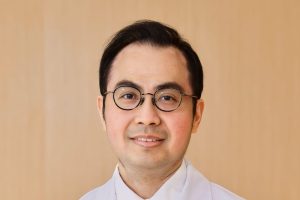
At Hong Kong Children’s Hospital (HKCH), a new chapter in rare disease medicine is unfolding. Under the leadership of Dr Luk Ho-ming, Chief of Service of the Department of Clinical Genetics, a multidisciplinary team is harnessing the power of genomics, data, and collaboration to bring answers to families who have spent years searching for them. Through groundbreaking initiatives such as the Hong Kong Genome Project and the city’s first gene therapy, HKCH is transforming how rare diseases are diagnosed and managed, turning science into hope.
How has the Hong Kong Children’s Hospital transformed the way rare diseases are diagnosed and managed in Hong Kong since its establishment?
As a clinical geneticist at Hong Kong Children’s Hospital, I work within a multidisciplinary team dedicated to the diagnosis, counselling, and management of rare diseases. These conditions are highly complex and often involve multiple organ systems, making cross-speciality collaboration indispensable. HKCH serves as the city’s principal referral centre for paediatric rare diseases, integrating advanced diagnostics, clinical expertise, and coordinated care within a single institution. While adult cases are directed to other hospitals, virtually all children with rare or genetic conditions are treated here, allowing for consistent and continuous management.
My role centres on two fundamental pillars: establishing an accurate diagnosis and providing genetic counselling. Diagnosis remains the cornerstone of effective care, yet many families endure confusion and uncertainty before reaching us. Our task is to interpret complex genomic information and communicate it clearly, helping patients and families understand their condition, its implications for care, and possible reproductive options. Genetic and genomic services at HKCH are jointly delivered by the Department of Clinical Genetics, responsible for consultations and counselling, and the Department of Pathology, which conducts laboratory investigations.
A core mission of our work is to end what we call the diagnostic odyssey, the prolonged and often frustrating journey many families face before receiving an answer. In the past, a child showing symptoms in infancy might wait nearly a decade for a diagnosis, largely due to limited awareness among healthcare professionals. Today, with centralised services and direct referral pathways, medical practitioners can refer suspected cases to HKCH much earlier, sparing families years of uncertainty and distress.
What role does the multidisciplinary model play in ensuring coordinated and effective care for patients with complex rare diseases?
Most rare diseases involve multiple organ systems and therefore require input from several specialists. Without structured communication, families can easily receive conflicting advice from different clinics. Our joint-clinic model addresses this challenge by bringing specialists together – paediatricians, surgeons, allied health professionals, and others – who collectively assess and manage patients within the same setting. This one-stop structure shortens waiting times, reduces travel, and ensures a unified, evidence-based management plan for each case.
We also hold multidisciplinary team (MDT) meetings for complex or atypical cases, bringing together clinical geneticists, pathologists, paediatricians, and referring clinicians to refine diagnoses and align care strategies. This close coordination not only strengthens communication across disciplines but has also significantly improved diagnostic performance. Our diagnostic yield, once between 5 and 10 percent, now consistently reaches 40 to 50%, surpassing international benchmarks and demonstrating the effectiveness of collaborative care.
Education is integral to this approach. Through regular seminars, workshops, and public engagement, we aim to build awareness among clinicians and the public, helping them recognise “red flag” signs – such as congenital anomalies, developmental delay, or early-onset cancers – and refer patients to appropriate specialists at the right time.
What are the key priorities guiding your work in rare disease management and genomic medicine at HKCH?
Our mission is anchored in three priorities: raising awareness, advancing personalised care, and building knowledge. First, we continue to expand awareness of rare diseases among both healthcare professionals and the public. Because most physicians focus on common conditions, rare or genetic disorders are not always considered in initial diagnoses. We therefore invest heavily in professional education – through training sessions, seminars, and public talks – to help practitioners recognise potential indicators of genetic disease and navigate the appropriate referral pathways.
Second, we strive to turn diagnosis into personalised care. Identifying a genetic mutation allows us to tailor interventions – be it genetic counselling, medical therapy, or surgery – based on precise molecular insights. This personalised approach transforms diagnosis from an endpoint into a foundation for more effective individualised management.
Finally, we are developing a local rare disease database to consolidate clinical and genetic data from across Hong Kong. Given that many of these conditions are under-documented globally, this database enables long-term follow-up, strengthens prognostic counselling, and contributes to international research efforts. By transforming individual cases into shared knowledge, we can improve understanding and care for future patients both locally and globally.
How are rare and ultra-rare diseases defined and approached in Hong Kong’s healthcare context?
There is no single global definition of a rare disease. In the United Kingdom, for example, any condition affecting fewer than one in 2,000 people is classified as rare. While Hong Kong has no formal definition, it is estimated that around 10 percent of the population lives with a rare or genetic disorder. Worldwide, between 7,000 and 8,000 rare diseases have been identified – approximately 80% of them genetic – and about half manifest before the age of five. These figures naturally position HKCH as the city’s primary centre for rare disease management and research.
Because rare diseases often present with non-specific symptoms, diagnostic delays are common even in advanced healthcare systems, with patients typically waiting five to seven years for a confirmed diagnosis. The centralisation of rare disease services at HKCH has drastically reduced this timeframe by consolidating expertise, refining referral systems, and promoting early detection. The Hospital Authority, which governs Hong Kong’s public healthcare network, has been instrumental in embedding genomic medicine into routine care. Following two landmark policy reports in 2019 and 2020, significant investment was made in infrastructure, workforce training, and genomic testing capacity. These reforms led to the establishment of the Department of Clinical Genetics at HKCH, which consolidates the hospital’s position as a rare disease centre.
HKCH’s genetic service is structured across three tiers model in Hospital Authority: the first manages relatively common genetic conditions; the second handles complex or ultra-rare cases centralised within our hospital; and the third focuses on the most challenging cases requiring specialised expertise or international collaboration. Supporting this model are two critical professional roles: genetic counsellors, who translate complex scientific findings into clear, empathetic communication, and bioinformaticians, who manage and interpret vast genomic datasets to inform clinical decisions. Together, they ensure that scientific insight is meaningfully integrated into patient care.
How do multidisciplinary teams collaborate to address the challenges of diagnosing and managing highly complex cases?
Bringing together experts from diverse disciplines, each with deep and distinct expertise, can be challenging, yet we see it primarily as an opportunity rather than an obstacle. Rare disease management demands this kind of collaboration; no single specialist can master every aspect of such highly complex conditions. Within our multidisciplinary clinics, each professional contributes unique insight, while also learning from colleagues across fields. The result is a continuous exchange of knowledge that enriches both individual understanding and collective practice.
Differences in opinion naturally arise, but they are resolved through discussion grounded in evidence and guided by scientific reasoning. These conversations foster alignment in diagnostic and management decisions and cultivate mutual respect within the team. In truth, the multidisciplinary environment becomes a space for intellectual dialogue as much as for clinical problem-solving, an arena where expertise is shared, challenged, and refined. This culture of collaboration ultimately enhances not only our cohesion as professionals but also the quality and consistency of care we provide to every patient and family we serve.
What progress has been achieved through the Hong Kong Genome Project, and how is it shaping genomic literacy and research locally?
The Hong Kong Genome Project (HKGP), launched in 2021, represents a landmark step in the city’s development of genomic medicine. Though formally established as a research initiative, it operates as a hybrid model that integrates clinical practice and research. By sequencing the genomes of thousands of local families affected by rare diseases and hereditary cancers, it aims to accelerate diagnosis, build Hong Kong’s first comprehensive genomic database, and foster a culture of genomic literacy within the healthcare community.
Clinically, the impact has been profound. Many participating patients had spent years, sometimes decades, seeking answers without success. Through whole-genome sequencing (WGS), around 25 to 27% have now received a confirmed diagnosis, a result that aligns with leading international benchmarks. Even when targeted therapies are not yet available, establishing a definitive genetic explanation is invaluable, ending what we call the “diagnostic odyssey” and giving families clarity, direction, and peace of mind.
Another important achievement of the HKGP is the creation of a local genomic database, which addresses the historic underrepresentation of Asian populations in global datasets and enhances the accuracy of variant interpretation for our community. Equally significant has been the programme’s educational impact. Over the past five years, with support from the government, the Hospital Authority, universities, and professional bodies, awareness of genetic medicine has expanded markedly among both healthcare professionals and the general public. Through education, media engagement, and clinical collaboration, understanding of when and how to apply genetic testing has deepened across the system. Hong Kong’s journey toward full genomic literacy is still unfolding, yet the progress has been exceptional. The HKGP has not only strengthened diagnostic and research capabilities but also helped embed genomics as an integral, trusted element of modern healthcare in Hong Kong.
As awareness of rare diseases grows, how is HKCH adapting to manage the rising number of referrals and demand for specialised services?
From a clinical perspective, we have seen a marked rise in awareness of rare and genetic diseases across Hong Kong in recent years. As paediatricians have become more familiar with identifying genetic red flags, referrals to our centre have increased substantially, almost doubling within the past three to five years. This reflects not only growing recognition of rare conditions but also greater confidence among healthcare professionals in seeking specialised assessment and care.
While the rising demand could have strained our capacity, we have met it through thoughtful expansion and adaptation. By strengthening our teams with additional genetic counsellors and bioinformaticians and refining our operational model, we have maintained both service efficiency and clinical quality. The multidisciplinary structure of our hospital allows expertise to be shared fluidly across departments, ensuring that patients continue to receive timely and comprehensive care. What might once have been a logistical challenge has become an opportunity to enhance collaboration and efficiency. The steady increase in referrals speaks to the success of Hong Kong’s rare disease awareness efforts, while our ability to manage this growth demonstrates the resilience and flexibility of our integrated care approach, allowing us to meet rising needs without compromising on the quality or compassion of care.
To what extent is international collaboration contributing to Hong Kong’s rare disease ecosystem, and what barriers still exist in treatment access?
While our primary focus is on serving patients in Hong Kong, our outlook is inherently international. Rare disease research and management transcend borders, and collaboration is key to progress. We actively engage in talent exchange programmes that allow our clinicians, nurses, and genetic specialists to train and share expertise with leading children’s hospitals worldwide, strengthening both our clinical capabilities and global connections.
That said, cross-boundary data sharing remains a complex issue. Genomic information is subject to strict ethical and regulatory safeguards, and current frameworks limit the transfer of such data between Hong Kong and the Chinese Mainland. Nonetheless, ongoing discussions between the Hospital Authority, the Health Bureau, and major Chinese Mainland partners – including children’s hospitals in Beijing and Shanghai – aim to establish structured pathways for collaboration. These partnerships will be vital in enabling shared research and data integration, particularly in rare disease genomics, where collective knowledge is essential to improving diagnostic accuracy.
From a clinical standpoint, access to treatment presents further challenges. As a clinical geneticist, my role centres on diagnosis and counselling, while disease-specific therapies are managed by our subspecialists. Once a definitive diagnosis is made, especially for ultra-rare conditions, the Hospital Authority provides mechanisms to support patient access, including funding assistance, engagement with pharmaceutical partners, and consultation with global experts to ensure alignment with international standards of care.
Admittedly, the cost and limited availability of orphan and gene therapies can pose barriers, yet these challenges are not insurmountable. The first gene therapy delivered in Hong Kong, right here at HKCH, illustrates what can be achieved through collaboration and determination. It underscores our belief that even the most advanced treatments can reach patients when knowledge, commitment, and collective effort converge.
What sustains your motivation to work in such a demanding field, and how do you see new technologies advancing rare disease diagnosis in the years ahead?
Working in the field of rare diseases requires genuine dedication and empathy. If one focuses solely on statistics, it can be difficult to stay inspired. What drives me is the knowledge that each successful diagnosis transforms a patient’s life and offers clarity to families who may have waited years for answers. When I began in this area, our diagnostic yield was around five to ten percent; today, it has risen to approximately 25%, a significant improvement that gives us confidence for the future. I believe that in the next decade, continued advances will push these numbers even higher. Hope, shared by both patients and clinicians, remains our greatest motivation.
This progress stems from several factors: deeper understanding of disease mechanisms, stronger data integration, and technological innovation. In the past, we could examine only a single gene at a time; now, whole-genome sequencing enables us to analyse every gene simultaneously. Even so, the diagnostic yield remains around 40 to 50%, leaving space for further discovery. Emerging technologies such as RNA sequencing, epigenetic studies, and multi-omics represent the next frontier, offering new ways to uncover the causes that still elude us. Though many of these methods are still being validated clinically, they hold great promise for improving precision and diagnostic depth.
Ultimately, progress in rare disease medicine is driven not only by technology but by perseverance and compassion. Each breakthrough, no matter how small, brings us closer to ending years of uncertainty for patients and their families, and that is what sustains our commitment to this work.