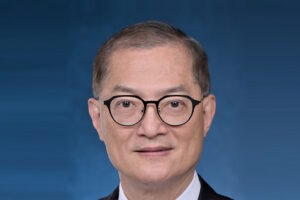
Hong Kong is entering a pivotal new chapter in its healthcare and regulatory evolution. Under the leadership of Secretary for Health Professor Lo Chung-mau, the city is reshaping its position as a global bridge for medical innovation through the “1+ Mechanism,” the creation of the Centre for Medical Products Regulation, and deeper integration within the Greater Bay Area. Combining world-class research with pragmatic reform, Hong Kong is moving toward a model that accelerates patient access to innovation while maintaining the efficiency and equity that define its healthcare system.
How is Hong Kong advancing its ambition to become a leading global hub for health and medical innovation?
Since the Chief Executive of the Hong Kong Special Administrative Region (HKSAR) announced in the 2023 Policy Address the goal of transforming Hong Kong into an international health and medical innovation hub, we have made steady progress toward that vision. Hong Kong already enjoys a reputation for excellence in healthcare delivery, combining universal coverage with exceptional efficiency. Our system is funded almost entirely through general revenue under a simple, low-tax regime, allowing every resident with a Hong Kong Identity Card to access highly subsidised services, around 97.6 per cent of all costs are borne by the government. This model ensures both equity and sustainability, guaranteeing that no one is deprived of care because of financial constraints.
Beyond service provision, Hong Kong’s academic and research landscape is remarkably strong. We have two medical schools ranked among the world’s top 25 and five universities within the global top 100, an extraordinary concentration of excellence for such a compact city. Both the University of Hong Kong (HKU) and the Chinese University of Hong Kong (CUHK) operate internationally recognised clinical-trial centres whose data are accepted by leading regulators worldwide for their rigour and compliance with Good Clinical Practice standards.
Under the “One Country, Two Systems” framework, our healthcare and regulatory structures operate independently from those of Chinese Mainland, yet our clinical-trial data are recognised by the National Medical Products Administration (NMPA). Four local hospitals accredited by the NMPA, covering more than 30 specialties, reflect this trust and underline Hong Kong’s unique position as a bridge between the Mainland and the international community.
Within the Guangdong-Hong Kong-Macao Greater Bay Area (GBA), Hong Kong serves as a key connector for global biomedical innovation. The NMPA’s special policy allowing designated Mainland hospitals to use drugs and medical devices registered in Hong Kong prior to formal Mainland approval is a prime example of this bridging function. Introduced in 2021 at the University of Hong Kong-Shenzhen Hospital, the pilot has since expanded from 17 to 45 hospitals, now encompassing more than 130 products. This initiative has effectively narrowed the gap in drug availability between Hong Kong and the Mainland, giving patients earlier access to innovative therapies while generating valuable real-world evidence from Chinese populations to inform regulatory decisions. Several of these products have subsequently achieved full NMPA registration, underscoring the policy’s practical success.
By leveraging Hong Kong’s trusted regulatory standards and international credibility, the “1+ Mechanism” and related GBA initiatives are facilitating faster access to innovation, strengthening the city’s role as both a national asset and a global gateway for healthcare advancement.
What progress has been made toward establishing the Centre for Medical Products Regulation and a more forward-looking regulatory framework?
Building on the Chief Executive’s 2023 Policy Address, we are preparing to establish the Centre for Medical Products Regulation (CMPR), targeted for launch within the next year. The Centre will mark a pivotal evolution in Hong Kong’s regulatory approach. While maintaining rigorous standards for quality, safety, and efficacy, we are shifting from a passive role to a more collaborative one, serving not only as a regulator but also as a facilitator of innovation.
At the heart of this transformation lies the “1+ Mechanism,” which registers drugs by requiring a single approval from any drug regulatory authority of the 36 recognised reference countries (instead of two), including NMPA, the United States Food and Drug Administration (FDA), the European Medicines Agency (EMA), and the Japan Pharmaceuticals and Medical Devices Agency (PMDA), supported by relevant local data. This inclusive framework reflects Hong Kong’s distinctive position as a bridge between the Chinese Mainland and the international community. To date, 15 new medicines have been approved under this mechanism– seven originally approved in the United States, six in the Chinese Mainland, and two in Japan – demonstrating a balanced and dynamic exchange of innovation between East and West.
To guide companies through the “1+ Mechanism,” we have introduced consultation services, including workshops and webinars that foster transparency and engagement. All medicines, not only those for life-threatening or rare diseases, are eligible, with applications typically processed within 150 days. For therapies addressing urgent or unmet needs as recommended by the Hospital Authority, a priority evaluation mechanism will further shorten this timeframe to as little as 100 days.
Complementing this work, we are establishing an Office for Introducing Innovative Drugs and Medical Devices within the Hospital Authority (HA). Leveraging big-data analytics from Hong Kong’s unified Clinical Management System (CMS) – which connects all 43 public hospitals and more than 120 specialist out-patient/ family medicine clinics – the office will identify unmet clinical needs and propose suitable innovations. Clinicians and pharmaceutical companies alike can submit recommendations based on emerging evidence, ensuring that promising therapies are evaluated swiftly and responsibly. This integrated, data-driven model exemplifies Hong Kong’s ambition to act as both a trusted regulatory authority and a catalyst for biomedical progress across the region.
What steps are being taken to build the expertise and talent needed to sustain Hong Kong’s regulatory transformation?
As we advance toward establishing the CMPR and developing full primary-evaluation capacity, building a strong base of expertise is essential. Recruitment is already underway, targeting both local and international professionals with the scientific and regulatory acumen required to uphold world-class standards. Hong Kong’s academic excellence, global connectivity, and reputation for integrity in medicine and research make it a natural magnet for such talent.
At the same time, we are investing in boundary capacity-building and regional collaboration. Within the Hetao Shenzhen-Hong Kong Science and Technology Innovation Cooperation Zone, the Greater Bay Area International Clinical Trial Institute will establish an International Clinical Trial Academy dedicated to training experts in clinical operations and regulatory science, with a formal launch expected in 2027.
To reinforce this ecosystem, several talent-attraction initiatives are in place, including the Top Talent Pass Scheme, which draws outstanding professionals from both the Mainland and abroad. In parallel, plans are progressing to establish a third medical school in Hong Kong, complementing the University of Hong Kong and the Chinese University of Hong Kong, to expand training capacity and strengthen the city’s global appeal as a centre for education, research, and biomedical innovation. Even before its establishment, the concept has attracted significant interest from overseas academics, underscoring Hong Kong’s growing role as a regional and international nexus for scientific talent and regulatory excellence.
How is Hong Kong deepening collaboration with country-specific regulators as it moves toward greater autonomy in product evaluation?
Developing a mature and internationally recognised regulatory authority demands both global collaboration and a carefully sequenced approach to institutional growth. We have already begun by deepening our partnership with the Chinese Mainland for training and technical exchange. Beyond this, we maintain close ties with Singapore’s Health Sciences Authority (HSA), a long-standing partner whose experience we both learn from and complement. Such cooperation reflects our belief that regulatory progress stems from mutual learning, not competition.
In parallel, we are aligning our framework with the WHO’s Global Benchmarking Tool (GBT), the leading international standard for assessing regulatory maturity. The CMPR is being established within the Department of Health to ensure a fast and stable start, consolidating resources, systems, and expertise under direct government support. Once mature, it will transition into an independent authority. The timeline is clearly defined: the CMPR will be launched in 2026, with primary evaluation activities introduced in stages from that year and full capability expected by 2030.
At the international level, Hong Kong was accepted as an observer to the International Council for Harmonisation (ICH) in October 2023, with support from the NMPA. We plan to pursue full membership by 2027, enabling direct contribution to global regulatory convergence. Concurrently, we are aligning our framework with the WHO’s GBT to achieve international benchmarks of an effective trusted regulator. Under the “One Country, Two Systems” framework, Hong Kong benefits from strong national backing to ensure our system meets the highest global standards.
Together, these steps reflect Hong Kong’s pragmatic yet ambitious vision: strengthening institutional capabilities, learning from leading regulators, and building recognised independence, rigour, and credibility on the world stage.
If we turn the conversation to population health, how is Hong Kong adapting its healthcare model to meet the needs of an ageing population and ensuring long-term resilience?
Hong Kong’s healthcare system continues to deliver exceptional outcomes with remarkable efficiency, supported by a stable annual public health budget that exceeds HKD 100 billion. Despite concerns about cost pressures, our funding remains solid; the real challenge lies in ensuring that this investment continues to deliver sustainable, equitable care in the face of rapid demographic change. The population is ageing swiftly; today roughly one in four residents is over 65, and by 2046, more than one in three will be aged 65 or above. This is, in many ways, a positive challenge: we are proud of our longevity, but longevity must be accompanied by healthy ageing, enabling citizens to enjoy both longer and better-quality lives.
Our strategy places strong emphasis on primary healthcare and early intervention. The Chronic Disease Co-Care Pilot Scheme (CDCC), launched in 2023, focuses on residents aged 45 and above without diagnosed diabetes mellitus (DM) or hypertension (HT). Through government subsidies, participants receive DM and HT screening services, and blood lipid testing, followed by continuous management with family doctors, nurses, and allied health professionals. In just 24 months, more than 170,000 people have enrolled in the Scheme, and of those who completed screening, around 40 per cent were found to have elevated readings, an alarming figure but one that allows us to intervene early and prevent complications such as stroke and heart disease.
We are applying the same preventive approach to infectious diseases. This year, we are commencing risk-based hepatitis B screening and management. While hepatitis C is not a major concern in Hong Kong, hepatitis B remains a leading public-health challenge, accounting for over 80 per cent of liver-cancer cases, the city’s third most common cancer killer. Many people with chronic hepatitis B (CHB) are asymptomatic, and around 40 per cent are unaware of their status. Since the introduction of universal childhood hepatitis B vaccination in 1988, coverage among newborns now exceeds 99 per cent, and vertical transmission has dropped dramatically. Pregnant women are routinely screened, and those with active infection and high viral load receive antiviral therapy to prevent mother-to-child transmission, while newborns of mothers with hepatitis B receive both the hepatitis B vaccine and hepatitis B immunoglobulin (HBIG) at birth, followed by testing to confirm protection. As a result, the prevalence of CHB among individuals born after 1988 have become negligible, allowing screening efforts to focus on older, unvaccinated groups.
These initiatives reflect a holistic vision for healthy ageing, built on prevention, early detection, and continuity of care. By reinforcing primary healthcare and maintaining strong vaccination coverage, we aim not only to extend life expectancy but also to preserve vitality, independence, and well-being, ensuring that Hong Kong’s longevity remains a true measure of health and societal resilience.
In a moment where some places are looking to broaden the population screening in certain disease areas, how is Hong Kong strengthening its approach to prevention and early disease detection to build a healthier future?
Our approach to screening and prevention is always guided by evidence. Every programme must demonstrate clear clinical value, not simply consume resources. Screening the entire population without a strong scientific justification would not be responsible. It is not only a matter of cost but of ensuring sufficient laboratory capacity, trained personnel, and appropriate interpretation. Each initiative must serve a proven public-health purpose, for instance, there is little sense in testing a healthy 20-year-old man for prostate-specific antigen (PSA), given the extreme rarity of prostate cancer at that age.
With this principle in mind, we are preparing to launch a low-dose computed tomography (LDCT) screening study for lung cancer aimed at high-risk groups. Over the past four decades, Hong Kong’s rigorous tobacco-control measures have reduced smoking prevalence from 23.3 per cent in 1982 to 9.1 per cent in 2023, dramatically lowering cases of squamous-cell carcinoma. Yet we are now seeing a rise in adenocarcinoma, a type more common among non-smokers, particularly Asian women, and often diagnosed only at advanced stages. This evolving trend demands a more targeted approach.
International studies show that LDCT can detect lung cancer in more than two per cent of screened individuals within well-defined risk groups. Expanding such screening indiscriminately, however, would place a heavy burden on radiology services, as every scan requires professional review. To balance early detection with practicality, we have commissioned a local university to develop an AI-assisted LDCT system, where artificial intelligence serves as a first-tier image reader to flag potential abnormalities for radiologists. This approach optimises manpower, shortens turnaround times, and makes risk-based screening feasible without compromising diagnostic quality.
Alongside cancer detection, we are reinforcing our primary-care platform to better manage chronic diseases and promote long-term wellbeing. The Chronic Disease Co-Care Pilot Scheme already provides screening for hypertension, hyperglycaemia, and hyperlipidaemia, and is now expanding to include hepatitis B testing and weight-management support. Non-alcoholic fatty-liver disease is becoming more prevalent, even among apparently slim individuals, reflecting metabolic patterns particular to Asian populations. These insights are shaping a more precise, prevention-driven strategy tailored to our people’s needs.
Preventive care begins early. Our school dental programme, formerly limited to primary pupils, now includes secondary students and will soon cover kindergartens, embedding lifelong oral-health habits. Dental prevention exemplifies the broader principle that “prevention is better than cure,” good oral care from childhood ensures health and confidence well into old age.
We are also advancing the integration of Chinese medicine within our health system. Each year, the government subsidises around 800,000 outpatient visits to registered practitioners, and by end-2025, we will inaugurate Hong Kong’s first Chinese Medicine Hospital, operated by Hong Kong Baptist University under a public-private partnership model. Fully funded by the government, the hospital will serve as a centre for clinical excellence, education, and research, strengthening the complementary role of Chinese medicine in delivering holistic, patient-centred care.
What measures are being introduced to keep Hong Kong’s healthcare system equitable, innovative, and financially sustainable?
Hong Kong continues to deliver exceptional health outcomes with a comparatively modest public expenditure, around 4.1 per cent of GDP, well below the OECD average. Yet, as the population ages, demand is rising sharply. Although people aged 65 and above represent less than a quarter of the population, they account for over half of hospital inpatients and more than a third of outpatient consultations. Sustaining this level of care requires both fiscal discipline and structural reform.
We are reinforcing primary healthcare to promote healthy ageing and reduce pressure on hospitals, while simultaneously reforming our fees and charges to make the system more equitable and financially resilient. It is important to emphasise that this reform does not entail any reduction in government funding. Public healthcare remains a core commitment. Instead, the goal is to introduce a co-payment mechanism for those with the means to contribute, particularly for minor illnesses, thereby freeing up resources for patients with more serious or chronic conditions. Currently, around 600,000 residents receive full fee waivers and another 300,000 are eligible for partial reductions. Under the new framework, these numbers will expand significantly, with up to two million people benefiting from either full or partial relief. For the most vulnerable – those on low incomes or with serious illnesses – full protection will remain in place. To ensure that no citizen falls into financial hardship due to medical costs, we are introducing payment caps for prolonged hospital stays and major interventions, consistent with the principle that “illness should never lead to poverty.”
At the same time, we are strengthening access to innovative and high-cost therapies. In the past, many breakthrough medicines were categorised as self-financed items, restricting their availability despite proven efficacy. Through the Samaritan Fund and related subsidy schemes, we are expanding subsidies and lowering eligibility thresholds so that more patients can benefit from subsidies for advanced drugs and medical technologies. This reform is founded on the values of fairness and solidarity. Those who are able to contribute more will do so, ensuring greater support for those who cannot. We have engaged extensively with stakeholders and the wider public to explain that this is not a fee increase, but a redistribution of resources to enhance protection for the acutely ill, the critically ill, and the financially underprivileged.
Taking effect on 1 January 2026, the reform will be implemented by the Hospital Authority, which is preparing for a surge in fee-waiver applications and expanded drug subsidy schemes. Ultimately, our objective is to build a more balanced and resilient healthcare system, one that safeguards universal access, supports medical innovation, and remains financially sustainable in the face of demographic change.
How does Hong Kong continue to uphold efficiency and quality in healthcare amid growing fiscal and demographic pressures?
While governments worldwide face increasing fiscal pressure, our focus in Hong Kong is not on cutting healthcare expenditure but on enhancing cost-effectiveness through smarter resource management. These measures form part of a broader effort to optimise public spending while preserving high standards of care and universal access.
Hong Kong already operates one of the most efficient healthcare systems in the world. With around 16,600 practising doctors, the city has roughly 2.2 physicians per 1,000 residents, the lowest ratio among developed economies. For comparison, Singapore stands at around 2.8, and most European countries exceed three per 1,000. Yet, despite its lean workforce, Hong Kong consistently delivers comprehensive universal coverage, ensures that no one is deprived of appropriate treatment, and continues to achieve one of the world’s longest life expectancies.
Geography offers both advantages and challenges. Hong Kong’s compact layout allows efficient patient access and short travel distances between healthcare facilities, contributing to operational agility. At the same time, its high population density intensifies exposure to pollution, increases the risk of infectious disease transmission, and magnifies the impact of outbreaks such as SARS and COVID-19. Balancing these pressures demands continuous innovation, disciplined resource allocation, and an unwavering commitment to maintaining both efficiency and excellence in public health.