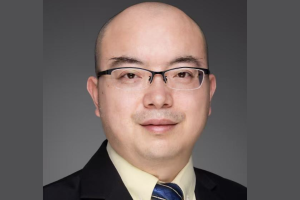
Ye Liu, CEO and cofounder of OcuMension Therapeutics, speaks about the challenges and triumphs of running one of China’s most ambitious ophthalmology-focused biopharmaceutical companies. Launched with USD 5 million and no initial products, OcuMension now leads in China’s ophthalmology drug development, maintains rapid growth, and is preparing for global reach.
What inspired you to become a founding member of OcuMension, and does the sense of optimism from those early days still endure now that you are facing the realities of the always competitive Chinese market!?
My decision to found OcuMension stemmed from a strong personal conviction that it was time to pursue something independent and meaningful. At the time, I was leading Santen China and felt a sense of professional satisfaction, but the idea of building something from the ground up became increasingly compelling. When 6 Dimensions Capital—the firm that established OcuMension—first reached out to me, I was initially hesitant to engage with venture offers. However, a very short discussion with Leon, head of 6 Dimension, led me to consider the opportunity more seriously.
What followed was a clear alignment of vision and support. I was granted an initial investment of USD five million and, together with six co-founders, we built OcuMension from scratch. The venture offered both the resources and the freedom to shape a company fully focused on ophthalmology.
6 Dimensions approached me precisely because of my role as Head of Santen China at the time. Santen was the market leader in ophthalmology drugs in China, and they saw clear potential in the sector. Their strategy was straightforward: find someone with proven expertise to help build a company from the ground up. They identified Santen as the benchmark and reached out to me.
The transition from a large corporate environment to starting from a blank slate was not at all an easy one. Multinational corporations and small biotech firms are entirely different worlds. Interestingly, unlike other biotech start-ups, which usually begin with at least one or two seed projects—often from people already in the lab—OcuMension started with almost nothing but a concept. All we had was the idea that ophthalmology was a good market and USD five million.
What made the ophthalmology market in China appealing at that time?
If someone came to me offering USD five million, or even USD 100 million, to create an oncology company in China today, I would probably refuse. Oncology in China is now fiercely competitive. Ophthalmology, by contrast, was underdeveloped. Even in 2018, the Chinese market for ophthalmology drugs was smaller than Japan’s—only about 10% the size of the US market.
However, in comparison to fields like oncology or cardiovascular treatment, where China is now the second-largest market globally, ophthalmology had enormous growth potential. In 2018, when OcuMension was founded, most multinational corporations (MNCs) were focused on oncology.
That revealed the vast potential for innovation and entry. I always say that the OcuMension story could only have happened in China in 2018. It would not be possible today, nor would it have been feasible in the US, where any new company would have to compete with giants.
In 2018 China, MNCs were not strong in ophthalmology. Local companies were almost non-existent in the field. That allowed OcuMension to enter the market and grow rapidly.
Were multinational companies covering several therapeutics perhaps less interested in further developing the China market, which is always set on price pressure? How did you approach partnering?
That is absolutely true. For ophthalmology, companies tend to fall into two categories. First, there are dedicated ophthalmology drug firms, which focus solely on this field, usually excluding devices. Then there are major pharmaceutical conglomerates, where ophthalmology is just one part of a much larger portfolio.
The challenge with ophthalmology is that it generally lacks major blockbuster drugs. No single product generates massive revenues in China, unlike in oncology. Success in ophthalmology comes from having a broad portfolio. Yet most MNCs only had one business unit for ophthalmology, and the field was not a strategic focus.
When we engaged with them, we highlighted that their ophthalmology division was relatively small, experiencing slow growth, and that their sales force was already under significant strain. It was clear that promoting both oncology and ophthalmology through the same team was not an efficient strategy. We proposed a solution: allow us to take on the ophthalmology portfolio and focus on maximising its potential.
How did your licensing deals begin? Was it difficult at first, given that you were so new and unproven?
One story is particularly interesting. I approached an MNC in 2019, just half a year after founding the OcuMension. We were only seven people then. I reached out through a friend who had a business relationship with this MNC in China. We had a video conference call, and I explained our vision—even though the company had very little to show at the time.
Their business development team’s initial response was a single word: “Interesting.” That was the extent of it. Nevertheless, I persisted in engaging with them. They monitored our progress, and after three and a half years, they finally agreed to enter into discussions.
What exactly is OcuMension’s business model today? How would you define your identity?
Our vision is clear. In oncology, one major blockbuster can make a company self-sufficient. In ophthalmology, you cannot rely on just one or two products. You must serve the entire field.
The human eye is tiny—just the size of a coin—but ophthalmology contains at least twenty subfields: myopia, allergies, glaucoma, uveitis, and many more. Our goal is to cover them all. We want OcuMension to be the go-to choice whenever an ophthalmologist in China needs a drug.
That is why we have built the largest ophthalmology drug portfolio in China. Last year, our company accounted for nearly one-third of all Phase III ophthalmology studies in the country. China has about 170 companies active in the field—OcuMension alone represented one-third of the late-stage trials.
We have developed an extensive portfolio that comprehensively covers the entire market, while simultaneously investing in our own fundamental research and development, particularly in advanced, frontier treatments. Our R&D efforts include phase three clinical trials, initiated entirely from scratch. For instance, in the areas of dry eye and myopia, we are pioneering significant developments. Our dry eye treatment is a first-in-class drug currently progressing to phase three studies. In the realm of myopia, we are conducting the only multinational clinical trial globally, encompassing the United States, five European countries including the United Kingdom, and China. This stands in contrast to other trials, which have been limited to Japan and China alone. Our study represents the first large-scale, well-organised, multinational face-to-face clinical trial for myopia treatment, and it is eagerly anticipated by the medical community worldwide. The trial, spanning four years, is expected to deliver results by June 2026—a highly significant milestone given the considerable investment involved.
As a Chinese company focused on the local market, why is Ocumension investing in a global clinical study?
Myopia is a huge public health problem in China—over 90 percent of high school students suffer from it. Yet there are still no globally approved drug treatments. A global study helps us in two ways: it strengthens our case for approval and marketing in China, and it lays the groundwork for going global through out-licensing
Although we are just six and a half years old, it is possible that one day we will become a global company. If that occurs, we cannot afford to begin preparations at that moment—we must be ready from now.
What is the state of the market in China, especially considering the shortage of ophthalmologists?
China is actually a very favourable market for ophthalmology drugs. Unlike oncology, which is saturated with pharmaceutical reps fighting for a moment of the doctor’s time, ophthalmology has very little competition. Only about six companies—including us—have national sales networks in this field. That makes it far easier to access doctors and build relationships. The market is still driven primarily by prescriptions—70% to 80% of our revenue comes from hospitals. And while the number of ophthalmologists is limited, patients can still access them relatively easily. There are no long waiting times, and under-diagnosis is not a major issue.
Industry stakeholders often state that doctors prefer to work with companies specialising solely in ophthalmology rather than general pharmaceutical firms. Do you find this holds true in the Chinese market?
In our case, this is particularly relevant. Doctors often grow weary of engaging with companies that offer only a single product. It can become monotonous when representatives repeatedly present the same treatment without broader support or options. OcuMension, by contrast, offers a comprehensive portfolio of ophthalmic products, enabling us to provide meaningful and sustained support through a variety of partnerships. This breadth is highly valued by physicians. It is also one of the reasons why, at CCOS—the largest ophthalmology conference in China—OcuMension consistently holds the leading position. Our extensive portfolio sets us apart in the field.
How is the company doing financially? Can you walk us through your recent performance?
Last year, our growth rate reached 70 percent, and we are on track to double our sales again this year. Looking ahead, we expect to maintain at least 50 percent annual growth for the foreseeable future. This trajectory is supported by a consistent stream of product launches—at least one new product each year—and a steady pace of strategic acquisitions. While the pace may appear ambitious, we are confident in our ability to sustain it for at least another five years. Our pipeline has matured significantly, so innovation is now increasingly driven from within, rather than relying solely on licensing opportunities.
The Chinese market is known for volume, but often with compressed margins. How does that dynamic play out in ophthalmology, and for OcuMension specifically?
In many sectors, fierce competition in China leads to downward pressure on prices, while promotional costs rise—ultimately eroding margins. However, our situation in ophthalmology is quite different. There are very few competitors with comparable depth or reach, so we do not face the same pricing pressures. Eye drops, for instance, are already inexpensive—usually priced under RMB 100—so they are not a focus of government cost-containment efforts, which tend to target high-cost treatments. This allows us to maintain stable pricing and healthy margins. Moreover, the majority of our revenues are generated through the national reimbursement system, which we actively seek to include our products in. Most of our products follow this route, though there are exceptions like our product for myopia. Given the potential demand—over 100 million children in China—the government would likely raise concerns around cost and access, making reimbursement impractical. Instead, OT-101 will be positioned outside the reimbursement framework and also marketed internationally, including in the United States where we will license the product out to a multinational corporation that understands how to operate in that market.
Are you actively exploring emerging technologies such as gene editing…. or is your current focus more strategic—building scale through portfolio expansion and partnerships?
We are approached almost weekly by biotech start-ups, particularly from the US, where we have built a solid reputation as a trusted partner. The US biotech ecosystem is quite close-knit, and when a company is looking for a foothold in China, many recommend OcuMension. That is how several of our partnerships came about. However, the reality is that most of these companies do not fail because of weak science, but because their ambitions outweigh their resources. At OcuMension, we take a more grounded view. With our current capabilities, our priority is to become the leading ophthalmology pharmaceutical company in China within the next three years. Only then will we begin to look beyond China’s borders—and possibly into adjacent areas such as medical devices.
As for technologies like gene therapy or in vivo CRISPR, they are certainly promising from a scientific standpoint, but their commercial viability remains limited, particularly in China. In markets like the US or Europe, rare disease treatments can command high prices, largely due to regulatory and cultural frameworks that support orphan drug models. However, such pricing models are not easily adopted in China, where policymakers prioritise equitable access to care across a population of 1.4 billion.
Ocumension listed on the Hong Kong Stock Exchange in 2020. How has the experience of being a public company shaped your perspective as CEO, and are the guiding principles or values that you aim to instil in the company?
We were founded in August 2018 and listed on the Hong Kong Stock Exchange in July 2020. The early phase offered a welcome sense of autonomy, but post-listing, investor scrutiny increased significantly—often unrelated to business fundamentals. While it can be demanding, the company remains on a strong growth path. We expect to break even on an EBITDA basis this year. With that, we do not foresee the need for further fundraising and are now positioned to finance our own growth.
At OcuMension, we believe a company should improve lives—not just for patients, but for its employees as well. A business that delivers life-changing treatments but creates a punishing work environment holds little real value. Our HR philosophy is simple: work should not come at the expense of well-being. In a high-pressure market like China, we maintain a culture of balance. There is no expectation to stay late or work weekends—our offices are empty by 6:30 p.m. We respect that our mostly young team members have lives beyond the workplace, and we want them to thrive both professionally and personally.
What final message would you like to share with the international pharmaceutical and investment community?
I would simply say that anyone with an interest in ophthalmology—whether partners, innovators, or investors—is always welcome to reach out. I remain accessible and open to meaningful conversations at any time. At OcuMension, we are committed to collaboration and to advancing the field through thoughtful, long-term partnerships.