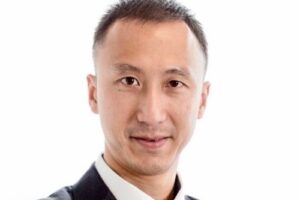
We sat down with Lawrence Wong, general manager of the Swiss company's Hong Kong affiliate, to discuss Ferring's recent milestones, such as moving into new areas like uro-oncology and the microbiome space. Wong also spoke about the recent "1+" regulatory reform, Hong Kong's strategic position in the Greater Bay Area, its strengths as a clinical trials destination, and Ferring making Fortune’s 2023 Change the World list.
The last time we caught up was already a year ago. Can you elaborate on how 2023 has been for Ferring in Hong Kong, including developments in areas like uro-oncology and microbiome, two new areas for the company?
Year 2023 was a significant year for us. We recovered from the impact of COVID-19, which was considered officially over since the beginning of the year in Hong Kong. The reinitiation of tourism and the reopening of borders allowed us to observe and contribute to economic recovery. We were fortunate to achieve some important milestones, not just financial ones, but also some strategic initiatives.
In oncology, we focused on exploring how our infrastructure can support our global counterparts and their development strategy through Hong Kong, Macau and the Greater Bay Area. The introduction of the “1+” mechanism in the fourth quarter of last year was a significant regulatory milestone that streamlines the regulatory process and accelerates the registration of new products. We have been in close discussions with our global team to prepare for future launches. Our FDA-approved products have already garnered significant interest from local physicians and experts for potential collaboration through Hong Kong’s infrastructure to develop new insights on clinical managements for various diseases.
In addition to uro-oncology, the microbiome space is another new domain for Ferring. One of our FDA-approved products addresses a life-threatening infectious disease known as Clostridium Difficile (C. diff), which is common in the US but less so in this region. Despite this, many new discoveries should be expected in microbiome for managing other diseases, with significantly high commitments by some world-class researchers and top-notch academic institutions.
What can you tell us about the recent advancement in the product approval pathway and how this connects to the Greater Bay Area?
The regulatory pathway is always crucially important. The recent advancements could generate both macro and micro changes that are beneficial to various stakeholders, especially patients. These changes enable Hong Kong to be more strategic for earlier access in the Greater Bay Area (GBA) of China through the network of hospitals in the area. Once a medicine has been registered in Hong Kong, it can also be accessed in the hospitals in which patients with unmet medical needs are to be addressed. Although, we have not utilized this new mechanism yet, we observe the significant potential for those newly / ready-to-be registered products in Hong Kong. Ferring Hong Kong is delighted to see this and to work with our colleagues in mainland China to facilitate our support to patients.
Moving forward, will there be collaboration with mainland China regarding the use of Hong Kong’s latest regulatory pathway or the established pathway in the mainland?
This is something that we need to carefully consider. The regulatory processes in mainland China are quite robust and stringent, and usually involve clinical trials to ensure product safety and efficacy. In contrast, products already approved elsewhere can possibly be fast-tracked through the Hong Kong pathway. We have expectations for the “1+” mechanism to expedite the process of registering products in Hong Kong and look forward to any government updates. Currently, the “1+” mechanism mainly addresses new chemical entities (NCEs), while advanced therapy products (ATPs) are not yet considered under this framework.
There is ongoing development on ATPs and we anticipate that in a short period of time clarity will emerge on the expedited pathways not only for NCEs, but also covering ATPs.
The FDA has approved Ferring´s product for bladder cancer in a new form of gene therapy. What are the plans for Hong Kong and how does the therapy fit into your existing portfolio?
Ferring has been working in uro-oncology, focusing on therapy for prostate cancer. We have a dedicated team for oncologists and urologists who are excited about any new and innovative treatments for rising uro-oncological problems like bladder cancer.
While we have new pipelines in uro-oncology and microbiome, our focus on existing portfolios especially in reproductive medicine remains so as to help a wider range of people and address their medical needs. Our approach has been to leverage our well-developed foundation here and facilitate access to our new therapies in Hong Kong, Macau and the Greater Bay Area.
Ferring’s FDA-approved medicines are first-in-class treatments that include the first microbiome-based live therapies. Is there an increasing awareness of microbiome-based treatments in Hong Kong?
We are proud and honoured to have first-in-class therapies for patients with unmet medical needs. Working with many world-class experts in Hong Kong builds our expertise and allows us to delve into these new fields with confidence, especially in Advanced Therapeutics and Products (ATP). On the other hand, we are committed to advancing microbiome research and delighted if we can expedite our work in Hong Kong through its strong expertise in this domain, to address patient needs beyond our domestic markets.
Have you advocated to your global headquarters for Hong Kong as a potential destination for clinical trials? What compelling reasons have you presented to support this proposal?
We are actively proposing Hong Kong as a viable clinical trial destination to our global headquarters. Our advocacy is underpinned by several compelling factors. Firstly, Hong Kong has world-class experts and scientific and research excellence. Secondly, Hong Kong has a unified, standardized system of health records like a powerful database spanning a network of all Hospital Authority (HA) hospitals, that enable researchers to access efficient and extensive analyses. Furthermore, the increasing collaboration with the Greater Bay Area presents strategic advantages, such as the potential recognition of local trials in China, thus facilitating seamless expansion across the borders.
We remain optimistic on the prospects, and we recognize the importance of data from Asian cohorts, particularly Chinese, in supporting product applications and R&D investment endeavours.
Looking at Hong Kong, a mature market with a limited population and a world standard healthcare system, is it possible for companies to grow there?
I see this as a multifaceted endeavour. Financial growth is the most apparent aspect, but equally important is the growth of our people and transformational growth. We are delighted to see that Hong Kong’s strengths can help elevate the industry, particularly in initiatives like the Greater Bay Area, that demonstrate growth with a higher level of positive impact and broader implications beyond the numbers.
Ferring has seen some transformational growth. Has this signified a new direction for the company?
Some fundamentals remain unchanged, such as our company’s philosophy and vision, whereas there is an expectation among employees for a shift in pace and dynamics with the market. In this new era, responsiveness to patients’ needs is paramount. While leveraging our strengths we actively identify and fill the gaps in patient care pathways. This means adopting a more proactive approach, anticipating needs rather than just reacting to them.
In essence, two key areas have emerged: agility and proactiveness through an evolutionary journey. Changes in people’s mindsets and culture for this way of working are required, and fortunately, Hong Kong’s people demonstrate a high level of resilience and adaptability. The pandemic has accelerated certain mindset shifts that enable people to surf on an evolving business landscape. Ultimately, these changes reflect not only internal dynamics, but also broader global trends.
Ferring received an award last year. Could you shed some light on what being a “Company of Change” entails and how Ferring earned this recognition?
It was a momentous occasion for our company being named in Fortune’s 2023 Change the World list which recognizes companies that have had a positive social impact through activities that are part of their core business strategy. Ferring’s recognition on the list acknowledges the company’s #ProjectFamily Safe Birth Commitment, which aims to reduce maternal mortality in low and lower-middle income countries.
Our efforts are primarily focused on addressing issues like postpartum haemorrhage, and we have been collaborating closely with the World Health Organization (WHO) for over a decade. By working with medical associations to revise guidelines and enhance healthcare practices, we have been instrumental in improving maternal health outcomes.
Is there any final message you would like to share with our audience, both in the biomedical and financial sectors?
It is essential to maintain positivity and to explore new opportunities. While business growth is important, delivering better medical solutions and transforming the healthcare industry to an ever-better status are equally crucial. As we navigate through complex dynamics, focusing on transformational growth has become imperative. Hong Kong’s unique position offers opportunities for innovation and leveraging new opportunities as well as addressing the evolving needs of our industry and community. A new perspective from policymakers can make a difference and develop more talent to ensure sustainable growth and innovation.
While Hong Kong’s role has been continuously re-defined, developing talent for leveraging new opportunities remains key. Hong Kong is very well-established in terms of infrastructure and systems, making it as one of the strongest candidates for regional business functions.