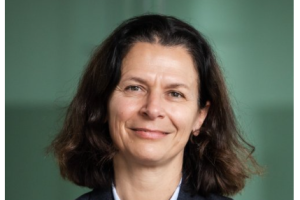
Under Laurence Rodriguez’s leadership, GenSight Biologics is charting a bold path forward after a period of reset, advancing groundbreaking gene therapies for rare ophthalmic and mitochondrial diseases. She reflects on rebuilding the organisation, preparing a pivotal Phase III study for the gene therapy GS010/LUMEVOQ, and shaping the future of optogenetic innovation with GS030, all while steering a lean, deeply committed team toward lasting impact.
What inspired your transition from a large pharmaceutical organisation like Sanofi to GenSight Biologics?
My professional journey has always been guided by a fascination with science and the impact it can have on patients’ lives. I hold a degree in biochemistry, a master’s in public affairs, and an executive management qualification; a combination that has allowed me to navigate both the scientific and strategic dimensions of the healthcare sector. Over the past three decades, I have held leadership roles across major pharmaceutical organisations, including Sanofi, where I was responsible for the rare disease and haematology business in France.
In 2021, I made the deliberate choice to join GenSight Biologics, a bold shift from the structure of big pharma to the agility of a biotech. The decision was shaped by three factors. First, my enduring commitment to rare diseases, an area that has defined much of my career since my early experience establishing Genzyme in France. Second, GenSight’s pioneering gene therapy platform which immediately captured my attention with its scientific rigour and therapeutic promise. And third, the urgent unmet medical need that our lead programme addresses: Leber Hereditary Optic Neuropathy (LHON), a devastating mitochondrial disorder that causes rapid and irreversible vision loss, often leading to blindness within a year. The condition predominantly affects young men and currently has no approved curative treatment.
When I first joined, my mission was to establish the French and Benelux affiliates and prepare for the launch of our lead therapy, GS010 (LUMEVOQ), which had already been submitted to EMA for marketing authorisation. Unfortunately, weaknesses in the dossier combined with manufacturing issues led to its withdrawal, an incredibly difficult moment for all of us at GenSight. Many colleagues had to leave, and I also stepped away in 2023.
A few months later, however, the board invited me to return as CEO. It was not an easy decision, knowing the challenges that lay ahead, but I had unwavering belief in our science, our technology, and our people. I accepted the role with a clear goal: to rebuild, rethink, and restart. That decision marked a new beginning for GenSight, a moment of renewal that reaffirmed our shared commitment to bringing transformative therapies to patients living with vision loss.
How did you approach GenSight’s reset after such a difficult period, and what have been the main priorities in rebuilding the organisation?
When I returned as CEO, it was clear that the reset had to be both structural and cultural, a complete rethinking of how we operate and how we approach the next phase of our journey. GenSight Biologics was founded in 2012 as a spin-off from the Institut de la Vision in Paris, one of the world’s leading ophthalmology research centres affiliated with Sorbonne Université, CNRS, and INSERM. Our technology and intellectual property originated from within this renowned academic ecosystem, and over the years, we have evolved from a pioneering start-up into a listed biotech. In that sense, we are what I often describe as an “old start-up”: agile and entrepreneurial in spirit, yet backed by more than a decade of scientific depth and maturity.
Operating as a small, publicly listed company, however, comes with its own complexities. The regulatory and reporting obligations are similar to those for a multinational, but we currently operate with a team of only fifteen people. When I came back, the situation was undeniably difficult, yet it quickly transformed into an inspiring collective effort built on trust, resilience, and a shared sense of purpose. Our strength lies in the extraordinary network that surrounds us – clinicians from the Quinze-Vingts National Ophthalmology Hospital and the Institut de la Vision, international expert centres, and highly engaged with international patient organisations – all united by a common goal: to deliver a long-awaited treatment to those living with LHON.
The priority was to address the manufacturing challenges that had delayed our progress. We made the strategic decision to transfer production to a new CDMO in the United States, a technically demanding and costly process, but one that was essential to ensure the long-term robustness of our manufacturing and supply chain. Biotechnology manufacturing is highly sensitive, and the transfer requires meticulous coordination, extensive validation, and significant investment. Initiated late last year, the transition is now nearing completion, marking a major step forward in restoring full control and confidence over our production capabilities.
The second priority centred on advancing our lead gene therapy, GS010 (LUMEVOQ), towards regulatory success. Both EMA and FDA requested a new Phase III trial, even though 252 patients had already been treated in previous studies. Those trials, which compared one treated eye with the untreated control eye of the same patient, revealed an unexpected “contralateral effect,” whereby the therapeutic virus travelled via the optic nerve to the untreated eye. While scientifically fascinating, this biological phenomenon reduced the statistical difference between the two eyes and prevented a conclusive outcome, even though a meaningful improvement in patients’ vision was reported.
The upcoming Phase III trial, scheduled to begin in the second half of next year, will use a revised design with two independent patient groups – one receiving bilateral treatment with GS010 and the other a placebo – enabling a clearer, more statistically robust comparison. We remain humble but confident. The safety profile is excellent, the mechanism of action is well understood, and the dialogue we have maintained with both regulatory agencies has been extremely constructive. With these foundations, I am confident that we will be well-positioned to demonstrate efficacy and take a decisive step towards bringing LUMEVOQ to patients who have been waiting far too long for a therapeutic solution.
How is GenSight advancing GS030, which uses optogenetics with a wearable device to address Retinitis Pigmentosa?
GS030 represents an exciting new frontier for us, bringing together gene therapy and advanced electronics to tackle Retinitis Pigmentosa, a neurodegenerative condition that, unlike LHON, first affects peripheral rather than central vision. The disease leads to progressive vision loss and eventually blindness, and it continues to present a deeply unmet medical need. It is the leading cause of visual disability and blindness among people younger than 60, and there is still no curative treatment available.
Our ambition with GS030 is to develop a therapy that is mutation-independent and can be applied to all patients, regardless of their genetic profile. The concept is to enable retinal cells unaffected by the underlying mutations to express a light-sensitive protein capable of converting light into a neural signal, thereby restoring a form of functional sight. While this does not recreate natural vision as we know it, it does allow patients to distinguish shapes and contours, a significant step towards personal autonomy and improved quality of life.
The programme unites two distinct components: the gene therapy itself and a wearable device, a pair of specialised goggles designed to project light at a specific wavelength to activate the treated retinal cells. This dual system illustrates our commitment to innovation at the intersection of biology and technology. PIONER, the phase I/II clinical trial across the United States, the United Kingdom, and France, has enrolled ten patients. The next step will be to advance to an efficacy trial, and discussions are underway with potential partners to co-develop the device and jointly support this next phase of development.
In the current financial climate, we have made a deliberate choice to concentrate our internal resources on advancing GS010 (LUMEVOQ) through its upcoming Phase III study, while progressing GS030 through strategic partnerships. Like many biotech companies, we face a complex investment environment, which reinforces the need for a focused and pragmatic approach. Developing an optical medical device requires highly specialised expertise, distinct from gene therapy, and finding the right business partner will be key. By combining our scientific know-how with complementary technological capabilities, we are confident that GS030 can open an entirely new therapeutic horizon for patients coping with irreversible vision loss.
What is your long-term vision for applying GenSight’s mitochondrial gene therapy platform beyond LHON to other diseases?
There is still no curative treatment for LHON. The few existing options can provide only temporary or limited improvement, underscoring the urgent need for a more durable and targeted solution. Our immediate focus is therefore on addressing the most common LHON mutation, which also presents the worst prognosis for patients, while our long-term ambition is to extend the technology to other genetic variants of the disease and, ultimately, to a broader range of mitochondrial disorders that currently lack effective therapies.
The innovation behind GS010 is rooted in our proprietary Mitochondrial Targeting Sequence (MTS) platform, which enables the delivery of genetic material directly into the mitochondria – the cell’s energy centre where the impact of LHON is first manifested – to restore their function. This approach represents a fundamental shift in how mitochondrial diseases could be treated, moving from symptomatic management to true functional restoration. The potential applications of this technology extend well beyond LHON, offering a foundation for new therapies across multiple conditions linked to mitochondrial dysfunction.
We are already engaging with academic partners to explore these broader possibilities, but our priority remains clear: to achieve clinical and regulatory success with GS010/LUMEVOQ as the first proof of concept. With a small but highly dedicated team, we must stay focused and deliberate in our approach, building step by step toward sustainable impact. Delivering success with GS010 will not only transform outcomes for LHON patients but will also validate a platform with the power to redefine the therapeutic landscape for mitochondrial medicine.
With such a small team, how do you ensure you have the right people and culture to sustain GenSight’s mission?
When you operate with just fifteen people, every individual carries real weight. Having the right team is therefore fundamental, not only in terms of experience and technical expertise, but also in mindset and attitude. Beyond strong credentials, what I truly look for is a combination of curiosity, humility, and a shared sense of purpose. We need individuals who are highly skilled in their field yet versatile enough to adapt, contribute across functions, and think collectively, what I often describe as a “Swiss army knife” profile.
At GenSight, collaboration is not a slogan; it is part of our DNA. Even the most specialised experts, such as those managing manufacturing, are encouraged to engage in broader discussions and bring fresh perspectives to other aspects of our work. This cross-functional spirit fosters agility and cohesion, which are indispensable in an organisation of our size. Ultimately, it is not just about hiring the best “résumés”, it is about building a team that believes in the mission, shares accountability, and moves forward together.
For now, we are not expanding, but we expect to strengthen the organisation next year, particularly in regulatory, quality, and manufacturing roles as we advance towards key development milestones. Our current financing extends until the end of this year, and securing the next round of funding will enable us to reinforce the team. What makes GenSight remarkable is the drive and resilience of this small but exceptional group, people who combine technical excellence with the conviction that their work can genuinely change patients’ lives.
How have investors responded to GenSight’s technology, and how are you approaching financing and partnerships in today’s market environment?
Investor engagement with GenSight has always been strong. Since our founding in 2012, we have raised more than EUR 200 million, including through our IPO in 2016. The scientific credibility of our work and the distinctiveness of our gene therapy platforms have consistently attracted the interest of both institutional and private investors. The technology is well-understood and widely recognised for its potential; what lies ahead is the critical task of demonstrating its efficacy through definitive clinical results.
We are no longer in the proof-of-concept phase– that has already been achieved. The focus now is on translating that scientific promise into regulatory approval. In the life sciences, the rules are clear: only a positive Phase III study provides the level of evidence required to confirm a therapy’s effectiveness. While our existing data show a meaningful therapeutic effect with GS010, the formal statistical proof has not yet met regulatory standards. This makes the upcoming Phase III trial a decisive milestone, not only for the product but for GenSight’s broader scientific and financial trajectory.
From a funding perspective, we plan to secure non-dilutive financing by the end of this year, followed by a capital raise early next year to support the Phase III programme. Preparations are already well underway. Although six months may seem a short period, it is a realistic and achievable timeline given the groundwork already in place. Completing this financing phase will ensure we have the resources to execute the pivotal study and move a significant step closer to bringing LUMEVOQ to patients who have been waiting for so long.
As a French biotech with an international footprint, what advantages does being based in France offer in terms of science, collaboration, and market access?
France’s greatest strength unquestionably lies in the excellence of its science. The quality of its physicians, researchers, and scientific institutions is exceptional, and collaborating with them is both intellectually stimulating and personally rewarding. Conducting clinical studies here can be administratively demanding – opening trial centres, for instance, is not a simple process – yet once the studies are operational, the level of professionalism, rigour, and commitment among investigators makes the effort worthwhile.
Our long-standing partnership with the Institut de la Vision perfectly illustrates this advantage. We maintain a continuous, open dialogue with their teams to refine our technology, explore new ideas, and challenge our assumptions. These exchanges are not just technical; they are collaborative and forward-thinking, reflecting the kind of scientific partnership that drives meaningful innovation.
Where France still has room for improvement is in converting this world-class scientific ecosystem into more efficient market access pathways. Being a French company does not necessarily provide preferential treatment with health authorities or payers, and the system remains highly structured and is often slow to adapt. The proximity to leading academic and clinical centres is therefore an undeniable asset, but ensuring that breakthrough science translates more quickly into patient access is the next challenge France must collectively address.
Looking ahead, what key milestones do you hope to achieve over the next few years?
Over the next three years, our priority is to complete the RECOVER Phase III clinical trial for GS010 (LUMEVOQ) and to be in a position to submit our marketing authorisation applications to both EMA and FDA. We will submit our regulatory dossier in the UK for a specific Market Authorisation. Reaching this stage will be a defining milestone for us, the culmination of years of scientific commitment and regulatory engagement and a crucial step toward delivering the first approved gene therapy for LHON.
The GS030 development plan will be pursued through a co-development partnership.
Looking slightly further ahead, within five years, we aim to initiate the first commercial sales of GS010 while advancing the evolution of our mitochondrial gene therapy platform. In parallel, we plan to launch new research programmes designed to optimise and extend the platform’s applications to other diseases. These twin objectives will shape the next chapter of GenSight’s growth, as we build on our scientific foundation to deliver tangible benefits to patients living with vision loss.