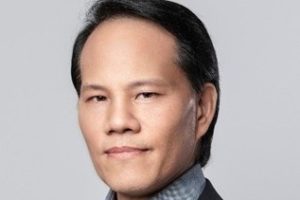
CK Life Sciences, under the leadership of CEO Lance Yuen, is reshaping its identity through a renewed focus on early-stage oncology innovation powered by next-generation cancer vaccines, AI-enabled design and a growing network of regional partnerships. Stable commercial revenues give the organisation unusual freedom to pursue high conviction science, while Hong Kong’s evolving regulatory landscape provides a credible platform for its transition toward clinical development. This interview examines the strategy, the scientific priorities and the leadership vision driving this shift.
What experiences shaped your path toward CK Life Sciences, and why did you decide to join at this stage of your career?
Throughout my career, I have worked across a broad range of commercial roles in large multinational companies, including Bristol Myers Squibb and Bayer Consumer Health. That experience covered sales, marketing, market access, late-stage development and product launches, along with extensive work in medical education and engagement with key opinion leaders. It gave me a clear view of how innovation moves from scientific concept to patient impact. Oncology has been one of the areas where I have witnessed the most significant advances, yet it continues to carry substantial unmet need. This is particularly evident in Asia, where cancers such as lung, breast, colorectal and liver are often diagnosed at a later stage and where affordability can limit access to treatment.
I joined CK Life Sciences in September 2024 because it gave me an opportunity to contribute to a focused mission of developing innovative treatments for patients who have few options. The organisation combines a strong scientific direction with the financial stability provided by its operating businesses, which allows us to invest in meaningful research without the constraints that many early-stage biotechs face. It also offered a setting where my experience could influence the strategy more directly. On a personal level, having seen family members face cancer, the chance to work on something with the potential to help people tangibly gives me a strong sense of purpose.
How has CK Life Sciences evolved from its origins into the oncology research focus you lead today?
CK Life Sciences was established in 2000 and became one of the earliest biotechnology companies in Hong Kong to list on the Hong Kong Stock Exchange. We first joined the Growth Enterprise Market in 2002, which was designed to support high-growth emerging companies, and later transferred to the Main Board in 2008. The organisation began with a portfolio that combined biotechnology acquisitions with profitable nutraceutical and agriculture-related businesses. These operating businesses have always been part of the model and continue to provide stable, recurrent funding that supports our research efforts.
In our earlier years, we acquired WEX Pharmaceuticals in Canada and Polynoma in the United States, both of which became wholly-owned subsidiaries and shaped our pharmaceutical research for a long period. WEX contributed a neuropathic pain portfolio, and Polynoma focused on a melanoma vaccine. More recently, these assets were moved into dedicated NASDAQ-listed companies, better positioned to advance them through later-stage development. WEX was combined with Virios Therapeutics to create Dogwood Therapeutics, which is progressing Halneuron® for chemotherapy-induced neuropathic pain. Polynoma was combined with TransCode Therapeutics, which will be responsible for taking forward its Phase Three-ready melanoma vaccine seviprotimut-L. These transactions allow the later-stage programmes to continue while giving us greater freedom to focus on our own in-house innovation.
That focus now centres on our Hong Kong-based early-stage oncology research. We are developing investigational cancer vaccines and immunotherapies targeting PRAME, PD-L1, TROP2, Claudin-6, and several other antigens. Over the past two years, we have begun sharing our scientific progress with the broader community, including preclinical data at the American Association for Cancer Research (AACR) Annual Meeting that showed strong tumour growth inhibition from our dual-antigen PRAME and PD-L1 programme. Our TROP2 circular mRNA vaccine candidates have also demonstrated complete tumour suppression in breast and colorectal cancer models. These results are encouraging, and we recently presented our findings at the Society for Immunotherapy of Cancer (SITC), as we prepare our lead candidates for first-in-human studies.
How advanced are your in-house oncology programmes, and how do they relate to the assets now held by Dogwood Therapeutics and TransCode Therapeutics?
All our in-house programmes are currently in the preclinical stage, although our leading candidates, including the PRAME and PD-L1 vaccine and our TROP2 circular mRNA programme, are now progressing toward clinical studies. This reflects the area where we are most directly involved, which is the early phase of discovery and development. By contrast, the former WEX Pharmaceuticals and Polynoma portfolios now sit within Dogwood Therapeutics and TransCode Therapeutics, both independently listed and managed in the United States. Their future development will be funded and executed by those organisations, so their trajectories are separate from our early-stage pipeline. While it is always possible that opportunities may align later, there is no designed link between their clinical plans and the early-stage programmes we are advancing in Hong Kong.
We intend to bring our in-house candidates to a clear early proof-of-concept, then partner with organisations better equipped to manage late-stage development and commercialisation. This approach allows us to focus our resources on the parts of the journey where we can contribute the most scientific value, while ensuring that any successful assets can be taken forward by groups with the scale and capabilities needed to reach patients.
How is your R&D organisation building partnerships across the Greater Bay Area, and what role do these collaborations play in strengthening your scientific work?
Our scientific team is based in Hong Kong, yet our work already extends across the region through collaborations that broaden both our capabilities and our perspective. We have a strategic investment in Pharus, a Taiwan-based cancer diagnostics company developing liquid biopsy technologies for early detection, and we collaborate with XtalPi in Shenzhen on an AI-enabled platform that supports the design of some of our tumour vaccines. These partnerships introduce expertise that complements our in-house research and enhances the way we approach target selection and vaccine design.
The Greater Bay Area (GBA) is becoming central to how we think about advancing our programmes. Although our nutraceutical business has long operated across Hong Kong and Mainland China, the type of engagement required for oncology development is quite different. Here we are in active discussions with government stakeholders, KOLs and CROs to understand how best to move our preclinical assets into the clinic. The region offers a large and relevant patient population, strong scientific and operational infrastructure and a supportive policy environment. The cancers we are targeting are also more prevalent in this part of Asia, which reinforces the rationale for progressing our candidates within the GBA as we move toward first-in-human studies.
What steps are you taking to accelerate your oncology pipeline, and how do you envisage the transition to later-stage development as candidates mature?
Acceleration relies on several elements coming together. Additional resources matter, but so do clear priorities, strong teams and the right partnerships. We have been expanding our scientific and medical staff, upgrading our laboratory capabilities and investing in the tools required to move promising programmes forward with greater efficiency. We are also engaging more actively with collaborators and government stakeholders to identify ways of bringing our candidates to patients as early as possible. One part of this approach is to run certain steps in parallel rather than strictly in sequence. Preparing an IND submission while toxicology studies are underway is a good example. It introduces some risk and requires careful management, yet it meaningfully shortens timelines.
The decisions we made with Dogwood Therapeutics and TransCode Therapeutics also play an important role in how we accelerate. Moving the former WEX and Polynoma assets into independently listed US companies reduces overall portfolio risk, because late-stage development tends to lead to binary outcomes, whereas early-stage programmes provide more room to refine designs and incorporate learnings. It also allows those companies to fund and manage the later stages, freeing our resources to focus on early innovation, which is where we can contribute the most. From a practical standpoint, the cost of a single phase three trial can match what it takes to run a substantial number of early discovery programmes, so concentrating upstream is both strategic and efficient.
As these external companies advance their assets, we expect late-stage development and commercialisation to be led by partners with the infrastructure and scale to take products to market, whether they are specialist oncology firms or larger MNCs looking for complementary additions to their portfolios. We do not intend to build a commercial organisation in oncology. Our role is to create and advance novel cancer vaccine approaches, including our next-generation circular mRNA and fusion protein technologies. The TROP2 circRNA programme, for example, has shown strong tumour growth inhibition in preclinical studies, and it illustrates the potential of this platform even at this early stage. Once we reach a solid proof-of-concept, collaboration will be the most effective path to ensure these innovations reach patients.
How do you view the scientific challenges surrounding therapeutic cancer vaccines, and what principles guide your approach?
The field of therapeutic cancer vaccines has long moved between optimism and setback, often because early efforts tried to position vaccines as solutions for patients undergoing treatment rather than in settings where the immune system is more responsive. Our work is centred on the adjuvant setting, where patients have already undergone surgery or primary therapy and where a vaccine can operate with a stronger immunological baseline. Existing options rely heavily on broad chemotherapy or checkpoint inhibitors, which carry significant toxicity, so a well-designed immunotherapy vaccine offers the possibility of a safer and more targeted approach.
Being a smaller organisation also shapes how we operate. Limited resources force sharper choices, which I see as an advantage in a space where large players can be tempted to pursue too many directions at once. Collaboration becomes essential; our partnership with XtalPi allows us to use AI to strengthen target selection and vaccine design, improving precision at a stage where thoughtful decisions matter most.
We also take a tumour-agnostic view by prioritising antigens broadly expressed across cancers with high prevalence in Asia, including lung, breast, colorectal and liver. We assess whether an antigen appears in a meaningful proportion of cases and use AI to evaluate combinations with the strongest predictive value. This ensures that our efforts remain focused on targets with real clinical potential.
How do you balance long-term scientific ambition with the financial sustainability needed to advance an early-stage oncology portfolio?
Our financial position is different from that of many early-stage biotech companies that must constantly manage burn rate. The nutraceutical and agriculture-related businesses within CK Life Sciences generate steady, recurrent income, which gives us the flexibility to invest in R&D without relying on continuous fundraising. Our financials show sizeable cash reserves, providing several years of capacity at our current level of investment. That stability allows us to focus on advancing our science rather than on short-term financial metrics.
We measure progress by the strength of our pipeline and the innovation we bring forward. The science must ultimately reach patients, which is why we concentrate our efforts on the early stages of development, and then we will work with partners who can take those advances the rest of the way.
How do you view Hong Kong’s position as a biotech hub, particularly as you prepare to advance your programmes toward clinical development?
Hong Kong’s reputation in biotech is still developing, but our work is not confined by geography. Our chief science officer comes from Singapore, our scientists come from both Hong Kong and Mainland China, as well as the United States, and their training is global. In practice, we operate like any emerging biotech that draws expertise from wherever the best talent is found.
At the same time, Hong Kong is building a stronger foundation for biomedical innovation. The Hong Kong Stock Exchange has become an important channel for biotech capital, particularly through Chapter 18A, which has attracted significant pre-revenue listings. This is supported by direct government funding and broader efforts to bring scientific companies into the city. The academic base is also substantial, with universities producing strong research and a growing pipeline of talent.
Integration with the GBA adds the scale that Hong Kong alone cannot provide. The region offers deep patient pools, experienced CROs, and a broad scientific workforce, making it an attractive environment for future clinical development. Regulatory reform is another important factor. The “1+ mechanism” aims to accelerate the approval process, and the establishment of the Centre for Medical Products Regulation (CMPR) marks a meaningful step toward direct local evaluation rather than reliance on foreign regulators.
We already work across the region. Our investment in Pharus connects us to a liquid biopsy platform with US clearance, and our collaboration with XtalPi in Shenzhen strengthens our AI-enabled vaccine design. We remain location-agnostic in principle, but our partnerships often sit in Asia because the cancers we target are more common here.
If we become one of the first local innovators to bring a clinical dossier forward under Hong Kong’s evolving regulatory framework, it would demonstrate what the ecosystem can now support. Smaller biotechs like us can stay focused on diseases that affect patients in this region, while large multinationals must spread their attention across many markets. Both approaches serve different needs, and they reinforce rather than compete with one another.
How has your multinational experience shaped the way you lead CK Life Sciences and guide its long-term development?
My time in large multinationals helped me understand how the different parts of drug development connect, even when you are only responsible for a single market or function. You engage with colleagues across early research, clinical development, medical affairs and commercial planning, and you work closely with CROs and KOLs as programmes move toward launch. That exposure gives you a sense of what must be built over time, not just for today’s tasks but for the path that eventually brings an asset to patients. Stepping into a more focused organisation like CK Life Sciences makes that perspective even more important, because you need to define the destination early and then shape the capabilities that allow you to reach it.
Access is another area where that experience matters. In an MNC, you learn quickly that access has medical and financial consequences, and that thinking cannot wait until the end. Bringing that mindset into CK Life Sciences ensures that our future assets align with the needs of potential partners who may take them forward. They have to complement existing portfolios and add clear value, not sit in competition with what is already on the market.
This is part of what motivated me to join CK Life Sciences. I can apply what I learned in global settings, but do so in an environment where decisions made today have a direct influence on the organisation’s future shape. It allows for a level of impact and purpose that is harder to achieve in a larger, more established structure, and that makes the work deeply satisfying.