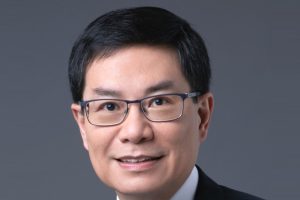
With a career spanning clinical medicine, hospital management, and healthcare policy, Dr Kenneth Tsang brings a rare depth of perspective to his dual role as Regional CEO of IHH Healthcare North Asia and CEO of Gleneagles Hospital Hong Kong. Having helped shape Hong Kong’s public healthcare system during his tenure with the Hospital Authority, he now leads one of the region’s most progressive private institutions, redefining how academic partnership, innovation, and accessibility converge to deliver high-quality care.
How did your journey from Hong Kong’s public healthcare system lead you to your current role, and how has that experience shaped your leadership approach at IHH?
I trained and practised as a clinician for almost two decades, primarily at Queen Elizabeth Hospital (QEH) within the public sector. The turning point in my career came during the 2003 SARS outbreak, when the Hospital Authority recognised the urgent need to strengthen both patient and staff safety after many frontline professionals became infected. I was selected to undergo formal training in hospital safety, which marked my transition into management, a natural extension of my longstanding interest in public health.
That step led to nearly ten years in healthcare administration, including at the Hospital Authority’s head office, where I was deeply involved in policy planning and system development. It was a transformative period for Hong Kong’s healthcare landscape: I contributed to the Ten-Year Hospital Development Plan, which laid the foundation for landmark projects such as the redevelopment of Queen Mary Hospital (QMH), the construction of the Hong Kong Children’s Hospital (HKCH), and several new high-technology facilities. I also helped reform medical workforce planning by introducing a centralised allocation system for new graduates. This ensured a more balanced distribution of doctors across specialties, encouraging young clinicians to pursue essential but less popular disciplines such as pathology, rather than focusing solely on more lucrative fields like radiology.
After nearly twenty years in public service, I joined Gleneagles Hospital Hong Kong (GHK) as Chief Operating Officer at a pivotal moment, the hospital was then only three years old and entering a new phase of clinical expansion. My role was to help develop and localise its clinical services, building on my experience in both system design and medical administration. What truly drew me to Gleneagles was its unique positioning: it is Hong Kong’s first private hospital conceived from the outset as a teaching and training institution, established in partnership with The University of Hong Kong (HKU). This integration of academic and private healthcare represents a new chapter for the city, combining educational excellence with patient-centred innovation.
What inspired Gleneagles’ distinctive model, and how does it reflect Hong Kong’s evolving healthcare needs?
Our model takes inspiration from leading integrated healthcare systems in the United States, particularly Massachusetts General Hospital (MGH) and the Mayo Clinic. These institutions demonstrate how private hospitals can operate in close partnership with academia while maintaining their own management, governance, and financial independence. At MGH, for example, all physicians belong to the Harvard Medical System, yet the hospital itself manages its operations with professional autonomy. This blend of academic excellence and operational discipline has allowed such models to thrive and continually expand their impact.
For Hong Kong, this hybrid structure offered a natural solution to a longstanding policy challenge. When the government opened tenders for the land on which Gleneagles now stands, our proposal – anchored in collaboration with HKU – aligned with its ambition to strengthen the private sector through the Voluntary Health Insurance Scheme (VHIS). For decades, Hong Kong has operated two distinct healthcare tracks: a heavily subsidised public system accessible to all, and a fee-for-service private sector that caters mainly to the affluent. The cost disparity between the two has widened over time, leaving the middle class with limited options for affordable, high-quality care.
Gleneagles’ answer has been to introduce all-inclusive packages that provide transparency, predictability, and value. Patients pay a fixed amount for defined procedures and that price remains unchanged even in the event of complications. In doing so, we absorb part of the financial risk traditionally borne by insurers, giving patients greater peace of mind and helping to build trust in private healthcare. The approach differs from the Diagnosis-Related Group (DRG) system used elsewhere, which bundles payments for entire episodes of care, but it serves a similar purpose: to improve cost efficiency without compromising quality.
Each package is developed in partnership with our doctors, who determine the clinical parameters and resources required. This collaboration ensures both medical integrity and financial discipline while engaging clinicians as true partners in service design. By embedding this principle from the outset, Gleneagles became the first hospital in Hong Kong to operationalise such a model, several years ahead of others who have since followed.
Ultimately, this innovation is not about pricing alone. It reflects our broader philosophy that genuine progress in healthcare comes from rethinking how care is delivered, with transparency, accountability, and accessibility, so that quality private medicine becomes a realistic choice for more of Hong Kong’s population.
How have you built a culture of trust and collaboration among doctors while expanding Gleneagles’ services and reputation?
We had the advantage of beginning with a clean slate. The government was prudent not to introduce a new healthcare model within long-established private hospitals, where structural change would have met resistance. Gleneagles, by contrast, was a young institution, and this allowed us to shape a new culture from the ground up. From the outset, we engaged doctors individually, explaining our philosophy and the reasoning behind our approach. Convincing clinicians anywhere is never simple, but we were fortunate to find early adopters who recognised the potential of this model. I personally met many of them to discuss how it could enhance care delivery and professional satisfaction. Gradually, as the concept proved itself, participation grew and collaboration became deeply ingrained in our organisation.
Trust is the foundation of everything we do, trust between patients, clinicians, and the institution itself. For us at IHH Healthcare, that trust rests on three essential pillars: brand, quality, and responsibility. Our network spans more than ten countries, including Malaysia, Singapore, India, Turkey, and China, and encompasses renowned hospitals such as Fortis Healthcare, Prince Court Medical Centre, and the Mount Elizabeth Hospitals. Across all these facilities, the IHH name has become synonymous with reliability, compassion, and excellence in care. Our philosophy, expressed in the phrase “Care. For Good.”, embodies a broader definition of healthcare, one that extends beyond clinical outcomes to encompass care for patients, colleagues, the public and the environment. Quality, to us, is inseparable from responsibility and sustainability.
We summarise this mission through the acronym ART: advancing Advanced technology, acting Responsibly toward the community, and Training our people. This reflects our drive to integrate innovation with inclusivity, introducing state-of-the-art technologies, expanding access to care, and nurturing talent across our network. In partnership with HKU, we have also established a clinical trial centre at Gleneagles to further strengthen research and innovation.
A notable example of this spirit is our collaboration with the Li Ka Shing Foundation, which donated Hong Kong’s first histotripsy machine, a non-invasive ultrasound technology for liver cancer treatment. Outside the United States, Gleneagles has now performed the highest number of histotripsy procedures globally. We see this achievement not only as a milestone in clinical innovation but as a demonstration of our willingness to push boundaries safely and purposefully. Equally important, we have committed to using this technology not only for research and commercial purposes but also for charitable care, underscoring our belief that progress must ultimately serve patients and the wider community.
How is Gleneagles advancing innovation and research, particularly as Hong Kong is looking to strengthens its role within the Greater Bay Area healthcare ecosystem, where probably the cost and delivering of healthcxare system is more affordable than Hong Kong…
Innovation at Gleneagles is guided by structure, collaboration, and scientific rigour. We maintain close dialogue with academic partners such as HKU and leading medtech companies to identify promising technologies. Once a potential solution is recognised, our internal clinical governance team evaluates the evidence behind it. If the data support its value, we initiate a research or pilot programme to assess its clinical applicability. Only after proven results do we move toward full adoption or commercialisation. The establishment of our clinical trial centre has deepened this capability, enabling us to conduct advanced research on medical devices and participate in later-stage clinical trials, marking a significant step beyond the small-scale pilots of earlier years.
The GBA integration brings both challenge and opportunity. Differences in pricing and insurance may draw some patients across the border to Shenzhen or Guangzhou, yet we see this as a healthy form of competition that drives greater efficiency and innovation. As Regional CEO of IHH Healthcare North Asia, I view this development as a chance to optimise resources across the region. The relationship between Hong Kong and the GBA, in many ways, mirrors that of Singapore and Malaysia within our network, distinct markets that complement rather than compete. Hong Kong will continue to serve as a trusted, high-end medical and academic hub, while the mainland can deliver quality care at scale and more accessible cost levels.
At Gleneagles Hong Kong, we are defining clear areas of excellence that will shape our long-term identity. Together with HKU, we are building deep expertise in liver disease and oncology, particularly liver cancer, as well as in orthopaedics, where HKU’s leadership in spine and joint replacement is internationally recognised. These areas complement our strong base in cardiology and general medicine. Our goal, much like world-leading institutions such as Memorial Sloan Kettering Cancer Center, is to combine highly specialised care with the breadth of a full-service hospital, creating a foundation for growth that endures over generations.
Beyond Hong Kong, we are strengthening synergies between Hong Kong and Shanghai, two cities whose destinies are closely intertwined as China’s leading financial and innovation hubs. Hong Kong’s century-old academic legacy – rooted in HKU, which trained Dr Sun Yat-sen, the father of modern China – offers deep credibility and trust, while Shanghai contributes scale, research capacity, and regulatory flexibility. By connecting the two, we enable cross-border collaboration: some treatments not yet available in Hong Kong can be delivered in Shanghai, with follow-up care provided locally or through our wider IHH network, including Singapore.
This integrated approach reflects our broader ambition to build a connected ecosystem of Centres of Excellence across IHH Healthcare. Each location contributes its own strengths – advanced oncology in Hong Kong, transplantation in India, or emerging cell and gene therapy programmes in Shanghai – while operating under a unified commitment to quality, innovation, and trust. With Hong Kong and Shanghai only two hours apart, we are laying the groundwork for a seamless medical corridor that will serve patients across China and the wider region for decades to come.
How is IHH Healthcare driving sustainable growth across North Asia- where lower to middle income countries are abundant- while ensuring that innovation remains both responsible and affordable?
IHH Healthcare’s growth trajectory has been robust, underpinned by a clear focus on responsible innovation and operational excellence. While we continue to collaborate with leading multinational partners in pharmaceuticals and medical technology, we are increasingly engaging with the new generation of healthcare innovators emerging from China and across Asia. Many of these companies are producing high-quality medical equipment and therapeutics at significantly lower cost, which helps us manage medical inflation, a critical challenge for every healthcare system.
Our philosophy is straightforward: premium care should not equate to excessive cost. Much like a five-star hotel that seeks to deliver an exceptional experience rather than an inflated price tag, our aim is to make advanced healthcare both aspirational and attainable. The largest drivers of medical expense are not always the clinical processes themselves, but the cost of drugs and equipment. By sourcing high-quality, cost-effective technologies and products from within our network, including from China and India, we can maintain excellence in care while keeping it affordable.
Our Shanghai operations now serve as a testing ground for new technologies across the IHH network. One example is an imaging platform developed in China with integrated artificial intelligence. We are piloting it in Shanghai, and if successful, we will bring it to Hong Kong and then to Singapore, using this regional model to validate innovation before broader adoption.
Beyond collaboration, we also invest directly in promising technology. A Hong Kong-based start-up from Science Park, for instance, developed a smart ring that detects sleep apnoea and other physiological parameters. We recognised its potential early, became one of its investors, and have since deployed the device across our hospitals in Hong Kong, Singapore, and Malaysia, with expansion now underway in Turkey. This illustrates how we combine investment, clinical validation, and regional scaling to bring value-driven innovation to patients.
Ultimately, our responsibility lies in balancing progress with affordability. By collaborating with medtech start-ups in China, regenerative medicine companies, and Indian producers of high-quality generics, we create a diverse and sustainable ecosystem that benefits patients while keeping care accessible.
Financially, this disciplined approach has delivered tangible results. Listed on Bursa Malaysia, IHH Healthcare’s share price has doubled in recent years, reflecting strong investor confidence in our model. Even without a corresponding doubling of revenue, this performance demonstrates belief in our strategic direction and the power of our scale. In an industry increasingly shaped by artificial intelligence and digital transformation, scale is not just an advantage, it is a necessity. And as one of the world’s largest integrated healthcare providers, IHH is well positioned to lead that transformation responsibly and sustainably.
What message would you like to share with our readers across the healthcare and investment communities?
To anyone dedicated to advancing healthcare – whether in pharmaceuticals, medtech, academia, or finance – we stand ready to collaborate and support. We do not position ourselves as the innovators pushing the limits of science, but as an enabling platform, a facilitator that connects ideas, people, and resources to turn innovation into real-world patient benefit.
Our mission is to complement and empower those driving progress, from researchers and clinicians to technology developers and investors. For partners seeking a robust platform that can guide their innovation from pilot stage to large-scale adoption, we offer an ecosystem capable of testing, validating, and globalising new solutions. When technologies prove effective, safe, and accessible, we often take a further step by investing in them directly.
In many ways, we represent the final bridge between innovation and implementation, the stage where promising ideas are translated into clinical reality. Whether it is a start-up developing a new medical device, a company redefining care pathways through AI, or a technology improving workflow efficiency, we seek genuine collaboration rather than a vendor–buyer relationship. That collaborative model – built on integration, feedback, and co-development – is essential to achieving meaningful and sustainable impact.
This approach benefits all sides. Innovators gain real clinical insight and validation within a world-class healthcare setting, while we strengthen our capacity to deliver advanced, patient-centred care. Being an early adopter of transformative technologies naturally attracts clinicians who share our forward-looking mindset, creating a cycle of innovation that continues to reinforce itself. Ultimately, this is how we see our role: as a trusted partner helping to shape the future of healthcare, responsibly, collaboratively, and with purpose.