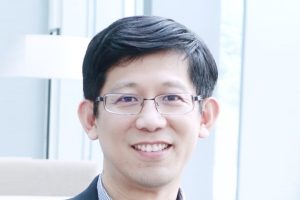
Dr Jung-Chi Liao, CEO and Founder of Syncell, explains how his company is creating a new category in protein identification through its microscopy-guided protein extraction technology. Trained as a mechanical engineer with a PhD from MIT and later conducted biological research for 25 years since his postdoctoral work at Berkeley, Dr Liao moved from a faculty position at Columbia University into entrepreneurship. Syncell enables proteomic discovery, allowing pharmaceutical partners to identify novel drug targets across oncology, neurodegenerative diseases, and other complex conditions.
Your transition from Columbia University faculty to biotechnology entrepreneur is remarkable. What catalysed this journey?
The origin story is somewhat serendipitous. I was faculty at Columbia and returned to Taiwan’s Academia Sinica to continue my research in 2014 due to a family reason. During a dental procedure at Columbia, I observed the dentist using intense light to cure fillings within a few seconds, which sparked an idea: could I use focused laser light inside cells to create what I initially envisioned as the “nano tapioca of a bubble tea” – nano gel-particles I could centrifuge to isolate disease-related proteins.
Pathologists can identify Parkinson’s aggregates, Alzheimer’s plaques, fat accumulation, boundary of drug-resistant cancer cells, or borders with exhausted versus activated T cells visually, but no one could isolate them from patient tissues easily for molecular analysis. I was not contemplating company formation initially – this was purely research-driven. We attempted forming nanoparticles through light-triggered reactions, essentially optical 3D printing inside cells, similar to dental filling polymerisation.
The approach evolved. We now use light to trigger chemical reactions that bond proteins in precisely targeted subcellular locations – aggregates in Parkinson’s disease, membrane proteins in a specific type of cancer, for example. Using AI-guided disease site selection, we illuminate specific regions, attaching chemical “magnets” to proteins there. Subsequently, we extract only those tagged proteins for mass spectrometry analysis, which identifies proteins with extraordinary precision based on their mass signatures.
This was originally for my own research on organelle proteins. The machine became operational around 2017, and collaboration requests proliferated. The government provided approximately 2 million USD funding with one grant contingent on company formation and structured timelines – exclusive licensing, fundraising, incorporation – all within prescribed schedules, with advisory support from Taiwan Tech Arena (TTA). Initially, this felt constraining coming from academia’s different pace, but ultimately proved beneficial. We incorporated in 2020, and after five years, we have built a team generating millions of dollars in annual revenue.
What made the technology commercially viable beyond scientific merit?
Need-driven development was essential. Academia builds technologies that are novelty-driven, but sometimes commercially expensive or overly sophisticated without business viable applications – creating swords without suitable things to cut. We were lucky to start from the unmet need first, and then built the appropriate tool.
My professorial experience was somewhat useful for the balance between functions and costs – I was involved in purchasing capital equipment during my academic tenure, so I understood budgetary constraints academics could tolerate. When components became prohibitively expensive, we identified more affordable alternatives.
My career detour, jumping from mechanical engineer to biology, actually turned out to be advantageous. I completed my bachelor’s, master’s, and PhD in mechanical engineering. After seeing an MIT lecture on nanotechnology describing nanometre-sized molecular motors that walk and rotate – capabilities that even the most advanced Taiwan’s semiconductor industry cannot replicate – I shifted to biology for my Berkeley postdoctoral work. Twenty-five years of biology research combined with mechanical design and programming capabilities, including AI coding, created a fortunate convergence. I understood the technical landscape comprehensively.
Now I am learning the commercial dimension. We recruited exceptional talent from leading US companies, assembling approximately 90 people: 70 in Taiwan, 20 internationally, covering the United States, Europe, and Asia. Our 25-person commercial team is led by Chief Commercial Officer Nikhil Rao. We collaborate intensively with daily communication. Tight coordination between top leadership is essential for success.
Spatial biology represents a broad umbrella encompassing diverse platforms. Where precisely does Syncell position within this landscape, and what do you intentionally exclude?
We differ fundamentally from existing spatial biology technologies. This is spatial proteomics without requiring a priori knowledge of targets. Existing spatial proteomics employs antibody arrays requiring predetermined targets – analogous to COVID-19 testing requiring known antigens. For triple-negative breast cancer or Parkinson’s aggregates where composition remains poorly understood, unbiased discovery is essential. Mass spectrometry reveals what is present without predetermined hypotheses. This discovery power excites researchers.
What is your realistic addressable market, and who represents competitive alternatives during procurement?
At present, we have no direct competitors in terms of discovery capability. Companies such as 10x Genomics, Nanostring, and Lunaphore focus on mapping RNAs or known proteins to study tissue heterogeneity. Our approach differs fundamentally: we perform discovery. We identify what is malfunctioning and characterise the molecular composition directly. In that sense, we are closer to functional and mechanistic studies, whereas others focus primarily on spatial mapping.
This distinction is particularly relevant for pharmaceutical companies. Proteins represent approximately 95 percent of drug targets, whereas RNA findings require indirect validation. Because we directly identify proteins, our approach is more directly relevant to drug target identification. This is why several pharmaceutical companies have shown strong interest, with some purchasing machines within four months of initial discussions.
In terms of market size, we expect to reach approximately USD hundreds of millions annually, within a broader proteomics market estimated at around USD 60 billion. Our addressable market may exceed current spatial biology analyses if clinical applications materialise because it is beyond the current scope of spatial biology.
Today, our primary customers include leading academic institutions such as the Mayo Clinic, which has purchased our machines. We began pharmaceutical sales in the middle of last year. Pathologists identify drug-resistant regions within the tumour and ask us to isolate and molecularly characterise those specific areas, enabling a more precise understanding of emerging resistance mechanisms.
We also see potential clinical applications that could be described as “superior biopsies” – secondary tissue analyses performed at smaller scale but with greater purity than conventional biopsies. If such clinical translation proves feasible, the addressable market becomes difficult to quantify.
We believe we are creating a new category in which we are currently the leading player. We continue to expand equipment sales while simultaneously exploring pharmaceutical service partnerships, with the longer-term ambition of evolving from a tool provider into a platform company – helping identify druggable targets and potentially first-in-class biologics.
Your partnership with Thermo Fisher is notable. How do you navigate partnership versus competition dynamics?
Thermo Fisher is a thousand times larger by revenue. Leading mass spectrometer manufacturers such as Thermo Fisher and Bruker designed exceptionally sensitive mass spectrometers initially targeting problems such as single-cell proteomics. They now emphasise clinical screening prioritising speed over ultimate sensitivity.
We opened an entirely new direction: subcellular tissue biopsy. Blood-based testing presents challenges – Alzheimer’s or cancer markers may be hard to detect in blood due to dilution. Biopsy-derived tissue converted to liquid through our technology enables mass spectrometry analysis. We have opened a previously non-existent field, exciting both Bruker and Thermo Fisher with institutions purchasing both a high-end mass spectrometer and our system. Approximately one-quarter of our customers purchase new mass spectrometers, establishing proteomics centres.
What message would you communicate to pharmaceutical executives reading this regarding partnership opportunities?
We have engaged more than 20 US pharmaceutical companies. For oncology, most express interest in identifying novel antibody-drug conjugate (ADC) targets. Biochemical membrane protein extraction captures non-specific intracellular components, but our technology targets exclusively the membrane region with exceptional purity. When we provide protein lists, the specificity comes from the microscopy-based selection. Unexpected findings represent potentially superior discoveries because high specificity eliminates ambiguity about whether absences reflect technical artefacts or genuine biological insights.
This becomes pharmaceutical companies’ tool for discovering ADC targets. For example analysing 20 patients with identical small-cell lung cancer subtypes, identifying markers consistently appearing in 12 of 20 patients, yields high-confidence targets for dual-marker ADCs with unprecedented precision.
Our technology identifies druggable targets whilst elucidating mechanisms. Some companies investigate drug internalisation – whether therapeutics reach intracellular targets. We can isolate early versus late endosomes, definitively confirming drug localisation where conventional imaging proves insufficiently sensitive.
As you scale, what constitutes your greatest constraint?
Brand awareness presents challenges for all small startups like us. Operating as a relatively unknown company with exceptional technology requires substantial awareness-building. Near-term challenges involve brand awareness for our technology’s capabilities. Publications, our reputation, and partnerships with recognised names like Thermo Fisher, combined with PR, social media, and email campaigns, have proven most effective at our stage.
As a Taiwanese entrepreneur building globally competitive biotechnology, what must change for Taiwan to gain greater recognition as an innovation hub?
Risk tolerance represents the fundamental challenge in Taiwan’s culture. Cultural conditioning emphasises caution; failure tolerance proves essential in venture ecosystems targeting not 10 or 50 percent returns but tenfold or fiftyfold multiples.
Taiwan’s start-up ecosystem requires better CEO cultivation, developing capabilities to engage capital markets effectively. Investors seek returns, requiring entrepreneurs to adopt investor perspectives rather than remaining perpetually misaligned. Conversely, Taiwan investors must embrace greater risk tolerance like US and Israeli counterparts. Even China demonstrates higher risk appetite and ambition for substantial returns.
Taiwan also lacks branding talent – few Taiwanese brands achieve global recognition beyond perhaps several laptop manufacturers. Collaborating with international talent and maintaining those connections proves essential for scaling globally competitive enterprises.