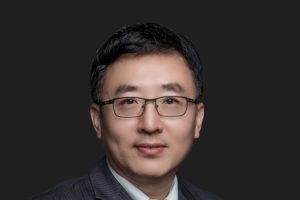
Jun Liu, CEO & Executive Board Director of BioDlink, defines and explores the company’s strategic focus on antibody drug conjugates (ADCs), their global expansion plans, and role as a leading CDMO. Liu emphasises the balance of quality and cost efficiency, stating, “Our mission is to deliver exceptional value, ensuring we exceed global standards while driving success for our clients and ourselves.”
How has your career evolved in the biopharmaceutical industry, and what led you to join BioDlink?
My career in biopharmaceuticals began with a solid foundation in chemistry, having earned my bachelor’s degree in analytical chemistry in China. I then advanced my studies in the United States, obtaining a PhD in protein analytics from UC Davis. Following this, I undertook postdoctoral training at the City of Hope in Southern California, where I concentrated on oncology and biologics development, further honing my expertise in innovative therapeutics.
My professional journey started at Applied Biosystems, now a part of the Danaher Group, where I engaged in the burgeoning field of proteomics. This role involved providing cutting-edge technological solutions for clients, including industry leaders like Genentech and UCSF. I then transitioned to Bayer Healthcare in Berkeley, where I received comprehensive training in biological drug development, process optimisation, and large-scale manufacturing within Bayer’s largest biologics manufacturing site, which housed over 1,600 specialists. This experience was instrumental in deepening my understanding of Good Manufacturing Practices (GMP) and the complexities of pharmaceutical production.
In 2010, driven by the rapid growth and untapped potential of China’s biopharmaceutical sector, I made the pivotal decision to return to China. I played a key role in pioneering the establishment of a biological contract research organisation (CRO) and contract development and manufacturing organisation (CDMO) services in China. My efforts contributed to the growth of a Shanghai-based company that emerged as the largest biologic CRO/CDMO in the region of the year, initially focusing on small molecules before expanding into large-molecule therapeutics. In 2016, I joined BioDlink as part of its management team, bringing my extensive global experience to help steer the company towards new heights in the biopharmaceutical industry. Later on, I became the company CEO and later led the strategic transformation to biopharmaceutical CDMO.
What was BioDlink’s initial focus, and how did the company navigate its key transformation to become what it is today? What led BioDlink to prioritise ADCs, and how has the company equipped itself to excel in this advanced area of biopharmaceuticals?
BioDlink was founded in 2010, and initially focused on drug development, particularly in the areas of biosimilars—both “me-too” and “me-better” products—as well as generic drugs. The company was established by a Taiwanese entrepreneur who remains our largest shareholder and has played a pivotal role in guiding the company’s growth over the past 14 years.
Starting 2019, we observed a significant shift in the pharmaceutical industry, with government policies moving away from the support of biosimilars. Concurrently, changes in health insurance structures and pricing pressures highlighted the limitations of our existing business model.
After a careful evaluation based on our technology platforms, track record of project experiences and talented team, our board and I soon made the decision to strategically transform into a CDMO. We believe our competitive advantages lies in the mature integrated platform that we built during our own product development and commercialisation work, our first-mover advantage in ADCs in China, and our technical advantage in process development and large-scale production. All of these factors will help us to win out in the currently intense market.
Our strategic decision to focus on ADCs stemmed from a desire to avoid the crowded and less challenging areas of drug development. Instead, we sought to differentiate ourselves by pursuing a path with higher technical barriers and long-term potential. We were the first-tier ADC developer with own pipeline in China, and already began working on this project in 2013. The early involvement and technical accumulation provided us with substantial experience and led to the establishment of critical infrastructure, such as conjugation labs, advanced drug product lines, comprehensive analytical capabilities and robust antibody production capabilities.
Today, BioDlink is fully equipped to lead in the development and production of ADCs. We have developed comprehensive capabilities, from molecule research and compound screening to advanced drug candidate development. Our facilities include two state-of-the-art ADC manufacturing lines, with one being among the most advanced and largest in China, built to meet global standards. We are fully prepared to meet the demands of this rapidly evolving field.
How vital are global certifications from bodies like the NMPA, FDA, and EMA for BioDlink in establishing a strong market presence, and attracting multinational companies as clients?
Global certifications are absolutely critical to our strategic positioning as a leader in ADC development and manufacturing.
Quality systems are at the heart of our operations and are crucial for sustaining our leadership in the industry. We continuously invest with an emphasis on quality, not only in hardware, but also in the promotion of quality awareness and mindset of our team members. As a result, we have consistently met the stringent standards of the NMPA, and notably, we have successfully passed EU QP inspections three times, underscoring our unwavering commitment to excellence. Additionally, we have satisfied plenty of client audits, many of which involve projects preparing for filings in the US, Europe, and China.
Thanks to our outstanding service performance, we have helped many Chinese ADC companies to license their assets overseas. During this process of securing license agreements, some of our global licensees are now looking to achieve FDA approval through BioDlink. This is our next major milestone and will give BioDlink greater global visibility. Having already obtained the qualified MNC supplier certificate from the EU and Japan, achieving FDA approval is a key objective for us in the coming years, and we are rigorously preparing to meet these high standards.
How successful has BioDlink’s strategic focus on CDMO been, and how does this reflects in your financials?
Our strategic emphasis on ADCs has indeed been successful, together with our strong foundation in antibody-based biologics. By focusing on ADCs, we have significantly enhanced BioDlink’s market visibility, attracting considerable interest. However, we continue to maintain a balanced portfolio that includes both ADC and antibody-based projects.
The growing demand for ADCs reflects the market’s evolving needs, and our position as a leader in ADC CDMO services has been solidified through positive client reception. This strategic focus has fuelled impressive growth. For example, in the first half of this year alone, we successfully turned losses into profit and our CDMO revenue surged by 144%, an extraordinary achievement, especially given the current economic climate in China. This growth represents real expansion, with both new clients and the progression of existing clients from early-stage development to more advanced stages, including Phase 3 clinical trials. We currently have multiple pre-FDA Biologics License Application (BLA) projects in progress, which involve manufacturing clinical materials, producing Process Performance Qualification (PPQ) and Pre-Approval Inspection batches, and preparing for BLA submissions. These advanced projects are particularly valuable as they promise sustained revenue and higher profitability due to the efficiencies of large-scale production. By the end of the first half of 2024, we accumulated hundreds of projects, with more advanced projects entering into commercialisation, providing high visibility for near-term revenue opportunities and demonstrating the company’s profitable growth.
Is BioDlink equipped to manage large-scale production as these projects transition to commercial phases?
BioDlink is fully prepared to handle large-scale production globally. We are among the largest CDMO providers in China, with extensive manufacturing capabilities. For instance, we have bioreactors with a combined capacity of 20,000 litres and operate one of the most advanced ADC production lines, featuring a 40-square-meter liquefaction capacity—an area that is often a bottleneck in ADC manufacturing capacity. We have already launched two dedicated ADC production lines with two more for non-toxic antibody-based production. In total, we have four complete commercial production lines dedicated to biological development, ensuring that we are well-positioned to scale up as projects advance to commercial production.
In light of the intense price pressures in China, how is the cost efficiency of manufacturing being affected for biotech companies and big pharma, and what emerging trends are you observing to counter this?
The competitive pressure in China’s market has notably intensified, particularly since the second half of 2022, with rising price constraints making it increasingly challenging for domestic companies. Despite this, an intriguing shift has occurred. While the broader investment landscape has cooled, leading to a reduction in new biotech projects and a halt in the construction of in-house manufacturing facilities, the demand for CDMO services has surged. This has created a balance where, although the number of new projects has decreased, the reliance on CDMOs to support manufacturing needs has grown significantly.
Many of our clients who initially intended to develop their own CMC facilities and manage projects internally have since reconsidered, particularly from mid-2022 onwards. This shift is especially pronounced among Chinese biotech firms, which now mirror a trend more commonly seen in the US. In the US, the prevailing business model favours a focus on R&D while outsourcing manufacturing to CDMOs, allowing for faster project advancement and greater efficiency.
Having spent 15 years working in the US, I’ve observed how this mature business model operates, and I believe it’s the optimal approach. By concentrating on research and development and leveraging the expertise of CDMOs for manufacturing, companies can accelerate their time to market and achieve cost efficiency, particularly in a highly competitive environment like China’s.
In a manufacturing-centric country like China, where the temptation for other companies to enter the field is strong, how does BioDlink protect its pricing and scientific value proposition? What distinctive advantages do you offer to your clients?
The competitive environment in China, especially in manufacturing, is undeniably intense. However, a notable trend has emerged over the past two years: Chinese biotech companies have been forging strategic partnerships with multinational corporations, with projects aimed at both the domestic and international markets. This trend has significantly increased the demand for CDMO services that adhere to global standards, providing us with a valuable opportunity to demonstrate our capabilities to an international audience.
In the past 12 months alone, we have hosted five major multinational clients at our Suzhou facilities for audits and due diligence. These clients were impressed by the quality and scope of our services, particularly in the ADC domain. Our strong value proposition lies in our advanced platform, which includes cutting-edge equipment, a highly experienced team, a proven track record, a fast-delivery timeline and a robust quality system. These assets have allowed us to differentiate ourselves in a highly competitive market and have accelerated our entry into the global arena.
Regarding these engagements, our initial role was to support these multinational companies through their Chinese collaborators. However, we are now witnessing a shift, with these companies showing direct interest in partnering with us. I am confident that we will soon secure direct business from these multinational clients, further solidifying our position as a leading CDMO in the global market.
Given that global expansion for CDMOs often aligns with the needs of clients, is BioDlink considering extending its capabilities overseas? Is this a part of your long-term strategic vision?
Indeed, global expansion is very much a part of our strategic vision. While we have a significant presence in China, it’s essential to recognise that BioDlink is inherently an international company. Our founder is from Taiwan, one of our largest shareholders is based in the United States, and we have investors from various countries, further underscoring our global outlook. Additionally, our listing on the Hong Kong Stock Exchange reflects our international orientation.
Looking ahead, expanding our capabilities beyond China is a key consideration. We are actively exploring the possibility of establishing business branches in critical markets such as Europe, the United States, and potentially regions like Singapore. The evolving global landscape and the opportunities it presents are pushing us to broaden our horizons. In the coming years, our focus will increasingly shift towards the global market, moving beyond a purely regional approach. From my perspective, international expansion is not just an aspiration but a necessary evolution as we continue to grow and meet the demands of our global clients.