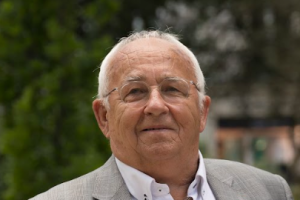
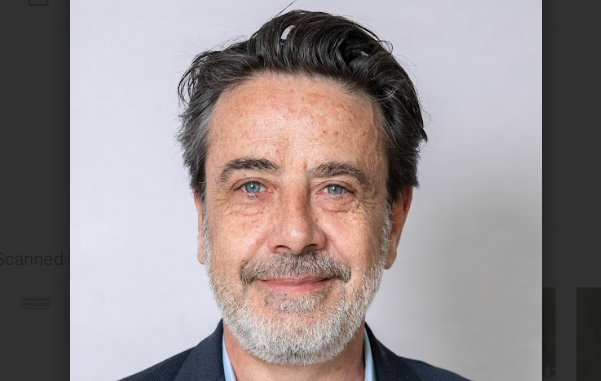
France Alzheimer’s Joel Jaouen and Benoit Durand articulate a comprehensive strategic framework for addressing one of Europe's most pressing healthcare challenges. With four decades of operational excellence, the organisation has evolved from a grassroots family initiative into France's premier associative research funder, developing sophisticated care pathways whilst advocating for systemic healthcare transformation.
Could you begin by introducing yourself and outlining what France Alzheimer represents today, particularly your core mission?
Joel Jaouen: I serve as associate president of France Alzheimer, and 2025 marks a significant milestone as we celebrate our fortieth anniversary. Our genesis stems from families who encountered one another with a singular objective: progressively building awareness of this disease whilst establishing comprehensive support structures for those navigating this devastating condition. Despite four decades of scientific advancement, Alzheimer’s remains incurable, which continues to drive our strategic focus.
France Alzheimer operates through four principal mission areas. Our social mission encompasses individualised consultations, psychological support services, therapeutic holidays, and memory cafés – essentially a complete spectrum of modelled interventions. Our second major initiative centres on education: we train our volunteers initially, then extend this expertise outward. This represents one of our few public funding streams, as we maintain a contract with CNESST to provide caregivers with comprehensive toolkits.
We maintain operational velocity of five to six thousand training sessions annually across our network of 102 associations, achieving virtually complete territorial coverage across metropolitan France and overseas territories.
Benoit Durand: We have also established a dedicated training institute – our commercial arm, if you will – which has achieved full operational maturity over the past five years. This institute holds Qualiopi certification and generates lucrative revenue streams whilst serving healthcare professionals across various sectors.
We have developed substantial partnerships with ambulance services, where genuine demand existed for specialised training. Similarly, we collaborate with pharmacists to enhance their diagnostic recognition capabilities within their patient populations. Our partnership with the gendarmerie addresses critical needs in managing individuals who may exhibit behavioural disturbances or become disoriented in public spaces – particularly relevant following unfortunate incidents during COVID-19 lockdowns.
Home care services represent another crucial area, as many practitioners enter this field without specific training in Alzheimer’s pathologies. We are advancing these training programmes in alignment with political objectives, though implementation remains inconsistent.
Our distinctive advantage lies in combining professional trainers with volunteers who have lived experience of the disease, providing both theoretical knowledge and practical testimony.
Joel Jaouen: Research funding represents our third major mission. We function as France’s leading associative research funder, operating through a structured internal Scientific Council encompassing both humanities and clinical medical sciences. This council issues annual calls for proposals, typically receiving between 100 and 150 responses, with emphasis on supporting emerging researchers.
Benoit Durand: Our annual research envelope ranges from Euro 1.5 to 2 million. Beyond project funding – usually 10 to 14 projects totalling approximately £850,000 – we support young researchers’ participation in international conferences and related professional development.
A significant innovation last year involved repatriating a French researcher, providing three-year funding to enable continued research within France – our contribution to reversing brain drain.
After twenty-five to thirty years of research funding with progressive increases, we recognised opportunities for expansion. We established a separate endowment fund with its own Scientific Council, enabling broader funding scope including equipment purchases and other investments previously unavailable to us.
The council identified an ambitious opportunity: creating the Alpha Three cohort study. This innovative programme, promoted by Toulouse University Hospital in partnership with Montpellier, Rouen, and Marseille facilities, simultaneously tracks a patient living with a diagnosed Alzheimer’s disease, their primary caregiver, and a family member to examine hereditary factors.
We are currently in the two-year pilot phase, having recruited approximately 70 patient trios, requiring twice that number to complete the experimental phase before potential expansion to additional university hospitals.
Joel Jaouen: Indeed, this approach has never been attempted previously. Through our participation in Alzheimer Europe, we understand that our European colleagues are closely monitoring this initiative’s progress. However, funding remains our primary constraint – accelerated progress depends entirely on securing additional resources.
Unfortunately, as a private foundation, we cannot access public subsidies, which may ultimately determine this project’s viability.
Our fourth mission involves public advocacy and policy influence. Our credibility enabled us to establish a parliamentary study group within the National Assembly, comprising thirty deputies. We had scheduled a major conference for September 23rd, though current political Turmoil has created uncertainty regarding continuity of our governmental relationships.
Benoit Durand: Nevertheless, we remain the only association providing comprehensive daily support to both patients and caregivers through workshops, individual consultations, and specialised programming for patients, caregivers, and couples together.
Joel Jaouen: Until lasting solutions are discovered, the daily support we provide remains essential. On our fortieth anniversary, I often repeat my hope that in another forty years we will no longer exist – because our work will no longer be needed.
Could you share insights on Alzheimer’s prevalence in France and current status?
Benoit Durand: The fundamental challenge lies in the absence of official French statistics on actual patient numbers. We rely on projections based on Alzheimer Europe data, estimating 1.4 million people affected by Alzheimer’s or related diseases, including approximately 55,000 individuals under sixty-five years.
This statistical gap severely hampers our advocacy efforts with public authorities – how can we implement serious, dignified support systems without accurate prevalence data?
What are the primary care pathway challenges requiring immediate attention?
Benoit Durand: When France Alzheimer was founded, our priority was to raise awareness of the disease. Forty years ago, the term “Alzheimer’s” existed but was not recognised; instead, symptoms were attributed to “dementia,” a word burdened in French culture with connotations of madness and psychiatry rather than neurology. This created an initial barrier, one that is gradually easing with new generations. Today, as we train adult children and grandchildren of patients, we see mind-sets shifting – though full acceptance will still take time.
Diagnostic capabilities represent a critical weakness. Many healthcare professionals, including general practitioners and neurologists, lack adequate training in Alzheimer’s diagnosis. Geographic inequalities create vastly different care experiences depending on location, with diagnostic timelines extending eighteen to twenty-four months – particularly problematic for younger patients experiencing more rapid disease progression.
The situation deteriorated further with the withdrawal of reimbursement for these medications in 2018. Whilst these medications were not curative, they provided symptomatic relief, particularly for Lewy body disease patients experiencing sleep and behavioural disturbances. Removing reimbursement disincentivises diagnostic consultation, creating perverse economic incentives.
Similarly, driving licence restrictions implemented blanket prohibitions for diagnosed patients regardless of individual capability. We advocated for professional neurological assessments to determine individual driving competency rather than automatic disqualification, but these recommendations were disregarded.
How do you view recent pharmaceutical developments, particularly new treatments like those receiving European approval?
Benoit Durand: These represent genuine hope after more than twenty years without new medications. However, we maintain realistic expectations: these treatments target early-stage patients exclusively, carry significant side effects, and will serve limited populations.
Unfortunately, the High Authority of Health has issued its verdict, announcing the refusal of early access to Leqembi in France. This decision is currently being strongly contested by stakeholders involved with people living with Alzheimer’s disease. We sincerely hope that the French Government will reconsider and soon authorize the commercialization of Leqembi with full reimbursement. In the meantime, French patients are left waiting up to 18 months before accessing treatment, which represents a significant loss of therapeutic opportunities for thousands of individuals.What can we expect from the 2024-2028 national plan in terms of impact?
Joel Jaouen: We maintain nostalgia for the 2008-2012 Sarkozy plan, which combined genuine ambition with dedicated funding. Unless current strategies include both ambition and financing, they remain merely roadmaps rather than actionable plans.
Benoit Durand: The third National Alzheimer Plan was the most ambitious and impactful, but later efforts diluted its funding by merging Alzheimer’s with other neurodegenerative diseases, leaving many measures unfinished. After years of delay, a new 2025–2030 strategy has been announced, incorporating many of our long-standing demands and promising dedicated financing outside the usual budget constraints. While this offers genuine hope after six years of stagnation, we remain cautious until the first steering committee confirms its implementation.
Specifically regarding Alzheimer’s disease, the strategy provides improvement but remains insufficient, particularly concerning younger patients who represent significant unmet need.
Benoit Durand: The previous plan introduced valuable support systems for caregivers, specialised home-based care teams, and activity centres that improved daily life in nursing homes. Yet, long waiting lists, uneven national coverage, and the absence of facilities for younger patients highlight persistent gaps. Expanding these services and creating adapted structures remain essential ambitions for the new strategy.
Looking forward, what is your vision for international collaboration and knowledge transfer?
Joel Jaouen: I serve officially on Alzheimer Europe’s administrative council, though as a volunteer. We have established francophone working groups encompassing Mauritius, Madagascar, Mayotte, and Réunion. My vision extends to Mediterranean and African francophone nations: Morocco, Tunisia, and broader African partnerships.
We have developed remarkable organisational capabilities over four decades, and sharing this expertise whilst respecting local cultural contexts represents both opportunity and responsibility. The connection between experienced caregivers creates immediate understanding – shared suffering enables profound mutual support.
What message would you offer to the international community?
Joel Jaouen: Research remains at the heart of our mission, as we believe that lasting solutions will ultimately emerge from it, sometimes even by chance. Until such breakthroughs arrive, our role is to innovate and support. Across Europe, we see inspiring approaches, from adapted sports to creative therapies, and it is vital that these innovations are shared internationally.
At France Alzheimer, we have learned that progress does not always come through medicine alone, but also through imaginative programmes that bring stability and dignity to patients’ lives. Whether through therapeutic holidays, animal-assisted activities, or large community events like the Memory Run, our guiding principle is clear: life does not end with a diagnosis. Patients and families deserve continued support, creativity, and hope.