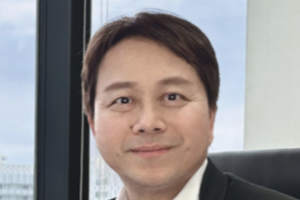
With over two decades of global pharmaceutical experience at Eli Lilly and Allergan, Dr Jimmy Chang returned to Taiwan to lead TaiMed Biologics, Taiwan’s first biotech to successfully commercialise a biologic therapy worldwide. Now CEO, Chang has overseen the company’s evolution from a single-asset HIV specialist to a globally recognised innovator in antibody therapeutics. Under his leadership, TaiMed has validated its CD4-targeting antibody platform with a first-in-class therapy for multidrug-resistant HIV and is advancing a next-generation, long-acting regimen that could redefine treatment adherence and patient outcomes. Building on this foundation, the company is now extending its technology into autoimmune diseases and antibody-drug conjugates (ADCs), positioning Taiwan as an emerging force in precision biologics.
Could you provide some context about your professional background and what attracted you to TaiMed Biologics?
My career trajectory has been rather distinctive. I trained as a pharmacist in Taiwan before pursuing doctoral studies in pharmaceutical sciences in the US, where I subsequently spent approximately 25 years in the industry. My tenure included four years at Eli Lilly, followed by two decades at Allergan, where I progressed from bench-level product development scientist to global leadership positions overseeing development programmes, manufacturing technology transfer, and GMP production for regulatory submissions and commercial launches.
The opportunity at TaiMed presented itself six years ago, and I was compelled by several factors. The company was pursuing a genuinely differentiated scientific approach – developing first-in-class antibody therapeutics for unmet medical needs in HIV treatment. The scientific foundation was exceptionally robust, and the prospect of establishing Taiwan’s first company to commercialise a biotechnology product globally was unprecedented. At that juncture, TaiMed was approaching regulatory approval, which necessitated building manufacturing infrastructure and expanding our clinical portfolio. I joined as Chief Technology Officer, advanced to Chief Operating Officer, and three years ago assumed the role of Chief Executive Officer, recently expanding to Chairman and CEO of TaiMed Biologics USA with global responsibilities.
How would you characterise TaiMed’s strategic evolution from its founding to the present?
Most Taiwanese biotechnology enterprises commence with highly focused programmes designed to validate their fundamental approach and demonstrate proof of concept for specific disease modalities. TaiMed’s initial decade followed this trajectory precisely. We in-licensed our first antibody, a CD4-targeting therapeutic for HIV, concentrating our efforts on developing this asset for patients with multi-drug resistant conditions – a last-line therapy addressing a critical unmet need.
To contextualise this within the HIV treatment landscape: patients progress through distinct therapeutic stages. Initial infection leads to first-line treatment with antiretroviral cocktails. Successful first-line regimens eventually transition to maintenance therapy, which emphasises improved compliance through simplified dosing – combining multiple agents into single-pill formulations. However, HIV’s propensity for mutation means that a significant patient subset inevitably develops multi-drug resistance, a population historically without effective therapeutic options.
Our product represented the first product ever approved specifically for last-line therapy – a designation we secured from the US FDA, which granted us Fast Track, Breakthrough Therapy, Orphan Drug, and Priority Review designations. This substantial regulatory support underscored the product’s importance for multi-drug resistant patients. Our first decade thus validated not merely a product but an entire platform, demonstrating for the first time that antibody-based therapeutics could effectively address HIV infection.
What distinguishes antibody therapeutics from conventional small molecule approaches in HIV treatment?
Antibodies possess two fundamentally differentiated characteristics that confer substantial clinical advantages. Firstly, they demonstrate superior safety profiles with minimal toxicity concerns. Unlike small molecules, antibodies do not undergo hepatic metabolism or renal excretion, eliminating the drug-drug interaction challenges that complicate small molecule therapy. For HIV patients requiring multiple medications – often managing comorbidities alongside their infection – this represents a transformative benefit.
Secondly, antibodies enable extended dosing intervals. Whereas small molecules necessitate daily administration, antibody therapeutics can achieve therapeutic efficacy with monthly or bimonthly injection schedules. Our product was developed as a biweekly injection, and our second-generation candidate employs a two-month dosing interval.
Our platform specifically targets CD4-positive cells – the immune cells that serve as HIV’s primary reservoir. The virus enters these cells, replicates, destroys the host cell, and repeats this cycle. Our CD4-targeting entry inhibitor antibodies bind to CD4 cells, functioning as molecular gatekeepers that prevent viral entry. This contrasts fundamentally with the small molecule paradigm, which employs a shotgun approach – distributing throughout the body with only a fraction reaching target cells to inhibit viral replication. Our antibodies are precision-targeted, binding exclusively to CD4 cells with essentially no drug-drug interactions.
Could you elaborate on your second-generation programme and its competitive positioning?
We are advancing TMB-365 and TMB-380 as a complete long-acting regimen administered every two months. TMB-365 is an enhanced entry inhibitor – a modified version of our actual medicine developed in collaboration with Dr. David Ho’s laboratory. Dr. Ho, who was named Time Magazine’s Person of the Year for his HIV research contributions, serves as our Chief Scientific Board member and was instrumental in our founding. His laboratory engineered substantial improvements to create a long-acting formulation with broader viral strain coverage.
TMB-380, in-licensed from the National Institutes of Health, is a broadly neutralising antibody that binds circulating virus, enabling immune system recognition and clearance. These complementary mechanisms of action – entry inhibition and viral neutralisation – together provide comprehensive regimen coverage.
Both antibodies are engineered for long-acting effect, enabling a combination regimen administered once every two months – an approach that significantly enhances patient comfort and adherence, particularly given the chronic nature of HIV. Over 60% of patients struggle with daily oral regimens, making less frequent administration a meaningful advancement.
The competitive landscape currently features three programmes at Phase II: our bimonthly injection regimen, Gilead’s six-monthly combination of two antibodies, and ViiV’s therapy with a broadly neutralising antibody. Our clinical results demonstrate two critical differentiators. First, we observed zero treatment failures in our studies – no patients exhibited viral loads exceeding 50 copies per millilitre, whereas both Gilead’s and ViiV’s programmes recorded treatment failures.
Given the oligopolistic nature of the HIV market, dominated by Gilead with approximately 65 percent market share, what is your commercialisation strategy?
TaiMed’s historical model has centred on development and licensing rather than direct commercialisation. For our biologic therapy for multidrug-resistant HIV, we partnered with Theratechnologies for US commercialisation. They have recently undergone an acquisition transition, but that partnership exemplifies our approach.
For our second-generation long-acting combination, having just completed Phase IIa and entering Phase IIb, we are pursuing licensing or co-development partnerships as our primary strategy. We possess sufficient capital to complete Phase IIb independently. Our objective during this phase is securing a commercialisation partner, which would not require substantial additional capital. Alternatively, should we elect to advance independently through Phase III, we would need to access significant funding for pivotal trials and commercial preparation.
We recognise that several major pharmaceutical companies have withdrawn from HIV – Bristol Myers Squibb among them – creating a concentrated competitive environment. However, we are not positioning ourselves as a direct competitor to Gilead, ViiV, or Merck. Rather, we are introducing a highly differentiated product addressing capabilities outside these companies’ core expertise. These organisations remain fundamentally small molecule-based enterprises. Gilead’s flagship HIV therapeutic medicine, generates approximately 12 billion USD annually from the 35 billion USD that this market represents and their pipeline remains predominantly small molecule-focused.
We believe our differentiated antibody platform, supported by compelling clinical data, merits development for patient benefit. We remain committed to advancing this therapy through to commercialisation with a partner or independently.
How does government procurement and programmes like PEPFAR factor into your commercial considerations?
Government collaboration, particularly regarding affordable medication access for developing nations – Africa, for instance – certainly requires government funding and support. However, for private-sector, insurance-based markets, such mechanisms are less critical to commercial success.
It is noteworthy that Taiwan’s government has been instrumental in TaiMed’s development. Founded in 2008, our first Chairman was Taiwan’s former president, who championed biotechnology sector development to diversify Taiwan’s economy beyond semiconductor manufacturing. The Taiwanese government remains our second largest shareholder at approximately 15 percent through the National Development Fund, alongside corporate co-investors.
Beyond HIV, how are you leveraging your CD4-targeting platform?
HIV remains our primary focus; however, we are expanding into oncology and autoimmune diseases through antibody-drug conjugate (ADC) development. Our CD4-targeting platform is exceptionally well-positioned for precision medicine applications.
In HIV, we can engineer ADCs carrying small molecule antiretroviral payloads directly to CD4 cells, deploying therapeutics precisely where viral replication occurs. This targeted delivery enables dramatic dose reduction whilst improving efficacy and safety profiles.
For autoimmune diseases, CD4 cells play fundamental pathogenic roles. Hyperactivated CD4 cells drive numerous autoimmune conditions. Our platform can deliver immunomodulators – such as JAK inhibitors – directly to CD4 cells, achieving local therapeutic activity without systemic exposure.
Current autoimmune therapeutics fall into two categories: oral immunomodulators like JAK inhibitors, which are broadly effective but carry substantial toxicity due to their systemic distribution; and therapeutic antibodies, which are highly specific and safe but possess narrow therapeutic windows, limiting applicability to specific disease subtypes. Our ADC approach positions us uniquely – offering broad therapeutic applicability with substantially reduced toxicity.
We are currently developing programmes targeting rheumatoid arthritis and Crohn’s disease, with several additional indications at earlier research stages.
You have also established contract development and manufacturing (CDMO) capabilities. How does this fit within your strategic framework?
Our CDMO operations serve dual purposes: generating revenue to support our pipeline whilst leveraging our commercial-scale GMP manufacturing infrastructure and regulatory expertise. Initially conceived as a local service, our client base has proven predominantly international spanning the US, Europe, and Asia.
We have identified a specific market niche: clinical-stage manufacturing for early-phase biotechnology companies. Large-scale CDMOs like Samsung Biologics or WuXi Biologics focus on commercial production volumes. Many early-stage companies require smaller-scale, flexible manufacturing for proof-of-concept studies and clinical trials. We serve this market segment effectively, with the understanding that successful clients will eventually require commercial-scale partnerships as they advance.
What strategic advantages does operating from Taiwan offer your organisation, and what limitations or challenges do you encounter due to the local regulatory, geopolitical, or market environment?
Taiwan offers compelling advantages for drug development and innovation. The workforce is highly educated in science and technology, demonstrates exceptional quality consciousness, and maintains rigorous work standards. Development costs are substantially lower than the US or Europe, making Taiwan ideal for early-phase development and initial manufacturing.
Our historical model envisioned development and manufacturing in Taiwan with global export. However, the current US administration’s trade policies have necessitated strategic reconsideration. Taiwan remains optimal for early-stage manufacturing, clinical production, and initial commercial launch activities, where manufacturing process development and scale-up occur. Post-approval, establishing secondary manufacturing sites – potentially in the US or through partnerships – would mitigate tariff considerations whilst maintaining Taiwan as our innovation and early-stage manufacturing hub.
What are your capital markets strategies for supporting TaiMed’s growth trajectory?
While publicly listed in Taiwan, our access to global capital remains constrained by the localized nature of Taiwan’s equity markets. To unlock our next phase of value creation, we are proactively pursuing international financing channels to directly engage U.S. and global institutional investors, This strategy is not simply about capital raising. It is a deliberate step to reposition the company onto the global biotechnology stage, increase international ownership, and elevate our visibility among multinational pharmaceutical partners evaluating late-stage licensing and co-development opportunities.
Our immediate objective is enhancing visibility beyond Taiwan to both the investment community and strategic partners, which aligns with our Phase IIb timeline for partnership discussions.
What closing thoughts would you offer regarding TaiMed’s positioning and future direction?
TaiMed Biologics represents a genuinely distinctive entity within Taiwan’s biotechnology landscape. We have validated a platform demonstrating that antibody therapeutics can effectively treat HIV – a first-in-class achievement. Our next-generation long-acting bimonthly regimen represents a potential paradigm shift in HIV treatment. Moreover, our CD4-targeting platform’s expansion into autoimmune diseases and precision medicine through ADC technology opens substantial first-in-class opportunities across multiple therapeutic areas.
Our vision remains unchanged: we develop innovation in Taiwan, positioning our nation as a biotechnology innovation hub, whilst targeting global markets. We are demonstrating that Taiwan can compete at the forefront of biologics innovation and deliver transformative therapies to patients worldwide.