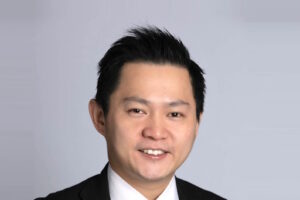
Dr Jeremy Teoh highlights the importance of Hong Kong’s role in global urology research, emphasizing collaborations with international institutions and the Greater Bay Area. Despite the challenges of Hong Kong's smaller scale, its strategic position allows it to bridge Eastern and Western medical practices, elevating research standards globally. Dr Teoh also stresses the importance of government and institutional support in fostering young leaders in R&D, inspiring the next generation of medical professionals to engage in innovative research and contribute to Hong Kong's growing reputation in clinical trials and biotechnology.
Medical education in Hong Kong is pretty much defined by the University of Hong Kong (HKU) and the Chinese University of Hong Kong (CUHK). Can you explain the differences between these two institutions for those unfamiliar with them and why you joined CUHK?
Both the HKU and CUHK are excellent institutions. CUHK, having a younger faculty, offers a dynamic and flexible environment. When I worked at the Prince of Wales Hospital, I met my mentor there and realized that this place provided numerous opportunities for young talents. This supportive environment is one of the main reasons I decided to join CUHK and focus on my academic work.
My specialty is urology, with a particular focus on urological cancers like bladder cancer. I started my career at Prince of Wales Hospital about 15 years ago and transitioned from being a public hospital doctor to a university faculty member in 2016. Currently, I am an associate professor and assistant dean of the Faculty of Medicine. My work primarily involves managing non-muscle-invasive and muscle-invasive bladder cancers, and my team is leading efforts in a procedure called en bloc resection of bladder tumors.
As a key opinion leader in the field of urology, what is your take on the medical progress of bladder cancer treatment?
There has been massive progress. Two centuries ago, the challenge of visualizing a bladder tumor was addressed with a rudimentary method: a hollow metal tube was inserted into the bladder, and a candlelight was used for illumination. This early approach gave way to the development of the resectoscope about a century ago, an endoscopic device equipped with an electric current to resect tumors. Despite this advancement, the technology was limited, leading to the piecemeal resection method where tumors were removed in fragments. This method, while functional, was less than ideal as it could lead to tumor spillage and recurrence. In modern times, the approach has become more refined with the introduction of advanced technologies such as better endoscopic devices and laser technology.
This advanced technique we have been working on – the en bloc resection – helps in maintaining the integrity of the tumor during removal, which is crucial for assessing margins and reducing recurrence rates. We have even conducted a multi-centre randomized trial in Hong Kong involving 13 public hospitals and 350 patients, demonstrating that this technique significantly reduces the one-year recurrence rate from 38.1 percent to 28.5 percent.
Is the en bloc resection a surgical methodology or does it encompass some sort of new device? What is being patented in this case?
It is a surgical technique and we can complete the surgery using the same equipment. By changing the technique, we can immediately influence outcomes. This isn’t about intellectual property or patents, as surgical techniques cannot be patented. However, en bloc resection can be challenging for certain bladder tumours, and newer robotic devices are being developed to facilitate the adoption of technique. By optimizing complete resection and minimizing the risk of seeding, the recurrence rate of bladder cancer can be reduced. Our trial showed that by adopting en bloc resection, we were able to lower the one-year recurrence rate from 38.1 percent to 28.5 percent. The results are promising, but I think we should aim to do better.
For bladder cancer, the adjuvant treatment, typically intravesical BCG therapy, works like an immunotherapy and is administered after surgery. In our trial, some patients received BCG and some did not. We found that those who had the en bloc resection combined with BCG therapy had a significantly lower recurrence rate, around 5 percent at one year for high-risk non-muscle-invasive bladder cancer. This indicates that a combination of good surgery and effective adjuvant treatment is essential to manage both the surgical and biological aspects of the cancer.
If the en bloc resection procedure for bladder cancer proves successful in Hong Kong, how do you envision its adoption as a standard of care on a regional and global scale?
While our focus remains local, our ambitions are global. In our field, altering standard practice requires conducting randomized trials to demonstrate clear benefits. These trials are crucial for influencing guidelines and establishing new standards of care. Historically, implementing such trials has been challenging due to the need for extensive collaboration and industry partnerships. Despite Hong Kong’s small size, we are at the forefront of this field, and our upcoming trials include various innovative approaches. For instance, we are exploring trials combining on-block resection with novel devices and therapies, such as J&J’s TAR200, a drug-eluting device, and Ferring’s Adstiladrin gene-mediated therapy. These efforts could potentially set new global standards.
Would you consider a spin-off becoming a potential partner for any companies developing bladder cancer medications?
We are indeed a candidate for partnerships with companies focused on bladder cancer therapies. The reason they are keen to collaborate with us is that our surgical approach is relatively new. We are currently leading a registry for this particular surgery, with over 100 centres joining globally. We aim to gather data on 5,000 patients to provide substantial real-world evidence. While we have already established through phase III trials that this technique is effective, this prospective registry will offer insights into its practical application. The drugs and devices involved in these collaborations are already approved, so our focus is on collecting real-world data to demonstrate the efficacy of combining surgery with these therapies. Historically, trials have not integrated surgical methods, even though some drugs received approvals for specific indications. Now, by combining effective surgery with these approved medications, we believe we can make significant strides towards potential cures. While bladder cancer has a notoriously high recurrence rate, our findings suggest that a successful surgery, alongside pharmacological interventions, could reduce this rate from around 40 percent to as low as 5 percent. We are genuinely optimistic about this pathway towards a more definitive cure.
What is the impact of sponsors like J&J or Ferring to your work? Are they helping you to set up global trials, and how do you manage these collaborations?
There are two types of trials when working with companies. The first are sponsored trials, which are pivotal regulatory studies. In these trials, the companies lead recruitment and administration, with input from various global centers. I have been involved in study steering committee, helping to design studies and demonstrate clinical benefits. I have also been involving in study publication committee, where we focus on highlighting benefits and knowledge transfer. The other type of trials is Investigator Initiated Studies (IIS), in which independent researchers can propose novel ideas to run by themselves. Usually these studies are not conducted for regulatory purpose, but could be important to address other clinical questions and influence practice.
For the IIS, do you feel you have enough resources here? While many companies bring phase I trials to Hong Kong due to the efficiency of KOLs, there’s a perception of a shortage of clinical trial personnel. How does your team manage this?
Despite the general shortage, my team is well-resourced. We have around 15 research staff, including research nurses and assistants, allowing us to manage 50-60 ongoing studies. This isn’t common, but we have secured funding from various sources, such as research grants, industry partners, and private funds. Additionally, organizing workshops and symposiums helps sustain our operations. With two other professors on the team, we are able to maintain a robust and efficient setup.
Generally, faculty members face significant workload balancing teaching, hospital duties, and research. The government funding to universities is mainly based on teaching and research performance. Teaching funds depend on undergraduate and postgraduate quotas, with the latter being more flexible based on research success. Research funds are competitive, with more grants leading to more university funding. Strong R&D and entrepreneurship also play a crucial role, as successful startups and IP can contribute additional resources.
Given Hong Kong’s relatively small size, how do you handle the challenge of expanding your research and clinical trials, and what do you think about collaborating with larger centres in the Greater China region?
Hong Kong’s smaller scale can be a limitation, but it also offers unique opportunities. Our approach involves leveraging Hong Kong’s strong ties with both Western and Asian medical communities. For example, I’m involved with influential associations like the European Association of Urology (EAU) and the Society of International Urology (SIU). These connections help us stay at the forefront of global research and practice standards.
We face challenges such as language barriers and differences in trial methodology between regions. However, Hong Kong’s education system, which is heavily influenced by Western practices, equips us with the skills to run high-quality randomized trials. We also have an advantage in being bilingual and familiar with both Eastern and Western medical practices.
To address the challenges of collaboration with larger centers in China, we focus on building strong, high-quality partnerships. We provide guidance on trial design and protocol to ensure that the studies meet international standards. This collaboration helps us utilize China’s extensive caseload effectively while maintaining rigorous research standards. By nurturing these partnerships and working closely with both local and international experts, we aim to elevate our research and clinical practice on a global scale.
Some of the programs include hospitals from the Greater Bay Area as well as other parts of Asia. In October, we will hold our annual symposium featuring a pre-conference workshop for the first time under the ARISTA, Asian Rising Star Program, which I designed. This program aims to invite key opinion leaders from Europe and the US to Hong Kong for research skill training and academic leadership. We have invited a number of centers from different Asian countries such as Singapore, China, and Malaysia to participate. The goal is to foster collaboration between East and West, allowing each center to showcase their strengths and innovative research work, thereby demonstrating that Asian institutions are valuable partners in the field of urology.
What more could the Hong Kong government do to support young leaders in R&D and enhance the city’s clinical research environment?
Currently, efforts like the Global Physician Stream (GPS) program within our faculty are focused on inspiring medical students to become leaders in various fields, including R&D. These programs aim to encourage young doctors to gain experience in areas like biomedical engineering and laboratory research, developing a broader skill set beyond traditional clinical training. For our faculty members, certainly we received a lot of support from the Hong Kong government There are numerous faculty-led and successful startup companies based in the Hong Kong Science and Technology Park. Government support is extremely important for nurturing future leaders in R&D and entrepreneurship.