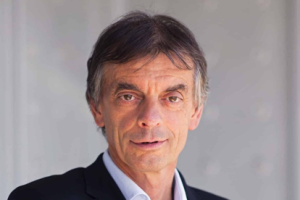
Seven years after our last discussion, GREENTECH has expanded its international presence, reinforced its leadership in dermocosmetics, and deepened its role in pharmaceuticals. In this interview, CEO Jean-Yves Berthon reflects on the group’s evolution, from pioneering natural ingredients for the world’s leading cosmetics brands to advancing biotechnology across plants, microbes, and marine resources through its philosophy of cross-fertilisation.
What have been GREENTECH’s main milestones since 2018?
Since 2018, GREENTECH has undergone a period of considerable development while remaining anchored in its original mission as a biotechnology pioneer. We work with a broad spectrum of natural resources, plants, microorganisms such as bacteria, yeast and fungi, as well as macroalgae and seaweed, extracting active compounds with applications across healthcare, dermocosmetics, agronomy, and environmental management. Central to our identity is what we call “cross-fertilisation”: the ability to draw knowledge from different natural sources and economic sectors and to apply insights across them. Progress made in cosmetics, for instance, often feeds into healthcare or agronomy, and vice versa, creating a virtuous cycle of innovation.
In dermocosmetics, we have strengthened our relationships with the world’s top ten cosmetics brands while also supporting many SMEs in diverse markets. Today, our products reach some 50 countries, a presence made possible by both a wide distributor network and our subsidiaries in the United States, Brazil, Germany, India, Thailand, Taiwan, China, and Madagascar. These international developments have been particularly important in reinforcing our global footprint and proximity to clients.
Beyond active ingredients, we have also advanced in the field of functional ingredients, reflecting the industry’s growing demand for natural substitutes to the synthetic components that determine a formulation’s texture, touch, and overall sensory profile. A notable example is SENSOL, a natural and Cosmos-certified alternative to silicones derived from upcycled avocado oil. It delivers the same soft, silky, film-forming properties expected by formulators while meeting sustainability requirements and demonstrating how innovation and responsibility can go hand in hand.
On the pharmaceutical side, an important milestone was our July 2021 acquisition of the plant extraction business of Laboratoire Gifrer, which we relocated to our Biopôle Clermont-Limagne site in Saint-Beauzire with an investment of EUR 5 million. GREENTECH’s involvement in pharmaceuticals stretches back more than three decades, beginning with the supply of key botanical precursors such as 10-deacetylbaccatin III from yew trees for the semi-synthesis of docetaxel (Taxotere) and colchicine from Colchicum autumnale for gout and inflammatory disorders. Building on this legacy, we now offer an expanded portfolio ranging from extracts for ENT conditions such as sore throats and respiratory disorders to pain management solutions and strictly regulated opiate derivatives like morphine and codeine, which we can produce in both liquid and dry forms under carefully controlled conditions. At the same time, we continue to explore new medicinal plants and remain committed to broadening our pharmaceutical portfolio in line with industry needs, like microbiota study.
How is the GREENTECH Group organised, and how do its different entities complement each other?
The GREENTECH Group brings together three specialist entities, each with a distinct focus yet fully aligned around a shared philosophy. GREENTECH is dedicated to plants, extracting active molecules and building on their traditional medicinal uses. GREENCELL concentrates on microbial biotechnologies, working with bacteria, yeast, and fungi through fermentation to generate active ingredients of high value. GREENSEA focuses on marine biotechnology, developing products from microalgae and macroalgae. Taken together, these three pillars give us a unique platform that spans the plant, microbial, and marine worlds, allowing us to combine expertise and apply it across industries.
In microbial biotechnology, for example, we have patented strains with remarkable properties. One produces unusually high levels of gamma-aminobutyric acid (GABA), a neurotransmitter with significant potential in neurological disorders such as Alzheimer’s disease. Although we do not conduct full clinical validation ourselves, given its complexity and cost, we have demonstrated clear proof of concept. We have also developed strains with analgesic potential, opening new possibilities in pain management. Our aim is not to bring finished drugs to market but to supply pharmaceutical partners with active ingredients, supported by fermentation capacity of up to 5,000 litres and in-house purification facilities that ensure consistent quality at scale.
At GREENSEA, our work centres on “domesticating” algae by guiding their physiology to stimulate the production of additional bioactive molecules. This approach, which combines plant extraction and microbial fermentation techniques, enables us to unlock compounds with pharmaceutical and cosmetic value. It is a good illustration of our cross-fertilisation philosophy, where expertise in one area enriches progress in another.
Although GREENTECH (founded in 1992), GREENCELL (2000), and GREENSEA (1988) each bring decades of experience, we now increasingly see ourselves as one unified organisation serving pharmaceuticals, dermocosmetics, agronomy, and even environmental biotechnology. A strong example of this integration is our contribution to wastewater treatment. We do not build treatment facilities ourselves, but we supply them with microorganisms specifically adapted to degrade pollutants such as antibiotics or hormones. By selecting the right strains and applying them at the right time, we ensure effective biodegradation and prevent contaminants from entering rivers and soils. These microorganisms also neutralise odours, and our expertise has been successfully applied in both wastewater treatment plants and large lagoons, including projects in Africa and Saudi Arabia.
How has GREENTECH’s trajectory evolved in terms of international expansion and portfolio development?
Our trajectory in recent years has been driven above all by the needs expressed by our markets. Being present in multiple countries exposes us to a wide variety of expectations, and by analysing and combining this feedback, we can identify trends, anticipate demand, and transform them into concrete innovations. This process of continuous exchange acts as a powerful source of inspiration, allowing us to expand our portfolio in a targeted and meaningful way.
Research and development sit at the centre of this evolution. Although GREENTECH, GREENCELL, and GREENSEA each bring their own expertise, our teams work seamlessly as one, irrespective of whether a project originates from plants, microorganisms, or algae. Much of our work focuses on physiology and metabolism, since it is at this level that we can detect the critical points of stimulation or inhibition governed by active molecules. Once identified, our task is to determine how best to obtain these molecules through fermentation, plant extraction, or marine resources, ensuring that the most effective and sustainable route is pursued.
In terms of business share, cosmetics and dermocosmetics represent around 60% of our activities today, pharmaceuticals approximately 15%, and agronomy close to 20%. This balance reflects both our long-standing strength in cosmetics and the expanding opportunities we see in pharmaceuticals and agriculture, each supported by the same cross-fertilisation philosophy that underpins the GREENTECH Group.
What guides your approach when entering and developing new international markets?
Proximity is at the heart of our international strategy. To succeed in a new market, it is essential to be present, to travel, and to establish genuine relationships. Developing business from behind a desk is not credible; you need to meet people face to face, understand their culture, and gain a feel for the local context. Only then can trust be built and opportunities fully grasped.
This philosophy explains why our affiliates are led locally. In Brazil, the manager and team are Brazilian. In the United States, our director may be French by origin, but having lived there for more than 25 years, he is in every sense American, supported by an American team. The same applies in Germany, India, and elsewhere. Local leadership ensures our people are immersed in their markets, able to interpret trends directly, and to provide us with valuable feedback that guides our innovation.
I also make it a point to travel extensively myself, as there is no substitute for direct observation. Some years ago, I visited Turkey and was struck by the country’s dynamism, yet our business there was underperforming. I asked a Turkish colleague to meet with our distributor, and within two days, it became clear that the problem lay with their performance. We immediately changed course, which transformed our position in the market. Without that first-hand experience, we would have missed the opportunity entirely. This is why proximity is so critical: to truly understand a market, you must be present to breathe its atmosphere.
Which broader trends are shaping your sectors, and where do you see the most promising opportunities ahead?
The pandemic exposed the fragility of pharmaceutical supply chains and, in France, prompted the government to encourage renewed investment in domestic production. The shortage of even basic molecules such as paracetamol underlined the importance of reinforcing manufacturing capacity. At the same time, around 30% of medicines still derive from plants and natural sources, and biotechnology is steadily expanding this share. While there is competition, increasingly complex regulations have led some players to withdraw, whether due to succession issues in family-owned businesses or the high cost of compliance. For us, this has created opportunities to strengthen our position, exemplified by the acquisition of Laboratoire Gifrer’s plant extraction activities. More microbiota therapy is coming, and GREENCELL is present in this area.
Looking ahead, one of the most promising frontiers is the microbiota. We already have a broad portfolio of strains with potential applications in pain, Alzheimer’s disease, and other neurodegenerative conditions, and our large-scale fermentation and purification capabilities allow us to supply pharmaceutical partners with high-quality active ingredients ready for clinical development. Beyond this, we continue to look to nature itself as a boundless source of innovation. In chemistry, everything begins with the right molecular scaffold, which can then be adapted to create derivatives with new properties. Nature provides these sophisticated structures, and our role is to identify and refine them for therapeutic use.
The appetite for natural solutions is also clear in the market. In cosmetics and dermocosmetics, demand is overwhelming. In pharmaceuticals, safety is paramount; patients care less about whether a treatment is natural or synthetic than whether it is effective, but regulations around environmental impact, wastewater, and workplace safety are accelerating the shift towards natural alternatives. In this respect, marine biotechnology, and particularly macroalgae, is attracting growing interest, with strong demand from our partners across multiple sectors.
What is it like to operate as a French SME internationally, and what improvements would you like to see in the business environment?
In France, SMEs and ETIs (intermediate-sized enterprises) play a fundamental role in the economy. They are highly competitive, adaptable, and innovative, and they contribute directly to the resilience of the industry. Yet despite these strengths, they are often confronted with regulatory and financial barriers that make international expansion more difficult. It is therefore essential to provide supportive frameworks, through financial backing, targeted development initiatives, and clearer regulatory guidance, to allow these companies to thrive on the global stage.
When I speak about regulation, I do not mean that businesses should operate without constraints, but rather that there should be a more open and constructive dialogue between regulators and enterprises. Too often, particularly since the pandemic, exchanges have been reduced to emails or video calls, without the possibility of direct discussion. This lack of communication leads to lost time, misunderstandings, and, at times, costly mistakes because requirements are unclear. With greater opportunities for timely and transparent dialogue, SMEs and ETIs could avoid unnecessary expenses, adapt more effectively, and channel their resources into innovation and growth, both in France and internationally.
What are GREENTECH’s priorities for the coming years, and how would you like the company to be perceived internationally?
Cosmetics and dermocosmetics will remain at the centre of our development, and GREENTECH is now firmly recognised as a leader in active ingredients for these markets. In pharmaceuticals, my priority is to deepen our partnerships in biotechnology and, above all, in the field of microbiota. I am convinced that microbiota represents a “third medicine,” complementing chemistry and biotechnology. The scientific community increasingly highlights its role in areas such as pain management, Alzheimer’s and Parkinson’s disease, joint health, and even mood regulation. Because microbiota-based approaches are largely preventive, they can also reduce healthcare costs compared to curative treatments, which is why I believe they hold such enormous promise for the future.
More broadly, I would like GREENTECH to be associated with the idea of “one company, one health.” Our activities encompass a range of sectors, including cosmetics, pharmaceuticals, agronomy, and environmental applications, yet they are deeply interconnected. From agronomy, we obtain plants that provide nutrition; from microorganisms and macroalgae, we develop compounds for healthcare; from healthcare and good nutrition comes healthier skin, which brings us back to cosmetics. Finally, through wastewater treatment and the recovery of organic waste, we return resources to the soil in the form of fertiliser and irrigation water, helping preserve drinkable water for humanity. It is a comprehensive, circular vision —a 360-degree cycle in which every element is interconnected. In this sense, GREENTECH embodies a holistic vision: one world, one health.