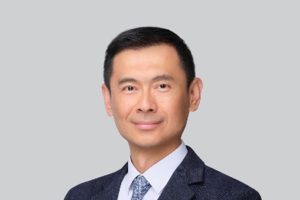
Jack Chiu is leading Siemens Healthineers’ transformation from equipment supplier to value-based healthcare partner in Taiwan. Under the 2026–2030 “Elevating” strategy, Taiwan serves as an Asia-Pacific innovation landing pad, validating advanced imaging and AI solutions. With market leadership in high-end MRI, CT, and hybrid ORs, Chiu is focusing on precision therapy, digitalisation, and supporting Healthy Taiwan initiatives addressing ageing and chronic disease challenges.
Could you outline your professional journey and leadership philosophy guiding your current role?
Over 25 years, my career has centred on one consistent theme: translating medical technology into improved patient outcomes whilst ensuring practical hospital operational integration. From Johnson & Johnson and Stryker – where I served ten years as General Manager for Taiwan and Hong Kong – to my current Siemens Healthineers leadership, my focus has evolved from equipment supply to building value partnerships.
My fundamental belief is that technology and innovation serve healthcare through warmth and human connection. I concentrate on translating advanced medical technology into genuine value for patients and physicians, ultimately improving clinical outcomes whilst optimising hospital operational efficiencies.
My role encompasses two primary dimensions. First, bridging innovation – adopting our most advanced and suitable technologies alongside local clinical partners. Second, strategic transformation – leading our organisation to partner with hospitals, physicians, and surgeons delivering comprehensive value. We aspire beyond supplier status toward authentic value partnership.
How does Siemens Healthineers’ shift from equipment supplier to healthcare transformation partner influence your priorities in Taiwan?
We are implementing our new ambition developed over the past four years whilst looking toward the next five years under our “Elevating” strategy. My responsibility involves localising our global mission into regional strategies.
My leadership team’s philosophy emphasises trust-building internally and externally. Internally, we embrace “lean for growth,” optimising organisational procedures, developing talent, empowering employees as change agents, and encouraging innovation. Externally, echoing Dr Montag’s Elevating strategy, we engage more actively with C-level executives, enhancing understanding of hospital decision-maker priorities and resource constraints. As genuine partners, we must communicate with hospital leadership, providing solutions transcending hardware to encompass clinical and academic collaboration.
In Taiwan, we entered our new global strategy phase, “Elevating” (2026-2030), focusing on three key areas aligned with local needs and our global vision:
First, fighting non-communicable diseases – cancer, cardiovascular disease, and neurodegenerative conditions including stroke and Alzheimer’s disease. This represents our primary focus, with substantial evidence of several years’ commitment intensifying over the next five years.
Second, precision therapy aligned with our Elevating strategy. As an imaging-focused organisation, we excel at image-guided therapy and theranostics concepts – diagnostic and therapeutic integration. We aim to advance these capabilities, providing comprehensive solutions to physicians.
Third, digital AI leveraging our global resources whilst capitalising on Taiwan’s exceptional AI and automation manufacturing capabilities. We partner with local organisations, creating more comprehensive portfolios and solutions, providing enhanced data access to customers.
Globally, Siemens Healthineers generates approximately USD 22 billion revenue with imaging contributing 55 percent. How does Taiwan’s product mix compare, and what market positioning have you achieved?
Our Taiwan profile closely mirrors global patterns. We maintain market leadership in imaging – particularly MRI and CT in high-end sectors – with market shares approaching or exceeding global averages in certain segments, given territorial differences.
We demonstrate exceptional strength in surgical infrastructure, notably hybrid operating rooms. We hold a significant share in the hybrid operating room construction and equipment market. Generally, for advanced imaging and precision treatment technologies, we have established a strong presence in Taiwan’s market.
Within your Asia-Pacific organisational structure, how does Taiwan function – as growth market, reference site, or innovation hub?
Taiwan possesses distinctive strengths that we leverage for China and the broader Asia-Pacific region, enabling mutual learning whilst interacting with Korea, Japan, and Southeast Asian countries.
Taiwan serves as a crucial “innovation landing pad” within our strategy given three particular market characteristics:
First, a highly integrated network infrastructure. Taiwan’s National Health Insurance system provides exceptional coverage and accessibility, creating ideal environments for validating real-world data and AI models. This integration enables rapid technology testing and swift data collection, positioning Taiwan as a demonstration centre for advanced technologies.
Second, rapid technology adoption. Taiwan hospitals function as early adopters for China and Asia. We focus not merely on equipment sales but on re-engineering clinical value delivery. The introduction of technologies such as Photon Counting CT often leads to a redesign of clinical pathways – from screening to diagnosis – rather than a simple equipment upgrade.
Third, synergy with ICT and semiconductor ecosystems. Taiwan’s robust technology infrastructure facilitates local partnership identification accelerating medical AI and hardware integration.
We rapidly launched our most advanced CT – Photon Counting CT – at Taichung Veterans General Hospital and Cheng Hsin General Hospital, Taiwan’s premier cardiac centres. This technology ensures a safer imaging experience with minimal bodily impact, all while capturing cardiac details that were once beyond the reach of previous CT generations. We collect clinical reports for industry publication, establishing Taiwan clinical validation.
Additionally, we maintain exceptional strength in hybrid operating rooms, working closely with hospitals adopting advanced comprehensive solutions. For instance, Taichung Veterans General Hospital established Asia’s first hybrid OR with dual-plane robotic arms for acute stroke intervention. National Taiwan University Hospital maintains similar installations, saving numerous stroke, neurological, and brain disease patients. Several represent Asia’s or China-Taiwan region’s first cases, with some achieving global leadership.
How does Taiwan compare to Japan, Korea, and Singapore in digital maturity and readiness to adopt healthcare innovations?
Taiwan’s digital progression proves undeniably robust and accelerating. However, hospital data remains fragmented – each institution maintains proprietary systems and configurations. President Lai’s Healthy Taiwan initiative, supported by substantial AI budgets for current and coming years, will enhance cloud integration and cross-hospital data communication, accelerating development trajectories.
We observe critical mindset evolution. Previously, hospitals and suppliers emphasised fee-for-service models. With AI, digitalisation, and philosophical transformation, systems shift toward value-based care supporting National Health Insurance Administration quality metric adoption. Funding flows more accurately toward patients and critical diseases, though this transformation demands robust digital and AI infrastructure.
Additionally, AI and digitalisation facilitate scaling and addressing rural healthcare access challenges – mobile CT trucks, mobile AI diagnostic capabilities, and remote digital devices. The government actively encourages these initiatives, and we deliver such solutions.
Consider our mobile CT truck launched last October in collaboration with Taoyuan City Government’s vice mayor, a hospital expert. The government promotes lung cancer screening programmes by utilising low-dose CT. This vehicle proves ideal – visiting factories where busy workers resist hospital visits yet represent high-risk populations, plus serving rural ageing populations reluctant to travel. The Healthy Taiwan policy explicitly supports this initiative. We subsequently created a second unit for Changhua County in central Taiwan, reflecting growing awareness that early-stage lung cancer screening plus potential additional cancer detection represents tremendous value.
Resilience considerations prove equally important. During power restrictions, political disruptions, or future COVID-like scenarios, mobile capabilities prove essential for hospitals and communities. We represent the only provider successfully delivering these solutions through local partnerships – we supply equipment whilst trunk and IT companies provide complementary capabilities. This exemplifies local partnership innovation supporting government policy implementation.
Beyond mobile diagnostics, how does Siemens Healthineers support Healthy Taiwan objectives, and where do strategic gaps remain?
The Healthy Taiwan initiative, alongside programmes like the “888 Plan,” emphasise earlier prevention, more precise diagnostics, and superior treatment avoiding downstream expenditures. Early patient identification and treatment is more cost-effective. Our contribution echoes government policy through our Elevating strategy, leveraging comprehensive Siemens resources.
We support President Lai’s Healthy Taiwan vision through three mechanisms:
First, early NCD detection. We deploy Photon Counting CT and low-dose lung CT with AI support, aligning directly with government initiatives identifying high-risk populations before severe disease progression. Our focus areas – non-communicable diseases encompassing cardiac disease, stroke, neurodegenerative conditions including Alzheimer’s disease, plus cancer – represent our primary concentration.
Second, precision therapies. As image-guided diagnostic specialists, we collaborate intimately with physicians providing precision therapy strategies and tools. We operate extensively in interventional operating rooms with substantial coverage for image-guided intervention, equipping facilities with AI-integrated solutions assisting younger physicians and critical care departments treating stroke and cardiac emergencies.
Third, AI-driven workflow optimisation. We shift from sick care toward prevention and screening – lung cancer screening, diabetic testing promoting prevention awareness, MRI scanning ensuring brain health and stroke prevention. We elaborate our role from technology adapter or equipment provider toward value partnership with hospitals and patients.
Additionally, we address efficiency and access through multiple pathways. Clinically, minimally invasive solutions reduce hospitalisation duration and recovery periods, alleviating hospital staff pressures. Our Mobile CT Truck extends advanced imaging to remote communities ensuring equitable access. Regarding sustainability, we introduced helium-free MRI technology. Traditional MRIs require 1,500 litres of helium; ours require only 0.7 litres whilst consuming 50 percent less energy. This environmental protection simultaneously lowers operational costs, expanding high-end MRI accessibility.
We also implement Digital Twin technology, enabling pre-surgical simulation, reducing risks and operational simulation, optimising hospital workflows, and ensuring efficiency despite workforce limitations.
Could you provide concrete examples demonstrating these strategic commitments?
For oncology, consider our Photon Counting CT installations at Taichung Veterans General Hospital and Cheng Hsin General Hospital focusing on lung cancer detection, plus our PET-MR nuclear medicine technology at various hospitals, enabling early breast and lung cancer detection.
For cardiovascular and stroke prevention, we maintain extensive hybrid operating room coverage, providing AI-integrated solutions for image-guided intervention.
Regarding innovation partnerships, we collaborate with Heron Technology on BNCT (Boron Neutron Capture Therapy) – an extraordinarily advanced cancer treatment. We possess comprehensive cancer treatment solutions, but BNCT addresses gaps in our portfolio. Traditional radiotherapy struggles with brain tumours, but BNCT injects drugs into cranial tumours, subsequently delivering light beam activation, causing tumour destruction – substantially more precise than conventional approaches. We cannot achieve this with existing radiotherapy capabilities.
Our collaboration provides precise imaging diagnostic technology whilst they deliver sophisticated therapeutic weaponry – together, we strengthen our position in the Taiwan market.
We also partnered with National Tsing Hua University, donating Digital Twin AI systems which enable students to learn anatomy through three-dimensional immersive simulation rather than traditional cadaver-based education.
How do you attract and retain top technical and clinical talent amid competition from Taiwan’s high-paying semiconductor sector?
Younger generations gravitate toward semiconductors given compensation two to three times our levels. Fortunately, our turnover rate remains stable because we recruit colleagues with medical backgrounds possessing foundational knowledge and customer service capabilities.
Our vision and mission communication emphasises meaningful impact. Team members experience tangible evidence that customers and patients achieve improved outcomes – our equipment genuinely helps patients. Personally, after nearly 30 years in medical industry, I continue because I dialogue with customers, witnessing patient improvement and recognising our equipment’s genuine contribution. We share this culture across our teams – frontline work enables witnessing genuine achievement.
We involve families through family days, events, and children’s education programmes, demonstrating the significance of their parents’ work. Children express pride, some declaring aspirations toward identical careers.
Additionally, certain individuals demonstrate intense excitement regarding innovation and clinical solutions. Siemens welcomes such talent because unlike other multinational representative offices merely trading equipment, we encourage customer dialogue, physician consultation identifying challenges, and collaborative problem-solving benefiting patients. We achieved numerous Taiwan firsts, genuinely inspiring young professionals and technical talent who recognise our platform and company enable pursuing authentic aspirations with institutional support as an innovation-driven organisation. Most medical companies prove reluctant toward such approaches.
What long-term impact or legacy do you aspire to leave on Taiwan’s healthcare system?
Translating advanced medical technology into clinical reality. I will celebrate witnessing achievements like our CT truck operational excellence.
We are pursuing the opportunity to install Taiwan’s first seven-tesla MRI through open tender procurement after nine years of planning – a breakthrough for neurological research If it succeeds, that would represent a milestone for Taiwan.
Our Heron BNCT collaboration potentially delivers exceptional cancer treatment broadly accepted, saving numerous lives. I want witnessing this realisation.
Beyond technology, people matter most. Throughout career transitions, my colleagues and teams disperse across the industry whilst customer relationships endure – physicians and patients alike. These friendships and partnerships represent my most valuable assets, sustaining my excitement and commitment.