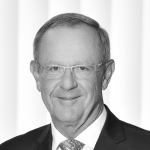
Axel B. Müller, managing director of Intergenerika, the Swiss generics association, reveals the penetration rate of generics in Switzerland; why generics are a safe, and smarter choice, manufactured to modern standards with affordable prices; and the threat of government forcing generic companies to benchmark their prices to nine European countries by 2017.
Can you give us an overview of the generics market in Switzerland today? Last year the market reached 637 million Francs (USD 648 million), seven percent growth in value over 2014, but market penetration still lags considerably behind the OECD average. Why is that?
The Swiss generics market is still not fully developed. When you look at the market share and penetration of generics in this country, it does not compare to markets such as Germany, the UK, France, or the Netherlands. In terms of value, the total share of generics within the Swiss pharmaceutical market was 19 percent in 2015 in terms of value, and 32 percent by volume. The penetration rate in Switzerland is still rather low, and must be expanded.
The member companies of Intergenerika have been working hard on the educational front to ensure that pharmacists, doctors and patients have a more balanced view of generics. There has been a lot of work done to convey the point that generics are not of an inferior quality to the originator product. Generics are high-quality, off-patent products. I would even go so far as to say that they are sometimes of a superior quality with regard to the respective originator product. Patented products have usually been on the market for 10 years or longer before a generic alternative is launched. Over this time, the product has been advanced in many ways, such as modern dosage forms or package varieties. The side-effect profile of generic products are well known, they are manufactured to a modern standard, and are on offer at more affordable prices. In times of austerity they are the optimal choice and are increasingly seen as the indispensable alternative.
What are some of the factors that explain this comparably low market infiltration and what are some of the regulatory measures Intergenerika is advocating?
The reason the generics market is not yet fully developed in Switzerland is in large part due to a lack of incentives for doctors and pharmacists when it comes to prescription. There is even a disadvantage for a self-dispensing doctor or pharmacist, since they receive a lower profit margin. In Switzerland doctors are free to prescribe what they consider to be the best available product; they are under no obligation to prescribe a generic, and the same is true for the pharmacist. It is true that when purchasing a generic the patient has to cover 10 percent of the costs out of their own pocket, whereas that percentage can rise to 20 in the case of an originator product. Yet this incentive to buy a generic is reduced by the patient’s sickness-fund, which frequently covers all the costs. Intergenerika is asking the government to create further incentives for doctors and pharmacists to prescribe generics. Notwithstanding a lack of incentives, today more and more sickness funds and patients understand the value of generics when it comes to reduce overall healthcare costs. I am convinced that the growing penetration of generics will continue in the years ahead.
[Featured_in]
Most generic associations advocate mandatory substitution, yet Intergenerika is not favor of this, but argues instead for more individual responsibilities for doctors and pharmacists. What factors explain your atypical approach?
Imprinted within the Swiss DNA is the right to make a choice, notably when it comes to their medicines. At Intergenerika, we are not asking for a disadvantage when it comes to buying the originator product, or any particular advantage for generics: we simply say, let the doctor and the patient decide what is best for them. We encourage the use of generics, as the more modern and affordable option. Nevertheless, the barriers to generic penetration that I mentioned earlier must be removed.
You have had over 30 years of experience working across markets as diverse as Germany, the US and the UK. What are in your view the other particular characteristics of the Swiss generic market?
In Switzerland, doctors and pharmacists remain in control of the [decision making] process.
In Germany the decision-making power has moved from the doctors and pharmacists, to the sickness funds, which reimburse only the most cost efficient product. In Switzerland, doctors and pharmacists remain in control of the process. While the approach employed in a country such as Germany is advantageous when it comes to reducing costs, it is problematic for the patient. Germany has a so-called rebate-system, where sickness funds negotiate a contract with the pharmaceutical company, and the patient is then obliged to switch to a lower priced product the next time they go to the pharmacist. Different brands, namely drugs with the same ingredients but with different presentations, frequently lead to overdosing by confusing the patient. In Switzerland we do not use such a system; the patient and the doctor can decide what is best for them. This is an important principle that must be respected.
Swiss generic drug prices are close to double those of six EU countries (Germany, Austria, Denmark, France, UK and Holland). Indeed, Health Minister Alain Berset has said he is focused on reversing the high price of generic drugs. Is it not counter-productive to have above average generic prices in Switzerland?
Quite the opposite, I would say that generics in Switzerland are too cheap, particularly with respect to the quality and unique service package that are offered. One also has to take into account the costly approval procedures by Swissmedic, the Swiss Health Authorities. The problem of the comparison with foreign prices is the countries we are comparing prices to. You cannot compare Swiss generic prices to those in Germany, where there is a rebate system that penalizes the patient. If you compare our prices to those in France, Finland, Austria or Belgium, markets with systems comparable to the Swiss healthcare system, there is only a 30 to 40 percent price difference. If you compare the Swiss generics market to those in the UK, Denmark or the Netherlands, where you have extremely high generic penetration, clearly we cannot compete. The number one issue is the selection of the reference countries.
What do you see as some of the other factors that explain such price differentiation?
[related_story]
Costs are, in general, higher in Switzerland than in many other European countries. I mentioned it earlier, before a product can be launched on the market, it must receive approval from Swissmedic, which asks for additional trials, rather than merely accepting results from the EU. Such additional trials have a cost. Furthermore, all the key healthcare stakeholders – the wholesaler, the pharmacists, the doctor – enjoy higher salaries than in the majority of other European countries. A pharmacist in Switzerland earns double what a German pharmacist receives.
In markets such as Germany and the Netherlands, companies can launch the pack size which is the most profitable for them, and avoid having to launch the ten-pill package. In Switzerland, we are asked to launch the full range of package sizes, which results in additional costs. The principle factor behind the differentiation in pricing, however, is that the market in Switzerland is rather small compared to a country such as Germany, and therefore you do not have economies of scale.
If the Swiss government follows through with its intention to oblige generic companies to benchmark their prices to a group of nine European countries, by 2019, this generics industry could be irreparably harmed. Today the majority of Swiss generics companies are no longer family owned, but belong to large publicly-traded multinationals. If the margin achieved in a specific country does not reach a certain threshold, such companies may decide to stop marketing their products. As a result, we will witness supply shortages. Indeed, we already have this issue with a number of specific illnesses in Switzerland, where manufacturing costs are considered too high. If the Federal Office of Public Health asks for prices which are lower than the manufacturing costs, such products will disappear from the market, leading to a risk of supply shortages. Another issue is that if generic prices continue to be forced down, smaller companies could be forced off the market, leading to a monopoly, with all the known disadvantages. The government must realize that if they go ahead with their proposed price cuts, it may lead to short-term savings over the next few years, but will result in a long-term damage of our industry.
Mr Müller, you took over as managing director of Intergenerika in May 2016, having had an extensive career in the pharmaceutical industry. What will be your priorities with Intergenerika?
I am a pharmacist by training. During my entire life I have dealt with medicines. I obtained a PhD in pharmacology because I wanted to gain a better understanding of how medicines work. I then gained experience with various corporate groups in a number of countries. At this stage in my career I want to give back some of the knowledge I have received, in particular to the generics industry. Most of my professional life has seen me interacting with the generics industry, from the API level, to the development of generic drugs, to the marketing of such products. Leveraging all my experiences, I believe I can add value to a market that is still embryonic, with room for further growth and development. My objective is to interact with all stakeholders, in particular the politicians, to ensure that Switzerland has a commercial climate that is beneficial to the generics industry. I attach great importance to this mission, because it is my strong conviction that generics remain the drugs of choice when it comes to costs savings. Such potential needs to be further nurtured.