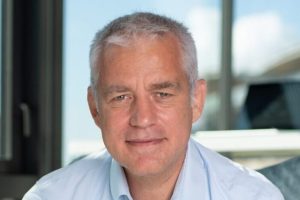
MaaT Pharma is entering a defining moment in its mission to bring microbiotherapies into areas of acute unmet need. Hervé Affagard recounts how a personal catalyst, an engineering mindset and early scientific partnerships shaped a platform now approaching its first potential approval for its first microbiome drug candidate. The journey mirrors both the complexity of the gut microbiome and the determination required to translate it into meaningful clinical progress.
What shaped your decision to launch MaaT Pharma and focus on microbiome science?
My route into biotechnology was unconventional. I trained as an IT engineer and spent many years in information technology, corporate roles and later M&A while completing an executive MBA. That progression eventually brought me to Lyon as a C-suite operations executive at Biomnis. Starting MaaT Pharma felt like a natural next step, but the real catalyst was personal. Both my parents were diagnosed with cancer, and their experience pushed me to explore therapeutic areas where patients have very few options. I became convinced that the gut microbiome could offer, fundamentally, new ways to address unmet medical needs.
From the beginning, my contribution was shaped by an engineering mindset. Studying the microbiome relies heavily on sequencing and computational analysis, so approaching the science through data, iteration and rapid learning allowed us to move quickly. Our objective was to create full ecosystem microbiotherapies capable of modulating the immune system rather than simply replacing a patient’s microbiome, something that had not yet been attempted in the field.
Acute graft‑versus‑host disease became our starting point because it is a condition with a profound unmet need, where treatment‑induced microbiome disruption and the microbiome’s central role in physiopathology make the rationale for intervention especially strong
When we founded the company in 2014, there were no approved therapies for steroid-refractory acute GvHD, and only one treatment, a JAK inhibitor ruxolitinib, has since been approved for second-line use. We chose to focus on the third line population, patients who fail ruxolitinib and face extremely poor survival outcomes.
The scientific groundwork came through a technology transfer from INRAe. Working with Doctor Joël Doré, once call the pope of the microbiome, we co-developed our approach and secured patents on our method for producing standardised pooled microbial ecosystems drug candidates. These patents underpin our first candidates, including MaaT013 and MaaT033, and formed the basis for the platform we have continued to expand.
Choosing Lyon was also pragmatic. In 2014, no CDMO in Europe was able to manipulate a full ecosystem microbiome therapy because of the complexity of producing drug candidates using live bacteria. At this time, the Accinov facility within the Lyonbiopôle health cluster was the only site prepared to host us, and it later evolved into a more specialised CDMO and MaaT Pharma set the largest full ecosystem manufacturing facility in Europe with Skyepharma. A decade later, that early work has brought us to a decisive point. In June 2025, we submitted our Marketing Authorisation Application to the EMA for Xervyteg®, also known as MaaT013, which, if approved, could become the first microbiotherapy authorised in Europe, the first microbiome-based therapy worldwide in oncology, and the first approved treatment for third-line aGvHD. This is the foundation of what we describe as our triple F positioning. In parallel, we continue to expand into additional oncology indications such as solid tumours in combination with immunotherapies, with preclinical activities for our MaaT034 asset designed using AI and co-cultured technologies.
What do the recent clinical results reveal about the unmet need in third-line acute GVHD and the progress achieved with Xervyteg®?
Third-line acute GvHD remains one of the most challenging situations in haematology. Patients who no longer respond to steroids or ruxolitinib typically survive only a matter of weeks, and historical one-year survival hovers around 15% (Abedin et al, 2021). The disease often affects the gut, liver and skin simultaneously, with gastrointestinal involvement alone sometimes reaching several litres of diarrhoea each day. Although the patient population is small, with roughly three thousand cases per year across the United States and Europe, those who reach this point have a trajectory that is almost uniformly severe.
Against this background, the phase 3 ARES study, our pivotal trial evaluating Xervyteg® in third-line acute GvHD, is showing a decisive advance and was recently presented at the ASH 2025 Annual Meeting. The study met all its endpoints with a 62% gastrointestinal overall response rate at Day 28 in a population that had exhausted available therapies. Early response is strongly associated with longer-term outcomes, and our data show a one-year survival of 54%, with a clear distinction between responders and non-responders. These results provided the basis for moving quickly on the regulatory front.
We submitted the Marketing Authorisation Application for Xervyteg® to the EMA on 2 June 2025, and the file is now under standard review.. If the process follows typical timelines, a decision could be reached around mid-2026, based on standard processes. In terms of confidence, I remain guided by the benefit we see for patients. This is a first in class therapy, so additional requests from regulators are possible, and we approach that reality with humility. At the same time, our development history has been consistent and resilient, with clinical trials positives up to this point. That experience allows us to stay measured but genuinely optimistic as Xervyteg® moves through the final stages of review.
How would you outline your regulatory approach and the path you have chosen to bring your therapies to market?
Our regulatory strategy reflects the same ambition that drives our science. We chose to file first in Europe, which is not the usual playbook, because our full ecosystem-pooled technology was immediately well understood there, and our earliest regulatory interactions were in that framework. As live biotherapeutic products, our programs undergo rigorous, standards-based review in every jurisdiction. In the United States, we sequenced activities to build a comprehensive safety and quality evidence base on data generated in Europe and now have an open IND for trial in acute gastrointestinal GvHD, similar to the registration in Europe. However, we are in active discussion to ensure this trial is fitted to support a BLA. In parallel, patients are being treated under Individual Patient Expanded Access (compassionate use) while the broader clinical setup is finalised.
The scientific rationale also shaped our path. The human gut hosts hundreds of bacterial species and millions of microbial genes that influence immune regulation. Since each microbiome is unique, we believed that a single donor product could not provide the consistency needed for severe immune-mediated disease. This led us to build a pooled donor full ecosystem therapy, which is the basis of Xervyteg® and is now under review at the EMA. In parallel, we have developed a second platform that creates donor-independent microbial ecosystems using co-culture and artificial intelligence. This next-generation technology, illustrated by MaaT034, aims to support larger-scale oncology applications.
Europe’s plan has advanced more rapidly. With the Marketing Authorisation Application now under EMA review, we are moving through the usual clarification steps expected for a first-in-class therapy. The process follows a standard rhythm, and we remain focused on addressing the agency’s questions as they arise.
What stands out to you about the scientific and competitive evolution of the microbiome field?
The microbiome field has always been defined by its biological complexity, and that complexity explains why many early approaches faltered. A first wave of companies built programmes around single-strain concepts that resembled next-generation probiotics. These models could not reproduce the diversity or functional depth needed to influence immune responses in severe diseases. A second group pursued defined consortia with a limited number of strains, which improved on the single-strain model yet still fell short of the interactions that occur within a true microbial ecosystem. Over time, the field converged around more complex strategies, including full ecosystems, whether donor-derived or synthetically reconstructed, because they more accurately reflect the biology we aim to modulate.
As this scientific shift unfolded, the competitive landscape also changed. Europe and the United States led the early clinical efforts, but momentum has grown rapidly in the Asia Pacific region, particularly in China and South Korea, where investment and research capacity have expanded at a pace. In contrast, Europe has seen a contraction. Several startups, especially those rooted in narrow or simplified technologies, struggled to secure financing or validate their science and ultimately disappeared. The result is a more concentrated field centred on companies capable of addressing the full complexity of microbiome-based therapeutics.
This is precisely why we created EMIH, the European Microbiome Innovation for Health association. The aim is to unite the strongest scientific players, support their access to capital and provide a coherent voice for the field in Europe. In several cases, this coordinated platform has helped ensure that promising initiatives remained viable at moments when they might otherwise have been lost.
How have you designed MaaT Pharma’s financing model to support progress toward commercialisation?
Since creating MaaT Pharma, we have raised roughly EUR 130 million through equity and non-dilutive sources. Our 2021 IPO provided EUR 36 million, supported by smaller capital increases that helped us advance key clinical milestones. The current strategy rests on three coordinated elements. Through our partnership with Clinigen, which will commercialise our lead therapy across 27 European countries pending approval, we receive milestone-based payments that link financing directly to regulatory progress. We have also secured a EUR 37.5 million loan facility from the European Investment Bank (EIB), tied to a similar set of development milestones. Alongside this, we will raise additional equity to unlock the remaining EIB tranches and preserve financial flexibility. If we deliver on the planned milestones, this structure gives us financial runway into 2027, covering both the anticipated EMA decision and the initial phase of commercial preparation.
How do you see investor sentiment shifting around microbiome therapeutics, and what does that mean for your next steps?
The investor landscape has shifted noticeably over the past decade. Early setbacks in the microbiome field, particularly in the United States, created a degree of hesitation, so part of our work has been to rebuild confidence in the potential of full ecosystem therapies. The Clinigen partnership, together with convincing data, helped validate our approach, yet many investors remain in a wait-and-see position because, as of today, we are the only microbiome player with a registration process underway. It places a clear responsibility on us to deliver the first approval before larger pools of capital engage more fully.
Our pipeline is designed to support that trajectory. MaaT033 is advancing in a large Phase 2b study, potentially pivotal, in allogeneic transplant patients, one of the most substantial trials conducted in this area, and MaaT034 represents our next-generation synthetic ecosystem for immuno-oncology. As part of our immuno-oncology strategy, we have launched a series of investigator-sponsored trials with leading cancer institutions to gather actionable scientific insights on modulating the gut microbiome in combination with checkpoint inhibitors. Across all these programmes, the constant is our commitment to enhanced survival outcomes with microbiome modulation, which remains our defining scientific differentiator.
On the commercial side, Europe will be managed through our partnership with Clinigen, while decisions for the United States will follow once pricing and market dynamics are clearer. In parallel, opportunities in the US and in Asia are being evaluated, although Europe remains the primary focus. For now, the essential goal is to secure approval and prepare a launch model that is both disciplined and scalable.
What principles have guided the way you built a team capable of moving from research to market readiness?
The team has evolved in parallel with the science. Several colleagues who were with us at the very start remain central today, including the person who led the transfer of the INRAe technology into MaaT Pharma and now oversees both manufacturing and product innovation. The same continuity is present within the clinical group, where a core set of experts has guided our programmes for nearly a decade. As we approached the commercial stage, we expanded the organisation with the capabilities required to launch and scale. We strengthened our Strategy and Corporate Development, and Finance teams to support disciplined growth. We just recently brought leaders with significant North American launch experience, further enhancing our ability to organise for launch, manage partnerships and structure our global development
The organisation today is a balanced mix of long-standing specialists and newer profiles who bring the downstream expertise needed at this phase. It is a young, agile and highly qualified team, predominantly female and with a strong proportion of PhDs, and many have grown alongside the company’s ambitions. We are also expanding our advisory base in the United States, with experts on the East Coast, as we begin to adapt not only the composition of the team but also our way of working in preparation for a more international future.
What key inflexion points do you anticipate for MaaT Pharma as you look ahead to 2026-2027?
The first major turning point will be the consolidation of our position in haematology oncology. With one pivotal study now completed and our marketing authorisation under EMA review, we are approaching the moment when our work in acute GvHD could translate into a genuine therapeutic franchise. If approval comes later in 2026, and when MaaT033, which is progressing, will generate strong data, we will have secured the foundation that has guided the past decade of effort, bringing two complementary programmes into a coherent clinical and commercial pathway.
The second inflexion point is tied to the emergence of our next-generation technology. A significant proportion of the global population shows some level of gut microbiome alteration, shaped by lifestyle, medication and early life factors, which creates a much broader therapeutic horizon. Our ambition is also to develop donor-independent ecosystems capable of priming the immune system to enhance the efficacy of oncology treatments. Achieving this requires AI-driven design, sophisticated co-culture tools and an industrial-scale manufacturing process that can serve large indications such as immuno-oncology.
If this platform ultimately improves responses to cornerstone treatments like pembrolizumab (Keytruda), the scale of impact would be entirely different. That would signal the arrival of our second technology wave and a decisive step in MaaT Pharma’s long-term trajectory.