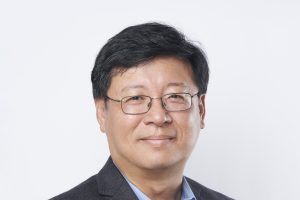
PharmaEngine is entering a defining phase as it strengthens its development-only roots while expanding into early discovery, differentiated DNA damage response programmes and AI-enabled design. In this conversation, CEO Hong-Ren Wang outlines how ONIVYDE® provides the stability to advance a more ambitious pipeline, how a virtual model sharpens scientific focus and partnering discipline, and how globalisation influences both clinical strategy and organisational culture. His perspective offers a clear view of how a Taiwan-based biotech can operate with global intent while remaining agile, selective and scientifically grounded.
How did you approach shaping PharmaEngine’s model and priorities when you stepped into the role?
Since its establishment, PharmaEngine’s strong foundation has empowered us to function as a virtual pharmaceutical company without laboratories or manufacturing facilities, which keeps capital requirements low and allows us to work seamlessly with CRO and CDMO partners. That structure has always given us flexibility and clarity of purpose, and it still does.
The evolution has taken place at the front end of the pipeline. When I joined, advances in computational chemistry and AI-based discovery created an opportunity for companies of our scale to engage earlier in the research continuum without abandoning a virtual model. We do not pursue basic biology or target identification, but we have built selective capabilities in early discovery where these tools can meaningfully accelerate design. This expansion gives us access to a broader set of potential assets.
For many years, our pipeline depended entirely on in-licensing, which meant progress hinged on the availability of assets that other companies were willing to out-license. By designing our own small molecules and securing the associated intellectual property, we now maintain a more balanced and self-directed portfolio, advancing internal assets alongside in-licensed programmes through preclinical and IND enabling stages. Throughout this shift, our therapeutic focus has remained unchanged. We continue to concentrate on oncology, but with greater control over direction and a more resilient pipeline that reflects both continuity with our origins and a deliberate extension into targeted early discovery.
What role does ONIVYDE play in sustaining your development plans and strategic flexibility today?
ONIVYDE continues to anchor our progress, both operationally and financially. The product is an irinotecan liposomal formulation approved for metastatic pancreatic cancer. We commercialise it in Taiwan and receive royalties and milestone payments from our partners internationally.
For a virtual organisation with modest capital requirements, this creates a dependable foundation for reinvestment in discovery and development. That stability is important. It allows us to allocate resources to new programmes with confidence and maintain a realistic path to profitability, something not always possible for companies at a similar stage. It also enables us to work consistently with academic groups, CROs and CDMOs and to follow a longer-term development vision without being forced to adjust direction in response to market cycles or fundraising pressures. Oncology development requires sustained focus, and ONIVYDE gives us the continuity to advance the next wave of assets with discipline and purpose.
How does the transition toward DNA Damage Response targets shape the narrative you want this new pipeline to represent for PharmaEngine?
ONIVYDE emerged through the 505(b)(2) pathway, which allows developers to rely in part on existing safety and efficacy data from a previously approved product while introducing a new formulation, dosage form or delivery technology. That route reduces development time and cost, and it served us well for ONIVYDE, but it also made clear that reformulation strategies alone would not sustain our long-term ambitions. Oncology is moving toward differentiated mechanisms, and we needed to focus on areas where an organisation of our scale can create real value. Immuno-oncology and large indications demand resources that are not aligned with a virtual model, and we were not aiming to discover entirely new biological targets. This naturally leads us toward spaces where meaningful best-in-class advances remain possible.
That analysis led us to the DNA Damage Response pathway. DDR is tightly linked to standard of care treatments because many frontline regimens still operate by inducing DNA damage, and the biology is well validated. Yet there is still room to improve efficacy, tolerability and combination potential through more selective and better-designed small molecules. We therefore evaluated DDR targets through several filters, including druggability, structural feasibility, biological rationale and the competitive landscape, and chose to remain within small molecules to preserve the operational flexibility a virtual organisation requires.
Our current pipeline reflects this intent. PEP07, a brain penetrant CHK1 inhibitor, and PEP08, a next-generation PRMT5 inhibitor for MTAP-deleted tumours, occupy complementary positions within DDR and precision oncology, and create opportunities for rational combinations. Both compounds demonstrate meaningful brain exposure in preclinical models, which opens avenues in areas with limited treatment options. The emerging programmes behind them follow the same logic. PEP09 and PEP10 extend the portfolio across additional DDR and precision oncology targets selected for both monotherapy promise and synergy potential, reinforcing the coherent architecture we want this next wave of assets to represent.
How do you see AI-enabled design influencing the way you build your pipeline, and where do you draw the practical limits of these technologies?
We approach AI from the standpoint that we are not a platform company, and that distinction matters. When organisations invest heavily in a single technology platform, they often feel compelled to shape every future programme around it, even when the science points elsewhere. ONIVYDE is a useful example. Had we built internal infrastructure for liposomal formulations, we would almost certainly feel pressure to pursue more liposomal drugs simply to justify that investment. Operating virtually allows us to avoid that kind of structural lock-in. Our focus is on advancing medicines, not on sustaining a platform, which gives us the freedom to select the modality and partner that best fits each programme.
Within that framework, AI is an important tool but not a destination. In discovering PEP08, AI-driven screening played a meaningful role, yet it was only one stage in a broader, integrated process. AI was used to generate a large virtual library, after which our teams applied computational chemistry, medicinal chemistry refinement and ADMET modelling, followed by the experimental work that ultimately determines whether a molecule is viable. Features such as blood–brain barrier penetration, which became central for PEP08, had to be demonstrated through pharmacokinetic studies rather than predicted models.
The limitations are equally clear. Effective AI systems depend on large, clean and well-annotated datasets, and while our industry has deep scientific foundations, few companies possess proprietary data on that scale. More importantly, no algorithm replaces the experimental and clinical validation required to demonstrate safety and efficacy. Even the strongest predictions must carry through cell assays, animal models and human trials, and regulatory agencies will rely on that evidence for the foreseeable future. That said, the direction of travel is encouraging. AI tools are becoming more accessible, and collaborative data-sharing initiatives are improving the quality of the inputs that support them. For us, the value lies in integrating these technologies with discipline, using them to accelerate and refine our work while ensuring that each decision is grounded in structural biology, medicinal chemistry and real experimental data.
In a virtual model that depends heavily on external partners, how do you determine what should remain internal and what can be outsourced?
We draw that line with intention. All experimental execution sits with our partners, but the interpretive centre of gravity stays with us. CROs and CDMOs can run synthesis, assays and routine development work, yet the true value often emerges when data from several sources are integrated and assessed collectively. When those integrations reveal a mechanistic insight or a differentiated way to advance a project, that work remains internal because it shapes our strategy and underpins our intellectual property. This approach is especially important in DDR. We have spent considerable time comparing datasets, revisiting the literature and identifying patterns that only appear when viewed across programmes. Those strategic judgements cannot be outsourced. They guide how we select targets, design combinations and prioritise resources.
At the same time, our model requires flexibility. As a virtual organisation, we avoid technologies that tie us to a single provider. If a collaboration ends, we need to transfer processes cleanly and without added constraints. Small molecules fit that philosophy. They are more straightforward to scale, easier to move between partners and less dependent on specialised infrastructure than biologics. The principle is simple but effective. We outsource execution, but retain the insight, decision-making and IP that define our competitive edge. It keeps us agile while ensuring that the elements that matter most remain firmly within PharmaEngine.
How are you approaching partnership development as your programmes mature, and what kinds of collaborators are you seeking?
The answer depends on the needs of each programme, but we generally look for partners who can strengthen clinical development while sharing a clear, long-term view of how the asset should progress. We are a focused organisation, so the ideal partner brings scale, operational depth and a collaborative mindset. Out-licensing remains common in Asia and has been part of our own history, yet our profitability and lean model give us the flexibility to avoid licensing prematurely. This allows us to advance programmes through Phase 2, build a solid dataset and engage potential partners from a more informed position.
Phase 3 introduces a different set of considerations. In principle, we could raise the capital to fund such a study, but committing all resources to a single trial is rarely the right strategic choice for a company of our size. Our model is strongest when we drive early development ourselves and then identify partners who can support large, multi-country studies with the right level of investment and infrastructure. Each party focuses on its strengths, the incentives are well aligned, and the collaboration has continued to evolve in a way that supports the long-term potential of the asset.
How do you define internationalisation for PharmaEngine, and what does it mean to lead a globally oriented oncology biotech from Taiwan?
For me, internationalisation begins with ensuring that our work is visible and credible on the global stage. We continue to rely on established channels to demonstrate that, publishing data consistently, presenting at meetings such as AACR, ASCO and ESMO, and engaging with potential partners at forums including BIO-Europe, BIO International Convention (BIO USA), and BioAsia. These interactions serve a dual purpose. They help us find the right collaborators for our own programmes, and they allow us to evaluate external assets that may complement our pipeline. In-licensing, therefore, remains an important part of our model even as our internal capabilities grow.
Global planning is also central to how we run clinical development. Taiwan offers a strong base, given the quality of investigators and our close relationships with key opinion leaders, and it is often the most efficient place to begin a study. However, no programme with global ambitions can rely solely on Taiwanese data. We involve Australian sites early to incorporate Caucasian populations, and as the evidence matures, we extend our trials into the United States and Europe. This progression is essential, as no oncology drug can recover its development investment through a single domestic market.
There is a cultural dimension to internationalisation as well. After many years working in the United States, I returned to Taiwan with an appreciation for how differently organisations can operate. In the US, performance is judged by output and people are expected to challenge assumptions. In Taiwan, structures are often more procedural, shaped by traditional labour norms and expectations around presence. That environment can limit the kind of questioning and experimentation that innovation requires. As we globalise, shifting toward a more outcome-driven mindset while finding the balance between eastern and western cultures becomes important, particularly in areas like DNA damage response and precision oncology, where progress depends on connecting ideas across mechanisms.
We are making this shift gradually. We communicate key updates in both English and Chinese, strengthen our presence on LinkedIn and encourage colleagues to build international networks. I also use my own relationships to extend our reach, recognising that social platforms are still underused across much of Taiwan’s biotech sector. These steps, along with opportunities such as this interview, help reinforce that we operate within a global community and contribute to shaping how we are perceived beyond Taiwan.
After many years abroad and now leading PharmaEngine in Taiwan, what continues to motivate you in your role?
My motivation has always come from the possibility of making a meaningful difference for patients. Early in my career, I had the rare privilege of seeing several programmes progress all the way to approval, and witnessing how those medicines changed people’s lives left a deep and lasting impression. I still think about a young patient who spoke at a company event, describing how only months earlier she could not imagine a future at all. Encounters like that stay with you and reinforce why this work matters, particularly in oncology, where the unmet need is so significant.
That sense of purpose connects directly to how I think about leadership. I feel fortunate to be guiding PharmaEngine, and I have a clear vision of the culture we need to foster, one that encourages curiosity, independent thinking and steady progress rather than complacency. As long as I see the organisation moving toward that vision, even in small steps, I feel energised to continue. The science itself also motivates me. There is always more to understand, and that constant learning keeps the work both challenging and deeply engaging.