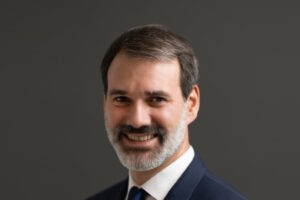
General manager Guillaume Delmotte explores Ipsen's strategic initiatives in China, highlighting the importance of innovation, addressing healthcare challenges, and fostering a sustainable, people-centric organization. Delmotte emphasizes the rapid pace of change and the vital role of human connections in driving success.
What motivated you to take on the role of leading Ipsen China, and what were your initial steps upon arriving?
I embraced this exciting opportunity because I thrive on building and transforming organizations. My journey with Ipsen over the last two decades has been about growth and development, both personally and professionally. I have always valued Ipsen’s entrepreneurial mindset and its strong culture of performance and care. Reflecting on my experience, about 20 years ago, my first mission was to build a 10-year strategic plan for China, which was then very consumer healthcare-driven. I spent over six months in Tianjin working with a team, including the former China GM, Eric Bouteillier, developing strategies like the flavour creation for our anti-diarrhoea medication Smecta, our best-seller at the time.
When I was asked to lead Ipsen China, my mission was clear: to transform the affiliate in line with Ipsen Global’s transformation strategy. We set out with a mission called “Put China at the centre of Ipsen, put Ipsen at the centre of China.” Over the last three years, we have been working on this transformation across several pillars.
First, we enhanced our commercial and medical capabilities by moving our headquarters from Beijing to Shanghai, recruiting a new leadership team, and restructuring our field force to specialize more effectively. We aimed to make Ipsen China a high-performing organization and an attractive place to work. Second, we focused on people. I believe in creating a great place to work, where collaboration and impact are emphasized daily. We recruited a new leadership team and built a high-performing organization to drive our mission forward. Lastly, we reviewed and rebuilt Ipsen’s portfolio in China. We are introducing several transformative products for patients and exploring global innovations to leverage in China. This comprehensive approach ensures that China significantly contributes to Ipsen’s dynamic growth and ambitious targets.
What made you decide to move Ipsen’s headquarters from Beijing to Shanghai?
First, Shanghai is a major business hub with a significant economic gravity in China, especially in the biopharmaceutical industry. Being closer to this centre aligns us with the industry’s core activities and growth opportunities.
Second, moving to Shanghai allowed us to start afresh and build a new legacy. Ipsen has been in China for over 30 years, primarily known for consumer healthcare. This move represented a strategic shift to establish a new identity in China’s most dynamic economic centre.
We still have a presence in Beijing and Tianjin for government affairs and commercial activities, but Shanghai positions us centrally within the country’s economic landscape, supporting our strategic goals.
Building a reputation in a country with 1.4 billion people must be challenging for a mid-sized company like Ipsen. How do you approach this?
Rebuilding an image is about mindset and people. Each member of our team is an ambassador for Ipsen, actively communicating our transition to the biopharmaceutical market. We honour our legacy while focusing on our specialty care business, which has been our core for many years. Although Ipsen is not new to oncology and rare diseases in China, our image needed a shift.
In the past year and a half, we have seen a definite change in perceptions among stakeholders and government officials. As a mid-sized company, It is crucial to have a clear purpose and stick to our core values. Consistent communication, advocacy, and conversations help build our image more effectively than advertisements.
I also stay active and visible in organizations like the French Health Care Alliance, promoting connections between China and France to advance healthcare excellence. Integrating ourselves into initiatives like Healthcare China 2030 is a daily effort. Building our reputation is a continuous process that progresses day by day.
What can you share about the execution of your plan in China, beyond what the strategy looks like?
As a mid-sized company, we need to be as impactful as possible. We need a clear strategy to determine where we want to play and where we can lead. While we may not lead in all areas of oncology, we can excel in our therapeutic areas by delivering the right products at the right time for patients.
In addition, people are our greatest asset. Building a skilled, capable, and motivated team is essential for executing our strategy. It is about developing their mindset, purpose, and competencies to ensure they can deliver the best outcomes.
Lastly, execution is about orchestration. We focus on increasing diagnostic rates, improving patient management, and ensuring the right treatment is chosen for each patient. This involves market access, commercial activities, and public affairs working in harmony. It is not just about selling our medicines but helping physicians make the best choices for their patients.
Our goal is to provide the right medicine, achieve the appropriate reimbursement levels, and raise disease awareness. This orchestration spans across the entire organization—from HR and finance to public affairs—ensuring that every small detail is managed to make a significant impact. I believe that small actions can lead to great differences, which is why I prefer to think of this process as orchestration for success, making an impact on patients and society.
Given the vast number of physicians and private hospitals in China, how do you effectively target and achieve success with limited resources?
It starts with having a clear strategy. Once we define where we want to play, we focus on commercial effectiveness—targeting and aligning with the right physicians. But more importantly, we need to know where we want to make an impact, from tier 1 cities to tier 3 cities, and ensure our brand and therapeutic ambitions are clear.
For instance, in prostate cancer, our focus is on improving the quality of life for patients. We aim to be a leader in this area by offering innovative treatments like transitioning from monthly injections to once every six months. This reduces hospital visits and gives patients more time with their families and less stress.
Our uniqueness comes from offering transformative solutions that significantly improve patients’ lives. Innovation is not just about new medicines; it is about making a meaningful difference with small changes. By providing fewer hospital visits, we offer patients more time to enjoy their lives. Our strategy is to promote this uniqueness clearly and consistently. We ensure that everyone understands what we offer and how it benefits patients. Execution is key, and we approach it with precision, like an orchestra, ensuring all parts work together seamlessly. A methodical approach—defining our impact, targeting effectively, and executing flawlessly—allows us to maximize our resources and achieve our goals in a vast and complex market like China.
Ipsen’s focus includes oncology, rare diseases, and neuroscience. How important are these areas to your current and future plans? What can you share about the company’s new assets and activities in this regard?
Let us start with the global perspective. Our strategy over the past few years has focused on building a sustainable pipeline through strategic M&A, agreements, and partnerships. We have integrated more than 25 programmes into our pipeline, ensuring a balanced mix of early and late-stage developments across oncology, rare diseases, and neuroscience.
We have significantly reinforced our neuroscience and rare disease pillars, while continuing to expand our oncology pipeline. Although I cannot disclose specifics, we have several new medicines in various stages of development and commercialization. In neuroscience, for example, we are working on breakthroughs with long and short-acting neurotoxins for therapeutic use.
Our goal is to rebuild Ipsen’s future for the next decade with a clear focus on external innovation. We aim to acquire medicines with significant potential, ensuring a robust and balanced future pipeline. Bringing this focus to China, our mission is to integrate these global innovations locally. China is now fully aligned with our global strategy, participating in phase 1, phase 2, and phase 3 clinical trials simultaneously with the US and Europe. This synchronization allows China to be at the forefront of our clinical development, ensuring that new assets and innovations are promptly available in the local market.
Currently, our focus in China is on oncology and rare diseases. By placing China at the centre of Ipsen’s strategy, we ensure that the country plays a key role in our global innovation efforts. This approach not only supports our global objectives but also brings cutting-edge therapeutics to Chinese patients, reinforcing our commitment to improving lives through innovative treatments.
Something noticeable about Ipsen’s recent development is how often the company has knock at the FDA´s door for products approvals and new indications. Is it the same here in China and how are relations with the regulator?
I am very proud of our R&D team and our Shanghai Innovation Centre, established in 2019. They work tirelessly to build strong relationships with regulators, authorities, and physician centres to advance our assets. The doors to Chinese regulators are quite open, and they are willing to discuss and understand our propositions and the value we offer.
The regulatory environment in China today is comparable to Europe or the US. If you have a compelling proposition, comply with the rules, and offer reasonable trade-offs, there is no reason why Chinese regulators would not be receptive. Building a network of conversations and respecting cultural nuances are essential for fostering good relationships and facilitating open communication with regulators. China has made significant strides in improving its regulatory framework over the past decade. The environment has become more transparent and efficient, which has accelerated progress in clinical development and R&D. This transformation has helped establish a robust healthcare ecosystem and a thriving market for innovation.
The growth of biotech companies and innovations developed in China over the past ten years is a testament to this progress. Such an ecosystem requires a solid regulatory foundation, and China has made remarkable advancements in this area. As a foreign company, we are eager to contribute to this dynamic environment. We hope that Chinese authorities will continue to view foreign investment as a vital component of their long-term strategy for growth and innovation in the healthcare sector.
What about M&A and in-licensing? Ipsen’s office in Boston has driven a lot of activity, but do you have a business development strategy for China?
We are actively involved in discussions with our corporate team to ensure that China plays a significant role in our global strategy. Our external innovation strategy focuses on global deals that can benefit the entire company, specifically targeting assets that can generate sales of at least EUR 500 million. As a mid-sized company, we concentrate on our core therapeutic areas with precision.
In China, we have established a local business development (BD) team that continuously scouts for opportunities and collaborates closely with our global external innovation BD team. Our corporate team regularly reviews China’s innovation ecosystem, screening for new technologies and biotech opportunities.
However, acquiring global rights can be complex. For instance, US biotechs often retain US rights, leaving us with the rest of the world, and Chinese companies sometimes do the same. Despite these challenges, our goal is to secure the best opportunities to serve patients globally.
Over the past three years, we have focused on rebuilding our commercial capabilities in China and strengthening our local organization. We maintain a continuous dialogue with the corporate team to ensure that China remains a key part of Ipsen’s global strategy. Step by step, we are enhancing our leadership, building a talented team, and developing a sustainable pipeline. This integrated approach ensures that we maximize our potential in China while supporting our global objectives.
Considering the evolving landscape, what should executives expect from the Chinese market in the next three to five years?
China is set to become one of the leading pharmaceutical markets globally, driven by significant innovation and a government focus on quality and value for life, rather than just value for money. This positions China as a key player in global healthcare innovation.
One critical challenge is the demographic shift in China. The country has an aging population and a declining birth rate, necessitating a transition in both economic and social models. Managing this demographic change will be crucial for the healthcare system, aligning with the Healthy China 2030 initiative. Additionally, China’s economic model is moving towards higher quality and internal consumption, which requires a young, skilled workforce to sustain economic growth and drive the healthcare sector.
How do you foresee the sustainability of the healthcare system in China, and what challenges and opportunities do you anticipate?
Patient access and affordability present significant challenges. While China is expanding medical coverage, only 23 percent of new drugs on the national reimbursement drug list have been listed in Tier 1 hospitals over the past three years. This highlights issues in accessibility and the need for better physician education. Furthermore, co-payment varies significantly across provinces, affecting affordability for patients. Standardizing these systems and ensuring equitable access to new treatments is essential.
To address these challenges, China must continue to enhance its regulatory frameworks. Over the past decade, China’s regulatory environment has improved dramatically, becoming more transparent and efficient. Continued advancements in this area will be crucial for fostering innovation and ensuring that patients can access and afford the latest treatments. This includes improving the distribution of new drugs and standardizing co-payment systems across provinces.
China is also becoming a hub for biotech innovation. Foreign companies, including Ipsen, can play a significant role in this ecosystem by bringing global innovations and collaborating with local stakeholders. For Ipsen, our strategy in China focuses on agility, tenacity, and resilience. We continuously adapt our operating model to address these challenges, work closely with provincial and central authorities, and build local partnerships. With ongoing regulatory improvements and a growing focus on innovation, China will continue to develop a more mature healthcare system, supporting the biotech industry and driving further innovation.
On a personal note, how transformational has this role been for you and what are your hopes for the future?
I am very happy to be in China. The joy and connection with the people here have been incredible. The French and Chinese cultures share many similarities, especially in our love for food and conversation. We often discuss what we ate today and what we will eat tomorrow. This cultural affinity fosters a sense of sharing and camaraderie, which I truly appreciate.
China is a fascinating place with hard-working and innovative people. Despite cultural differences, which can sometimes lead to misunderstandings, we continue to move forward together. Each region in China feels like a different world, and there is always something new to discover. The pace of change here is astounding; it is often said that one year in China equals seven years elsewhere. This rapid evolution is reflected in the spirit, mindset, and technological advancements, making it a very dynamic environment.
For me, the importance of people cannot be overstated. With my leadership team, our goal is not just to create a great place to work but to build an exceptional experience for everyone involved. In a world increasingly focused on digital and remote work, we must not lose sight of our humanity and the need for face-to-face connections. We are like a tribe, and we need to work together to make a significant impact.
Our mission is to transform the mindset within our organization to focus on health and people. This means fostering an environment where our team feels connected and dedicated to making a difference. Ultimately, we all could be patients one day, and we need a strong, collaborative ecosystem with officials, hospitals, and physicians to ensure the best care. I believe in the power of people and the importance of maintaining our human spirit in everything we do.