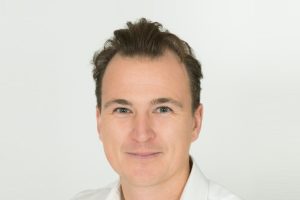
ISISPHARMA’s story unfolds through the Dewavrin group’s evolution from textile manufacturing into a science driven portfolio spanning dermocosmetics and micronutrition. Grégoire Dewavrin explains how the brand has grown through a resolutely medical positioning, early international expansion and a strategy built on proximity to clinicians and local partners. As the organisation strengthens its global footprint, its focus remains on medical relevance, innovation and deeper engagement with practitioners
How would you introduce yourself to international readers, and how has ISISPHARMA evolved within the broader Dewavrin group over the years?
I am from Lille in northern France, where our family group is based, and where much of our history was shaped. ISISPHARMA belongs to the Dewavrin group, an industrial enterprise founded in 1842 that began in textiles before progressively turning toward health and beauty in the early 2000s. That transition gave rise to Dewavrin Cosmetics, which today brings together three complementary activities. We produce ingredients through Stella in Belgium, a long-established supplier of lanolin for major global brands. We operate two CDMO entities, Alpol Cosmétique for cosmetics and Novapharm for food supplements. We also develop our own brands, ISISPHARMA in dermo cosmetics and Effinov in micronutrition, which we acquired in 2022.
The overall structure is balanced. Dewavrin Cosmetics generates close to EUR 100 million, with ISISPHARMA and Effinov together contributing about EUR 45 million. My role is to lead the brand division and steer our development in dermo cosmetics and micronutrition in line with the group’s evolution from its industrial origins into a broader health and science focused portfolio. This perspective shapes how we build our brands today, combining long-standing industrial expertise with a commitment to medical relevance and international reach.
How do you describe ISISPHARMA’s medical positioning in dermo-cosmetics today, both in France and across your international markets?
ISISPHARMA has been part of our group for more than two decades, and from the beginning we shaped it around a resolutely medical approach to dermatology. The brand grew from the idea of a French dermo cosmetic laboratory focused on pigment disorders, rosacea, acne and atopic or reactive skin, with formulas designed to support everyday clinical practice rather than operate only in the consumer space. Although our products remain cosmetics rather than medicines, they are recommended by dermatologists in many of the more than eighty countries where we are present, which reflects the trust that our medical positioning has earned over time. This orientation guides how we develop our ranges, structure clinical work and engage with the specialist community, and it remains the anchor of our differentiation in a crowded category.
My responsibility is to steer the development of both ISISPHARMA and Effinov within a group that is organised by business line, each with its own CEO, and chaired by my brother, Dimitri Dewavrin, in Lille as President of the Executive Board. This structure reflects a longer journey that began in textiles and evolved into health through Stella, our long-standing lanolin producer, before expanding into cosmetics manufacturing with Alpol Cosmétique, developing ISISPHARMA as our dermo cosmetic laboratory, and strengthening nutrition capabilities through Novapharm and the acquisition of Effinov. That evolution explains how our brands took shape and why we remain committed to building them around scientific relevance, practitioner engagement and a clear sense of purpose in patient care.
Your early expansion focused almost entirely on markets outside France. How did that international-first strategy shape the brand’s development and footprint?
When I joined ISISPHARMA in 2010, the organisation was still modest in size and operated exclusively abroad. That approach reflected both our learning curve as a young brand and the reality of competing in a French market dominated by long-established players. We chose to concentrate on regions where those competitors were less present, which led us to Latin America, the Middle East, North Africa and Southeast Asia. These markets shaped our identity for many years and allowed us to build the expertise and credibility that later supported our broader development. France only began to grow meaningfully from 2018 and still represents less than ten percent of our business, while Latin America accounts for close to forty percent. This balance illustrates how those early strategic decisions continue to define our international profile.
How do you assess the current evolution of the global dermo-cosmetic market, and how does your portfolio respond to different regional needs and expectations?
The global dermo cosmetic market continues to expand at a high single digit rate, sustained by rising attention to skin health and a stronger medical influence across the category. French laboratories remain important reference points, although the competitive landscape has broadened with influential brands emerging from Germany, Spain and the United States. Growth is visible across all regions, yet the most sizeable markets remain the United States, Western Europe, Brazil and Asia. Looking ahead, Southeast Asia is set to deliver the strongest momentum, while Europe continues to advance within a more mature competitive environment.
Our portfolio is designed to reflect these dynamics. Pigmentation disorders are our primary focus, covering both hyperpigmentation and depigmentation conditions such as vitiligo through ranges like Vitiskin and Neotone. We also work extensively on redness and rosacea with Ruboril, alongside acne, sun protection and eczema or barrier repair. These categories enable us to respond to needs that vary by region. Whitening products, for example, have long been significant in Asia and are now gaining interest in Europe. We were active in this segment early, which has helped us remain relevant even without the communication scale of larger competitors.
When entering new countries, what approach helps you establish the brand effectively, and what guides your choice of local partners?
Our introduction into new markets has always relied on medical engagement rather than broad consumer visibility. We work with a single distributor in each country, ideally one with an established presence in dermatology and a field team accustomed to medical visits. Building awareness among dermatologists is the foundation of our approach, since our products are created to support their clinical routines. We therefore direct our efforts toward medical representatives, scientific dialogue and consistent participation in congresses and professional events. This enables us to develop trust and recommendation patterns even before the brand gains wider recognition.
The selection of partners is a critical part of this process. We look for organisations that understand dermatology, interact regularly with specialists and appreciate the value of integrating dermo cosmetics into their portfolio. Working with distributors naturally involves giving up some degree of direct control, yet our responsibility is to create the conditions for strong alignment. We invest in comprehensive training, provide clear marketing and communication tools and maintain close contact so that their teams can represent us with accuracy and confidence. This collaborative model allows us to preserve our medical positioning while ensuring a coherent presence across diverse markets.
Looking ahead, how are you shaping ISISPHARMA’s strategic direction for the next years, and what factors are sustaining your current momentum?
We are ending the year on a strong upward path, with growth close to twenty percent, and the drivers behind it give us confidence in the years ahead. Our progress is rooted in a broad international presence, with activity in around eighty countries and a network of eight subsidiaries across Latin America, Europe and North Africa. These subsidiaries have never been the result of a rigid expansion plan. They were created when we found the right partner and, importantly, the right person locally, someone aligned with our medical positioning and capable of building the brand in the field. Each of these moves has helped us tighten control over our marketing investments and execution, which in turn has translated into stronger market performance.
As ISISPHARMA scales, we are also adapting the way we organise ourselves. Until recently everything was coordinated from France, supported by local directors in each country. We are now introducing regional hubs to give the organisation more depth and consistency. Latin America is the first example, with a team in Mexico now guiding the subsidiaries across the region. Mexico has become our largest market outside France, and Latin America as a whole continues to play a central role in our growth profile. This combination of international reach, selective local investment and a more structured regional model is shaping the direction we want to pursue into 2026 and 2027.
How do you navigate the regulatory diversity that comes with operating in eighty markets worldwide?
We manage this complexity by centralising most of the regulatory work, which gives us consistency across markets and the ability to adapt quickly when requirements evolve. The global landscape for cosmetics is broadly anchored in the European framework, particularly EC Regulation 1223/2009, which many countries use as their benchmark for safety, labelling and market access. That common reference point helps, but regional and national differences still require careful attention. ASEAN countries follow a similar structure while maintaining their own layers of compliance, and China remains the most demanding environment. The reforms under the Cosmetics Supervision and Administration Regulation have created conditional pathways that avoid mandatory animal testing for general cosmetics, yet the administrative and financial burden remains high. Entering China therefore requires a measured approach and strong local expertise. Handling most of the work internally allows us to anticipate these variations and support our teams and partners more effectively.
How are you aiming to deepen your presence in existing markets, and what roles do ISISPHARMA and Effinov play in that strategy?
Our priority is to build greater depth where we already operate rather than extend our geographic footprint. Strengthening our position begins with achieving complete medical coverage, starting with dermatologists and, where it makes sense, widening the engagement to general practitioners and aesthetic doctors. That is how prescription habits form and how the brand gains long term visibility. Innovation is the other cornerstone. We invest consistently in R&D and in targeted launches that reinforce our medical orientation. Pigmentation disorders remain a strong area for us, and the Vitiskin range for vitiligo illustrates how we expand an indication, support it with additional clinical work and roll it out across multiple markets. With more than eighty products across pigmentation, rosacea, acne, sun protection and eczema, ISISPHARMA has the breadth needed to sustain this approach.
Effinov complements this portfolio with a focus on medicalised micronutrition. It is still smaller in scale, but the underlying potential is significant, even if regulations vary widely from one country to another. What we see globally is a clear shift toward prevention, more natural solutions and scientifically supported alternatives to medication whenever possible. Effinov was built for that space, designed for prescription by GPs, nutritionists and other practitioners. Together, both brands allow us to address skin health and broader wellbeing through a coherent, medically anchored strategy, which is the direction we intend to reinforce in the years ahead.
How are you preparing internally to sustain your current growth, and how would you characterise ISISPHARMA’s brand awareness across markets?
Sustaining the momentum we have built requires meaningful investment across the organisation. We need to continue strengthening our teams, expanding our R&D capabilities and supporting the brand with more consistent marketing and communication. Coverage is essential to how we grow, yet coverage alone is not enough. We are aware that our visibility still needs to increase, and building stronger awareness will be key to maintaining the rhythm we achieved this year. Operating in around eighty countries gives us reach, but recognition varies, and consolidating that foundation is an important part of our internal priorities.
Our visibility differs markedly from one market to another. In the larger and more established countries we remain a smaller player, including in France, where we only began developing the brand more recently. In several emerging markets the picture is very different. In Mexico we stand among the leading dermo cosmetic brands, and in Ecuador we have secured a strong position as well. These outcomes reflect the history of our presence, the fact that some major competitors are less active in those regions and, of course, the strong appeal of French dermo cosmetics. When you build early, maintain close medical engagement and remain consistent in the field, the market responds, and that has shaped our trajectory in these areas.
On a more personal note, what principles guide your leadership, and how do you hope ISISPHARMA is perceived internationally by clinicians and partners?
My approach is built around the quality of relationships. Our progress depends on staying close to the people who rely on our products and to the partners who represent us in very different environments. That is why we place so much emphasis on being present in the field, speaking directly with dermatologists, pharmacists and patient associations. These interactions give us a clear sense of local expectations and help us refine our innovations in ways that remain relevant to clinical practice. At the same time, I hold on to a simple philosophy. As a smaller player, we cannot assume we will win by scale, so we have to remain disciplined, attentive and willing to work harder to earn our place.
On the international stage, we want to be recognised as a genuine partner to the medical community. Our ambition is to stand for science, dermatology and meaningful medical value in a space where many brands now present themselves as dermo cosmetic without necessarily having that foundation. We aim for dermatologists and other healthcare professionals to see us as an ally they can rely on, and maintaining that identity guides how we shape our brand, how we innovate and how we intend to grow in the years ahead.