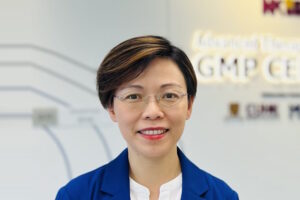
One year since our last conversation, the Hong Kong Institute of Biotechnology's Gina Jiang introduces the significant strides made in setting up a GMP facility for CAR-T cell therapy manufacturing at HKIB. Regulatory frameworks have now been developed to support clinical trials and the rollout of advanced therapies. Jiang highlights some of the challenges related to recruiting and training a skilled workforce for such an endeavour and casts her eye over Hong Kong's current strategic positioning as a biotech and clinical trials hub.
We last spoke just over a year ago, when you had recently been recruited to manage the Hong Kong Institute of Biotechnology and oversee its entry into advanced therapy product (ATP) manufacturing space. What has happened since then?
Significant progress has been made! Our GMP facility has received various certifications from the Hong Kong Department of Health, including a manufacturing license specifically for CAR-T cell therapies intended for clinical trials. Our clinical partner also obtained their clinical trial certificate, enabling us to proceed with manufacturing these products for patient trials.
Was there already legislation and regulatory frameworks in place for these clinical trials or were theses developed along the way?
The regulatory framework for these clinical trials was indeed established gradually. When I arrived, discussions and planning were already underway, dating back to around 2018. The Department of Health has approved three CAR-T clinical trials under this framework as of today, indicating its recent implementation and ongoing development to support advanced therapies.
Manufacturing and approving these therapies pose a challenge due to their lack of homogeneity, with each batch being different. How does this impact regulators and those handling the therapies?
The variability in each batch poses a significant challenge, not just for us but also for regulatory bodies like the Department of Health. Currently, our manufacturing license is scoped specifically for autologous CAR-T therapies within a closed system designed for clinical trials. Each new type of therapy, such as universal CAR-T cells, requires a separate application process due to these unique characteristics and complexities.
Typically, the initial application process is the most time-consuming. For us, it took approximately six months from our submission to receiving the manufacturing license. However, this timeframe also includes extensive preparation and several audits conducted by the Department of Health. Our proactive approach in addressing their requirements promptly certainly contributed to expediting the process.
As a newly established facility and the first in its kind in Hong Kong, can you tell us about the journey you have been on in terms of acquiring talent, equipment, and setting up the facility?
Our journey began essentially from scratch when I arrived. Everything had to be established anew, including what I consider our most valuable asset: our team. Recruiting and training them was certainly challenging, especially amidst the backdrop of the COVID-19 pandemic. We were fortunate to have the support of our partners at the Scottish National Blood Transfusion Service (SNBTS) in Edinburgh, who provided invaluable consultancy on facility design and helped us train up key personnel such as the Authorizing Person (AP), Production Manager, and QC Manager—all crucial roles in the regulatory framework of the Department of Health.
The Department of Health had an existing framework and requirements laid out, but the concept of assembling a team with both ATP and GMP expertise was novel. Initially, there wasn’t a pool of candidates with specific ATP backgrounds or extensive GMP experience, as these weren’t historically required. So, I took a dual approach, assembling a team with half coming from scientific backgrounds and the other half from GMP backgrounds, merging their skills effectively. Our institute, HKIB, has been committed to GMP since its inception in 1988, aligning with international standards when Hong Kong obtained Pharmaceutical Inspection Co-operation Scheme (PIC/S) membership in January 2016.
Over our 36-year journey at the HKIB, we have collaborated closely with the government, establishing internal departments and a GMP consultation unit that provides training to industry professionals on both general and specific GMP requirements. This internal resource was instrumental in shaping our team and implementing robust GMP practices with the guidance of SNBTS.
Do you manage the entire GMP process within HKIB?
We manage the manufacturing, QC testing, and product release locally here at our facility, but procure our lentivirus from external partners. The final step, the infusion to patients, takes place in the clinic setting. For our first clinical trial, we are collaborating with Prince of Wales Hospital, which is conveniently located just 10 minutes away from our facility. This proximity ensures efficiency and allows us to deliver fresh products promptly. Even the furthest medical centers in Hong Kong, such as Queen Mary Hospital, are within very manageable distances, ensuring logistical efficiency.
The current approved trial itself is an investigator-initiated trial (IIT) sponsored by the government, aimed at recruiting 20 patients. The first patient has been recruited, and we are poised to start manufacturing in August 2024. Typically, CAR-T therapies are administered in later treatment lines, but here in Hong Kong, it is anticipated to be a third or second-line treatment, potentially making patient recruitment slightly more accessible by targeting the most suitable candidates for the trial.
Could you elaborate on how this scientific advancement fits into the local context and meets local needs?
Our positioning in Hong Kong is unique and strategic. Firstly, our facility adheres to PIC/S standards for GMP, which serves as a crucial advantage. Currently there are 10 countries in Asia Pacific with regulatory authorities that are PIC/S members. This standard acts like a passport for multinational sponsors looking to conduct trials across multiple centers, including Hong Kong, Malaysia, Thailand, Singapore, and beyond. This capability is particularly attractive to Chinese companies working with ATP products, as current regulations restrict their ability to export these therapies. Hong Kong serves as a pivotal hub where companies can manufacture locally and potentially expand globally.
Secondly, there’s a significant need, especially in China, where pricing regulations cap the price of therapies like CAR-T at RMB 1.2 million per dose. This affordability challenge motivates companies to explore markets where regulatory conditions and pricing structures might offer more flexibility. Hong Kong, therefore, becomes not only a testing ground but also a gateway for companies seeking to gather crucial trial data and streamline registration processes in other jurisdictions. This dual role positions us uniquely within the broader industry landscape, offering both operational advantages and strategic opportunities for expansion.
Moving forward how would you select the right projects to partner with? Have you already established a ATP led scientific board?
Our current focus is squarely on enhancing our GMP capabilities and ensuring that our team meets the high standards expected by our future partners. This is our top priority. As part of a university setting, we also benefit from access to extensive scientific expertise. While we don’t have a formal scientific board yet, we do consult with numerous scientists, researchers, and clinicians who contribute valuable insights.
Looking ahead, as we anticipate more projects and collaborations, our plan includes establishing both a scientific advisory board and a business advisory board. These boards will play crucial roles in evaluating the scientific merit, market potential, and commercial viability of incoming projects. This structured approach will help us strategically align our partnerships and maximize the impact of our manufacturing capabilities within the evolving landscape of advanced therapies.
Our facility is a university-initiated site, but this project is actually in collaboration with Hong Kong Science Park. From the beginning, it has been designed to serve both academic and industry needs. As we progress, I believe it will be a combination of both when it comes to clinical trials. We have already engaged with several big pharma companies, including AstraZeneca. Other companies have shown interest, and when their headquarters representatives visit, they often come to assess whether Hong Kong is a suitable place for conducting clinical trials.
The feedback we receive frequently revolves around the size of the region, the regulatory framework, the speed at which they can commence trials, and the patient pool. Additionally, many are interested in using Hong Kong as a base to expand into Southeast Asia and gather multi-ethnic data from this broader region.
Hong Kong’s strategic location offers significant advantages for a startup targeting CAR-T therapies in Southeast Asia. With Indonesia, Thailand, Malaysia already members of the PIC/S and a combined regional population of approximately 400 million, the potential patient pool is substantial. The proximity to major markets ensures timely delivery of ATP therapies, crucial for their effectiveness.
Singapore, while established, is far away from many Southeast Asian countries, and does not have the close access to China market, making Hong Kong a more versatile hub. This proximity not only facilitates efficient clinical trial operations but also supports rapid patient access, essential in time-sensitive treatments like CAR-T for lymphomas and other conditions.
What are your plans concerning certifications from leading international regulators like the FDA, EMA, or PMDA?
Our strategy begins by leveraging our existing partnerships and memberships, such as our participation in the PIC/S framework. This membership allows for mutual recognition among member authorities in the Asia Pacific region, which facilitates streamlined regulatory processes. Initially, we are focusing on neighbouring markets like Singapore, where there is already a framework for reciprocal recognition. This approach minimizes initial regulatory barriers and ensures compliance with international standards.
Looking ahead, if we decide to expand further into markets requiring FDA or EMA certifications, we understand that additional audits and certifications will be necessary. These steps are crucial for gaining broader market access and ensuring that our products meet the stringent regulatory requirements of these jurisdictions. This staged approach allows us to maintain flexibility while strategically positioning ourselves for global expansion in advanced therapy manufacturing.
What’s next in terms of priorities and capability building?
Our immediate priority is securing and building up our team’s capabilities. Specifically, we are focused on ensuring our team is very familiar with and masters the intricacies of CAR-T therapy. This involves rigorous training and skill development, given the complexity and precision required in handling these therapies.
In addition to CAR-T, we are also excited about a new development involving the government’s RAISe+ grant. This grant targets highly promising projects that have strong commercial potential. In the first batch, released in May, one of the selected projects involves MSC manufacturing for cartilage repair. This project, led by Professor Barbara Chan from CUHK, will take place at our facility as well. We are currently in the preparation stages and hope to see significant progress soon.
Building our team and focusing on these two key projects are our top priorities. Training is a critical component, not just technically but also mentally, to ensure our team understands the importance of empathy in their work. In CAR-T manufacturing, the time and distance between the facility and the patient is minimal, especially with fresh products. We constantly remind our team that they are handling live cells that will be returned to the patient within days. This underscores the importance of empathy and the direct impact their work has on patients’ lives.
If you were to distil the essence of Hong Kong’s biotech potential into a few key points, what would you highlight?
Hong Kong is definitely an up-and-coming place with numerous unexplored opportunities. We are setting up the necessary infrastructure, and besides the well-known advantages—world-class talent, a free marketplace, and favourable tax policies—there are additional benefits to consider.
Firstly, Hong Kong’s inclusion in PIC/S acts as a passport to major global markets, ensuring products meet high standards and can be recognized and accepted internationally. Secondly, the city boasts a mature and established global logistics system, making it an ideal hub for global operations. Lastly, Hong Kong uniquely overlaps with China’s dual circulation strategy, serving as a gateway for companies entering both Chinese and international markets. Financially and strategically, this overlap offers unparalleled advantages.
These elements make Hong Kong a compelling destination for the pharmaceutical industry, poised to become even more significant as we continue to develop and roll out innovative products.