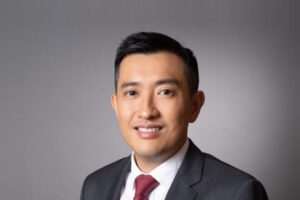
The GBA Healthcare Group aims to provide accessible, affordable, and accountable healthcare in the Greater Bay Area through a public-private partnership model, focusing on primary healthcare and health insurance empowerment. Co-CEO Dr Felix Lee, who also serves as Head of Healthcare Investments at parent group Chow Tai Fook Enterprises Limited, explains how GBAH emphasises value-based care models, aiming to integrate health management with insurance to improve health outcomes while managing costs effectively. Dr Lee also highlights some of the key trends at play as Hong Kong's aging population look for quality accessible care beyond the territory as well as the importance that GBAH places on collaboration with regional governments to train and upgrade healthcare professionals, refurbish clinics, and establish public-private partnership clinics.
Can you explain the origins of The GBA Healthcare Group (“GBAH”) and what motivated you to leave a career in investment banking to work in the healthcare sector?
What is now known as The GBA Healthcare Group was founded in 2014.
GBAH was formerly known as UMP Healthcare China Limited, a subsidiary of UMP Healthcare Group (“UMP”, a listed company on the Hong Kong Stock Exchange), which is affiliated with the Chow Tai Fook Enterprises (“CTFE”) conglomerate.
UMP is one of the leading managed care organisations in Hong Kong, delivering and administering over 1.3 million patient visits a year through its network of over 1,000 managed and affiliated clinical sites in Hong Kong. I was brought into CTFE by Mr. Patrick Tsang, the CEO of CTFE and Chairman of GBAH. Patrick is a seasoned and experienced finance professional, who took the visionary decision in early 2010 to invest and build out CTFE’s healthcare franchise, both through UMP and also through numerous other private equity investments in the healthcare sector.
My decision to leave investment banking in 2014 and joined CTFE as head of healthcare investments, and subsequently becoming the first employee at GBAH, was driven by a deep interest in primary healthcare (my father is also a primary care doctor), and also influenced by my background in law, investment banking and insurance. In 2014, having been a lawyer and an investment banker for almost 9 years, I became very interested in what UMP was doing in terms of creating a new value based care model that focuses on primary healthcare and prevention.
Under the visionary leadership of Dr. Sun Yiu Kwong, the founder of UMP, I was motivated to join hands with him to explore how to replicate UMP’s successful Hong Kong business model into Mainland China. Dr. Sun gave the management team frequent strategic guidance on primary healthcare development and health insurance, but then also gave the team a lot of freedom to explore different corporate strategies. I am forever indebted to him for his continuing support and guidance.
In investment banking, I was following the development of China’s healthcare reform, I worked behind the scenes as one of the bankers in advancing what is now the China Resources Medical Group, as well as their highly oversubscribed IPO in 2013. Through this work, I recognized the potential of China´s healthcare reform and how critical it is to integrate payer, provider and patient perspectives in payment for healthcare services with the end goal of improving healthcare outcomes. This multifaceted background motivated me to join The GBA Healthcare Group to tackle these challenges and with the drive to improve healthcare accessibility, accountability, affordability and sustainability.
How did the absence of a well-defined payer system in China back in 2014 impact your business strategy and the development of the GBA Healthcare Group?
When I joined GBAH in 2014, the absence of an effective payer system that encourages better health outcomes in China was indeed a significant challenge. At that time, China’s annual healthcare expenditure was at approximately 3.5 trillion yuan, a number that has since risen to about 9 trillion yuan in 2023. This rapid growth, while it might appear as promising markets for growth for healthcare and pharmaceutical companies, has raised significant concerns for the Chinese government about the long term sustainability of the healthcare system.
The Chinese healthcare system is primarily funded by the government’s public health insurance scheme that pays providers (mainly hospitals) on a fee-for-service basis, meaning the more services a hospital delivers to patients, the more income a hospital receives through reimbursement by the government insurance schemes. Mainland China’s hospital system is quite different from other countries in that, although these hospitals are mostly non profit and public in nature, they are still required to think of ways to become self-sustainable through generating income on a fee-for-service basis.
The Chinese government, recognizing these challenges, initiated the Healthy China 2030 Reform in October 2016. This foresight highlighted the need for a focus on primary healthcare as a cornerstone for future reforms. Understanding this, we aligned our business strategy with the anticipated policy shifts. As early as when we first started in 2014, we already foresaw that Mainland China’s aging population will lead to the inevitable situation where growth in healthcare expenditure outpaces the growth in public healthcare insurance income. We have seen the Chinese government implementing various means to control healthcare costs, such as volume based procurement for pharmaceuticals, and the most recently announced revamping of DRG and DIP as ways to control increases in healthcare costs.
When we look at Hong Kong, the Hong Kong government pays for about 50% of all healthcare expenses, with the remaining 50% funded by commercial health insurance and out-of-pocket payments. The healthcare expenditure in Hong Kong totals approximately HK$230 billion annually (and increasing at around 5-8% per year). The Hong Kong government covers about half of this HK$230 billion expenditure by delivering healthcare services via public hospitals and clinics managed by the Hospital Authority (“HA”). To give you a sense of the scale, the HA employs approximately 7,000 doctors, 30,000 nurses, 44,000 allied health professionals, managing 30,000 hospital beds across 43 hospitals, 49 specialist clinics and 74 general outpatient clinics. The Hong Kong government directly funds all of these expenses. In 2023, the HA received HK$83.4 billion from the Hong Kong government as recurring funding (2022: HK$78 billion).
The remaining half, approximately HK$120 billion, is primarily funded by private health insurance and citizens’ out-of-pocket expenses, where services are delivered through 13 private hospitals and thousands of private clinics and medical centres. The Hong Kong private health insurance market (referring to reimbursement products only) is sizeable, with annual health insurance premiums amounting to about HK$30-35 billion. Health insurance products are offered as individual and group products, sold by major players like AIA, AXA, CTF Life, Prudential, HSBC Life, Manulife, Sunlife, Bupa and Cigna, among others. Private health insurance accounts for about one-third of Hong Kong’s private healthcare spending, or about one-sixth of Hong Kong’s total healthcare expenditure. Commercial health insurance therefore is a crucial complimentary payer for healthcare expenses for Hong Kong citizens, and Hong Kong government provides tax incentives to encourage Hong Kong citizens (the Voluntary Health Insurance Schemes) to purchase government-approved commercial health insurance schemes.
Referencing Hong Kong, we believe there is significant potential for private health insurance to become an effective and complimentary health payment system in Mainland China. Through market forces, private health insurance is motivated to invest in infrastructures and technology to guide and help policyholders seek more personalized, health and preventive care-focused, patient-centric and value-based services.
GBAH’s vision is to give everyone access to trusted and affordable healthcare, and implementing our two-pronged “primary healthcare + health insurance empowerment” approach forms the core of our development strategy. On the one hand, we invest a lot of time, resources and effort to build out a high-quality, public-private partnership primary care service network. On the other hand, we have established a team of insurance professionals to work closely with health insurance companies to design, price and market health insurance policies. Once policies are sold, the policyholders can, through us, obtain accessible, affordable and accountable healthcare services at clinical sites that are accredited and recognized by us. We also deliver preventive care services and chronic disease management services to policyholders to help them stay healthy. Our approach is to assign a primary care doctor to every policy sold, enabling policyholders to have access to a primary care doctor as the first point of contact for their healthcare enquiries and needs.
The logic is simple. The healthier the policyholders are, the less health insurance companies need to pay out in medical claims, and the more both health insurance companies and GBAH benefit. Internationally, such a business model is broadly known as the Value Based Care (“VBC”) delivery model. Globally, there are well-known VBC companies such as Kaiser Permanente, United Healthcare, Humana, Cigna and Bupa that have been implementing these VBC insurance propositions for their policyholders for a long time, and with great success. In Mainland China, and in GBA in particular, such VBC models are still in their infancy and present significant growth opportunities for us.
Can you explain the approach GBA Healthcare Group takes in public-private partnerships?
Our laser focus on primary healthcare development is achieved through delivering standardized training and accreditation to front-line, government-employed primary care doctors and nurses. Whereas typical private healthcare organisations would invest heavily in capex to build out new clinics and hospitals, we saw the opportunity to invest our resources and time in collaborating with various regional governments through public-private partnerships.
Our approach was first to work with various regional governments, across the GBA, to train already qualified and practising primary care doctors and nurses on patient communication skills, as well as on the standardized and most up-to-date clinical pathways for 167 common illnesses seen at the primary care settings, spanning areas from paediatrics, mental health, chronic disease management, dermatology, endocrinology, gynaecology and cardiology etc.
At the end of 52 weeks, we put these doctors and nurses through our standardized examinations, under what we call Objective Structured Clinical Examinations (“OSCE”). If they pass the examinations, we will then award them with a certificate, certifying them as having completed the training programme. To date, we have conducted nearly 20,000 OSCE exams for our 3,000+ doctors and nurses.
I must emphasise that we are not a medical school, as we are helping regional governments to upgrade their primary care doctors and nurses to meet international standards and stay up to date with the latest international guidelines on primary care. The programme is called General Practice Oriented Learning and Development Programme, or GOLDTM, which is now a well-recognized doctors and nurses training and accreditation programme across the GBA. We also took the GOLDTM programme to the Royal College of General Practitioners (“RCGP”) in the United Kingdom and obtained accreditation from the RCGP too.
Once these doctors and nurses are qualified and certified, we also want to provide them with a new physical environment for them to practice. We partnered up with various regional health bureaus to help them to refurbish a section within their community health centres. The refurbished clinical rooms are generally better lit, more comfortable and have standardized furniture and GOLDTM posters that go to remind the doctors of their purpose of being a family doctor to the community.
By partnering with government entities and focusing on enhancing primary healthcare services, we aimed to create a sustainable win-win model. Various regional governments have been able to acquire international practices for their primary care doctors through the GOLDTM training programme, and in return, we save significant resources from investing in setting up new clinical facilities. These doctors and facilities are then included in health insurance products that we design together with insurance companies, whereby policyholders will be able to obtain reimbursable services at these designated sites on a cashless basis (what we refer to in the health insurance industry as direct billing services).
Since 2018, we’ve established over 200 such public-private partnership clinics within community health centres in the GBA (80 in Guangzhou, 15 in Zhuhai, 40 in Dongguan, 45 in Shenzhen and numerous others in the GBA), and we have trained and accredited more than 3,000 primary healthcare doctors and nurses. More recently, since 2021, we have also expanded our public-private partnerships to the setting up of primary care centers within Tier 3 government hospitals too, thereby allowing us to offer patients and our customers access to specialists and inpatient care when needed. To date, we have built over 7 primary care centers across government hospitals in the GBA. Such a vast and expanding service network put us in a good position to partner with health insurance companies to create new health insurance products catered for the GBA market.
How does The GBA Healthcare Group leverage the uniqueness of the GBA and demonstrate the use of insurance and quality of service?
For context, in Hong Kong, approximately $70 out of every $100 of health insurance premiums goes directly to reimbursement of healthcare services delivered by private hospitals and clinics, with the remaining $30 covering distribution, marketing, and underwriting profit. Due to the aging population leading to increasing medical expenses, the health insurance sector in Hong Kong struggled financially in 2023, primarily due to the aging population and increasing prevalence of chronic diseases that contribute to complications and increasing hospital admissions. As a result, the health insurance industry, as a whole, is expected to keep increasing health insurance premiums to cover the anticipated payouts. Overall, the health insurance industry in Hong Kong expects premiums will need to increase by 8-10% every year to remain sustainable.
The GBA Healthcare Group goes some way to try to address inefficiencies found in both mainland China and Hong Kong’s public healthcare systems. While Hong Kong’s public system faces long wait times and inefficiencies, mainland China’s healthcare system suffers from an imbalance—tier 3 hospitals handle the majority of the patient volume, leaving many tier 2 hospitals underutilized. Tier 3 hospitals, which represent 15-20% of institutions, handle 50-60% of patient volume, while nearby tier 2 hospitals struggle with low patient numbers. By focusing on the efficient use of health insurance and high-quality, accessible services, we aim to bridge these gaps and offer improved, cost effective and accountable healthcare delivery within the region. Our business model involves working with health insurance companies to make more health insurance accessible and control costs effectively. By managing chronic diseases through primary healthcare, we also aim to help health insurance companies prevent preventable chronic diseases, with the goal of reducing payouts for medical claims.
One of the key areas of service delivery is the training of HCPs. How do you manage the challenge of retaining trained healthcare professionals in a competitive market like China?
Retaining trained healthcare professionals in a competitive market is managed through a public-private partnership approach. While we train and accredit these doctors to meet the GOLDTM standards, they are still employed by the government, so actually we try and help various governments to retain their HCPs. We are working closely with various regional governments to invest more effectively in primary healthcare (i.e. through training, accreditation, IT solutions and clinical site upgrades), and we are also exploring ways for private health insurance to pay for their services delivered to commercial health insurance policyholders. We believe this innovative, public-private health insurance payment model will go some way to incentivise front-line doctors to stay committed to delivering quality primary healthcare services.
Whereas there is no doubt the business case in China’s healthcare industry is driven by the large volume of patients, international investors seem sceptical about sustainability and profitability….
We’ve already established a profitable, sustainable training and service business. As said, our strategy is two-pronged. The real market opportunity lies in building out a value-based care service model, whereby we closely partner with health insurance companies to manage policyholders’ lifelong health journey.
To partner with health insurance companies, it is critical to have a deep understanding of how health insurance companies underwrite, price and administer their products. However, just understanding how health insurance companies work is only 1.0. We believe the 2.0 opportunity lies on helping health insurance companies to manage their medical claims payout through various means, including offering primary healthcare services in health insurance products, streamlined service journey from outpatient to inpatient services, claims administration, data analytics and eventually having providers and provider groups, like us, to effectively take on the risks of providing services to a designated policyholder population on a capitated fee basis. Such value based care model has already proven to be a sustainable, scalable and profitable model globally, and we are confident that a Mainland China version of valued based care model will emerge, delivering long term sustainable returns for our medical staff, employees and shareholders. In the healthcare investment world, we always say we wished we had invested in United Healthcare earlier and held on to it, as United Healthcare has demonstrated that value based care can deliver a win win win situation for payer, providers and patients, and at the same time delivering long term significant return to shareholders.
What are your plans for The GBA Healthcare Group moving forward? Are you going to add more hospitals in the GBA? Or is the current infrastructure sufficient?
We have numerous plans for our expansion. Our core focus remains on amplifying what we do best and staying laser-focused on our public-private partnership primary care + health insurance empowerment model.
When we started in 2018, we began with just 11 doctors and one partnership clinic. Now, our vision is to continue growing this network significantly. Drawing inspiration from successful models like Kaiser Permanente and United Healthcare, which has excelled in integrating health management and insurance since 1930 and 1974, respectively, we aim to replicate and adapt their value-based care approach to the GBA market.
For reference, United Healthcare, being five times the size of major insurers like Ping An and AIA in terms of market capitalisation, highlights the potential of integrating insurance with robust primary healthcare management. By focusing on good health management through our primary healthcare network, we can empower health insurance companies to deliver better patient outcomes, and satisfaction, while managing costs and improving profitability for health insurers.
In addition to helping health insurance companies reduce medical cost payouts, there is also significant potential for growth in areas like data analytics, AI research, and drug discovery. These areas offer untapped opportunities to innovate and enhance our services, ensuring we stay ahead in providing top-notch healthcare and insurance solutions.
Regarding our plans, we set ambitious goals in 2018 to build 100 clinics and train 1,000 doctors, which we achieved by 2022. Our revised mission, established in 2022, is to train 10,000 doctors and establish 1,000 public-private partnership clinical sites by 2030. We are currently at 200+ clinical sites, with significant progress yet to be made, but we believe in setting a challenging mission to drive substantial growth.
How fundamental are data analytics to ensuring you are doing the right thing, especially related to insurance plans and cost-effectiveness ratios?
We are heavily invested in data analytics and population health management. We are amongst the first batch of companies approved by the Guangdong government to manage cross-border medical data. This enables us to offer a seamless experience for patients who can access their health data both in Hong Kong and within the GBA with their consent.
We have also built a comprehensive data infrastructure at our Shenzhen headquarters. While we don’t frequently highlight AI, it plays a significant role behind the scenes in enhancing our operations. Our approach to AI is pragmatic, focusing on its utility rather than the hype.
We assist insurance companies in managing their costs through two main avenues: data infrastructure and insights, including fraud detection, and health management (in particular, chronic disease management like diabetes and hypertension) for policyholders. By integrating family physicians and offering services like online bookings, guaranteed payments, telemedicine services and home medication delivery, we provide a holistic and efficient healthcare experience.
How does the concept of the Greater Bay Area resonate with patients, doctors, and the government? Are they supportive of integrating Hong Kong’s healthcare model?
The GBA is a diverse framework consisting of nine mainland cities, along with Macau and Hong Kong, rather than a unified government entity. Each city has its own distinct needs and priorities. For example, Shenzhen, being close to Hong Kong, is enthusiastic about integrating with Hong Kong’s international healthcare practices. Conversely, Guangzhou, which has a strong tradition in medical research, does not share the same urgency for integration.
Hong Kong’s unique position as a finance hub and its ability to implement new innovations under the “one country, two systems” policy is seen as a significant advantage. However, the varying priorities of cities within the GBA—ranging from Shenzhen’s focus on innovation to Guangzhou’s established research infrastructure—reflect a broader spectrum of interests and aspirations. Overall, while there is interest and potential for collaboration, the integration is shaped by the diverse goals and capabilities of the individual cities.
Hong Kong’s role is crucial in providing a unified direction amid these diverse agendas. The city’s strengths in finance and insurance makes it a key player and shaper of future health payment model reforms. Hong Kong’s potential as a health insurance and reinsurance hub is significant, especially given that many health insurance policies sold in mainland China are backed by reinsurers operating out of Hong Kong. The strategy to focus on health insurance is also in line with Hong Kong government’s stated policies of developing Hong Kong into an international risk reinsurance hub, of which health insurance is certainly a key focus area.
From a broader perspective, Hong Kong’s strategy includes promoting itself as a center for drug research and clinical trials, leveraging its unique policies and regulatory environment. This positioning is essential for attracting biotech and pharma companies, which need a supportive ecosystem for growth and innovation.
What can you tell us about the Hong Kong silver economy and its older population’s motivation to come to the Greater Bay Area? This seems to also be a key driver for the integration of the Hong Kong and GBA healthcare systems…
The migration interest of Hong Kong’s aging population to the GBA goes beyond just healthcare. As compared to cities in the GBA, Hong Kong remains expensive, the longevity of retirees necessitates sustainability in their living arrangements. For example, a retirement passive income of HK$10,000 per month in Hong Kong may not sustain much, but in the GBA, it can stretch much further.
Healthcare is important, but it is not the primary driver. Retirees first seek affordability and sustainability. The healthcare piece becomes crucial for day-to-day needs like managing chronic diseases, and routine check-ups. This is where our group steps in, providing a robust primary healthcare network supported by IT and infrastructure, ensuring that the healthcare needs of these residents are met efficiently.
As we wrap up this conversation, is there a final message you would like to share with our community?
My closing remark is to emphasize the need to address the global health challenges of an aging population. We are at the forefront of scientific advancements and are living longer, but we must consider the implications of longer lifespans on healthcare sustainability. It is crucial for payers and providers to collaborate effectively. We cannot have payers withholding payments or providers merely delivering services without thought to overall value.
The World Health Organization and our recent commitment to the World Economic Forum pledge highlight the importance of value-based care. As a matter of fact we are the first only company in China to adhere to this goal. We must all shift our mindset from a disease-based healthcare system to one that is focused on health and prevention. We need to focus on keeping people healthy and preventing illnesses rather than only treating diseases once they arise.
The big question we face is how healthcare companies can thrive while helping citizens to prevent sickness and prevent the preventables. It is a complex issue that requires collective intelligence and innovative solutions. We always say that it is an impossible triangle to balance the competing interests of payers, providers and patients. However, given the urgency of an aging population that is leading to unsustainable healthcare expenditures for governments globally, we are optimistic that new innovations in business models will emerge. We want to be amongst the pioneers in implementing value-based care in Mainland China, and we are ready and willing to join hands with governments, private providers, insurance companies, pharmaceutical companies and investors to help our people live healthier and longer.