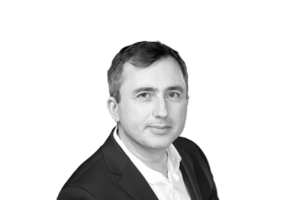
Fabien Riolet leads Polepharma, France’s leading pharmaceutical manufacturing network, driving industrial sovereignty and innovation across 460 member companies. Under his leadership, it has evolved into a strategic hub for manufacturing excellence, digital transformation, and sustainability, while positioning France for next-generation biopharma competitiveness.
Could you begin by explaining Polepharma’s mission and its role within France’s pharmaceutical ecosystem for our international readers?
Polepharma serves as the professional organisation that federates France’s entire pharmaceutical manufacturing value chain. When we speak of a value chain approach, we encompass not merely the production facilities manufacturing medicines in France—whether French-owned or foreign-owned—but the complete ecosystem of suppliers spanning from development through distribution.
Our scope deliberately excludes research activities and terminates at the threshold of pharmacies and hospitals. The industrial manufacturing dimension represents our core mandate since our establishment in 2002. Our fundamental objective centres on fostering collaboration amongst our 460 members—ranging from SMEs and start-ups to major international corporations—to enhance performance, competitiveness, cooperation, and mutual support.
Beyond conventional networking, we facilitate practical solutions to operational challenges. For instance, when manufacturing sites face shortages of spare parts, our collaborative framework enables even competitors to provide mutual assistance on technical matters. This reflects what has been aptly described as the “Silicon Valley phenomenon”—creating sufficient trust within a competitive system to enable collective performance enhancement.
Our ultimate mission, which has driven our advocacy since inception, centres on promoting “Made in France” pharmaceuticals—preserving and developing the industrial presence of pharmaceutical manufacturing within France.
We recently underwent a leadership change: after six years under Sanofi, the presidency has passed to LEO Pharma France, with Karine Duquenne taking over as President this June.
Concurrently, Polepharma has integrated with the SFSTP (Société Française des Sciences et Techniques Pharmaceutiques). This Learned Society, established in 1946, produces standards, guidelines, regulatory interpretations, and methodological proposals for pharmaceutical manufacturers. These commission-based professional works are published in “STP Pharma Pratique”, a bilingual journal whose articles significantly influence regulatory authorities and establish industry reference standards.
Our core activities encompass working groups, best practice development, congresses, and integrated initiatives focusing on performance optimisation, digitalisation, robotisation, and increasingly, artificial intelligence applications in industrial settings. We address quality management, pharmaceutical affairs, quality assurance, quality control, regulatory compliance, environmental transition, and critically, talent development and sector promotion to attract new professionals to industrial roles.
How do you differentiate PolePharma from other industry organisations, particularly given your inclusion of suppliers and CDMOs alongside traditional pharmaceutical manufacturers?
We currently represent 460 members across the French territory, supported by six offices and a team of 25 professionals. This provides both national coverage and local expertise.
To illustrate our collaborative approach, consider France Biolead, an association we co-founded and where we maintain board representation. Rather than competition, we seek collective impact. For instance, our France biomanufacturing Congress, co-piloted with Medicen, addresses biomolecules and biomanufacturing, but we recognised the need for France Biolead to provide focused leadership that also incorporates research elements—areas outside our direct purview, such as Institut Pasteur and similar research institutions.
Our rationale stems from a critical challenge: France imports over 90% of biopharmaceuticals, indicating a significant competitive disadvantage. We require international visibility to attract investment and scale capabilities—not recovery, as we were never previously strong in bioproduction—in the biomedicine sector. France Biolead serves this strategic positioning function whilst we maintain our manufacturing focus.
Our membership encompasses active pharmaceutical ingredient suppliers (biological and chemical), equipment manufacturers, training centres, engineering schools, pharmaceutical faculties, technical training institutes, and the entire supply chain, including packaging companies. This comprehensive value chain approach distinguishes us from organisations like LEEM, which functions as the national syndicate of pharmaceutical companies, or G5 members, who represent French pharmaceutical companies exclusively. We are the organisation that federates this entire manufacturing ecosystem. Our respective roles are very different and complementary.
Having witnessed the evolution of pharmaceutical manufacturing in France during your time at Polepharma, how would you describe this transformation, and what are the main challenges the sector still faces today?
France confronts a fundamental paradox. We emerged from thirty years dominated by economic theory that embraced what I term “happy deindustrialisation”—the fabless model adopted by the French government and official thinking. When PolePharma was established in 2002, our advocacy for maintaining a strong industrial presence in France, emphasising health sovereignty and independence, was largely dismissed. We were perceived as outdated thinkers who failed to comprehend economic evolution.
This ideology precipitated extensive French deindustrialisation. Then COVID-19 created an unprecedented shock—global economic paralysis with suspended international trade. Working closely with the government, leveraging our industrial representation, this crisis catalysed recognition of our strategic importance.
We contributed alongside organisations like LEEM (Les Entreprises du Medicament) to assist government crisis management, particularly through the Ministry of Economy’s crisis unit, where our former president participated in managing widespread shortages—not merely pharmaceutical shortages, but critical components like filters essential for production processes.
Here lies the paradox: whilst France endured thirty years of fabless ideology, we simultaneously represent one of the few sectors demonstrating resilience. According to LEEM data, over the past twenty years, direct employment in pharmaceutical production facilities—our primary interest—has remained stable at approximately 40,000 positions.
This stability provides a compelling recruitment argument: pharmaceutical manufacturing represents a stable industry without plant closures. We have experienced virtually no outright plant closures over twenty years, and the rise of CDMOs through major laboratory divestments has proceeded smoothly in France, with virtually all facilities acquired by CDMOs.
This paradox reflects France’s considerable pharmaceutical production assets: high-level expertise, sophisticated competencies, and status as Europe’s second-largest pharmaceutical market.
Whilst we acknowledge challenges in positioning France as an attractive investment destination, our reindustrialisation messaging—though “reindustrialisation” is imprecise for pharmaceuticals, as we have not retreated—focuses on investment support and industrial capacity consolidation.
Today, we command greater attention, evidenced by France 2030 initiatives. During COVID-19, we temporarily operated outside European subsidy regulations, as the European Union uniquely maintains strict WTO compliance among continental blocs. Typically, subsidies and competition regulations restrict support to SMEs and ETIs. However, during the 2021-2022 suspension of European regulations, major groups received subsidies that accelerated investment programmes.
Rather than greenfield investments—constructing facilities from zero, which proves challenging in pharmaceuticals—we witnessed capacity extensions and expansions, generating significant investment activity. We must continue advocating alongside organisations like G5, with whom we share strategic alignment, ensuring the government maintains this industrial focus and recognises genuine sovereignty and health security imperatives.
Amid fierce global competition, what positions France to continue emerging as an attractive pharmaceutical manufacturing destination?
Pharmaceutical manufacturing inherently requires substantial capital investment, generating continuous investment flows. Previously, through our National Productive Investment Observatory, co-piloted with LEEM, we documented consistently high annual investment levels.
Consider a practical example: a 2,000-employee injectable manufacturing facility requires €100 million annually merely for maintenance—not capacity expansion, but maintaining regulatory and technical compliance standards. This generates substantial subcontractor activity just for site maintenance.
Our challenge, until COVID-19 and subsequent government incentives, was that our observatory revealed 90% maintenance investment versus capacity expansion, new production lines, and similar growth investments. This has shifted significantly.
For instance, tomorrow we celebrate the 60th anniversary of the Leo Pharma Vernouillet facility near Paris. This milestone accompanies an investment exceeding EURO 40 million for new production lines. Novo Nordisk’s four-year EURO 2.5 billion investment, creating over 500 positions, represents genuine capacity expansion. At Chartres, this required complex coordination with municipal and State authorities to relocate neighbouring businesses through negotiated agreements with entire districts and roadways being redeveloped for this industrial zone expansion.
Such developments have been absent for decades, making current progress particularly encouraging.
We are experiencing authentic capacity investments, including symbolically significant projects like UPSA, Seqens, and Sanofi’s paracetamol production. This represents meaningful symbolism. France had ceased paracetamol production through economic logic, prioritising cost optimisation.
Sustaining this momentum requires addressing market realities. As LEEM explains comprehensively, we operate within regulated markets where essential French pharmaceutical consumption involves reimbursed medicines.
Our expectations align with industry colleagues: the government must adopt multi-annual planning rather than annual PLFSS (Social Security Financing Bill) modifications that create regulatory uncertainty. Industrial planning requires projection capability and stable regulatory frameworks. We advocate for recognising that French production creates socio-economic value locally whilst enhancing patient security through proximate manufacturing.
Global pandemics, whilst fortunately rare, remain possible, validating local manufacturing capabilities. We therefore advocate correlating pricing with French production and linking this to environmental objectives. All sectors, not exclusively pharmaceuticals, are pursuing decarbonisation, which logically favours local sourcing and proximate production.
This encompasses our dialogue with the government regarding enhanced stability and recognition of local production within pricing and reimbursement strategies.
France’s 2030 Innovation Health Plan features prominently in French pharmaceutical discussions. How does this initiative integrate with manufacturing objectives, particularly across biotherapeutics, injectables, and antibiotics?
The innovation plan encompasses numerous elements beyond Polepharma’s direct scope, including institutes, biocluster launches, and competitiveness clusters (Pôles de compétitivité) operating upstream in the value chain.
Our innovation focus centres on robotisation and digitalisation, with artificial intelligence representing a critical priority. Larger laboratories maintain substantial AI programmes. Our challenge involves democratising these technologies across smaller laboratories and CDMOs to maintain French production performance whilst ensuring regulatory authority comprehension and appropriate implementation.
We must collaboratively develop compliant frameworks with authorities, particularly ANSM (Agence Nationale de Securité du Medicament – National Agency for the Safety of Medicines and Health Products), enabling technology adoption whilst maintaining compliance. Without competitive advantages through productivity and irreproachable quality, we face challenges given the higher production costs compared to China or India.
We face significant challenges in maintaining mature pharmaceutical production, particularly in oral solid dosage forms. Beyond novel medicines and advanced technologies, we address initiatives with PHP regarding mature medicines—older formulations essential for hospitals where production ceases due to unsustainable low pricing.
This creates genuine challenges for maintaining these productions. Whilst biopharmaceuticals require attention through collective France Biolead initiatives, we cannot neglect conventional forms and older medicines essential for patient care and health sovereignty. The paracetamol example, whilst seemingly simple, demonstrates that distant production ultimately compromises patient care and health sovereignty, necessitating minimal French production maintenance.
Does French pharmaceutical manufacturing attract sufficient talent, and what characterises the available talent pool for industry development?
Talent represents our primary success factor. Fortunately, we possess a well-structured training system.
France maintains a pharmaceutical presence throughout the territory, but specific specialised areas exist. We can identify major manufacturing pharmaceutical areas such as, for example, Normandy, Lyon region, Loire Valley (Region Centre Val de Loire), Bordeaux region or Alsace
These specialised regions provide competitive advantages through established training institutes, supplier networks, pharmaceutical-knowledgeable authorities and communities understanding our constraints and providing support. We maintain skilled populations experienced in pharmaceutical conditions, with the Loire Valley and Normandy regions also overlapping with cosmetics manufacturing, sharing similar competencies in packaging, paste, and powder processing.
This cosmetics synergy enables collaborative training and recruitment, though pharmaceutical transition requires learning Good Manufacturing Practices and regulatory requirements significantly exceeding cosmetics standards, despite cosmetics’ increasing regulatory complexity.
This represents our significant promotional focus, collaborating closely with LEEM and industry branches, producing excellent materials, including career guidance and targeted initiatives.
For biomanufacturing, we launched the National Day of Biomedicines and biomanufacturing (GNDB) through France Biolead, promoting these careers among various age groups.
We invest substantially in educational partnerships, career guidance, employment initiatives, and public engagement operations, particularly in pharmaceutical-concentrated regions.
Looking ahead to 2025-2027, what are your strategic priorities? What achievements do you hope to accomplish within three years?
We maintain two critical imperatives: digital transition and environmental transition. Environmental transition, whilst indispensable, involves costs and reorganisation requiring transformation into competitive advantages. Meeting collective European and French objectives necessitates strategic advantage creation—our first challenge.
Second, we must continue training and recruitment, particularly addressing potential skill shortages in maintenance, laboratory control technicians, and industrial pharmacists.
Third, we will accompany the sector through structural projects. We are developing a national powder expertise platform in Dijon in Burgundy with our partner IMT (Pharmaceutical learning institute), ensuring continued classical pharmaceutical production of small molecules, including older formulations, and maintaining French manufacturing capabilities.
Beyond these priorities, we must sensitise the government to maintain pro-industry and “Made in France” pharmaceutical policies. Our integrated national platform project provides technical capabilities and expertise supporting site competitiveness across conventional pharmaceutical forms.
These initiatives represent our commitment to preserving French pharmaceutical manufacturing excellence whilst advancing technological innovation and environmental sustainability.