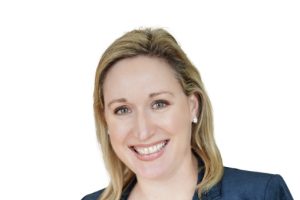
Kim Moran, SVP & Head of US Rare Disease at UCB, discusses how the company is building on its long-standing heritage in neurology to expand into rare and ultra-rare conditions. She highlights the strategic thinking behind UCB’s growing rare disease portfolio and explains what it takes to successfully bring therapies to highly specialized patient communities in the US. Moran also reflects on the importance of patient-first innovation, partnerships with advocacy groups, and the responsible use of data and AI to improve diagnosis and access for rare disease patients.
UCB has a long-standing heritage in neurology. Why has rare disease become strategically important to the company at this stage in its evolution, and how did UCB’s expansion into this space come about?
Our heritage at UCB has been built in neurology over the past three to four decades. However, neurology spans both large and very small patient populations, including rare and ultra-rare diseases. In many ways, our move into rare disease is a natural extension of that deep expertise in neurological science.
At UCB, everything begins with the science. We focus on understanding the underlying biology of disease at the deepest possible level, and from that foundation we work to develop solutions that truly fit the biology of the patient. For nearly two decades, our model has been centered around the connection between science, the patient experience, and the solutions we develop.
Our entry into rare disease was not a sudden decision. It has been decades in the making. One example is our therapy RSYTIGGO, which targets the FcRn pathway. That program began around 20 years ago with a UCB scientist in London. His wife had a severe immunological condition and required IVIG treatment, and he came to the company with the idea of developing a better solution for patients like her. UCB supported that vision, and two decades later the therapy was FDA approved and reached patients. Sadly, his wife passed away a couple of years ago, but that story reflects how deeply personal connections to patients have helped shape UCB’s journey into rare disease. In many ways, it began with one patient and one employee who wanted to make a difference.
How does UCB think about its responsibility in this space and what principles guide your approach to rare disease as an organization?
Rare diseases bring an especially high level of unmet need. Patients often face very long journeys from diagnosis to treatment, and in many cases, there are still no therapies available. That is why understanding the patient as deeply as possible is so important. At UCB, we see ourselves as a patient-first organization, focused not only on the biology but also on the lived experiences of the people we serve.
One example that stays with me involves a patient who runs a large generalized myasthenia gravis (gMG) support group in Georgia that serves around 500 patients across ten states. He was fortunate to be diagnosed relatively quickly after an ophthalmologist recognized the symptoms of eyelid drooping. For many patients, however, diagnosis can take several years. He often talks about how everyday environmental factors affect his condition. Heat and humidity, which are common in Georgia, can trigger symptoms. He once described walking through a cave near the Georgia–Tennessee border and feeling his throat begin to lose muscle tone while his eyes started to droop. Stories like this capture the essence of why it is so important to understand not just the disease biology, but the real-world experiences patients live with every day.
That is why we invest heavily in patient support programs. We have UCB-trained team members, many of whom are nurses or pharmacists, who work directly with patients. They are called ONWARD Care Coordinators and they do not provide medical advice. They will refer patients to their healthcare professional for any questions related to their treatment plan. ONWARD Care Coordinators listen to these lived experiences and help guide individuals through their treatment journey, often serving as coaches and sources of support.
Over the past few years, UCB has assembled a portfolio addressing rare and ultra-rare conditions. Could you walk us through the company’s current offering and the impact these therapies are having for patients and their families?
Within the gMG portfolio, we currently have two products, both of which offer unique differentiation. UCB is the first organization to offer the US gMG community the opportunity to benefit from a choice of two new targeted therapies from a single company. This is unique that UCB has two therapies in the same disease state. That was a deliberate strategic decision. We wanted to provide two different mechanisms of action and two different modes of administration that could be flexed depending on the individual needs of the patient.
The first product in the UCB US Rare Disease Portfolio that is FDA approved is RYSTIGGO, an FcRn inhibitor administered by a healthcare practitioner as a subcutaneous injection. It is given weekly for six weeks, and then we evaluate how the patient is doing. Many patients are able to go two months without treatment, and sometimes even three to four months, depending on their symptoms. They then return either when symptoms reappear or when their physician recommends the next treatment cycle.
Why is that important? My neighbor actually has gMG and is treated every other week with a different therapy. At one point he looked at me and asked, “Is this going to be the rest of my life?” I told him that there are other options available. The idea that you can go through a treatment cycle and then have a period where you can travel, go on holiday, and not constantly think about your disease can be incredibly meaningful for patients.
Our second product is ZILBRYSQ, which is the first at-home injectable therapy in this space. It works through a different mechanism as a complement inhibitor and is administered as a small daily injection that patients can give themselves. Patients can travel with their medication and incorporate it easily into their daily routine. This daily administration differentiates it from other treatments in the same class, which are often given in cycles. Together, these therapies allow physicians and patients to work together to determine which option best fits both the biology of the disease and the patient’s lifestyle.
Building this franchise in gMG has been an incredible journey. We are also looking at additional indications as we continue to expand within rare disease. One example is ocular myasthenia gravis, which represents the earliest manifestation of the disease. We are also studying a very rare condition called MOGAD, or myelin oligodendrocyte glycoprotein antibody disease. It sits somewhat within the same family as conditions like multiple sclerosis but involves a very specific antibody. In some cases, patients can present with severe symptoms, including coma, which often leads to a complex diagnostic process. That trial is currently ongoing and recruiting patients.
Finally, we have what I like to call our small but mighty therapy, KYGEVVI for Thymidine Kinase 2 deficiency (TK2d) which was approved in November 2025 and is now being launched. This program is especially near and dear to me. I have had the opportunity to meet several patients and families living with TK2d. It is a very serious disease with extremely high morbidity and mortality. The statistics show that five years after diagnosis, about 50 percent of patients do not survive. In fact, the endpoint of the clinical trial was a Kaplan–Meier survival curve, which is something you rarely see.
There are only about 110 individuals living with TK2d in the US, so this truly represents ultra-rare, the rarest of rare conditions. They deserve care, no matter how rare. About a third of patients are diagnosed as infants when they begin to lose developmental milestones. Parents may see their child begin to sit up around six months, only to then regress. In some cases, this leads to what clinicians refer to as “floppy baby syndrome.”
Bringing an FDA approved treatment to the TK2d community with such high mortality comes with an enormous sense of responsibility, yet working with these families and seeing the impact that a therapy can have brings a profound sense of purpose to our work.
From your experience, what ultimately defines a successful launch within the US rare disease ecosystem?
There are a few elements to the “secret sauce” of launching well in rare and ultra rare disease. You have to be both patient-first and digital-first.
Being patient-first means creating the right experience for patients. It requires deeply understanding both the biology of the disease and the lived experience of patients. When you are working in ultra-rare conditions, there is also a responsibility to help find patients. That is where being digital-first becomes critical.
For example, we partner with companies that conduct genetic testing and work to increase disease awareness among physicians. If clinicians see early warning signs such as loss of developmental milestones, muscle weakness, or respiratory complications, we want them to escalate to genetic testing quickly. If a patient is diagnosed with TK2d, getting them on treatment as early as possible can be life changing.
Much of our work is therefore not traditional pharmaceutical marketing. We are not simply promoting a medicine to physicians who already treat these patients. Our role is to build disease awareness and support earlier diagnosis. That includes partnering with patient organizations, supporting broader access to genetic testing, and educating clinicians so they recognize these conditions. I recently spoke with the head of neurology at Mass General, and they had never seen a TK2d patient. That illustrates just how rare this condition is. When you consider that there are only about 110 patients across the entire US, it underscores the responsibility that comes with bringing a therapy that has a survival benefit to market.
The second component of a successful launch is ensuring that once a patient is prescribed treatment, the process from prescription to receiving the medicine at home is as seamless as possible. In rare disease, patients and families already face enormous complexity. Our responsibility is to remove as many barriers as possible and support them at every step of the journey.
Being digital-first also plays an important role in conditions like gMG, where we have learned a great deal about using data and analytics to improve patient identification. The goal is to shorten the journey from first symptoms to diagnosis and ultimately to the right treatment. If we can help reduce that delay, patients can access the therapy they need much earlier in their disease journey.
From a leadership and culture perspective, what capabilities are required to build a team that can successfully operate in this highly specialized space?
We very much operate as a learning culture, and to me that starts with building a team with diverse backgrounds. On our TK2d team, for example, I have a genetic counsellor, someone who previously worked at a genetic sequencing company, a nurse who worked in a hospital system on a mitochondrial disease unit, and another colleague who came from the Muscular Dystrophy Association.
These individuals bring very different perspectives, but each one has experience with a different part of the patient care journey. That diversity is incredibly valuable because it allows us to bring multiple forms of expertise together when shaping our strategy. Each person understands a specific part of the ecosystem. This helps ensure that when we go to market, we are approaching it in the most thoughtful and informed way possible.
At the same time, the culture has to recognize that you are not going to get everything right on day one. That is why it is essential to stay externally focused and to keep listening. We listen to patients, caregivers, patient organizations, physicians, the payer community, and regulators. All of those perspectives matter. Our job is to listen carefully, evaluate the signals we are hearing, and if something needs to change, we pivot.
One way we operationalize that is through what we call an integrated launch room. We bring together these different stakeholders and review the data and insights as a group. Early in a launch we do this weekly, because the environment moves quickly and new information comes in all the time. It gives us the opportunity to say, “We did not anticipate that,” or “This is working really well and we should double down.” In a data-rich environment like rare disease, you have to pay close attention to the signals and be ready to adapt as you learn.
Advocacy organizations and patient communities are increasingly taking an active role in addressing care challenges and treatment gaps. What does it mean to be a trusted industry partner, and how does UCB approach engagement with the communities it serves?
Humility has always been an important part of UCB’s culture. We recognize that you cannot do this work alone. It always has to be done in partnership with the community. You are never the smartest person in the room, and no company can solve these challenges by itself.
Because of that mindset, everything we do is externally focused and built around partnership. For example, we have worked with MyHealthTeams for about five to eight years. They help create online communities where patients can connect with one another and share their experiences. Those communities are incredibly valuable, not only for patients but also for us, because they provide a rich source of insight into what patients are going through in their daily lives.
At the end of last year, we also announced a strategic partnership with Citizen Health, a company based in the San Francisco area that has a very interesting model. Many patients, particularly those living with rare diseases, voluntarily contribute their clinical records. Citizen Health then creates what they call data lakes from that information, which can be accessed by academic researchers, pharmaceutical companies, and other organizations to support research. Importantly, if a patient’s data is used, they receive compensation, so it truly becomes a two-way relationship.
Citizen Health was co-founded by Nasha Fitter, who is a rare disease mother and leads an organization focused on FOXG1 syndrome. Through that work, the community has already made remarkable progress and is now in Phase III trials for a gene therapy. It is a great example of how patient communities are increasingly driving progress themselves, and why it is so important for industry to engage as a trusted partner rather than trying to operate independently.
Looking ahead, what are UCB’s key strategic priorities in the US over the next few years and what reputation would you like the company to have earned within the rare disease community?
Continuing to listen and learn from the communities we serve must remain at the center of what we do. As we look ahead, I am excited about the opportunity to continue expanding our pipeline, whether through inorganic growth such as business development, acquisitions, or partnerships, or through the ongoing work of our scientists who are focused on identifying areas of high unmet need.
We now have strong proof points that demonstrate what UCB can do in rare disease. Over the past three years, we have launched three therapies. That experience has shown that we have the right platforms, the right capabilities, and most importantly the right people to support these patient populations.
Another priority for us is continuing to advance our use of artificial intelligence in a responsible way. That includes identifying unique data sources, building partnerships, and applying AI in ways that genuinely help patients. Trust is an essential part of that conversation. I work frequently with BioNews, an organization that publishes content for rare disease communities, and in a recent survey they conducted, trust and AI came up repeatedly. As a company using these technologies, we have to ensure that they are functioning as intended and that they are being applied in ways that serve patients.
We are already seeing the potential of AI. Through partnerships and the use of algorithms, we are able to identify potential patients and guide them toward telemedicine consultations that can support diagnosis and treatment. In that sense, we are working with partners to actively help identify rare disease patients across the US and connect them with appropriate care.