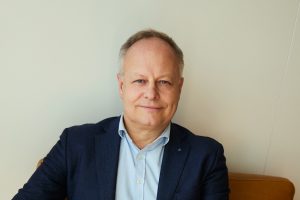
Etienne Tichit has dedicated over five years to steering Novo Nordisk France through a transformative period of unprecedented growth and strategic realignment. His tenure has been marked by bold industrial investments exceeding EUR 2.3 billion, the establishment of France as a global manufacturing hub for next-generation diabetes and obesity treatments, and pioneering initiatives in sustainable pharmaceutical production. Under his leadership, the company has navigated complex regulatory landscapes whilst positioning France at the forefront of cardiometabolic healthcare innovation.
Over the past five to six years leading Novo Nordisk France, what have been the key strategic milestones and transformational changes you have implemented?
Our strategic agenda has centred on ensuring that Novo Nordisk France contributes meaningfully to the corporation’s global development whilst simultaneously creating an environment where France can demonstrate its exceptional capabilities. The country possesses remarkable assets—extensive R&D expertise, sophisticated production capabilities, advanced decarbonisation knowledge, and a substantial patient population requiring treatment for diabetes, obesity, and related chronic diseases.
We have made significant investments across two critical dimensions. Firstly, in research and development, we established a dedicated clinical centre with approximately 45 professionals as of early 2024. This represents a fundamental shift in our clinical trial capabilities and reinforces France’s position as a centre of medical excellence.
Secondly, we executed what constitutes one of the largest industrial investments in pharmaceutical manufacturing history. In January 2023, we announced a EUR 130 million investment, followed by an additional EUR 2.1 billion commitment in November of the same year. When combined, this EUR 2.3 billion investment represents one of the most substantial pharmaceutical investments, potentially ranking amongst the largest industrial investments across all sectors in France.
Can you elaborate on the scale and implications of this manufacturing expansion?
The magnitude of this undertaking cannot be overstated. The investment requires approximately 2,000 construction professionals to execute the project, which will double our facility footprint from 110,000 to 230,000 square metres. This expansion will create 500 additional permanent positions in Chartres, bringing our total workforce to approximately 2,200-2,300 employees.
Currently, our Chartres facility serves 10 million patients across 85 countries, with 97 percent of our production exported to European and neighbouring markets. Our objective is to expand this reach to at least 15 million patients, with all next-generation semaglutide and GLP-1 therapies for diabetes and obesity originating from France.
The strategic significance extends beyond manufacturing capacity. We are positioning France as the global production hub for breakthrough cardiometabolic treatments that will fundamentally transform patient outcomes across multiple disease states.
How did you successfully advocate for this massive investment within Novo Nordisk’s global strategy?
Several factors converged to create a compelling investment thesis. Historically, France has maintained a strong position within our European operations since establishing our affiliate in 1959 and manufacturing facility in 1961. Chartres has consistently ranked as our largest European site outside Denmark, providing a foundation of established competencies and industrial infrastructure.
The French government’s industrial policy created a favourable environment, particularly the green industry legislation supported by Minister Roland Lescure. The administration demonstrated commitment to reindustrialising France and positioning pharmaceutical manufacturing as strategically critical. Production tax reforms and discussions regarding the elimination of the CVAE (cotisation sur la valeur ajoutée des entreprises) provided positive signals for industrial competitiveness.
However, I must acknowledge that political instability and budgetary pressures have subsequently created challenging conditions. We have experienced price reductions across our entire portfolio over the past two years, despite France already maintaining some of Europe’s lowest pharmaceutical pricing. This contrasts sharply with countries like Germany, which implemented price increases post-COVID to account for inflation.
How has this challenging pricing environment affected your strategic approach, particularly regarding obesity treatment access?
The pricing pressures necessitated innovative market access strategies. For obesity treatment, we made the strategic decision to offer our GLP-1 therapy through out-of-pocket payment whilst simultaneously pursuing reimbursement negotiations. This dual approach ensures patient access whilst navigating France’s complex and protracted reimbursement procedures, which typically require over 500 days compared to approximately 150 days in Denmark.
We initiated an early access programme that enrolled nearly 10,000 patients with obesity, partnering with leading obesity centres to establish clinical pathways, treatment protocols, and medical guidelines. This programme served multiple strategic purposes: providing immediate patient access, generating real-world evidence, and facilitating the development of comprehensive care pathways.
What is your assessment of the French healthcare system’s recognition of obesity as a disease requiring medical intervention?
There has been substantial progress in disease recognition, driven significantly by patient advocacy organisations. We have collaborated extensively on anti-stigma campaigns, as societal misconceptions persist regarding obesity as merely a lifestyle issue rather than a complex medical condition.
The reality is that approximately 50 percent of obesity causation relates to factors beyond diet and exercise—genetics, significant life events, psychological trauma, and metabolic dysfunction all contribute substantially. We developed educational initiatives, including the “Fresque de l’Obésité,” modelled after climate change awareness programmes, to facilitate healthcare professional discussions about obesity misconceptions and treatment approaches.
Recent regulatory developments are encouraging. We submitted cardiovascular outcomes data demonstrating a 20 percent reduction in cardiovascular risk with Our GLP-1 Therapy, resulting in an ASMR-4 rating from the Haute Autorité de Santé, indicating meaningful clinical benefit and life-saving potential. Additionally, the government plans to announce a national obesity strategy before the autumn, suggesting increased policy attention to this critical health challenge.
Can you quantify the broader economic and societal impact of obesity in France?
Our comprehensive economic analysis, conducted with Asterès, reveals that obesity imposes a EUR 23 billion annual burden on French society. This encompasses EUR 13 billion in direct healthcare costs and approximately EUR 10 billion in productivity losses, unemployment, and reduced economic participation.
Remarkably, 273,000 women currently remain unemployed due to obesity-related factors, representing 2.4 percent of the population. Furthermore, salary disparities exist, with a 0.3 percent wage reduction per BMI point, even for identical positions. These figures underscore that obesity transcends individual health concerns to represent a significant macroeconomic challenge.
How does your obesity treatment strategy address the broader spectrum of associated diseases?
Obesity functions as what I characterise as a “silent killer”—while visibly manifesting as weight issues, it simultaneously drives 18 distinct comorbidities. Our semaglutide clinical programme has demonstrated efficacy across multiple organ systems: 67 percent resolution of fatty liver disease, 20 percent reduction in cardiovascular events (superior to statin performance), improved renal function, and even benefits for knee pain and peripheral arteriopathy.
We anticipate results from our Alzheimer’s disease study by November, potentially expanding the therapeutic applications further. This multi-system approach enables us to deliver “health at scale”—addressing multiple diseases simultaneously rather than treating each condition independently.
What is your vision for diabetes care in France, and how are you leveraging technology to enhance patient outcomes?
Our diabetes strategy focuses on reducing treatment burden whilst optimising clinical outcomes. We are transitioning from daily to weekly administration across our portfolio— including weekly GLP-1 therapies for diabetes and obesity, and our forthcoming once-weekly basal insulin. Additionally, we are developing oral formulations of these hormonal therapies, which represents a significant technical challenge but promises to further improve patient adherence.
Digital health integration is central to our approach. Our connected insulin pens interface with continuous glucose monitoring systems, particularly through our Abbott partnership, providing patients with comprehensive glycaemic management on a single mobile platform. Over 4,000 patients currently utilise this solution, which we provide at no additional cost.
We have evolved clinical targets from basic glycaemic control to glycated haemoglobin (HbA1c) to “time in range”—maintaining blood glucose within optimal parameters 80 percent of the time. This approach, supported by remote monitoring and healthcare professional consultation, significantly reduces complication risks whilst empowering patient self-management.
Could you elaborate on how your clinical research footprint in France has evolved over time?
Our clinical research capabilities have undergone dramatic expansion. Previously, we participated in approximately 50 percent of Novo Nordisk’s global clinical trials. We now possess the infrastructure to support virtually all corporate studies, having established a dedicated 45-person clinical team—directly employed rather than contracted through clinical research organisations.
This expansion enables us to double the number of patients enrolled in our French clinical trials, from under 40,000 currently to over 80,000 by 2028. This growth serves multiple strategic purposes: advancing medical science, supporting French clinical excellence, and providing substantial research funding to participating hospitals and academic centres.
Our publications appear in premier journals such as Nature and BMJ, addressing novel therapeutic areas like MASH (metabolic dysfunction-associated steatohepatitis), where few treatment options exist. This positions French investigators at the forefront of ground-breaking medical research.
How do you balance innovation investment with the current challenging economic environment in French healthcare?
The fundamental challenge lies in reconciling innovation value with cost containment pressures. Our 2024 turnover of EUR 667 million now faces tax burdens approaching 10 percent of revenue—approximately EUR 66 million compared to EUR 1.5-2.5 million in 2019. This exponential increase in fiscal pressure undermines our ability to sustain innovation investment.
However, we must demonstrate that innovative therapeutics deliver superior value compared to existing treatments. Semaglutide clinical programmes have enrolled nearly 50,000 patients across obesity and diabetes indications—unprecedented in pharmaceutical development. This represents a paradigm shift from multiple generic medications with limited efficacy to single, comprehensive treatments addressing multiple disease pathways simultaneously.
The economic argument is compelling: whilst innovative therapies command premium pricing, they often deliver superior outcomes compared to multiple generic alternatives, potentially reducing overall healthcare costs through improved patient adherence and reduced complications.
What sustainability initiatives distinguish your French operations?
Environmental stewardship is integral to our operational philosophy, reflecting our foundation ownership structure and commitment to the “3 Ps”—performance, people, and planet. Our Circular for Zero programme targets net-zero emissions by 2045 through comprehensive sustainability measures.
Since 2020, we have eliminated 8,500 tonnes of CO2 emissions annually from our Chartres facility through energy efficiency improvements, renewable energy adoption, and process optimisation. Our 2024 sustainability reporting achieved full compliance with European green legislation, with complete product-level carbon footprint transparency available on our website.
We have also implemented circular economy principles, including a product take-back programme launched in 2022 in which used insulin pens are recycled into furniture—the chair I am sitting on was manufactured from 120 recycled insulin pens. These initiatives demonstrate our commitment to addressing environmental challenges beyond our direct therapeutic mission.
What prevention initiatives are you implementing to address the root causes of diabetes and obesity?
Our Cities for Better Health programme, active for a decade, now encompasses 51 municipalities sharing best practices for diabetes and obesity prevention. In the Strasbourg region, we collaborate with 30 cities, having identified six critical intervention points through partnership with the Observatoire Régional de la Santé.
We work with organisations including the French Diabetic Federation, French Food Bank Federation, and local associations to promote healthy lifestyle behaviours regarding nutrition, physical activity, and screen time management. Currently, approximately 800 children participate in these programmes, which aim to establish sustainable healthy habits before disease onset.
This prevention approach aligns with our foundation ownership philosophy of addressing health challenges holistically rather than solely through pharmaceutical intervention.
What is your final message regarding Novo Nordisk France’s contribution to the healthcare ecosystem?
Our impact extends far beyond pharmaceutical manufacturing. We are simultaneously advancing medical research, supporting clinical excellence, creating high-value employment, driving industrial innovation, and promoting environmental sustainability. This holistic approach creates value across the entire healthcare ecosystem whilst addressing some of society’s most pressing health challenges.