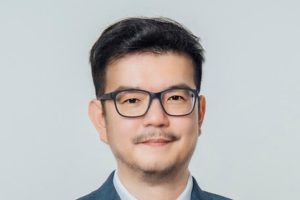
Dr Ethan Shen moves comfortably between the clinic, the laboratory, and capital markets, and this conversation reflects that rare vantage point. He explains how YD Bio is built not as a single-asset biotech, but as an integrated platform designed to connect diagnostics, data, and advanced therapies with real clinical execution. The discussion spans personal motivation, regulatory realism, and capital discipline, offering a clear view of how Taiwanese innovation can be translated onto a global stage.
What shaped your professional journey and led you to establish YD Bio as a platform company?
My career has consistently moved between the clinical front line and the strategic layers of healthcare execution. Early in my professional life, I spent time in hospitals speaking with physicians about patient realities, while simultaneously working with scientists and investors on data, capital allocation, and development timelines. That dual exposure led me to a clear conclusion: healthcare rarely fails because of a lack of effort. It fails because its components — research, regulation, capital, and clinical practice — do not connect in a coordinated and scalable way.
I trained at Taipei Medical University and later joined Novartis, where I was exposed to global development standards and the disciplined regulatory cycles required to bring therapies to market. That experience instilled in me a respect for process, regulatory rigor, and long-term capital discipline. In 2008, during the global financial crisis, I returned to Taiwan and rebuilt from first principles, starting with a pharmacy focused on clinical prescriptions and elderly care. Expanding it into a small network allowed me to understand healthcare not only from a product perspective, but from the standpoint of patient flow, reimbursement dynamics, and operational sustainability.
That combination of multinational pharmaceutical exposure and grassroots clinical infrastructure shaped the foundation of YD Bio when I established the company in 2013. From the beginning, the goal was not to create a single-asset biotech dependent on one binary outcome, but to build an integrated platform capable of translating Taiwan’s scientific strength into globally executable assets.
Over time, that vision has evolved into a structured ecosystem. We began with cancer and aging detection technologies, enabling patient identification, monitoring, and data generation within real hospital systems. We then expanded into therapeutic platforms, including advanced cell therapy capabilities and a world-class brain cancer team, allowing us to integrate detection and treatment rather than treating them as isolated domains. More recently, we have extended into U.S. regulatory execution through CRO and FDA submission services, including successful IND filings, strengthening our internal regulatory competence while generating revenue.
A personal experience also reinforced my long-term focus. Returning to Taiwan during my father’s final illness reminded me that healthcare innovation must ultimately translate into real patient impact. Financial success alone is insufficient if systems do not endure. That philosophy continues to guide YD Bio. We are not building concepts. We are building infrastructure — scientific, clinical, regulatory, and financial — that connects innovation to execution in a way designed to create durable value over time.
How is YD Bio structured today, and which core technology platforms define its strategic direction over the near to mid-term?
YD Bio today operates as a multi-layered execution platform rather than a traditional single-asset biotechnology company. Our structure is deliberately built around four interconnected pillars: data and patient interface, therapeutic integration, regulatory execution, and capital discipline.
The first layer of the platform is diagnostics and molecular detection. Through EG BioMed, we have deployed circulating cell-free DNA methylation technologies in clinical settings via Laboratory Developed Tests (LDTs), allowing real-world patient identification, longitudinal monitoring, and data generation. While current commercial contribution remains modest, the strategic value of this layer lies in its ability to integrate directly into hospital workflows and generate clinically relevant datasets that support therapeutic evaluation and future drug development.
The second layer is therapeutic integration. Once patient access and molecular data are established, we selectively expand into treatment modalities with defined clinical rationale and executable regulatory pathways. With our planned acquisition of Safe Save Medical Cell Sciences & Technology, we expect to add late-stage dendritic cell immunotherapy assets in glioblastoma, supported by an experienced brain cancer team and multi-centre collaboration in Taiwan. This will strengthen our oncology positioning and enable us to integrate detection and therapy within a single coordinated system.
The third layer is regulatory execution capability. Through our U.S. strategic alliance in CRO and FDA regulatory services, YD Bio serves as Official U.S. Agent for IND and related submissions, and we have already completed our first successful FDA IND filing. This capability enhances our internal regulatory strength, generates service revenue, and embeds the platform directly within the U.S. regulatory ecosystem rather than relying solely on external advisors.
The fourth layer is disciplined capital deployment. By leveraging Taiwan’s efficient clinical environment and regulatory frameworks, including hospital-based special medical technology pathways, we are able to validate programs earlier and at lower capital intensity compared to traditional U.S.-only development models. This allows us to sequence risk rather than accumulate it.
Over the near to mid-term, YD Bio should therefore be understood not as a collection of independent projects, but as an increasingly integrated oncology ecosystem. Detection generates data and patient access. Therapeutic platforms expand clinical impact. Regulatory execution strengthens credibility and control. Capital discipline ensures sustainability. Each layer reinforces the others.
Our objective is not rapid expansion based on narrative momentum. It is structural completeness — building a system where scientific innovation, regulatory execution, and clinical translation converge in a way that is progressively self-strengthening. The platform is not static; it is continuously being completed and refined through asset integration, regulatory engagement, and operational execution.
How have you approached the transition from LDT-based diagnostics to full regulatory approval, and how does this fit within YD Bio’s broader oncology strategy?
We do not view Laboratory Developed Tests and formal regulatory approval as competing pathways. For us, they represent different stages of a sequenced development model. LDT deployment allows us to operate within hospital systems today, support physicians in real clinical settings, and generate longitudinal real-world data. In parallel, we advance structured regulatory strategies for programs where the clinical rationale and manufacturing readiness justify progression.
This sequencing reflects a broader principle. In biotechnology, forcing every program into a full regulatory pathway from day one often concentrates risk and capital burn. Our approach is to build validation progressively. Diagnostics establish patient access and data infrastructure. That data strengthens therapeutic decision-making. Only when clinical and operational conditions are aligned do we advance toward formal regulatory submissions.
Within oncology, this framework becomes particularly important. Our DNA methylation-based detection technologies serve as a patient identification and monitoring interface, not as an endpoint business alone. Their value lies in enabling precision stratification and treatment evaluation over time. Alongside this, we have been deliberately building therapeutic depth.
The planned acquisition of Safe Save Medical Cell Sciences & Technology is expected to introduce a late-stage dendritic cell immunotherapy platform in glioblastoma, supported by a world-class brain cancer team and multi-centre collaboration in Taiwan. Subject to regulatory compliance and transaction completion, this program will position us to pursue a structured clinical pathway in Taiwan under its regulated special medical technology framework, with a target milestone in 2027. Recently, Safe Save Medical has begun applying late-stage dendritic cell immunotherapy for glioblastoma at Taipei Medical University Hospital in Taiwan, with planned immune cell therapy treatment in oncology patients. While this pathway differs from traditional FDA drug approval, it represents a meaningful validation and potential early clinical deployment opportunity within a defined regulatory environment.
This is where our oncology strategy becomes integrated rather than parallel. Detection identifies and monitors patients. Immunotherapy provides intervention. Regulatory infrastructure — including our U.S. FDA execution capability — ensures that development standards remain globally aligned. Rather than competing directly with large pharmaceutical companies on scale, we focus on connecting data, clinical access, and therapeutic innovation in areas of high unmet need, particularly solid tumours such as brain cancer where treatment options remain limited.
More broadly, YD Bio operates as an ecosystem builder. In Taiwan, we combine regulated clinical deployment, product distribution, and licensing models to create early operational validation while longer-term regulatory strategies continue. Internationally, we embed ourselves within the U.S. regulatory system through active IND participation. The result is a stepwise pathway where diagnostics, therapy, and regulatory execution reinforce each other — progressively reducing risk while advancing toward higher-value inflection points.
How do you manage scientific and regulatory risk in areas such as stem cells and exosomes, and how do you decide which technologies to advance within YD Bio’s ecosystem?
Stem cells and exosomes inevitably raise questions around consistency, reproducibility, scalability, and regulatory credibility. We approach these areas with a structured risk-management framework built around three principles: biological integrity, manufacturing discipline, and regulatory preparedness.
First, risk must be controlled at the biological source. Exosomes are cell-derived products, which means upstream cell quality, donor screening, and culture conditions directly determine downstream reproducibility. We therefore focus on controlled sourcing, standardized expansion protocols, and clearly defined release specifications. Scientific credibility begins at the process level, not at the marketing level.
Second, manufacturing discipline is non-negotiable. Without robust process control and documentation, advanced biologics cannot engage serious regulatory dialogue. For that reason, we have filed supporting Drug Master Files (DMFs) with the U.S. FDA for limbal stem cells and limbal stem cell-derived exosomes. A DMF is not product approval, and we are careful to make that distinction. However, pending FDA approval, it represents a formalized manufacturing and quality dossier that can support future IND submissions. This step signals regulatory intent and establishes a structured foundation for clinical development rather than exploratory experimentation.
Third, we manage portfolio risk through an ecosystem allocation model. YD Bio does not attempt to internalize every capability. Instead, different portfolio companies execute within their areas of strength, while YD Bio coordinates scientific direction, regulatory alignment, and capital sequencing at the platform level. EG BioMed leads molecular diagnostics validation within hospital systems. Safe Save Medical Cell Sciences & Technology advances late-stage dendritic cell immunotherapy in glioblastoma. External regulatory and quality specialists handle submission documentation to ensure global compliance standards are maintained.
This distributed execution model reduces operational concentration risk while preserving strategic coherence. As technologies mature and reach defined inflection points — such as regulatory readiness, late-stage clinical progression, or scalable manufacturing capability — we integrate them more deeply into the platform or prepare them for capital market access. In parallel, we are progressing toward a second U.S.-listed vehicle centered on a specific cell therapy asset, with regulatory and listing processes under way. While details are not yet public, this reflects a broader capital strategy: advancing assets to stages where they can sustain independent financing structures.
Across approximately eight affiliated companies, the guiding principle remains consistent. We prioritize technologies that meet three criteria: clear clinical relevance, achievable regulatory pathways, and disciplined capital sequencing. Scientific enthusiasm alone is insufficient. Each program must demonstrate translational feasibility and structured risk control.
Ultimately, managing risk in advanced biologics is not about eliminating uncertainty — it is about engineering systems that progressively reduce it. By embedding regulatory preparation early, aligning manufacturing discipline with scientific development, and sequencing capital allocation carefully, we aim to build a platform that remains credible not only to researchers, but to regulators, partners, and long-term investors.
As a Nasdaq-listed company, what is your strategy for balancing long-term scientific ambition with capital discipline, execution speed, and public market expectations?
In biotechnology, scientific innovation is rarely the primary constraint. The real bottleneck is disciplined clinical translation. Moving from pre-IND planning to IND readiness and early clinical execution requires manufacturing infrastructure, toxicology validation, assay development, and regulatory-grade documentation. These processes follow regulatory timelines that cannot be compressed without compromising credibility. As a Nasdaq-listed company, our responsibility is to align ambition with execution realism.
We are clear with the market that no product of ours is currently FDA-approved. That transparency is essential. At the same time, we focus on building execution capacity early — combining internal coordination with experienced CRO collaboration and direct participation in U.S. regulatory processes. Scientific quality alone does not sustain public-market confidence; operational discipline does.
Our capital allocation philosophy is deliberately stepwise. Diagnostics and biomarker development provide strategic data assets and patient interface capabilities, but they are not shortcuts to therapeutic approval. Data strengthens decision-making, yet progression remains sequential and capital intensive. Therefore, financial stability becomes a foundational resource. Without revenue and operational grounding, long-term R&D cannot be sustained responsibly.
This is why we prioritize assets that combine clinical relevance with nearer-term validation pathways. In Taiwan, the regulated special medical technology framework allows certain advanced cell therapies to be delivered within approved hospitals under defined oversight. Within this structure, and subject to regulatory compliance, we are targeting a conditional clinical pathway milestone in brain cancer in 2027 through our late-stage dendritic cell immunotherapy platform. While distinct from traditional FDA drug approval, this represents a meaningful validation point and a potential early demonstration of integrated platform execution.
At the same time, we have strengthened our execution layer by expanding into U.S. regulatory consulting and CRO services through our strategic alliance. YD Bio serves as Official U.S. Agent for FDA submissions, and we have already completed our first successful FDA IND filing in collaboration with our partner. This is not positioned as a peripheral consulting activity. It embeds our organization directly within FDA processes, enhances internal regulatory competence, and generates service-based revenue that reinforces platform sustainability.
What distinguishes our approach is integration. We possess cancer and aging detection technologies capable of monitoring and evaluating therapeutic response. We have advanced cell therapy capabilities supported by a world-class brain cancer team. We have active regulatory execution infrastructure in both Taiwan and the United States. Each layer strengthens the others.
For public market investors, the objective is not rapid narrative-driven expansion. It is structural consolidation. We aim to build a progressively integrated oncology ecosystem where data informs therapy, therapy advances through disciplined regulatory pathways, and capital is allocated in stages rather than in leaps. Over time, value realization emerges not from a single binary event, but from cumulative validation milestones.
The YD Bio ecosystem is therefore not a conceptual story. It is an operating system under continuous construction — where scientific ambition is matched by regulatory preparation, and where execution credibility is treated as seriously as innovation itself.
How do you address scepticism from US investors and position YD Bio as a credible long-term partner in the public markets?
Scepticism in the U.S. biotech market is not unreasonable. Over the past decade, investors have seen many companies raise capital on compelling narratives without delivering sustained clinical or regulatory progress. That history creates a higher bar for credibility — and I believe that is healthy.
If YD Bio were assessed solely on its current commercial footprint — early cancer detection programs and ophthalmology products — the picture would indeed be incomplete. Those activities are operationally real, but they do not fully reflect the structural evolution of the platform. What we are building is not a short-cycle revenue story; it is an integrated translational system that is progressively adding regulatory depth, therapeutic maturity, and execution infrastructure.
The way we address scepticism is through structure and sequencing. First, we communicate transparently. We are explicit that no product is FDA-approved today. We differentiate clearly between LDT deployment, conditional clinical pathways in Taiwan, and formal FDA approvals. Precision in language matters in public markets.
Second, we focus on visible execution milestones. The advancement of a late-stage dendritic cell program in glioblastoma, the targeted 2027 clinical pathway milestone in Taiwan, and our completed FDA IND filing through our U.S. regulatory alliance are not theoretical concepts — they are measurable steps. Each milestone reduces uncertainty incrementally rather than relying on a single binary event.
Third, we embed ourselves within the regulatory system rather than observing it from the outside. By serving as Official U.S. Agent in FDA submissions and participating directly in regulatory processes, we build institutional familiarity and discipline. Over time, this reduces execution friction for our own pipeline and strengthens investor confidence that we understand the standards required in the United States.
In addition, our close collaboration with Taipei Medical University and its affiliated medical centers provides a structural advantage that is difficult to replicate. Taiwan’s healthcare system combines high clinical quality, centralized reimbursement infrastructure, and regulatory flexibility within defined frameworks. This enables us to integrate diagnostics into real hospital workflows, advance cell therapy programs under regulated clinical pathways, and generate early operational validation with comparatively lower capital intensity than U.S.-only development models.
The proximity between academic research, clinical practice, and regulatory dialogue in Taiwan creates a more agile translational environment. For a platform like YD Bio, this means we can move from laboratory concept to structured clinical application in a coordinated manner rather than across fragmented institutions. Importantly, this environment also supports earlier-stage revenue generation through regulated hospital-based programs and service-based regulatory execution, reinforcing financial stability while longer-term global regulatory strategies continue.
Taiwan — and particularly our collaboration with TMU — is therefore not merely a geographic base. It is enabling infrastructure. It allows us to sequence risk, control burn rate, and validate programs earlier while maintaining alignment with international regulatory standards. This structural alignment is central to our confidence that YD Bio can generate sustainable cash flow while advancing toward larger international milestones.
For long-term investors, credibility is built through consistency. We do not promise shortcuts or dramatic inflection points detached from operational reality. We focus on building an ecosystem where detection, therapy, and regulatory execution reinforce one another. As validation milestones accumulate — clinical, regulatory, and operational — value is realized progressively rather than speculatively.
In that sense, YD Bio should not be viewed as a single-theme story, but as an emerging cross-border oncology infrastructure platform. Trust is earned over time. Our responsibility as a Nasdaq-listed company is to ensure that scientific ambition is always matched by disciplined execution, structural advantage, and transparent communication.