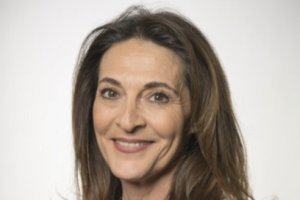
Estelle Fruchet, General Manager of Shionogi France since September 2024, brings 25 years of pharmaceutical experience spanning major organisations including Roche, Gilead, and Novartis Gene Therapies. A pharmacist by training with specialisation in product launches – most notably Gilead's hepatitis C therapy – Estelle Fruchet now leads a 25-person affiliate addressing one of healthcare's most critical yet commercially challenging areas: antimicrobial resistance (AMR) and reserve antibiotics.
You have built your career with major pharmaceutical organisations. What motivated your transition to Shionogi, and how has your first year been?
I am a pharmacist with 25 years of experience across pharmaceutical organisations of varying scale – from major European companies to medium-sized biotechnology firms and smaller specialised units. Throughout my career, I have held diverse roles, predominantly commercial, but also in market access and global launch excellence, which has given me a broader perspective beyond France, where most of my career has been concentrated.
I specialised in product launches, the most significant of which was introducing a breakthrough therapy for hepatitis C in France. Innovation has also been the consistent theme of my career – I have long focused on therapies addressing substantial unmet medical needs that deliver genuine patient value.
What drew me to Shionogi in September 2024 was the company’s distinguished history in infectious diseases, combined with its profound commitment and distinctive Japanese culture. I had previously experienced this culture during a co-promotion between a European affiliate and a Japanese partner, and I found it markedly different from those of the US or Europe. Shionogi is a research-focused, innovative company, relatively new to Europe and particularly France. While historically it operated through licensing arrangements in the region, it has been the originator of several major therapies.
I was particularly motivated by Shionogi’s approach – not merely discovering therapeutics but partnering with health authorities to develop novel patient access pathways. This represents the critical work we must advance now.
Having been leading France operations for over a year, my role encompasses three priorities: first, strengthening our people-oriented organisation and promoting appropriate utilisation of our sole marketed product – a reserve antibiotic for severe infections; second, raising awareness among French policymakers about AMR and the need for new economic models; and third, preparing for future launches, as our pipeline requires robust foundations in France.
How are you bringing this expertise in launches and innovation to bear in the uniquely challenging field of antibiotics and infectious diseases?
What distinguishes AMR and reserve antibiotics is that, by definition, therapeutic utilisation must be restricted to preserve efficacy. France has maintained robust stewardship for years, with controlled prescription protocols hospital-by-hospital with dedicated decision-makers. This necessarily results in low volumes for these product categories.
Despite this reality, we must maintain a field presence to develop product knowledge and promote appropriate utilisation. Today, Shionogi France comprises 25 people executing this mandate. Simultaneously, France has substantial pricing pressure, particularly given current regulatory requirements mandating cost savings through price reductions. This combination is fundamentally unsustainable in the long term, making the need for new models urgent.
Today, my most critical challenge involves explaining this situation to French authorities and generating willingness to adopt new, more incentivised economic models for companies bringing innovative antibiotics to market. The antibiotic market is genuinely broken. Anti-infectives are essential – resistant bacteria are increasing dramatically, and anti-infectives are indispensable for life-saving medical procedures across oncology, transplantation, and diabetes management. For industry sponsors, the research and development risk is exceptionally high, whilst return on investment for antibiotics remains substantially lower compared to other therapeutic areas. Consequently, investment has evaporated, creating access and development challenges at the country level.
We must build coalitions across the entire ecosystem, working with pharmaceutical partners, physicians, key opinion leaders, and patient associations, especially as patient advocacy in infectious diseases remains limited compared with chronic diseases, where organisations are well established and highly engaged.
There are alternative pathways in Europe, with the UK launching a subscription model and Germany exploring premium pricing for certain antibiotics. What elements from these models do you think France could realistically adopt?
We work hard to explain the new approaches to antibiotics access and incentivisation being explored outside of France’s borders to French policymakers. France has long been engaged in the fight against AMR, and we can characterise ourselves as a “clean country” with low AMR prevalence. However, we lag substantially behind our neighbours in terms of new models to incentivise pharmaceutical investment and ensure durable access to reserve antibiotics.
I am convinced solutions exist, and implementation is feasible. Italy’s model operates through regulatory frameworks with specific reserve antibiotic funding, plus exemptions from clawback mechanisms and taxes. This regulatory model functions within a context of high AMR prevalence and high-volume utilisation.
Germany employs an HTA-based incentive model excluding comparators, permitting pharmaceutical companies to establish a free launch price. Regulation then occurs through price-volume agreements monitored with authorities over time. We can envision such models in France, within a new framework agreement context or the forthcoming healthcare legislation, following Italy and Germany’s approaches.
The UK model proves even more sophisticated, combining appropriate utilisation with an economic framework. This ‘Netflix-style’ subscription model enables antibiotic listing based on value determined through Health Technology Assessment, with guaranteed revenue aligned to that value. This represents the objective we aspire to reach in France. I am convinced France, having historically led AMR combat, would benefit substantially from this model.
France does have a national AMR plan with numerous implemented initiatives, though nothing addresses incentive models yet. Critically, the French 10-year strategy mentions the Netflix model, which is significant and motivates our advocacy.
France favours experimenting with initiatives before full-scale implementation, ensuring efficacy. What we learn from other countries – particularly the UK transitioning from pilot to legislative implementation – demonstrates feasibility. Whilst numerous disease areas compete for priority, epidemiological projections indicate that by 2050, without intervention, infectious diseases from resistant bacteria will cause more mortality than cancer.
You are preparing for future launches, including treatments for fungal infections and next-generation antivirals. Could you outline the niches these products address and how your team is preparing?
Shionogi’s forthcoming launches encompass two highly innovative therapeutics addressing distinct clinical needs. The first, a treatment for severe fungal infections, continues to advance through Phase III clinical trials. In France, the central consideration is the eligibility for the Early Access Programme, given the substantial unmet medical need. The company has established precise criteria to ensure that patients gain access to therapy at an exceptionally early stage, while simultaneously enabling commercial entry significantly ahead of standard processes. The therapeutic approach bears similarities to antibiotic stewardship, involving specialised hospital clinicians but operating within a comparable framework.
We also have a focus on antivirals that we hope may support preparedness for health security planning across Europe. The European Health Emergency Preparedness and Response Authority (HERA) has identified emerging infectious diseases as one of three principal public health threats. At the national level, Shionogi is evaluating France’s readiness for potential future pandemics, examining interest in antiviral capabilities and the optimal models to ensure timely patient access. While vaccines remain essential, antivirals could represent a complementary tool capable of bridging critical gaps – particularly during the time required for vaccine development in case of a new pandemic– thereby enhancing the overall public health response.
Beyond challenges, what advantages does France offer for organisations like Shionogi in terms of research, development, and clinical capabilities?
Primarily, France represents Europe’s second-largest market. Regarding research and development, we maintain exceptional expertise levels with distinguished agencies and research groups – particularly specialised entities in infectious diseases such as the Pasteur Institute – providing extraordinary scientific knowledge.
For clinical development, we are well-positioned. I would emphasise the exceptional opportunity through Early Access. For diseases with substantial unmet need, where no alternatives exist, and new mechanisms of action demonstrate presumed benefit-risk advantages, opportunities exist for exceptionally early access compared to other countries – similar to Germany – unconstrained by conventional regulatory models. These three factors prove vitally important.
With your current product and upcoming launches, what key milestones will you prioritise over the next two to three years?
The primary milestone involves making our antibiotic model sustainable – encompassing everything previously discussed. Second, we must successfully deliver our future innovations to French patients. We recognise opportunities exist alongside challenges regarding reimbursement, pricing, and related matters. Naturally, all this must occur with a team experiencing an excellent workplace environment, maintaining high execution standards and excellence, combined with substantial teamwork, energy, and collective satisfaction – ultimately benefiting patients.
Awareness-raising also concerns affiliate visibility. Having worked at major organisations, competition for top talent remains intense, particularly presently. What attracted me to the firm – and proves attractive to others – is this innovation within a small, agile company. We currently operate with one product, but future expansion is planned. The organisation demonstrates agility, and Japanese culture is all about genuinely listening to people, seeking to understand others’ needs.
I report to a European region intimately familiar with all countries. We collaborate, learning from each other. For instance, substantial developments in Italy and Spain inform my learning as the more recently established affiliate. This knowledge-sharing proves invaluable, particularly regarding policymaker relationships and model development. Proximity to other countries, accessing their experience and expertise, is proving highly beneficial.
How do you aim to position the Shionogi brand, particularly in engagement with policymakers, given your relatively modest international recognition?
In Japan, we are an exceptionally important company – the pre-eminent infectious disease organisation, and highly recognised. For any questions on the topic, people approach us because we are a 140-year-old company delivering substantial innovation, historically selling in Japan whilst licensing globally. For the rest of the world, our presence is considerably more recent – only eight years in Europe, even less in France.
What I aspire to achieve is recognition as a company delivering exceptional innovation whilst co-creating solutions with policymakers that bring value to patients. Our lack of history in the French market and small size can be challenging, but being agile, Japanese, and truly patient-centric in our work also makes us stand out.
What has been your most significant learning over the past year, and what insights can you share about leading an affiliate of this size and agility?
My observation concerns the exceptional collaboration between countries. We are small individually, but collectively we are substantially larger, learning from each other with different histories and positionings. There exists an excellent spirit. This is an agile company where we can make decisions and act rapidly. Creative ideas are welcomed – you can be bold. Naturally, like everywhere, integrity and compliant practices are critical when working with patients and health matters, but thinking outside of conventional frameworks is accepted and encouraged.
What proves more challenging is operating as a one-product company. If that product faces commercial challenges, then the entire affiliate will struggle. However, we cannot cease investment because future innovation will prove exceptionally valuable for patients. France represents a substantial market with a considerable population and innovation opportunities.