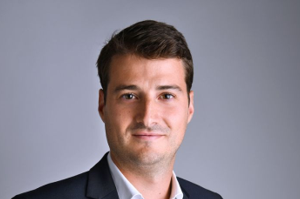
Founded in 2017 as part of France’s national health export strategy, the French Healthcare Association brings together more than 300 members from across the health ecosystem to showcase and support French expertise abroad. In this conversation, CEO Emile Jockey discusses how the association acts as a bridge between the public and private sectors, its role in shaping France’s international healthcare presence, and the ambitions set out in its 2025-2027 roadmap.
What is the role and purpose of the French Healthcare Association within France’s wider health ecosystem?
The French Healthcare Association is a public-private initiative established in 2017 by the Ministry for Europe and Foreign Affairs, which owns the French Healthcare brand. It forms part of France’s national branding strategy “Choose France”, alongside French Tech and French Fab, to highlight French strategic sectors. Its distinctive feature lies in the way the government asked the healthcare ecosystem itself, which we represent, to take responsibility for the brand, to organise, promote, and sustain its ecosystem through concrete and collaborative actions.
In this sense, we act as a collective platform that unites hospitals, companies, and other healthcare stakeholders to promote French expertise internationally. Although we are a private association, we work in close partnership with the Ministry for Europe and Foreign Affairs and the wider diplomatic network daily. Our activities are primarily focused on economic cooperation and foreign trade. Our role is to provide the frameworks, tools, and opportunities that enable our members to succeed abroad, and our international partners to find precisely what they need. In essence, we act as a catalyst, ensuring that French healthcare know-how is effectively showcased and translated into business for our members.
How has your career in the public service prepared you for leading this initiative?
After a first posting within the Directorate General for Competition Policy, Consumer Affairs and Fraud Control, working on medical device regulation, I have remained over the past decade in the healthcare sphere, working on industrial development, economic diplomacy, and regulatory issues across the Ministry of Economy and the Ministry for Europe and Foreign Affairs. This experience has given me a dual expertise: on the one hand, a detailed understanding of the healthcare industry, and on the other, a strong grounding in international cooperation.
I remain today a public servant motivated by the ambition to serve France and contribute to its international strategy. I see my position as a reflection of what the French Healthcare Association itself represents: a bridge between the public and private sectors. We are familiar with the expectations and constraints of the public authorities, while also acutely aware of the challenges faced by companies, hospitals, and private actors abroad. This dual perspective helps us to ensure that our activities are aligned with national priorities, while at the same time addressing the practical needs of the healthcare ecosystem.
How has France’s healthcare landscape evolved in recent years, and what are the main priorities guiding its current direction?
COVID-19 was a decisive turning point, not only for France but for the global health sector as a whole. In France, it profoundly altered how both the government and the public view health. If I were to oversimplify, I would say that previously, health was regarded as an economic strategic sector mainly because of the trade surplus generated by pharmaceuticals, but it was not considered central to questions of sovereignty. The pandemic changed this perception entirely: health became strategic in the fullest sense, both economically and politically for everyone, and moved to the very heart of national sovereignty.
I experienced this transformation directly during my time at the Ministry for Europe and Foreign Affairs in the midst of the crisis. Health was usually overshadowed during economic bilateral discussions by larger projects in energy, infrastructure, or transport, which could run into billions of euros. The pandemic overturned this, elevating health to the top of the political and diplomatic agenda.
This shift also had immediate consequences for policy and investment. In 2021 alone, EUR 19 billion was allocated to hospitals and more than EUR 7 billion to industrial innovation, with clear objectives and measurable indicators to strengthen biomedical production, digital health, and related areas. This helped to create a genuine sense of collective purpose, a shared roadmap that encouraged stakeholders across the sector to work together towards common goals.
It was a moment that demonstrated the necessity of collaboration: breaking down silos between pharmaceuticals and hospitals, medtech and research, and the public and private sectors. Since then, we have seen the emergence of new public-private initiatives, from oncology and AI clusters to broader industrial partnerships. Public authorities are no longer perceived solely as regulators but increasingly as facilitators and partners in development.
For us at French Healthcare, this shift validated the approach we have supported from the very beginning: the importance of working collectively. France has never ceased to be innovative – in research, oncology, and rare diseases – but today we are in a stronger position to advocate, to promote, and to make this innovation visible to international partners.
How does France compare with other healthcare hubs, and in which areas should it continue to invest and strengthen?
The French ecosystem never reaches a stage where we say, “Our work is done here.” That constant movement and willingness to improve is one of our defining strengths. We have a large healthcare system serving a broad population, and as needs evolve and diseases change, it needs to adapt. There is a shared understanding that improvement is continuous, and this mindset underpins the strength of our industry. Biotechnology, artificial intelligence and digital health, diagnosis and prevention, all topics targeted by France’s 2030 strategy, are essential to helping build the healthcare system of tomorrow.
Our approach in French Healthcare does not begin with export targets and then work backwards. Rather, it is shaped by national needs, and from these needs we develop expertise, policies, and programmes that in turn create know-how. Artificial intelligence is one example: France and Europe are working to build their own model, anchored, for instance, in human guarantees, and once such an ecosystem is established, my role is then to present it in a form that can be promoted and valued internationally.
Some areas are particularly central to our national priorities, including mental health, women’s health, oncology, and rare diseases. These are sectors where we invest heavily, and our task is to bring stakeholders together, align their strategies, and craft a French offer that embodies not only our capabilities but also our values. This is why the French Healthcare Association is so closely connected to the diplomatic network: our role is to promote business, and with it, to project internationally our values.
Which geographies are priorities for the French Healthcare Association, and how do you translate this strategy into practice?
Our activities are closely aligned with both France’s diplomatic strategy and our members’ targeted markets. This means strong engagement in Africa – North, West, and increasingly East Africa – as well as GCC countries, Eastern Europe and Central Asia, where we have been active for several years. We are also present in Southeast Asia, reflecting both economic opportunities and geopolitical realities. Alongside these regions, we naturally target the major global markets, including North America, China, India, Japan, and, of course, the European Union. Altogether, our efforts will be concentrated on 50 to 60 countries for the next two years.
In each of these markets, we adapt to local needs and to the strengths of our ecosystem. We create opportunities for our members to meet the right partners. By organising delegations abroad and welcoming foreign stakeholders to France, we connect them directly with decision-makers and potential clients across healthcare systems. We give our ecosystem visibility through the French Healthcare brand, promoted at major congresses, online, and in thematic publications. We also strengthen the conditions for long-term partnerships, through cooperation agreements with governments, hospitals, and federations. We open doors that facilitate future business and reinforce France’s role as a trusted partner.
What types of projects or collaborations are currently generating the most international momentum for French healthcare?
The strongest momentum today lies probably in hospital infrastructure, as it is the most effective way to unite a wide spectrum of expertise and remains one of the areas where France has a lot to offer, whether it’s medical expertise, equipment, products, IT, or civil engineering. Our role is to assemble the right partners within French Healthcare, ensuring that the full range of capabilities is represented so that projects are both compliant and competitive.
Pharmaceutical actors are also deeply engaged with us, not only for product exports but because we provide a framework that integrates prevention, training, and broader approaches to health challenges.
Several examples illustrate this collaborative model. A pharmaceutical company and French university hospitals partnered to train doctors on infectious diseases, showing how distant institutions can strengthen capacity together. Similarly, hospitals such as Institut Gustave Roussy, Institut Curie, university hospitals, and private clinics—though competitors—created a joint platform for foreign patients. By pooling expertise and streamlining processes, they improve care and set international standards. These initiatives embody French Healthcare: fostering collaboration that enhances global visibility and impact.
At its core, French Healthcare is a network. With more than 300 members, it enables connections that often turn into concrete collaborations: over 60% of members have found export partners within the association.
What are the key ambitions of the French Healthcare Association for 2025-2027, and how will you ensure they are delivered?
My role is to make the association more structured, efficient, and professional, in accordance with our Chairman, Jean-Pierre Boffy and our board’s vision. We remain a young organisation, almost like a start-up, and it was clear that the next stage would be to scale up by consolidating our foundations. That is why, from the outset, I worked on a strategic roadmap for the coming years, setting clear objectives, KPIs, and a framework for action. This plan was developed collectively with our members and validated by them last December.
The roadmap is closely aligned with national strategies, such as mental health, oncology, women’s health, digital health and our trade objectives, although metrics around foreign trade are currently evolving along with the geopolitical context. Historically, pharmaceutical exports have represented France’s fourth-largest trade surplus; we need to keep it this way, despite increasing international competition. In medical devices, the situation is more challenging, as France currently imports more than it exports, and one of our priorities is to help reverse that imbalance by building on a remarkably dynamic and innovative French ecosystem. Of course, this will not be achieved by the French Healthcare’s roadmap alone, but we are part of the chain and must contribute.
The overarching goal of our 2025-2027 strategy is to make our activities more impactful. While we will continue to answer international demands, we are now focusing on building long-term, structured relationships. Over the next three years, our aim is to concentrate on a more targeted set of geographies, strengthen cooperation with governments and private partners, and build durable relationships that give greater depth to France’s international healthcare engagement.
In the current climate of tariffs and geopolitical shifts, what sentiment are you observing within the industry, and how is it shaping your work?
The prevailing challenge today is uncertainty, which is corrosive to business confidence and investment. In France, the political situation over the past year has amplified this sense of caution, with companies hesitating to move forward until they can see conditions more clearly. Internationally, the same pattern is evident: tariffs, shifting alliances, and geopolitical instability all create an environment where businesses prefer to wait rather than take risks.
At the same time, these uncertainties and reconfigurations can open new opportunities for both French and UE companies. The BRICS grouping, for example, may not remain as cohesive or coordinated as it once appeared. We saw this year that South Africa, or Brazil were eager to strengthen their economic partnerships within the EU. Such developments underline the need for agility: to know precisely what France can put forward, how to showcase our model, and where to acknowledge our limits. It requires close alignment with government, industry, and the broader private sector.
The challenge is to ensure France responds more effectively and strengthens its position in an increasingly competitive global environment. This reflection is not unique to France – every country, and the European Union as a whole, is undertaking the same exercise. For its part, French Healthcare remains focused on supporting France’s strengths, while contributing to this broader European conversation, whose direction should become clearer by year’s end.
Do you have any final reflections you would like to share?
To conclude, French Healthcare above all reflects France’s collective approach. Our message is clear: France is open for business, open to partnership, and determined to make a positive impact on the international stage. We welcome foreign partners and investors to work with us, convinced that by joining forces, we can build stronger cooperation and contribute to a more connected and resilient global health landscape.