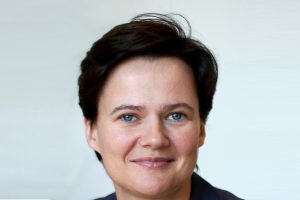
Ipsen France is navigating a pivotal moment. The affiliate sits at the intersection of global pipeline expansion, rising expectations for access and renewed national ambition around industrial sovereignty and innovation. In this conversation, Dominique Bery explains how France is shaping Ipsen’s next phase of growth, from oncology leadership to deeper engagement in rare diseases, neuroscience, manufacturing and sustainability, while defining a stronger role for the country within Europe’s life sciences landscape.
How did your professional journey lead you to Ipsen France, and what mandate do you carry today?
I joined Ipsen in 2017 after over 15 years at McKinsey & Company, at a time when the organisation was preparing for a significant transformation. My initial mandate was to lead that effort, and I later became Executive Vice President of Strategy and Transformation, responsible for global strategy, transformation, and digital teams. Those years were particularly active as we completed the shift from a business with a sizeable general-medicine and consumer-health footprint to a focused speciality care organisation. Carving out Consumer Healthcare allowed us to concentrate fully on oncology, rare diseases and neuroscience, which were already the core of our global portfolio.
A substantial part of my role also involved reshaping our approach to innovation. Ipsen had long-standing strengths in peptides and toxins, and toxins remain central to who we are, but we recognised that addressing highly specialised diseases requires access to the best science wherever it originates. Opening up to external innovation became a deliberate strategic choice, and it has served us well.
Three and a half years ago, I moved into operational leadership, first in the Nordics and Baltics and then across a broad Northern and Central European region. Leading countries with very different healthcare models gave me a strong sense of how systems organise care, fund medicine, and manage access. That perspective is invaluable now that I lead the French affiliate. I stepped into the role in April, and it is both energising and meaningful to serve the home market, where Ipsen has the ability, and in many ways the responsibility, to contribute to the wider national ecosystem.
How did you navigate the transition from global strategy to operational leadership, and what principles shape your approach in France?
The shift felt natural because the strategic lens helps bring clarity to local choices. When you understand the long-term direction, decisions about priorities or resource allocation become more grounded. Rare-disease launches, for example, require early investment well before the commercial return appears. Having helped define the global strategy made it easier to support those commitments and explain their importance to the teams.
My leadership philosophy is centred on enabling people to succeed. I see my role as providing clarity, support and access to the right networks rather than micromanaging. That approach worked well in my previous regions, and it continues to shape how I lead in France. The team knows I am there to help them move forward, and that creates the alignment and confidence needed to deliver impact.
How is Ipsen’s global momentum translating into the French context, and where do you see the affiliate contributing most meaningfully?
Ipsen is entering a decisive phase. We expect to deliver around 10% growth at constant exchange rates for the full year 2025, with all three therapeutic areas contributing and rare diseases showing particularly strong progress. Since 2020, we have added more than thirty new programmes to the pipeline, a reflection of the maturity of our speciality-care strategy. France, as our home market and a central base for manufacturing and innovation, plays a significant role in this momentum.
Oncology remains a major driver. We hold strong positions across several indications, including prostate cancer, where Decapeptyl is the market leader in its therapeutic category. Cabometyx continues to perform well in renal cell carcinoma (RCC), and our ambition is to bring it to more patients, in particular with a launch in neuroendocrine tumours. Tovorafenib, currently under review by the EMA, highlights the responsiveness of the French system to innovation. When innovation meets a clear clinical need, centres of excellence move rapidly. Tovorafenib, which we in-licensed for paediatric low-grade glioma, is already being used under compassionate access for children with relapsed or refractory disease driven by BRAF alterations. It is a concrete example of early adoption when the evidence is compelling.
Neuroscience is advancing quickly. Dysport provides a well-established foundation, and we are expanding it through clinical work in chronic and episodic migraine, together with a long-acting neurotoxin now in Phase II. These programmes will broaden the scope of what Ipsen can offer in neuromodulation.
In rare diseases, where we are present in rare liver disease for pediatric and adult patient populations, and are expecting the readouts of fidrisertib clinical data in FOP, we see that expert centres also have a high appetite for innovation.
France also contributes through its innovation partnerships. Several recent collaborations and acquisitions originate from the French biotech landscape and strengthen our global pipeline.
The commitment of our teams amplifies this momentum. There is a distinct sense of pride linked to Ipsen’s French roots, and the engagement I see across the affiliate, including from colleagues with many years of experience, is striking.
In terms of the revenue mix, France aligns closely with the group. Oncology represents over 70% of our activity, with neuroscience and rare diseases accounting for the rest. The higher share of oncology reflects the depth of our position in this area.
How do you view France’s current environment for accessing innovative and rare-disease therapies?
France performs broadly in line with the European average, and the strength of its Early Access pathways often enables patients, particularly in rare diseases, to benefit from promising therapies ahead of formal reimbursement. The question for me is less about pointing to a systemic shortcoming and more about defining the level of ambition we should hold. When compared with the countries that set the pace in Europe, such as Germany or Italy in the rare-disease space, it is clear that we can aspire to more. France has every reason to aim for leadership.
Part of the challenge relates to how national spending is managed. France places considerable emphasis on drug expenditure as a lever for controlling healthcare costs, and that focus is expressed mainly through price. Other countries balance price with volume-based tools, which can create a more favourable environment for high-innovation medicines aimed at small patient populations. This model has been highlighted in recent government analyses as a potential constraint on France’s long-term attractiveness, particularly in specialised and rare-disease areas at a moment when Europe is expected to shoulder a greater share of global investment.
Rare diseases bring these issues into sharper focus. Very small populations and limited datasets often make comparative trials impossible. Sweden’s experience is instructive. Its HTA body (TLV) recognised that conventional cost-effectiveness thresholds systematically disadvantaged rare and ultra-rare conditions adapted its approach to accept higher ICER levels for rare diseases. The objective was not to lower standards, to adjust the assessment framework to better take into account the specificities of rare diseases, and thus to significantly improve access.
France has begun to evolve in a similar direction. The HAS took a step by acknowledging that many new therapies reach the system with immature data or without comparative data, and that they still deserved to be reimbursed. However, these drugs will still often receive an assessment that will not enable the CEPS, the pricing committee, to grant them an acceptable pricing, given the investments that came into their development. We believe that it would be beneficial if all parties recognised that these rare disease drugs should have access despite gaps in evidence, given the unmet needs, and if all parties came to an agreement on ways to fill the gaps. Companies could be given a certain timeframe to gather additional data to strengthen the clinical evidence, for instance, working in collaboration with scientific societies to set up robust registries.
France already has strong foundations. With a clear ambition, it can shift from performing well to setting a benchmark for timely and sustainable access to innovation.
How is Ipsen strengthening its innovation footprint in France through partnerships and R&D investment?
France sits at the heart of our innovation strategy, and this is reflected in the partnerships we have built with several leading French biotechs. A recent example is our planned acquisition of ImCheck Therapeutics in Marseille. Its lead programme, ICT01, is a first-in-class BTN3A-targeting antibody for acute myeloid leukaemia (AML) patients who are not eligible for intensive chemotherapy. It addresses a clearly defined and underserved group of patients and fits well with our ambition to consolidate our leadership in oncology. The programme has completed Phase 2a and is now preparing to move into larger trials.
Our approach is dictated by scientific strength, as well as by the ambition to build a well-balanced pipeline across development stages. When we partnered with AGV Discovery in 2020, their asset was still pre-clinical. After a key milestone was reached, we exercised our option in 2022 to take global rights to an investigational ERK inhibitor, which has since advanced toward clinical development. At the other end of the spectrum, our agreement with Genfit in 2021 centred on elafibranor for primary biliary cholangitis, already in Phase III at the time. The collaboration with Biomunex adds another dimension, with a pre-clinical MAIT-cell engager, BMX-502, targeting GPC3 in solid tumours and expected to enter Phase I under our leadership. Together, these partnerships form a balanced portfolio that spans early discovery to late-stage clinical development.
Our contribution also extends to the wider innovation ecosystem. We are active within clusters such as the Paris-Saclay Cancer Cluster and serve as a founding sponsor of the BioLabs incubator at Hôtel-Dieu, where we support emerging biotechs through lab infrastructure, mentoring and our Golden Ticket programme. We collaborate with leading academic and clinical centres, including Gustave Roussy and Institut Imagine, and we invest through several Bpifrance funds. What sets us apart is how closely we work with younger companies, helping refine their scientific and development strategies and providing capabilities that are often out of reach for early-stage teams, particularly in chemistry and pharmaceutical development. These engagements demonstrate the role France continues to play as a cornerstone of our innovation model and reflect our commitment to helping advance the next wave of French scientific progress.
How is Ipsen contributing to France’s industrial ambition and the broader ‘made in France’ agenda?
France remains central to our industrial footprint, and we see a clear responsibility in reinforcing that position. Alongside our work across the innovation ecosystem, we continue to invest in the capabilities that anchor a substantial part of our operations in the country. Our Signes site in the south of France now exports to dozens of countries, and we are steadily expanding its capacity to ensure that both equipment and processes remain at the highest standard. Dreux complements this through its role as our pharmaceutical development centre, supporting formulation, analytical activities and global supply-chain functions. Together, these sites reflect a long-standing and deliberate commitment to maintaining strong industrial roots in France.
Looking ahead, the competitiveness of France is a key point of attention. We have a very valuable vantage point on this, as a global player, with the resources of larger pharma companies combined with the agility of biotechs. We must make thoughtful choices about where we invest, and our ambition is for France to remain an attractive and dynamic environment for bioproduction and life sciences innovation. This is why we remain closely engaged with national stakeholders and continue to highlight the conditions needed to strengthen economic attractiveness, whether through improved access pathways or adjustments that reflect the changing international landscape.
Our position gives us a particular role to play. We are proud of our French origins and are regarded as a trusted partner, yet we also operate globally, and France represents only part of our overall business. That combination allows us to bring an international perspective to national discussions and to help clarify what is required for France to stay competitive in a fast-evolving environment.
How is sustainability being integrated into your operations and teams in France?
Sustainability is now woven into how we operate, and our renovated headquarters is a clear example. The building relies on an advanced energy-management system that functions without traditional heating or air conditioning, and this has reduced our energy consumption by roughly 60%. It is a practical demonstration of the kind of choices we want to make, where environmental performance and operational efficiency reinforce one another.
We have also taken meaningful steps to reduce our carbon footprint, particularly through our vehicle fleet. The transition to electric cars has been a major focus, and by the end of the year, we expect around 80% of our vehicles in France to be electric. Achieving that required significant change management, which is why we made a point of explaining to teams how our emissions were evolving, what levers were available to us and why this shift mattered. Creating that shared understanding has been essential to making progress and ensuring that sustainability is viewed not as a directive, but as a collective effort.
What mindset and direction are you seeking to instil within the French affiliate as you transition into the role?
Although I am only a few months into the role, my focus has been on reinforcing a sense of ambition that is closely tied to impact. As an organisation, we place real weight on purpose and on the meaning behind what we do, and for me, that translates into pushing ourselves to deliver even greater value for patients and for our clinical partners. We already hold strong positions, yet I am convinced we can become even more distinctive in how our brands perform and in the support we provide across the healthcare community.
A central part of this is helping colleagues appreciate the influence they can have individually. It is easy to assume that one extra step will not change much, but in a company of our size, where teams are compact and responsibilities broad, individual actions carry significant weight. Recognising that can be energising. I often tell candidates and new colleagues that Ipsen is a place where you need to enjoy taking action. This is not an environment where work is managed from a distance. You contribute directly, you move things forward, and you see the effect of your work on colleagues, patients and society. That mindset is what I hope to continue strengthening across the French affiliate.
What long-term objectives are you aiming to drive in France over the coming years?
Looking ahead, my foremost priority is to embed a genuine leadership mindset across the organisation. Our positions in several therapeutic areas already give us meaningful responsibility, and I want us to translate that into even greater impact for patients and for the clinicians who work with us. That means continuing to raise our ambition in how our brands perform and in how we collaborate across the healthcare system.
Access is equally critical. We need an environment that enables us to introduce new medicines efficiently and positions France not as a mid-range market, but as one of Europe’s reference points for rapid and sustainable access to innovation. Progress on that front requires close engagement with stakeholders, and we intend to remain fully involved in that dialogue.
The final priority concerns our role within France itself. We have a responsibility to continue investing in our industrial and development footprint, from our manufacturing sites to our local R&D activities. These investments help reinforce France’s standing as a strong life sciences hub and ensure that we continue contributing to the country’s scientific and industrial momentum.