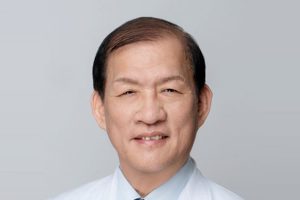
Bringing together clinical scale, academic depth, and a strong engineering mindset, China Medical University Hospital has positioned itself as more than a care provider. In this interview, Dr Der-Yang Cho, Superintendent and Professor of Neurosurgery, explains how the institution operates as an integrated innovation platform, advancing cell and gene therapies, data-driven medicine, and digital infrastructure from bedside practice to global clinical validation. The discussion explores how this model reshapes research culture, clinical decision-making, and international collaboration, while keeping patient impact at the centre.
What defines China Medical University Hospital’s institutional model and its approach to biomedical innovation?
At China Medical University Hospital, we operate as the flagship hospital of China Medical University within an integrated healthcare system that deliberately connects clinical care, academic research, and biomedical innovation. The system is chaired by Dr Chang-Hai Tsai, while I serve as superintendent alongside my clinical role as a neurosurgeon. This structure keeps leadership, research priorities, and patient care closely aligned, and ensures that innovation remains anchored in real clinical needs. Our model brings together the university, the hospital, a dedicated biomedical park, and a group of hospital-originated spin-off companies. This environment allows discoveries to move efficiently from laboratory research into clinical validation and, where appropriate, regulated commercial development. Spin-offs such as Ever Supreme Bio Technology and Ever Fortune AI were created to translate in-house innovation into applications that can be deployed at scale, rather than remaining confined to academic settings.
CMUH is a large tertiary medical centre, with about 2,261 beds and more than 6,000 staff, serving roughly 219,000 outpatient visits, 13,000 emergency visits, and around 5,900 surgeries each month. Alongside this clinical scale, we operate nine major research platforms focused on unmet medical needs, including cell therapy, exosomes, genomics and precision medicine, infection and microbiota, degenerative disorders, mitochondrial medicine, xenotransplantation, and medical AI. Across these platforms, we have produced more than 100 scientific publications and supported seven IND clinical trials, with validations from the Taiwan Food and Drug Administration (TFDA) and the US Food and Drug Administration (FDA).
This integrated approach has received international recognition for both clinical quality and digital maturity. Newsweek has ranked us among the World’s Best Hospitals from 2023 to 2026 and the World’s Best Smart Hospitals from 2024 to 2026. We have also completed the full certification portfolio of the Healthcare Information and Management Systems Society (HIMSS) at Level 7 across all four domains, reflecting a consistent commitment to innovation that is grounded in patient care and measurable outcomes.
How has CMUH approached digital transformation and the development of artificial intelligence capabilities over time?
Our digital transformation began in 2017 and has followed a deliberate, incremental path. We adopted the HIMSS framework as a global benchmark, not as an end in itself, but as a structured way to identify gaps and guide our progression from core digital infrastructure toward advanced data integration, analytics, and clinical decision support.
At the centre of this effort is the iHi Data Warehouse, a structured enterprise platform that integrates around two billion clinical and imaging records from approximately 3.4 million patients, alongside large-scale genomic data. These curated datasets support automated analysis and the development of artificial intelligence applications across cardiovascular disease, oncology, neurodegenerative disorders, and critical care, ensuring that data science remains closely connected to clinical practice.
Our emphasis has always been on deployment rather than experimentation in isolation. Artificial intelligence systems for antimicrobial stewardship, cardiovascular decision support, ICU mortality prediction, and automated clinical documentation are embedded in daily workflows and have delivered measurable improvements in patient outcomes. More than 80 business-intelligence dashboards provide real-time clinical and operational oversight, including a Critical Care Command Centre and medical digital twin capabilities.
A clear example of applied impact is the HiThings Tele-ICU platform, which integrates IoT data with AI analytics to support coordinated decision making between physicians and nurses in critical care settings. This system has contributed to a documented 6.3 percent reduction in ICU mortality and was recognised with the Newsweek AI Impact Award APAC in 2026. When digital solutions mature, we selectively transfer them into spin-off companies so they can progress through regulatory pathways and reach a broader market, while keeping clinical value, safety, and patient benefit at the centre of our approach.
How do clinical needs shape research priorities at China Medical University Hospital, and how has this influenced the hospital’s internal culture?
Research priorities are shaped primarily by unmet clinical need. As a university hospital, CMUH combines strong academic capability with daily clinical exposure, allowing clinicians and researchers to jointly identify areas where existing approaches fall short, including cancer, neurodegenerative disease, and complex infections. Rather than pursuing incremental work, the focus is placed on advanced platforms such as cell therapy, exosomes, and mitochondrial medicine, where new scientific tools are required to address persistent clinical challenges. The platform model provides a shared foundation through which multiple disease areas can be addressed in a coordinated way.
Translation is central to this strategy. Scientific publication remains important, but it is not treated as the endpoint. When research generates robust and clinically meaningful outcomes, the intellectual property is protected and advanced through structured technology transfer. In some cases, this leads to the creation of spin-off companies in areas such as advanced therapeutics or artificial intelligence. This approach ensures that innovation progresses beyond academic demonstration into regulated development pathways, while also contributing to the long-term sustainability of both the hospital and the university.
Over time, this model has reshaped institutional culture. Clinicians are encouraged to see innovation as part of their clinical responsibility, not as a separate activity. New technologies emerging from research platforms can directly inform patient care through advanced therapies, clinical trials, and novel treatment options. Sustaining this ecosystem requires sustained investment in people, including incentives, shared ownership for inventors, and international training opportunities at centres such as Mayo Clinic. When clinicians return with new expertise and translate it into solutions that reach patients, the benefits are shared, reinforcing a culture in which research, care delivery, and institutional development remain closely aligned.
Which areas of research best illustrate China Medical University Hospital’s strengths, and where has this focus created clear differentiation?
One area that clearly illustrates our research strength is cell therapy, particularly our work on allogeneic CAR-T for solid tumours. Solid cancers account for the largest share of cancer mortality and remain one of the most difficult challenges in immunotherapy, as CAR-T has historically delivered its strongest results in haematological malignancies rather than in solid disease. Our objective has been to address both the biological barriers and the practical constraints that have limited CAR-T in this setting. By using engineered CAR constructs and a donor-derived, allogeneic approach, we aim to shorten manufacturing timelines and move towards an off-the-shelf therapy that can be delivered more rapidly than traditional autologous CAR-T. This programme has progressed from translational research into FDA and TFDA approved Phase I/IIa clinical trials across several solid tumour indications, where the primary focus remains safety alongside early signals of activity.
This work sits within a broader cell therapy platform that integrates academic research, intellectual property development, and regulatory preparation into a single translational pathway. Rather than acting only as a treatment site for externally developed products, our teams are directly involved in designing, validating, and advancing therapies from the laboratory into early clinical development. In parallel, we are also exploring in vivo CAR-T as a next-generation strategy, again with a focus on solid tumours, reflecting a longer-term commitment to tackling areas of highest unmet need in oncology.
Beyond cancer, the same translational approach extends into neurodegenerative disease through advanced exosome research. In collaboration with our spin-off partners, we have developed a brain-targeting exosome platform, αDAT-EV, designed to cross the blood-brain barrier and deliver therapeutic agents directly to neurons affected in Parkinson’s disease. Preclinical studies show improved delivery to key brain regions, activation of cellular repair mechanisms, reduction of pathological protein aggregates, and functional improvement in disease models. Published in peer-reviewed literature, this work reflects how CMUH applies a consistent strategy across disciplines: focusing on clinically difficult problems, building purpose-designed platforms, and advancing them with a clear line of sight toward clinical translation.
How has the integration of digital and AI tools changed everyday clinical decision-making, particularly in complex care settings?
Digital transformation has reshaped clinical decision-making by bringing data, analytics, and clinical workflows into a single operational framework, rather than treating artificial intelligence as an isolated layer. At China Medical University Hospital, we built a multimodal AIoT environment that integrates real-time physiological signals, laboratory data, imaging, and device information into one clinical workspace. In critical care, systems such as our AIoT Tele-ICU and ARDiTeX for acute respiratory distress syndrome analyse these inputs together, allowing early risk detection and coordinated responses across care teams. Because these tools are embedded directly into ICU operations and command-centre dashboards, they support more timely interventions and more consistent decision-making by physicians and nurses.
Our approach starts with concrete clinical problems rather than technology itself. We develop solutions with frontline clinicians, validate them in daily practice, and scale only what demonstrates clear value. A good example is i.A.M.S, our Intelligent Anti-Microbial System, which was co-developed with intensivists, infectious-disease specialists, pharmacists, and in-house AI teams to address delayed and inconsistent antimicrobial decisions. By consolidating fragmented clinical data into structured alerts and recommendations, the system has been associated with lower infectious-disease mortality, a substantial reduction in inappropriate antibiotic use, and shorter hospital stays. This reduces cognitive and administrative burden for clinicians, enabling faster, more informed decisions while keeping final clinical judgement firmly with the physician.
Looking ahead, we believe hospital competitiveness will increasingly depend on how effectively data, algorithms, and workflows are integrated. This is why we have built these capabilities internally, supported by dedicated teams across information technology, big data, artificial intelligence and robotics, and digital transformation. The same incremental strategy has led to developments such as EirBot, an AI-enabled medical robot trained on our own clinical and educational content, designed to support nurses with patient education, ward guidance, and routine tasks. By reducing workload and helping address workforce constraints, including nursing shortages, these tools represent the practical extension of our digital platform. Ultimately, our objective is not to deploy technology for its own sake, but to deliver sustained improvements in care quality, operational efficiency, and the working environment for clinical staff.
How does China Medical University Hospital organise clinical research and collaboration with industry, and what makes it a credible environment for clinical trials?
Our approach to clinical research is built on a translational model that starts within the hospital and extends outward only once solutions have been clinically validated. Clinicians identify unmet needs, and our in-house teams across data, artificial intelligence, and engineering work alongside frontline staff to develop and test solutions in real clinical settings. When safety, performance, and workflow value are demonstrated, these assets are transferred to dedicated spin-offs so they can be productised, scaled, and advanced through regulatory pathways. This discipline applies equally to biomedical programmes, including exosome-based platforms developed with Shine-On, which have progressed into early-phase clinical development under both FDA and TFDA pathways. When we speak about clinical research at CMUH, we are referring to an infrastructure that already delivers regulated trials, enrolled patients, and outcome data at international standards.
Today, we support seven IND clinical trials, with programmes that have secured multiple TFDA and FDA validations. In oncology, this includes Phase I and IIa trials in allogeneic CAR-T for solid tumours, where early cohorts in the Nb-CAR.BiTE programme have shown substantial tumour reduction based on iRECIST criteria. In parallel, dual-checkpoint exosome platforms targeting PD-L1 and HLA-G have entered FDA- and TFDA-approved early-phase trials across a broad range of solid tumours. We apply the same rigor to digital clinical research, where AI-enabled antimicrobial stewardship, emergency cardiology pathways, and Tele-ICU platforms have delivered measurable improvements in mortality, length of stay, and time-critical clinical interventions.
Alongside internally developed programmes, we are an active site for both investigator-initiated and industry-sponsored trials. We see a high volume of oncology patients, with around 7,000 newly diagnosed cancer cases each year, which supports reliable enrolment across multiple therapeutic areas. All clinical trial activity is coordinated through a dedicated Clinical Trials Center and a Research Participant Protection Centre to ensure ethical oversight, governance, and data integrity. We also collaborate internationally through formal academic partnerships, including our agreement with Kyoto University’s Institute for Integrated Cell-Material Sciences. For industry partners, this combination of patient access, academic credibility, regulatory readiness, and operational execution creates a dependable environment for advancing clinical research while ensuring patients gain timely access to innovative therapies.
What types of academic, clinical, and technology partnerships are most important to China Medical University Hospital today?
The partnerships we value most are those that combine global scientific excellence with a clear focus on real clinical problems. We collaborate closely with leading academic medical centres to strengthen our capabilities in advanced biomedical innovation, particularly in areas such as cell therapy, exosome technologies, and artificial intelligence. Partnerships with institutions including Mayo Clinic and Kyoto University allow us to benchmark our work against international standards while continuously refining our scientific and clinical approaches. Our collaboration with Kyoto University, centred on its Institute for Integrated Cell-Material Sciences, is a good example of how we link strong discovery science with a clear pathway toward translational and clinical application. Across all academic collaborations, the guiding principle remains product-oriented research, where innovation is designed from the outset to address unmet clinical needs and deliver meaningful patient benefit.
The same principle shapes our engagement with technology partners. We collaborate where advanced capabilities can be embedded into clinical workflows and scaled in practice, rather than showcased in isolation. With Microsoft, we co-developed gHi, a generative clinical documentation system that allows physicians to dictate and rapidly generate structured medical records, reducing administrative burden while improving consistency. With Google Cloud, we partnered to develop AI-enabled physician workflows that support clinical decision-making and patient education, including early applications such as a chemotherapy assistant for nursing teams. At the infrastructure level, we have invested in high-performance computing, including NVIDIA DGX-class systems, to support medical AI development at scale. For partners, CMUH offers an environment where discovery, clinical validation, and operational deployment are tightly integrated, enabling collaborations to move efficiently from innovation to real-world impact.
From your perspective, what makes Taiwan a strong environment for healthcare innovation and international collaboration?
Taiwan offers a rare combination of scale, structure, and capability that supports healthcare innovation in a very practical way. With a population of around 23 million concentrated on a single island, it benefits from a dense concentration of clinical and scientific talent underpinned by a strong technology base. A critical enabler is the National Health Insurance system, which provides near-universal coverage and creates a highly standardised healthcare environment. This level of coverage allows large-scale, data-driven innovation to take place, even though the maturity of digital infrastructure can still vary between institutions. As healthcare increasingly moves beyond the hospital, Taiwan is also well positioned to advance telemedicine and remote-monitoring models, particularly for chronic disease management. At China Medical University Hospital, this has translated into concrete solutions such as home haemodialysis monitoring systems that integrate device data and vital signs with early-warning alerts to support patient safety outside the hospital setting.
At the same time, Taiwan’s relatively small domestic market naturally encourages a global outlook from the outset. Innovation is therefore designed with international validation and cross-border collaboration in mind, including licensing, co-development, and overseas clinical development, especially for advanced platforms such as cell therapy and exosome-based delivery. This outward-facing approach is reinforced by a regulatory framework that has evolved to support innovation through conditional, time-limited approvals for regenerative medicinal products targeting life-threatening or severely disabling diseases, once safety and preliminary efficacy have been demonstrated. Distinct from standard drug licensing cycles, this pathway allows innovation to progress while confirmatory evidence is generated. Together, these elements position Taiwan as a credible launchpad for globally competitive healthcare innovation, with the United States often serving as a key reference point for both regulatory strategy and long-term partnership development.
Looking ahead, what continues to motivate you personally, and what do you hope to build through China Medical University Hospital in the years to come?
After more than forty years in medicine, what continues to motivate me is how much unmet need still exists despite decades of clinical progress. Many diseases remain difficult, or impossible, to cure using conventional approaches, yet we are now entering a period where that reality can begin to change. Advances in cell therapy, mitochondrial medicine, exosome platforms, and medical artificial intelligence offer an opportunity to rethink long-established clinical paradigms and, in some cases, to reshape what is written in medical textbooks. My aim is to translate these scientific advances into tangible therapies that improve outcomes and quality of life, particularly in areas such as cancer, neurodegenerative disease, and age-related conditions. If approached with discipline and a clear focus on patient benefit, I believe meaningful progress is achievable within the coming decade.
My background in neurosurgery has shaped this perspective. Neurosurgery has always dealt with some of the most complex and high-risk conditions, including brain tumours, traumatic brain injury, stroke, and advanced cancers, where outcomes were often poor in the past. Those difficulties are precisely what drive me. When established solutions reach their limits, they create the urgency to innovate, to develop new therapies, and to confront scientific challenges that are inherently difficult. That mindset underpins our work across new drugs, advanced cell therapies, exosome technologies, and digital platforms at China Medical University Hospital. Rather than stepping away from complexity, I am motivated by it, because addressing the hardest problems is where innovation can make the most meaningful difference for patients and for the future of medicine.