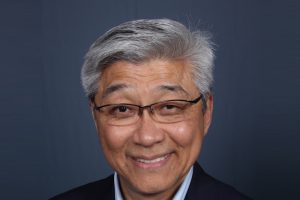
Dr David Chang discusses his vision for establishing the world's premier cell and gene therapy contract development and manufacturing organisation in Taiwan. Drawing on more than 30 years of experience at Celgene, Roche, and Genentech, Dr Chang explains how Taiwan's unique combination of technical talent, cost efficiency, and geopolitical positioning creates compelling advantages in advanced biologics manufacturing, particularly for emerging modalities where Western competitors have retreated.
Your career spans Celgene, Roche, and Genentech. How have those experiences shaped your approach to building TBMC?
After completing my engineering degree in Taiwan and military service, I pursued my PhD in biochemical engineering at MIT, then worked in US biopharmaceutical industry from 1992until 2024 – 38 years total, including graduate school.
The training I received provided invaluable operational and managerial capabilities beyond technical expertise. The US corporate environment offers the world’s finest strategic frameworks and cross-functional, metrics-based management. Throughout my career in Europe, China, and predominantly the US, I never encountered another culture executing this management approach as effectively.
When I returned to Taiwan in March 2024, I brought back this comprehensive training to build TBMC for the US market. To succeed with American customers, we must operate according to their expectations. We have embedded globally cultural principles throughout: customer-first orientation, results-driven execution, and cross-functional collaboration. Our team members must be bilingual in Mandarin and English, ensuring TBMC operates as a genuinely global organisation targeting the US, Japan, and Korea.
TBMC has publicly committed to developing advanced biologics and novel modalities. Where do you stand today in terms of technology transfer, site build-out and GMP readiness?
Founded two and a half years ago, we have completed technology platform transfers from partners such as DCB and ITRI. Our GMP facility will be operational by July 2026 with Phase I covering cell therapy and mRNA, followed by Phase II for biologics and gene therapy by July 2027. This pace exceeds even the infrastructure development speed for which China is well known.
Our foundational philosophy demands differentiation through better, faster, and more cost-effective operations. If we cannot build our facilities according to those principles, how can we assure clients our services will embody those qualities? This demonstrates that we execute projects with speed and excellence.
How do you position TBMC against massive CDMO players like Samsung Biologics and focused specialists?
We compete where success depends on technology and innovation rather than capital intensity. Companies like Samsung or Fujifilm built gigantic capacity targeting high-volume, mature therapeutics such as biosimilar monoclonal antibodies, competing through capital investment.
We selected emerging modalities – cell and gene therapy, mRNA – where entry requires superior technology. These currently represent perhaps one-tenth of traditional recombinant protein markets, but they represent the therapeutic future. Throughout my career, including as a co-inventor on HUMIRA, I understand that competing in mature therapeutics requires different factors, primarily capital. We chose emerging modalities where the capability to collaborate intimately with clients, developing manufacturing processes from pre-validation through commercialisation, provides a competitive advantage.
The government funded our mRNA capability to establish pandemic defence. We also selected cell and gene therapy because, whilst the industry currently suffers from constrained funding and requires substantial R&D investment that is proving challenging in the US. Biomanufacturing in Taiwan is prestigious work, enabling us to recruit exceptional talent. With superior R&D talent, we collaborate with clients to advance their platforms and develop next-generation therapies.
As you build capabilities, how do you decide what to internalise versus what to deliver through partnerships?
We maintain core capabilities internally whilst keeping non-core capabilities external. By non-core, we don’t mean unimportant, but rather capabilities that are less prioritised compared to our strengths. We keep all drug substance modalities internal – drug substance requires continuous technology advancement and serves as one of the key ways to attract and retain clients through “adhesiveness.” This is where we see stronger client relationships being built over time. Conversely, drug product remains predominantly external. We partner with Taiwanese and Korean providers, as well as National Resilience– a comprehensive biologics manufacturing platform– and, of course, other fill-finish service providers. Drug product presents easier switching opportunities for clients between service providers, whereas drug substance capabilities tend to create longer-term client relationships.
How are you able to attract the right talent for this endeavour, especially given the competition from Taiwan’s well-established and world-leading semiconductor industry?
For R&D positions, we recruit from academia and research institutes where candidates possess excellent training in managing primary cells like T cells. We simply teach them in industrial settings with deadlines – six months to produce viable manufacturing processes versus five years for academic publications.
The Development Centerfor Biotechnology, founded 40 years ago, has trained more than 4,000 professionals. TBMC requires only several hundred. The Taiwan Semiconductor Manufacturing Company (TSMC) hires many biologically-trained professionals who often perform quality assurance paperwork. These professionals would prefer developing T-cell expertise at TBMC. If we succeed, we will compensate comparably to TSMC.
For manufacturing, we hire individuals with relevant academic training and the right attitude aligned with TBMC’s culture. Experience matters less. We have experienced personnel who can transfer knowledge efficiently. I prefer training younger generations from scratch because individuals from other companies sometimes arrive with incompatible behaviours. With the proper value proposition, you can recruit the highest-quality professionals.
As a government-backed CDMO with a pandemic-response mandate, how do you balance long-term national mission objectives with the need to build a commercially sustainable business?
The government provided seed funding, but we must grow through independent fundraising and revenue generation. We are entirely commercially focused whilst maintaining our pandemic resilience mission.
The challenge is building the capability that can scale rapidly during pandemics to produce sufficient mRNA vaccine doses whilst generating income before pandemics arrive. We balance these imperatives: when pandemics strike, we suspend mRNA commercial operations to protect Taiwan. Before pandemics, we convert that capability into revenue-generating therapeutics such as in vivo CAR-T or personalised cancer vaccines.
No company can survive on government funding alone. Having used seed funding to establish capabilities, I recently completed another funding round, predominantly from private sources, to continue expansion. Mission-driven work with academic and research institutes represents less than five percent of our effort. The remaining 95 percent operates identically to any commercial CDMO, targeting primarily US customers.
Where do first-time CDMO builders typically underestimate scaling difficulties from development to global GMP supply, and how are you addressing those challenges?
The most common miscalculation is underestimating time and capital intensity. Biopharmaceutical CDMO cycles unfold over years, not the one- to two-year horizons familiar to semiconductor investors. It requires patience. The returns can be attractive and durable, but only if you build the pipeline correctly.
Our strategy at TBMC reflects that reality. We began as an RDMO, building strong early-stage research and development capabilities to support candidate validation and preclinical work. The CDMO model is fundamentally a funnel: many clients enter at research stage, fewer progress to early clinical, fewer still to late-stage, and ultimately a small number reach commercialisation. Revenue scales roughly tenfold at each step. If you want sustainable commercial manufacturing income, you must seed the funnel early.
Biopharma partnerships are also long-term commitments. Once a client selects a CDMO, it is effectively a marriage. The most reliable way to build credentials is to start collaborating at the R&D stage and grow together. That is why we define ourselves as a CRDMO – integrating research, development and manufacturing from the outset.
This approach is particularly relevant in cell and gene therapy, where more than 90 percent of companies remain at the R&D stage and technologies are evolving rapidly. Overbuilding capacity in such an environment is dangerous. The worst outcome for a CDMO is unused infrastructure – especially when platforms may shift from manual processes to automation within a few years, rendering facilities obsolete.
We have therefore chosen a capital-efficient path: build capabilities progressively, scale with client demand, and avoid making speculative large-scale investments upfront. Companies such as Lonza and WuXi Advanced Therapies followed this staged evolution successfully. Others, like Samsung, deployed billions upfront – a valid but higher-risk strategy.
Our view is clear: disciplined, phased scaling over five to ten years, protecting capital while nurturing a pipeline that will ultimately deliver commercial clients.
What major trends are currently reshaping the global CDMO and broader biopharma landscape?
The most significant challenge is funding scarcity. Many attribute this to artificial intelligence absorbing capital, but we are experiencing correction following an overheated market. Ten years ago, everyone was building capacity. We are now correcting oversupply.
For newcomers like TBMC, you must execute correctly whilst securing sufficient funding. We carefully plan capital expenditure, building only what is necessary. Our Zhubei facility is sized for commercialisation enabling scale, not full commercialisation requiring two or three times greater capacity. For CDMOs, exhausting capital reserves is fatal. We balance technology development against controlled capital spending.
How would you characterise the fundraising environment in Taiwan compared with the US, particularly for a company such as TBMC?
For strategic investors, Taiwan offers more opportunities. Lower cash flow requirements generate proof-of-concept faster, giving investors greater confidence. Many family offices from semiconductor and electronics profits wish to diversify into biopharmaceuticals at feasible funding scales. For purely financial investors, there is little structural difference. Valuation metrics and IPO benchmarks are assessed globally.
Currently, geopolitical reshuffling affects the landscape. China emerged as cost-effective for asset validation, but geopolitical considerations have changed this. Taiwan occupies an excellent position as a friendly shore to the US. Many US customers view TBMC as providing alternative pathways. Initially, I anticipated this need amongst start-ups, but mid-sized pharmaceutical companies equally seek cost-effective approaches.
Taiwan possesses exceptional biological research ecosystems with outstanding hospitals and world-class key opinion leaders for diseases like liver cancer. By selecting appropriate focus areas, Taiwan is extraordinarily competitive.
In an era of geopolitical fragmentation, what role can smaller but strategically positioned nations such as Taiwan play within the evolving global biopharmaceutical supply chain?
Geopolitical forces are increasingly dividing the global supply chain into China-led and US-led camps, and biopharmaceuticals are no exception. Taiwan is uniquely positioned within this landscape. While it is currently exceptionally well placed with the US – where capital concentrates and commercial scale is achieved – it also retains deep structural and cultural links to China. Since returning to Taiwan, I have been struck by the strength of US customer recognition; when I mention we are based in Taiwan, they often respond immediately, “We know Taiwan.” That familiarity creates a powerful advantage.
At the same time, although leading Chinese companies may ultimately be acquired by global players such as Johnson & Johnson or Roche, many second- and third-tier Chinese companies with strong products lack similar international pathways. Taiwan can position itself as a strategic bridge – helping those companies access US markets while simultaneously serving American partners seeking resilient, non-mainland supply chain alternatives. If executed correctly, Taiwan can operate effectively across both spheres. As I tell my team, money is money – whether in US dollars, New Taiwan dollars, or renminbi. We are a business. Today our emphasis is on US relationships, but over time we can develop opportunities connected to China as well.
Looking ahead, how will Taiwan’s biotech landscape evolve, and what transformation do you want TBMC to achieve?
I returned to Taiwan because I recognised Taiwan possesses every factor for biomanufacturing success, but these elements had never been integrated. I believe Taiwan, over the next one to two decades, will advance our biomanufacturing capabilities, particularly for novel modalities.
This represents extraordinary opportunity because the Western world is retreating. I joined the cell and gene therapy service industry at Celgene Juno during the gold rush when investors committed one hundred million USD to establish CDMOs. When the first CAR-T products launched and economics proved less attractive than anticipated, investors withdrew. Recent casualties include Catalent’s MaSTherCell, Belgium’s crown jewel. High costs and labour constraints made the business model unviable. What cannot succeed in Belgium or the US can succeed in Taiwan, due to cash flow economics and high-quality workforce availability.
I have witnessed this evolution through WuXi Advanced Therapies. With my current cash flow structure and Taiwanese human capital, the outcome would differ substantially.
I perceive tremendous opportunity for Taiwan. I have recommended to the government that Taiwan could become the future cell and gene therapy enabling disease centre, particularly for rare diseases. Biologics and therapeutics can demonstrate efficacy relatively easily, but traditional pharmaceutical companies avoid them due to return considerations. Taiwan can address this whilst gaining desperately needed global recognition. If we cure one child’s muscular dystrophy using Taiwanese-manufactured medicine, we could secure a Nobel Prize.
Throughout my career, I have worked on disease-managing medicines that modulate progression. I have rarely seen cures, but cell and gene therapy can cure. For all economic and practical reasons, I hoped this could occur in the US. It cannot. I believe it will occur in Taiwan.
My prediction: 20 years hence, Taiwan could be the cell and gene therapy excellence centre for the world, enabling successful rare disease trials benefiting global populations. Biosimilars fulfil important needs through one pathway, but I believe TBMC can address another sector, treating diseases through different modalities.
TSMC’s journey commenced 40 years ago. I doubt Morris Chang anticipated they would become the dominant nanometre chip manufacturer. Yet it occurred, though requiring decades. I tell my team: be patient. Success still requires years, but we will not require that long. This distinguishes TBMC from typical CDMOs. We demonstrated our manufacturing capability by producing Taiwanese-manufactured mRNA vaccines within six months. By demonstrating this capability, we established ourselves as a credible and trusted manufacturing partner for global innovators – including companies such as Moderna, BioNTech, and others. That is my belief and aspiration.