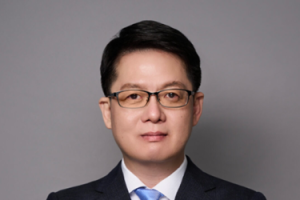
Under Dave Huang’s leadership, Ferring Taiwan has evolved from organisational recovery to sustained performance and regional relevance. The discussion that follows examines how disciplined focus, early engagement with innovation, and deep collaboration with the healthcare ecosystem have reshaped the affiliate’s role, positioning Taiwan as a reference market while anchoring strategy in long-term societal impact.
What priorities shaped your early restructuring of Ferring Taiwan, and how did you restore stability and performance?
When I joined Ferring Taiwan eight years ago, the affiliate was in a fragile state. Employee turnover exceeded 70 percent, the organisation had missed its targets for six consecutive years, and frequent shifts in direction had eroded execution discipline and internal confidence. Externally, this instability was equally visible to customers, leaving the business without momentum or a clear sense of purpose. I was aware of these challenges before arriving and had faced similar situations earlier in my career, having held commercial leadership roles at MSD Taiwan and Novartis, as well as spending seven years at Procter & Gamble, where I built strong foundations in sales, marketing, key account management, and financial discipline.
That experience shaped a very deliberate approach. The priority was stabilisation, which meant listening before acting. I spent time understanding what motivated our people, where frustration had set in, and why trust had been lost. Without trust, it is impossible to align teams around a shared objective or sustain disciplined execution over time. Rebuilding that foundation was essential before any strategic decisions could take hold. The second priority was simplicity. In a mid-sized organisation like Ferring, complexity is rarely a source of advantage. A review of our plans showed that priorities were changing too frequently, creating hesitation and risk aversion, as people questioned whether today’s focus would still matter tomorrow. We deliberately stopped that cycle. Teams were asked to identify one or two priorities that genuinely mattered and to commit to them for the full year, without shifting direction. That clarity restored confidence and accountability in day-to-day decision-making.
Globally, Ferring’s strengths are clearly defined in reproductive medicine and maternal health, and in speciality areas within urology and gastroenterology. In Taiwan, we translated this into three focused therapeutic areas: fertility, obstetrics, and urology. At the same time, we rebuilt critical capabilities, particularly in hospital engagement and market access, given the importance of reimbursement and listing in Taiwan. By staying close to hospitals, listening carefully to clinicians, and integrating their practical needs into our strategy, execution steadily improved. Within two years, we were delivering our targets again. Today, the organisation is markedly more stable, with employee turnover in the low single digits, well below industry norms, providing a solid foundation for sustained performance.
How does Ferring Taiwan fit within the group’s Asia footprint today, and what defines its contribution beyond scale?
In absolute terms, Ferring Taiwan is a relatively small affiliate, particularly when compared with large multinational pharmaceutical organisations. Within the Ferring group, however, Taiwan is a strong and reliable contributor. Internally, we rank in the mid-teens globally, which places us among the better-performing affiliates once market size is taken into account. That position is not driven by scale, but by focus, organisational stability, and consistent execution over time.
This performance also explains why we position Ferring Taiwan as a centre of excellence in Asia. We have built a mature and stable organisation that allows us to test new approaches and share proven practices with other markets. One example is our work on a more integrated key account management model in fertility. Rather than concentrating only on clinical protocols, we worked closely with clinics and specialists to understand the full patient journey. For many couples, fertility treatment is prolonged and emotionally demanding, involving repeated cycles, uncertainty, and stress. Recognising those realities helped us identify gaps in information and support and to reflect them more effectively in how we engage with healthcare professionals.
Alongside commercial execution, we have taken a more active role in policy engagement. We were early in working with external stakeholders, including the Health Promotion Administration (HPA), to raise infertility awareness and improve public access to reliable, evidence-based information. This aligned with broader public education efforts led by medical societies, including the development of a dedicated fertility knowledge platform promoted through official public health channels. From a group perspective, Taiwan was among the first affiliates to adopt this type of cross-stakeholder approach, which is now shared more broadly across Ferring.
From a portfolio perspective, Ferring Taiwan manages over 20 products across approximately 13 brands, depending on pack sizes and indications. Our activities are concentrated in four therapeutic pillars, with urology as the largest, followed by fertility and obstetrics, which together represent reproductive and maternal health, and then gastroenterology. This mix closely mirrors Ferring’s global focus on reproductive medicine, maternal health, and selected speciality areas in urology and gastroenterology, reinforcing strong strategic alignment between Taiwan and the wider group.
How is Ferring preparing the Taiwanese market for its gene therapy in urology, and what role could Taiwan play in the regional rollout?
Following the US FDA approval of Adstiladrin (nadofaragene firadenovec-vncg) in December 2022, we have been preparing Taiwan for its potential introduction in a measured and practical way. Adstiladrin is an intravesical, non-replicating adenoviral vector-based gene therapy indicated for the treatment of adults with high-risk BCG-unresponsive non-muscle invasive bladder cancer (NMIBC), including carcinoma in situ with or without papillary tumours. As the first gene therapy approved for this indication, it addresses a well-recognised area of unmet need, where durable bladder-sparing options remain limited.
In Taiwan, that unmet need is clearly understood within the clinical community. A key advantage for us is our long-standing and close collaboration with the Taiwan Urological Association (TUA) and the broader urology network. Early on, we engaged leading clinicians to discuss how this innovation could fit into local practice. Through focused expert discussions, we mapped current treatment pathways, identified gaps with existing options, and explored the practical constraints physicians face in real-world settings, including tolerability and treatment burden. This work has been essential in grounding global clinical data in local reality.
From a regional perspective, we do see Taiwan as one of the early reference markets in Asia. Taiwan benefits from a particularly strong and well-established urology presence within Ferring. With a dedicated local team, we are able to maintain close and consistent engagement with physicians and gain deeper insight into clinical needs, supporting meaningful collaboration and patient-centred care. That proximity to the medical community, combined with a mature healthcare system, positions Taiwan well to support early adoption and to generate practical experience. Those insights can then inform broader regional discussions, reinforcing Taiwan’s role as a meaningful contributor to innovation across Asia, rather than simply a recipient of global launches.
How is Taiwan’s reimbursement environment evolving for therapies addressing unmet medical needs, and what could this mean for patient access?
Historically, the pathway from regulatory approval to reimbursement in Taiwan has been lengthy and complex. That environment is now beginning to evolve. The government is working on a New Cancer Drug Fund designed to provide interim funding for innovative oncology therapies that are not yet covered under the National Health Insurance (NHI) system. Once fully implemented, the fund is expected to reach a scale of around TWD 10 billion and to allow provisional reimbursement while additional evidence and formal review are completed. The broader intent is to shorten the gap between approval and patient access, in line with national objectives such as reducing cancer mortality.
For highly innovative treatments, this creates a tangible opportunity. While conditions such as non-muscle invasive bladder cancer do not affect patient numbers on the scale of major solid tumours, the unmet need is nonetheless real. In parallel, engagement with medical societies is critical. Through expert discussions, clinicians have clearly expressed the urgency of improving access for these patients, and that collective voice can help support faster decision-making. Together, emerging funding mechanisms and professional advocacy could materially improve access timelines compared with the past.
How do you evaluate the relevance of microbiome-based therapies in Taiwan, given the local healthcare context?
Microbiome-based therapies have attracted considerable attention following regulatory approvals in the United States. For Ferring, this includes Rebyota, a live biotherapeutic approved by the US FDA in November 2022 to prevent recurrence of Clostridioides difficile infection after antibiotic treatment. In Taiwan, there is genuine clinical interest in microbiome approaches, and this field continues to draw attention from both clinicians and academic institutions.
At the same time, the application of microbiome-based therapies in Taiwan needs to be considered within the context of the local healthcare environment. Many major medical centres have already established laboratory capabilities and locally adapted protocols for microbiome-related research and clinical practice, supported by growing institutional experience. Human microbiome interventions are highly context-dependent, with clinical workflows, infrastructure, and practice patterns varying by region.
Local clinical experience continues to inform how microbiome-based approaches are evaluated, alongside considerations related to healthcare system characteristics and evolving research efforts. As microbiome science advances globally, Ferring continues to monitor developments in this area while carefully considering how emerging innovations may align with patient needs and the local healthcare ecosystem over time, and focusing resources on innovation areas where we can deliver clearer additional value for patients and the healthcare system.
Beyond product innovation, what role can pharmaceutical companies play in addressing Taiwan’s declining birth rate?
Taiwan’s declining birth rate is not a challenge that can be solved through medical innovation alone, and we do not see ourselves merely as a pharmaceutical company. We believe we have a broader role to play in contributing to society. Over recent years, we have worked closely with key stakeholders, including the Taiwan Society for Reproductive Medicine, the Taiwan Association of Obstetrics and Gynecology, and the HPA under the Ministry of Health and Welfare, to frame infertility and family building as a national issue rather than a narrow clinical concern.
A central part of this effort has focused on awareness and access. We have supported public education initiatives and collaborated with clinicians and public health authorities to encourage earlier assessment and treatment, as delays often have a direct impact on outcomes. On the policy side, the expansion of Taiwan’s national in vitro fertilisation subsidy programme from 1 July 2021, which broadened eligibility and reduced financial barriers, represented a meaningful step forward. Continued refinement of family support measures is equally important, as financial and informational barriers remain a key reason why many couples seek help too late.
At the same time, it is essential to be realistic about the limits of healthcare policy. Taiwan’s low birth rate is driven by wider social and economic pressures, including the cost of living, housing affordability, and changing lifestyles and expectations among younger generations. There is no single solution, even for the government. Our role as an industry partner is therefore to contribute evidence, share practical lessons from other countries, and work with medical societies and public health stakeholders to support policies that reduce barriers and help rebuild confidence around family formation over time.
How do you see Taiwan’s role in clinical development and real-world evidence generation within Ferring’s innovation strategy?
Taiwan offers a particularly strong environment for clinical research, supported by a mature healthcare system and a highly developed health data infrastructure. The National Health Insurance Research Database (NHIRD) is widely used for real-world evidence studies and makes Taiwan an attractive setting for outcomes research and post-launch evidence generation, which is becoming increasingly important as healthcare systems look to complement clinical trial data with insights from routine practice.
From a development perspective, we have already included Taiwan in multi-country fertility programmes. One example is an Asia-focused randomised Phase III study evaluating follitropin delta for ovarian stimulation, with IVF centres across mainland China, South Korea, Taiwan, and Vietnam, which delivered solid efficacy and safety outcomes, including a lower risk of treatment-related adverse effects compared with conventional dosing. Looking ahead, we are also assessing whether Taiwan could play a role in future clinical development for innovative therapies. In these cases, regional studies can be particularly valuable when larger patient populations are needed, which is why we have been exploring joint approaches with colleagues in neighbouring markets, especially to support post-launch real-world evidence and subgroup analyses.
How do you work to ensure Taiwan remains visible within Ferring as a priority market for innovation and collaboration?
For me, visibility is built over time through trust and consistent, reliable execution. Through experience across different roles, I have had the opportunity to build credibility within Ferring, which helps global leadership gain confidence in what we are able to contribute from Taiwan. That confidence is reinforced by Taiwan’s healthcare fundamentals. We operate within a mature healthcare system, supported by a clear regulatory framework for Good Clinical Practice under the oversight of the TFDA, and by a strong health data infrastructure. The NHIRD, in particular, is widely recognised for its value in real-world evidence and post-launch outcomes research, which strengthens Taiwan’s position as a credible partner for global and regional initiatives.
At the same time, visibility depends on how effectively results are shared. When we execute well in Taiwan, we make a conscious effort to translate our experience into best practices that may be useful for other parts of the organisation, which is why we position Ferring Taiwan as a centre of excellence in Asia. This includes visible initiatives such as hosting regional scientific forums, as well as regular knowledge exchange on stakeholder engagement, government affairs, and operating models. We also place strong emphasis on talent and capability sharing, leveraging local expertise to support other markets and presenting approaches such as our integrated Key Account Management model to regional and global teams. By positioning ourselves as partners to hospitals and clinics, focused on addressing real clinical and patient-management challenges rather than simply promoting products, we reinforce Taiwan’s relevance and sustain its role as a reference market for innovation.
How do you position Ferring Taiwan as a partner to the government as healthcare rises on the national agenda?
Our engagement with government starts from a clear alignment of purpose. Helping people build families and live better lives sits at the heart of what we do, and it closely mirrors Taiwan’s broader societal ambitions. That shared objective shapes how we approach collaboration, not only in clinical practice, but in contributing to a more fertility- and family-friendly environment overall, including how workplaces support employees through different stages of life. We see partnership as a two-way process, where industry experience and public policy can reinforce each other in addressing complex, long-term challenges.
A practical illustration of this approach is our Building Families at Ferring programme, which reflects Ferring’s global commitment to family building and has also become a basis for broader dialogue in Taiwan. Working alongside medical societies and government bodies, we have strengthened internal support for employees and used those experiences to engage employers and human resources leaders across the private sector. Through a range of online and offline dialogues across different sectors, we have shared practical insights on family-friendly workplace practices, such as flexible working arrangements, inclusive parental leave, and financial support for fertility and childcare. Grounded in evidence around employee wellbeing and retention, these discussions allow us to position ourselves as a constructive partner to government, not only in fertility and obstetrics, but in shaping a more supportive social ecosystem overall.
How would you characterise the culture you are building at Ferring Taiwan, and how does that shape your leadership outlook for the years ahead?
My leadership has been shaped by experience across large MNCs as well as more agile, mid-sized environments. I have seen the advantages of scale, but also the limitations that emerge when complexity, red tape, and constantly shifting strategies dilute focus. When I joined Ferring, it was important to preserve the speed and flexibility of a mid-sized organisation while consciously removing unnecessary layers. The culture we have built is therefore grounded in transparency, straightforward communication, and simplicity, with a strong emphasis on leading by example. Recruitment follows the same logic. Rather than chasing the most polished profiles, we look for people who genuinely fit the culture and are comfortable working with clarity, trust, and accountability.
As the organisation has matured, our priorities have naturally evolved. In the early phase, the focus was on stabilising performance, strengthening commercial discipline, and building core capabilities across functions. Today, with a stable and experienced team in place, the ambition extends further. We want to be an organisation that delivers positive impact beyond products alone, through how we engage with government, medical societies, and the broader ecosystem to help create a more patient- and family-friendly environment. The long-term objective is to remain commercially robust while continuing to shift towards an impact-driven model, where helping people build their families and improve their quality of life is central to what we do.