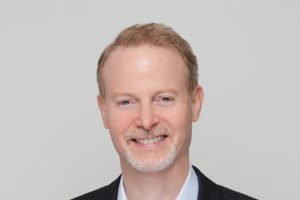
Boston Scientific's Dan Silver reflects on his global leadership journey and the evolution of the company’s presence in one of Asia’s most advanced healthcare systems. Silver discusses Boston Scientific’s growth drivers, Taiwan’s strategic role in Asia-Pacific, and striking the balance between innovation, digital health, and value-based care. He also shares his views on talent development, partnerships, and what long-term success looks like for the affiliate and the broader healthcare ecosystem.
Can you introduce yourself to our readers and your leadership journey until today?
I am originally from the United States and grew up on the East Coast. I had little international exposure early in life, but that changed in college when I chose to study Chinese in the 1980s. China was just starting to re-emerge as a significant presence on the world stage, and as part of my studies I lived and studied in Beijing during that decade. That early exposure shaped my interest in the region.
After completing my master’s degree, I moved to Hong Kong and worked as a consultant. At that time there were very few consultancies helping multinationals enter China, so we were at the nexus of a major wave of commercial activity. Through that work I engaged with multiple industries and gradually found myself drawn into healthcare.
I worked with companies such as Smith & Nephew and Pfizer as they built out operations in China. From there I moved deeper into the medical device sector, joining a relatively small California company after its IPO — a company in which Boston Scientific had invested. I then moved to C.R. Bard in marketing, and later spent a brief period in Taiwan with IQVIA before joining Abbott. At Abbott I became a general manager for the first time, which was a formative leadership experience.
My career has covered both large multinationals and smaller organisations, and it has been focused on the Asia-Pacific region. I have led Abbott operations in Taiwan and Hong Kong and worked in Japan for several years. In Japan I headed a Structural Heart business unit that followed Abbott’s integration of St. Jude Medical; that role spanned the Covid period and involved building a sizable organisation. In early 2022 I returned to Taiwan to join Boston Scientific as general manager. It has been a privilege to lead a strong local team at an important moment for the company.
What were your key priorities when you arrived in 2022?
The immediate context when I arrived in 2022 was still Covid. Masks, travel restrictions and limited face-to-face contact made establishing relationships harder than normal. So, the first priority was simply to get to know the team and to understand the organisation who the people were, how the functions worked, and where the strengths lay. That took longer than I would have expected in normal times, but it was essential.
Beyond that, my focus was to solidify our identity in Taiwan and ensure alignment with Boston Scientific’s global values and mission. Having observed the company’s early growth in the Boston area and in the small California company over many years, I had a sense of the corporate culture, mission-driven innovation, clinical focus, and inclusive approach to ideas. Working with colleagues, we emphasised integrating Taiwan into the company’s global fabric so that, even if we are not the largest market, we operate with the same standards and purpose.
Of course, we also had to deliver on the annual business objectives. But the deeper priority was to build a shared sense of purpose and to ensure that our people were committed to the values that drive Boston Scientific’s long-term success.
2025 was a very strong year for Boston Scientific. What drove the company’s performance?
Several factors contributed. One is cultural: Boston Scientific’s origins in New England bring a particular identity. We remain a relatively young company compared with some legacy players, and that youth brings energy and flexibility. More important, though, is the company’s values and leadership. Our CEO, Mike Mahoney, has reinforced a mission-driven, values-led approach since he took the helm, and that clarity of purpose helps the organisation move decisively.
Strategically, our investment approach matters. We invest early in promising technologies and maintain a portfolio of ventures and partnerships that let us observe, learn, and then scale innovations. Being one of the largest medtech investors gives us the flexibility to support new ideas until they are ready to be commercialised.
A concrete example is pulsed field ablation (PFA) in electrophysiology. This was identified years ago as a promising technology, but it required sustained R&D and careful clinical development. When the science matured and the evidence became compelling, we had the commercial and regulatory strategy to scale it quickly. Taiwan’s team recognised the potential early, supported clinical investigations, and worked closely with physicians and relevant authorities. That allowed us to launch PFA in Taiwan rapidly, making it one of the first Asia-Pacific markets to introduce the therapy. That blend of foresight, investment and local execution is a good representation of what drove our growth.
The US still drives a large share of growth. How can Asia and Taiwan become more prominent for Boston Scientific?
It is striking that so much of our historical revenue has been US-driven; it highlights the scale of growth opportunity outside the US. Leadership at the company sees emerging markets as essential to long-term growth, and Asia is top of that list.
Taiwan is not an emerging market in the conventional sense; it has a sophisticated healthcare system. But Taiwan sits near several of the region’s largest and fastest-growing markets. That gives Taiwan a strategic role as a reference market and a bridge for clinical expertise into neighbouring markets. Taiwan’s predictability, high clinical standards and reimbursement structure make it especially attractive as a regional anchor. Boston Scientific is aware of these attributes and has been working to ensure Taiwan plays a bigger part in the company’s Asia-Pacific growth story.
Which platforms and products matter most in Taiwan today?
Practically speaking, Taiwan receives the full breadth of our portfolio. The clinicians here are highly capable, and the health system is structured in a way that enables adoption of advanced therapies. The National Health Insurance system reduces affordability barriers for patients, which supports uptake when the evidence and clinical need are clear.
Our priority is to ensure Taiwan is considered early when new platforms are rolled out. That means supporting clinical trials, ensuring proper physician training, and working with hospital decision-makers to enable timely adoption. Taiwan’s combination of clinical excellence and a predictable system means it can be an effective early market for new technologies.
How do you advocate for Taiwan within Boston Scientific and regionally?
I feel very fortunate because I report to our Greater China president, June Chang, who is both an inspiring and highly effective leader for Boston Scientific. She has orchestrated a transformative growth blueprint for the Greater China region and has consistently positioned this area as a top priority for the company. That makes my role advocating for Taiwan much easier, because she has already spoken so clearly and persuasively about the region’s importance.
On top of formal leadership advocacy, we bring people to Taiwan to see the system in person. Covid restrictions limited travel before 2022, so we then redoubled efforts to invite colleagues and regional leaders to visit even for a day to meet our team, observe clinical practice and see hospitals. First-hand exposure is often the best way to demonstrate why Taiwan deserves priority in regional plans. When people return with that experience, it raises Taiwan’s profile internally.
What does success really mean for you in Taiwan?
Boston Scientific takes its commitment to the broader community very seriously. In Taiwan, we are fortunate that everyone, including foreigners like myself, is covered by the National Health Insurance Programme. This ensures that healthcare is accessible and affordable for all.
For me, success in Taiwan means delivering our technologies in ways that help healthcare professionals treat patients more effectively, reduce invasiveness, shorten hospital stays, and get people back to living their full lives as quickly as possible. That is the core of what we aim to achieve.
Education is a key part of this. We work closely with healthcare professionals and medical societies to share the knowledge we have developed globally through physician leaders, technicians, and nurses. Our goal is not only to ensure that this knowledge is applied effectively in Taiwan, but also to engage the local medical community in ways that advance care and innovation within the region.
What are the main challenges and how are you addressing them?
One is that, while Taiwan is one of the wealthiest places in the world, healthcare spending as a percentage of GDP is not as high as you might expect probably just under 8 percent. That is lower than the OECD average, which is closer to 10 percent. This creates pressure on the system and drives a strong focus on keeping costs, as perceived by customers, as low as possible.
Pricing pressure is intense, partly because the market is very open. Taiwan has a rigorous registration process for new devices, but suppliers from all over the world compete here. That competition pushes prices down further, and the trend has accelerated in recent years.
At Boston Scientific, we invest in some of the most sophisticated technologies, often supported by costly clinical trials that demonstrate their effectiveness and help establish new standards in the market. However, the value determined by clinical science is not always reflected in pricing. This gap between the outcomes we deliver and how the system recognises that value is a persistent challenge, driven by the overall pressure to reduce healthcare expenditures.
How do you approach private hospitals versus public hospitals?
The speed to market can differ, and private hospitals can sometimes be faster when it comes to listing new technologies. However, in terms of pricing, all healthcare institutions in Taiwan whether public, private, NGO, or religious-ly-affiliated are subject to the same payment policies and procedures.
Taiwan has a very healthy mix of public and private healthcare institutions, and both sectors have outstanding physicians and healthcare professionals. We do not prioritise one over the other. Our approach is simply to engage as many institutions as possible, as efficiently as possible, to ensure broad access to our technologies.
Taiwan is shifting toward preventive health and investing in digital technologies. How does this change your strategy?
Taiwan’s status as a technology hub particularly in semiconductors makes it naturally receptive to digital health. The National Health Insurance card and portable, English-language records are impressive building blocks. Hospitals and authorities are increasingly incentivising digitalisation, which opens new pathways for remote monitoring, diagnostics and AI-enabled tools.
At Boston Scientific we are integrating analytics and AI where it adds clinical value, especially in diagnostic and imaging tools. That said, digital is one component; the fundamentals of care remain critical. Our strategy balances investment in cutting-edge digital capabilities with ongoing work to improve the basics of clinical delivery.
How do national initiatives like Healthy Taiwan and the new cancer fund affect medtech companies?
We welcome initiatives that strengthen public health and clinical capacity. Boston Scientific operates across many therapeutic areas, so a single policy rarely transforms our operations overnight. That said, these national programmes signal political commitment, channel resources and can create opportunities for clinical partnerships and pilot projects. The effect tends to be incremental but positive, especially when combined with Taiwan’s digital and biomedical strengths.
Can you describe your local partnerships with healthcare providers and the community?
At Boston Scientific, our local partnerships extend well beyond our product portfolio. While we actively explore supplier and partner relationships across APAC, including Taiwan, our commitment to the community goes much further. We have a proud heritage of supporting initiatives that promote inclusion and education.
For example, in Taiwan, we have sponsored activities around the United Nations International Day of Persons with Disabilities, including the “#Purple Light Up,” where our building and the surrounding neighbourhood are illuminated to raise awareness. We are also the largest medtech sponsor of Taiwan Pride Parade, the biggest in East Asia, and have supported it for four years.
In education, we have expanded STEM programmes for gifted students, including sponsoring the Taiwan Science Train. This initiative converts a traditional steam train into mobile laboratories, taking students from remote areas on interactive learning experiences about science and healthcare across the island.
Programs like these allow us to support the broader community while giving our team the opportunity to engage directly and see our mission and values in action.
What talent are you looking to attract and how are you fostering local leadership?
Talent development is a continual priority. Our local teams are the “last mile” connecting global engineering, regulatory and manufacturing capabilities with clinicians and patients. We look for people who can act as consultative partners to healthcare professionals with the skills to train clinicians, explain clinical evidence, and support adoption.
We invest in training, mentorship and leadership development so team members gain the confidence and competence to advance in their careers. Local leadership is also fostered through involvement in industry associations one of which, TAMTA (Taiwan Advanced Medical Technology Association), I co-founded to create a collective industry voice and by creating opportunities for our people to engage with policymakers and clinical leaders. Similar work is done at the American Chamber of Commerce in Taiwan, where I had the honour to serve as Chairperson for 3 years.
Looking ahead five years, what would success look like for the affiliate?
Looking ahead, success for me starts with people. Many of us choose to work in medtech and healthcare because we have personal experience with healthcare challenges whether it is a loved one, a friend, or even ourselves. Creating an environment where everyone knows their views and contributions are valued, heard, and appreciated not only by our customers and patients, but by the entire Boston Scientific team is a key measure of success. Over the next five years, I want our people to feel proud of the work they are doing every day.
Beyond that, success means ensuring that the portfolio Boston Scientific develops globally through engineering, clinical research, and M&A activities is brought to Taiwan efficiently and effectively, so we can support physicians and their patients in the best way possible.
I also see success as being recognized as a trusted partner by healthcare policymakers and decision-makers. Boston Scientific is celebrating 30 years in Taiwan this year, and we aim to remain embedded in the community, contributing our knowledge, technologies, and perspective to help Taiwan’s healthcare system continue to deliver high-quality outcomes for its population, particularly as it just entered “super-aged” society status in December 2025.
What has been your proudest achievement so far?
I would say I am proudest as a manager when I see a younger member of my team grow, excel, and rise in their career and I can trace some of that back to the time they spent with me. Seeing that kind of development is incredibly rewarding.
I think this is true in many industries, but in medtech, the stakes are uniquely high because patient welfare is ultimately tied to how well we do our jobs. When I see someone advancing in their career and know that my team or my leadership played a role in that growth , while Taiwan’s medtech ecosystem grows alongside them – it is deeply meaningful. Their success is the strongest indicator that we are building a sustainable and impactful future for the next generation of healthcare. This is what makes me most proud.