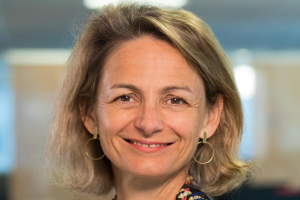
With over 35 years of experience across major pharmaceutical markets, Corinne Blachier-Poisson, General Manager of Amgen France, she discusses Amgen France’s ambitions and the company’s pivotal role in shaping France’s life sciences ecosystem.
What key experiences have shaped your leadership journey and priorities as General Manager of Amgen France?
I have spent over 35 years in the pharmaceutical industry, working across US, French, and Swiss organisations, including 17 years with Amgen. My career naturally divides into three chapters: marketing and sales leadership; market access, pricing, and public affairs; and general management, first in Belgium and now in France. These experiences have given me a comprehensive view of how science, policy, and business intersect, and how each dimension contributes to bringing therapies to patients.
How has Amgen evolved within France’s life sciences landscape, and what role does the affiliate play in the group’s global growth?
France continues to hold a strategic position in Europe, supported by strong scientific capabilities and a resilient healthcare ecosystem.
When I joined Amgen, we were known primarily for our focus on oncology and nephrology, operating mainly in hospital settings. Since then, our portfolio has broadened considerably over the years to include treatments for osteoporosis, hypercholesterolaemia, psoriasis, and inflammatory and rheumatologic diseases. This expansion reflects how we have evolved from a highly specialised biopharmaceutical company into a more diversified and balanced organisation.
A major turning point came when the strategic decision was made to enter the biosimilars space. Unlike traditional generics, biosimilars demand significant scientific, clinical, and manufacturing expertise, all of which Amgen brings to the table.
Our more recent acquisition of Horizon Therapeutics has strengthened our presence in rare diseases, deepening our expertise in an area that requires dedicated capabilities and close collaboration with specialist centres. Today, Amgen France combines innovation with reliability: advancing cutting-edge biologics while ensuring sustainable healthcare costs through high-quality biosimilars. This dual commitment, to breakthrough innovation and system efficiency, defines who we are and how we contribute to the healthcare ecosystem.
How is Amgen France’s portfolio structured, and what are its key growth priorities?
In France, we offer a diversified portfolio across oncology and haematology, cardiovascular disease, immunology, rheumatology and biosimilars. This diversified portfolio helps balance risk but also demands different ways of working, which strengthened our resilience, broadened our perspectives and pushed us to build unique capabilities for each distinct area.
Oncology continues to be the most dynamic engine of growth. Over the past two decades, it has attracted nearly half of global R&D investment, resulting in an unprecedented wave of innovation. When we entered the field of multiple myeloma ten years ago, therapeutic options were limited; today, patients benefit from a wide range of treatments and combination regimens that can extend survival over decades. This transformation is remarkable but has also created a far more competitive and complex environment. Success now relies on the strength of our evidence base, the clarity of our differentiation, and the scientific value we bring to clinicians. With physicians exposed to an overwhelming flow of data and digital information, communicating in a precise, credible, and impactful way has become an essential part of how we operate.
France has been a pioneer in biosimilar substitution. How is Amgen adapting its model and partnerships to this new regulatory environment?
Beyond oncology, one of the most significant shifts for us has been the evolution of the biosimilars market. Historically, hospital biosimilars followed a tender-based model defined by intense price competition and rapid value erosion after patent expiry. The recent introduction of automatic substitution has completely reshaped this landscape: for the first time, pharmacists in France are authorised to replace a prescribed biologic with an equivalent biosimilar directly at the pharmacy level or replace a biosimilar with another biosimilar, without requiring a new prescription or asking for the approval of the physician.
This regulatory change has compelled us to rethink our commercial model and expand our capabilities. To adapt, we established a strategic partnership with Teva Pharmaceuticals, whose broad portfolio and strong relationships with retail pharmacies complement our expertise in biologics. The pharmacy model is driven by portfolio contracting and sustained engagement rather than single-product promotion, and Teva’s experience has proven invaluable as we navigate this transition.
How did this transition reshape Amgen France internally, and what have you learned from leading the organisation through such a significant change?
Implementing France’s new biosimilar substitution model demanded a profound internal shift. For many years, our commercial strategy revolved around physicians as our principal point of engagement. The arrival of substitution regulations expanded this scope, placing pharmacists at the centre of the conversation and reshaping the way we operate. It represented a genuine cultural transformation, beginning with our leadership and marketing teams, who redefined their approach to reflect this dual dynamic, and extending to our field force, whose responsibilities now balance scientific dialogue with both prescribers and pharmacists.
Because France was the first market worldwide to implement such a system, there was no precedent to follow. We had to learn quickly, investing in new expertise and capabilities, particularly in retail-pharmacy engagement. Partnering with Teva Pharmaceuticals proved instrumental in this process. Their broad portfolio and established relationships with pharmacies complemented our biologics expertise, enabling us to adapt swiftly and effectively.
How would you describe Amgen’s clinical research presence in France and the country’s position within the global life sciences landscape?
In France, the environment for clinical trials is attractive for a company like Amgen. In 2024, we conducted 45 active clinical studies across the country, engaging more than 300 clinical centres and around 700 patients; 31 studies were in onco-haematology, including five early-phase trials, reaching about 229 patients. The prominence of oncology illustrates the excellence and competitiveness of French research centres, which operate at a level comparable with the world’s foremost institutions. Unlike large-scale cardiovascular or neurological trials, oncology studies typically involve smaller patient groups but greater scientific complexity, which speaks to the depth of expertise and precision of French investigators in this field.
While oncology and rare diseases remain major strengths, other therapeutic areas – notably cardiovascular, metabolic, and chronic diseases – have lost momentum over time. Historically, France held a strong reputation in these fields, but limited market access for new treatments in recent years has had a dampening effect. Many innovative therapies in cardiology, neurology, and diabetology have faced hurdles to reimbursement or delayed access, weakening the overall ecosystem and diminishing France’s leadership outside oncology.
France’s success in oncology is undeniable, yet it should not obscure the need to revitalise research in other domains, what we often call “the tree that hides the forest.” The achievements in cancer research show what can be accomplished through sustained commitment and strategic alignment. Spain’s evolution offers a telling example: within a decade, through a coherent national plan and effective public-private cooperation, it has become Europe’s leading hub for clinical research. France possesses the talent, infrastructure, and scientific ambition to achieve the same, provided the right signals and long-term policy frameworks are in place.
Looking ahead, what are your main ambitions for Amgen France as you continue expanding across oncology, chronic, and rare diseases?
What I find most engaging about leading Amgen France is the diversity of our portfolio and the range of challenges it allows us to address. Our work spans oncology, chronic diseases, and rare diseases, three areas with distinct dynamics but a shared purpose of advancing patient outcomes and system efficiency.
In rare diseases, our contribution extends beyond developing therapies. The principal challenge remains diagnosis: patients often wait an average of eight years before their condition is correctly identified. Once diagnosed, the French ecosystem performs remarkably well, with reference centres offering clear pathways, structured coordination, and close collaboration between specialists. The real need lies earlier in the process, improving recognition and referral so patients can be diagnosed sooner. This is where we can create meaningful impact by partnering with institutions and healthcare professionals to strengthen awareness, early detection, and data integration.
Oncology presents a different landscape. Diagnostic pathways are well established, but the pace of scientific progress requires ever stronger differentiation, robust clinical evidence, and effective communication to ensure timely access to innovation. Chronic diseases, meanwhile, pose another kind of challenge: fragmented care, scattered data, and limited coordination often leave patients navigating complex systems with little guidance. Greater alignment between industry, clinicians, and public institutions will be essential to address these gaps.
This variety of challenges is precisely what makes our mission so stimulating. Each therapeutic area calls for a tailored approach – scientific, clinical, or organisational – yet together they define who we are at Amgen: a company that combines scientific rigour, collaboration, and long-term vision to deliver lasting value for patients and healthcare systems alike.