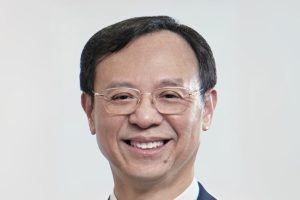
Chung-Liang Shih, Taiwan’s Minister of Health and Welfare, brings extensive governmental experience from his tenure as Director General of the National Health Insurance Administration, where he led reforms to strengthen financial sustainability while expanding access to innovative medicines. His strategic vision focuses on structural healthcare reform, digital transformation, and preventative care, positioning Taiwan as a leader in population health and clinical research excellence.
As Minister of Health and Welfare, what were your immediate strategic priorities upon assuming office?
During my tenure as Director General of the National Health Insurance Administration, I identified a central structural challenge facing Taiwan’s National Health Insurance system. Although it is widely recognised as one of the world’s most successful universal health coverage models, it is under increasing financial strain as medical expenditure accelerates, driven by the rapid diffusion of innovative therapeutics and advanced technologies with significant cost implications. The core policy question was one of balance – ensuring equitable access to innovation while maintaining fiscal sustainability. This led to four cornerstone reforms.
First, we established the National Health Technology Assessment Centre, modelled explicitly on the United Kingdom’s National Institute for Health and Care Excellence. Following an extensive study visit to NICE two years ago, it became clear that objective reimbursement decisions require an assessment body structurally independent from the payer. Our HTA Centre, now being established, will operate separately from the National Health Insurance Administration, replacing the previous embedded working-group model within the Centre for Drug Evaluation and ensuring rigorous, evidence-based decision-making.
Second, we introduced parallel review pathways for breakthrough medicines. Historically, innovative therapies faced sequential regulatory and reimbursement reviews, often delaying patient access by two to three years after Food and Drug Administration approval. Under the new framework, manufacturers can submit for regulatory approval and National Health Insurance reimbursement concurrently, materially shortening time to access.
Third, we expanded the global budget. Over three decades, annual growth averaged three to four percent. This was increased last year to between six and 6.5 percent, reframing the global budget as a healthcare investment rather than a cost-containment instrument, and enabling broader coverage of novel therapies alongside improved provider reimbursement.
Finally, inspired by the UK, the government has committed to building a NTD 10 billion Cancer Drug Fund, with NTD 5 billion allocated in 2025 and another NTD 5 billion planned for 2026 under the current budget framework. This managed entry contracting mechanism allows conditional reimbursement for therapies with promising Phase II data, particularly in oncology and rare diseases. Temporary coverage is granted with defined reassessment periods, and real-world evidence is evaluated over two to three years to inform final reimbursement decisions. This approach accelerates patient access while managing financial risk in a disciplined and transparent manner.
Despite structural differences between Taiwan’s healthcare system and that of the United Kingdom, what elements of the British model informed your reforms, and why were they particularly relevant to Taiwan’s context?
Taiwan’s healthcare architecture differs fundamentally from the UK model. In Britain, NHS trusts operate under direct governmental control. In Taiwan, approximately 80 percent of healthcare organisations function as private entities, with government-operated hospitals comprising merely 20 percent of total capacity. Despite this structural divergence, we share philosophical alignment regarding universal health coverage – our population coverage exceeds 99.9 percent, mirroring UK achievement.
The UK operates a tax-based national health system, whereas Taiwan’s National Health Insurance programme derives funding from premium contributions. This represents a fundamental operational difference. Nevertheless, both systems function as single-payer models, concentrating decision-making authority regarding coverage determinations. The critical question becomes: how does one make judicious decisions regarding expensive or innovative interventions?
Following visits to both the UK and Germany – where I studied their IQWIG system for quality and efficiency assessment – I identified two essential elements. First, robust HTA mechanisms require an independent assessment agency supporting governmental and National Health Insurance Administration reimbursement decisions. Second, accelerated processes proved necessary. The Cancer Drugs Fund specifically addresses oncological patients’ requirements for expedited access to novel therapeutics.
Since its introduction, what impact has the Cancer Drugs Fund delivered, and how do you plan to ensure its long-term sustainability once fully integrated into the National Health Insurance framework?
Whilst the Cancer Drugs Fund launched in January and therefore represents relatively nascent implementation, we accumulated two years of operational experience with conditional listing mechanisms under the National Health Insurance programme prior to this initiative. This foundation enabled us to establish comprehensive processes and standard operating procedures connecting the Cancer Drugs Fund with National Health Insurance Administration programmes seamlessly.
Initial results demonstrate meaningful progress. Whereas two to three years ago Taiwan’s cancer treatment practices lagged behind international guidelines, most oncological indications are now aligned with standards set by leading oncology societies.
Beyond reimbursement reform, what are the core objectives of the Healthy Taiwan Cultivation Programme, and how does it support long-term system transformation?
The National Health Insurance Administration global budget, the Cancer Drugs Fund, and the Cultivation Programme function as complementary engines. Whilst the first two drive service delivery reform, infrastructure transformation requires dedicated attention. The Cultivation Programme addresses this imperative across four strategic domains.
Firstly, we focus on improving healthcare workforce conditions and occupational environments, addressing practitioner wellbeing and sustainability. Secondly, we emphasise diverse talent development and training programmes, ensuring workforce preparedness for evolving care models. Thirdly – and critically – we advance smart care initiatives and digitalisation of health information systems. Given acute workforce shortages, we must deploy information and communication technology to enhance both efficiency and quality. Digital transformation represents not merely technological adoption but strategic necessity. Finally, we encourage healthcare providers to embrace environmental, social, and governance principles, establishing these four pillars as the Cultivation Programme’s foundation.
Given that the majority of Taiwan’s hospitals operate as private entities, how do you incentivise private providers to align with national priorities such as digital transformation and ESG adoption?
We employ a dual-strategy approach. Under the Cultivation Programme, we allocate dedicated budgetary support enabling hospitals – including private institutions – to undertake reform initiatives and systems modernisation. Private facilities may apply for these funds equally with public entities.
Simultaneously, we leverage Taiwan’s hospital accreditation system as a complementary mechanism. Our national accreditation framework establishes quality and operational standards for all healthcare facilities. We are integrating ESG principles and digital transformation requirements into accreditation criteria, creating structural incentives for compliance. This combination – financial support alongside regulatory standards – encourages comprehensive adoption across both public and private sectors.
When discussing healthcare expenditure increases of 6.5 percent, does this encompass infrastructure investment, or do these represent separate budgetary allocations?
These constitute distinct financial mechanisms. The global budget growth rate of 6.5 percent applies specifically to healthcare service delivery and pharmaceutical expenditure – operational costs, essentially. The Cultivation Programme receives separate, supplementary budgetary allocation dedicated to infrastructure development, workforce enhancement, and digital transformation. This dual-funding approach ensures neither operational necessities nor strategic investments receive inadequate resources.
Taiwan is committing significant additional resources to healthcare. What factors are driving this intensified focus, and does it reflect concerns about population health trends?
President Lai Ching-te, himself a physician, represents the first medical doctor to assume Taiwan’s presidency. His leadership vision emphasises healthcare investment as national priority. He articulates clearly: leading Taiwan toward becoming a healthier nation constitutes a fundamental governmental objective. Healthy Taiwan represents not merely policy nomenclature but our overarching strategic vision, reflecting presidential commitment to population health excellence.
Looking toward Taiwan’s role in global health, what model do you believe Taiwan offers to the international community, and how should readers understand Taiwan’s healthcare ambitions?
Reflecting upon three decades of experience, Taiwan’s National Health Insurance emerged as among the most successful universal health coverage models internationally. We achieved this whilst maintaining relatively modest expenditure – our national health expenditure comprises approximately 7.5 percent of GDP, substantially below OECD averages. This demonstrates how efficient healthcare system architecture can deliver universal coverage without excessive economic burden.
However, confronting super-aged society demographics and rapid innovative medicine and technology development necessitates evolution. The paramount question concerns resource allocation – how do we direct increased health investment toward optimal positions and strategic directions?
Prevention assumes central importance in our strategy. We emphasise health promotion and non-communicable disease control – hypertension, hyperlipidaemia, hyperglycaemia – alongside preventing frailty and long-term disability among elderly populations. Our strategic framework encompasses three principal initiatives.
Firstly, we developed a comprehensive chronic disease care model for non-communicable diseases, emphasising proactive management rather than reactive treatment. Secondly, we advance precision medicine for oncological care, leveraging genomic and molecular insights to optimise therapeutic selection. Thirdly, we introduce digital care solutions to enhance both quality and efficiency throughout healthcare delivery. These three elements – chronic disease management, precision oncology, and digital health – represent concepts we believe offer valuable insights for international healthcare systems.
Taiwan has implemented innovative population health initiatives, including monetary incentives for healthy behaviours. Could you elaborate on these programmes?
We plan to introduce a health coins programme in the coming year, structured as a points-based incentive system designed to encourage healthier behaviours across the population. Evidence consistently shows that health behaviours account for between forty and sixty percent of overall health outcomes. Encouraging healthier lifestyles is therefore essential, but it must be done through carefully designed incentive mechanisms. The health coins’ system creates an ecosystem in which behaviours such as regular physical activity, adherence to vaccination schedules, and participation in cancer screening programmes generate redeemable points. These points can be exchanged for health-promoting goods and services, including access to fitness facilities and healthier food and beverage options. The objective is to establish a self-reinforcing environment in which healthy choices are both rewarded and normalised.
This approach builds on lessons from tobacco control, where Taiwan achieved substantial success by reducing smoking prevalence from twenty percent to twelve percent through a combination of health taxes, public smoking bans, and sustained education campaigns. Those measures demonstrated that coordinated policy intervention can reshape social norms and behaviour at scale. Looking ahead, we see comparable opportunities in areas such as excessive sugar consumption and alcohol use. However, direct regulatory expansion into these domains requires careful calibration. Our preference is to begin with softer, behavioural approaches, often described as nudging, delivered through education, social media, school-based programmes, and incentive systems such as health coins. These methods encourage gradual, durable behavioural change. Taxation and more prescriptive regulation remain available policy tools, but we regard them as secondary measures, to be deployed only if education- and incentive-led strategies prove insufficient.
What priorities underpin Taiwan’s strategy for promoting clinical trials, and how does the country position itself competitively within the regional research landscape?
Clinical trials are fundamental to the development of innovative medicines, and we will formally launch the Clinical Trial Alliance within the coming week to address long-standing structural bottlenecks. One of the most significant challenges has been the inefficiency of Institutional Review Board processes. Modern clinical development increasingly relies on multicentre, multinational protocols, where delays in site activation can materially undermine competitiveness. Our response has been to establish common standards across participating clinical trial centres. Once a protocol is approved by a single centre, other sites within the alliance may accept that decision without undergoing duplicative review. This approach substantially shortens trial initiation timelines and supports our ambition to position Taiwan as a leading clinical trial hub in Asia.
While the region is highly competitive, with Korea and Japan having developed strong clinical research infrastructures and Mainland China offering unmatched population scale, Taiwan’s differentiation lies in the quality of its hospital systems and the consistency of trial execution. Historically, this strength was offset by fragmented administrative procedures, particularly the requirement for separate Institutional Review Board approvals at each hospital. The Clinical Trial Alliance directly resolves this constraint by creating unified approval pathways that preserve high quality standards while eliminating unnecessary redundancy.
For international pharmaceutical companies and innovators considering Taiwan, how would you characterise the collaborative relationship between industry and the Ministry of Health and Welfare?
We enthusiastically welcome international pharmaceutical companies to invest in Taiwan and conduct clinical research within our healthcare ecosystem. Clinical trials create mutual benefit – they provide patients earlier access to novel therapeutics whilst generating valuable data for pharmaceutical development. This represents genuine win-win collaboration. Consequently, we are systematically reforming processes and mechanisms governing clinical trial administration, removing barriers and creating facilitative frameworks that serve both patient welfare and industry innovation objectives.
What vision guides the Ministry of Health and Welfare’s future direction, and what message would you convey to our international readership?
Prevention is our foremost priority. Whether addressing non-communicable diseases or cancer, preventative approaches demonstrate superior cost-effectiveness compared with treatment paradigms. We seek fundamental transformation – shifting from disease-focused care toward comprehensive health management. This represents not semantic distinction but philosophical reorientation, repositioning healthcare systems from reactive treatment toward proactive wellness optimisation.