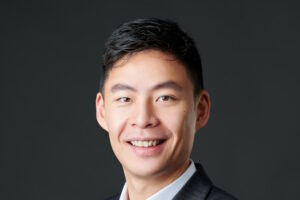
Chuen Yan Leung leads life science-focused venture capital firm Silver Dart Capital based out of Hong Kong and also serves as vice chairman of the Hong Kong Biotechnology Organization. In conversation, Leung outlines Silver Dart's investments in growth-stage healthcare companies that are already scientifically de-risked and generating revenue; some of the key strengths of Hong Kong-based companies and the importance of leveraging the Greater Bay Area to scale up; as well as his general optimism for the future of Chinese life sciences more broadly.
Can you start by introducing yourself and sharing how you became interested in the biomedical industry?
My interest in life sciences began at a young age. It started as a mix of curiosity and a philosophical question of “what is life?” I became fascinated with evolution, understanding that life is essentially a series of replicating entities with variations, shaped by natural selection. This concept captivated me, how life evolved from the molecular level of DNA and RNA to the complexity of multicellular organisms.
A turning point for me was reading “The Selfish Gene” by Richard Dawkins during my teenage years – the book which solidified my interest in life sciences.
I went on to study biochemistry at Imperial College for my undergraduate degree, and I knew I wanted to continue with a PhD. At the time, stem cell biology was a hot topic, and I was particularly interested in how different cell types in the body, all with the same DNA, differentiate into specialized cells like muscle or brain cells. This fascination led me to study embryology and stem cells at the University of Cambridge in the UK, where I completed my PhD at the Gurdon Institute. I was fortunate to be there when John Gurdon won the Nobel Prize in 2012 for the discovery that mature cells can be reprogrammed to become stem cells, making it an incredibly exciting time to be involved in stem cell research.
After completing my PhD, I worked with Kenneth Chien, a Harvard professor and co-founder of Moderna. He was starting a new venture in Sweden, where I joined him and we worked on a project in the cardiovascular space, specifically heart progenitor cells – ultimately aiming to tackle heart attacks. We had promising data and even secured a deal with AstraZeneca, though the company was still in its early stages at that time.
I spent four years in Sweden which made me realize that to truly see a biotech project through, I would need to commit at least five to ten years, with no guarantee of success. This led me to reevaluate my career path from a risk-reward perspective, and I decided to try something different. Around the same time, I also felt a pull to return home to Hong Kong.
Through connections in Sweden, I transitioned into investing. I started working at the Swedish private equity firm EQT, not just as a healthcare specialist but also as a generalist, to learn the business side of things, including rigorous financial analysis. I spent most of my time in the Shanghai office, wanting to experience the mainland’s work culture, which is even more incredibly fast-paced and intense than Hong Kong. I was there during the three COVID years, and while the rest of the world was in chaos, China was in a booming and vibrant bubble. While that experience was invaluable, about a year and a half ago I decided to move back to Hong Kong. Now, I have just returned at the beginning of this year after having lived abroad for the last two decades.
When you returned to Hong Kong, what was your assessment of the business environment, the state of the economy, and the general sentiment of the community?
Speaking personally, I was happy to find that many of my close friends were still in Hong Kong. The economy, however, has changed in the previous years. This year in particular has been tough, especially for the financial industry. Nevertheless, I enjoy being in Hong Kong because it is my home. However, I have realized that I need to travel to the mainland frequently as there are simply more opportunities there.
One of the biggest differences I have noticed between living in Hong Kong and living on the mainland is the network. In Hong Kong, the community is smaller, so you often see the same faces in the same places. However, in mainland megacities like Shanghai, Chengdu, or Beijing, the flow of people is constant and diverse. You continuously meet different people from all over and the sheer size of the country of course presents a wealth of opportunities and investment possibilities.
Hong Kong people have long had the advantage of being very international, but I think that edge is starting to decline. This is probably something that will diminish over the next two or three generations. Mainland China is starting to catch up. People in mainland China are incredibly smart, many of them are educated in the US or Europe, and fluent in both English as well as Mandarin. While we still have an advantage for now, it is clear that this gap will continue to narrow as more mainland Chinese become just as international as people in Hong Kong. Despite this, “one country, two systems” continues to make Hong Kong a unique place to be.
And how was the journey towards founding Silver Dart Capital, especially in the tough environment of raising money nowadays…
I co-founded Silver Dart Capital with two partners in 2022. Some might say it was a challenging time to start, given that the market was already on a downturn, but we saw an opportunity. While it was tough to raise funds, we noticed valuations were starting to drop, which could work in our favor. We also looked at the data and realized that the biggest factor influencing investment returns over time is not necessarily the expertise or insights of different investors, but rather the timing—the vintage of the investments. The last great vintage in terms of private equity returns was during the global financial crisis, so we thought, why not take a shot now? We are still young, and it felt like the right moment in our careers to take this leap.
My partners and I bring a diverse set of experiences to the table. Collectively, we have around three dozen years of experience across R&D, startups, and investment. One of my partners has spent most of his career in venture capital, another in private equity and fundraising, and I have been deeply involved in the scientific side. It felt like the right blend of skills at a time when Hong Kong is increasingly focusing on this space.
When we founded Silver Dart Capital, we knew we wanted to take a flexible approach. We could be passive investors or even incubate our own companies, given our capabilities. Silver Dart Capital is structured as a project-based investment entity, meaning investment returns are tied to each investment opportunity separately.
Our investment ticket size is relatively modest for the industry standard—typically in the low single-digit millions (USD). With this model, we can take on one project at a time and execute our strategy. We chose this approach because, as relatively young investors, we are competing with people who have been in the industry for 20 or 30 years. Starting project by project felt like the most practical and strategic way to establish ourselves in this competitive landscape.
Silver Dart Capital primarily focuses on projects in mainland China. Is this a deliberate strategy?
I would say that it is more by circumstance than by deliberate strategy. Since we are based in Hong Kong and are Chinese, most of the deals that come across our desk tend to be China-related. However, we deal in offshore currencies like Hong Kong dollars and US dollars, so we actually prefer to invest in offshore structures. It is not that we are exclusively focused on China, but being in this part of the world, we naturally leverage our local connections and angle. As a result, most of our deals end up having some connection to China.
As a new firm competing with larger VCs, what kinds of projects is Silver Dart Capital targeting? How do you position yourselves against more established players with greater capital resources?
We have two key constraints that guide our investment approach. First, since we do not operate a blind pool fund, we cannot rely on a portfolio strategy where you invest in multiple biotechs, hoping that one turns into a superstar. Each of our projects have a different investor base, so we cannot offset losses in one project with gains in another. This means we need to be very careful not to lose money on any single investment.
Our focus is exclusively on healthcare, but we are particularly interested in growth-stage companies. These are firms that are scientifically de-risked, ideally generating revenue, and experiencing rapid growth. We are not heavily invested in very early-stage biotech, which often is not revenue-generating or is already IPO’d. The only exception might be a pre-IPO deal that offers a clear return within three to four years. But generally, we avoid early-stage, pre-clinical projects.
Targeting companies that are already revenue-generating and scientifically de-risked often means less focus on pure biotech and more on sectors like CROs and CDMOs. These organizations are particularly attractive because they have mature business models and are more likely to be acquired by multinational corporations in their field. We are also interested in diagnostics and life science tools, ranging from basic items like cell culture media or plastic plates to more advanced technologies like sequencing machines and proteomics tools.
Our strategy is a blend of commercial and technological considerations, driven by underlying trends. For instance, in the CXO space, we look at pharma spending as a key driver. In life sciences, academic spending plays a similar role. These areas tend to be somewhat counter-cyclical, meaning they continue to see growth even during economic downturns. Pharma R&D spending, for example, remains relatively stable as a percentage of revenue, because companies need to invest in R&D to survive.
By focusing on areas with stable, long-term growth drivers, we aim to position ourselves effectively against larger VCs who might have more capital but also face more significant exposure to high-risk, early-stage investments.
With two portfolio companies already and a third on the way, how do you view the current environment for identifying strong investment opportunities? There are many companies that have a short cash runaway these days…
It is certainly a challenging time right now especially for biotech companies that are strapped for cash. Many are caught in a kind of death spiral where difficulty in fundraising makes them less attractive to investors, which in turn makes it even harder for them to secure the necessary capital. This situation can snowball, leading to a tough environment for both companies and investors.
In terms of the broader environment for asset managers and investors, it is particularly tough right now. I have spoken with people who have been in the industry for 30 or 40 years, and they say this is one of the hardest times they have experienced.
A big factor is the rapid rise in interest rates. The recent hikes, which reached about 5.25 percent in a short period, are the steepest we have seen in 40 years. This is unprecedented for many in the industry, and it is putting a lot of pressure on capital allocators. When risk-free returns are sitting around 8 percent, it makes people question why they should take on the higher risks of biotech.
One frequent critique from biotech founders in this region is the perceived lack of investor education in the mainland and Hong Kong. Do you see a need for better communication and marketing of the sector to address this issue?
Yes, I do think there is a need to better market the biotech sector and make it more visible to the public. However, I do not fully agree with the notion that low market valuations are simply due to a lack of investor sophistication. If we look back at 2019 and 2020, valuations were extremely high, and no one complained. I do not think that investors were highly sophisticated back then compared to today. While the investment ecosystem in Asia may not be as mature as in the US, where there are numerous specialized healthcare investment banks and hedge funds, I believe the sophistication level here is improving. Investors have become more selective about the assets they choose to invest in.
For instance, if a company on the Hong Kong Stock Exchange is undervalued simply because of the market environment, you would expect that savvy investors would acquire or relist it elsewhere to capture that value. Yet, there are still many high-quality biotech companies on the Hong Kong exchange that have performed well in terms of valuation. This suggests that investors are becoming more discerning. This shift might be due to various factors, such as geopolitical concerns or a move away from investing in “Me-Too” assets, which were very popular a few years ago but are not performing as well now. So, while better communication and marketing are important, it is also clear that the investment landscape here is evolving and becoming more refined.
What are your views on the Greater Bay Area and how this enlarged region can serve the development of Hong Kong medical innovation?
The Greater Bay Area (GBA) is particularly relevant for Hong Kong companies because Hong Kong faces significant land constraints, with land being quite expensive. The GBA offers a convenient solution for Hong Kong startups to scale their scientific discoveries through large-scale manufacturing centers and lab space for further R&D. In Hong Kong, finding large lab spaces is a challenge, and the region does not really have that kind of resource for biotech ecosystems which require a lot of space.
However, Hong Kong does have its own strengths. The “one country, two systems” framework, along with its international status, makes it an excellent hub for attracting global talent and fostering high-value brainpower. Companies can leverage this intellectual capital in Hong Kong and then scale their operations in mainland China. The GBA is the most convenient place to do this, especially considering the region’s size and proximity to Hong Kong.
That being said, the GBA has not traditionally been as strong in biotech and pharmaceuticals as other regions in China. For example, the Yangtze Delta region—with cities like Shanghai, Suzhou, and Hangzhou—are much more established in this sector. While the GBA has some good biopharmaceutical companies, it has historically been stronger in medical devices. Furthermore, our industry heavily relies on talent, and the Yangtze Delta region has an abundance of it, with major pharmaceutical companies like AstraZeneca and others having R&D centers in Shanghai. This creates a pool of skilled professionals that smaller pharma companies can tap into. Meanwhile, the GBA is more concentrated in tech companies, with strong engineering and coding capabilities. In fact, one of our first portfolio companies is a medical device company based in Shenzhen which highlights the region’s strength in this area.
Looking ahead, what are your expectations for the future of the life sciences sector in China?
There are opportunities, but there is also a level of uncertainty that none of us have seen before. Right now, even small events around the world can have a massive impact on the market. This is quite different from the past 20 or 30 years, where even after significant events like a housing crisis, things tended to stabilize within a couple of years. What we are seeing now are developments with effects that could last much longer.
When it comes to China in particular, I have conviction in the fundamentals of the healthcare ecosystem here. The healthcare reforms that were initiated back in the late 2000s have continued to shape the policy landscape in a positive way. Today, nearly everyone has access to basic healthcare. Additionally, when you consider healthcare spending as a percentage of GDP, China is currently spending around 4 percent, compared to 16 percent in the US. This suggests that as the economy grows, healthcare spending is also likely to increase. This increasing focus on health has created strong fundamentals to build a biotech industry upon.
On the research side, China has made significant strides. In terms of academic research, China is now one of the top countries in the world for scientific paper output. While the quality of some publications still trails behind those in the US and UK, China is catching up rapidly. Additionally, the reverse brain drain we are seeing is helping to strengthen the local ecosystem and is bringing national talent back to China.
We have also seen tremendous growth in the CDMO and CRO sectors, which have been growing at a compound rate of approximately 20 percent over the past 10 to 15 years. The largest CDMO in the world is now based here despite the industry challenges due to geopolitical pressure. Nevertheless, there has been a boom in translational research, talent, and funding in recent years. Although the sector is experiencing some difficulties now, a lot of bets have been placed on new technologies and many talented individuals from MNCs have left to start successful companies in China.
If you look at cross-border transactions, China is now a net exporter of locally developed assets. Even European companies, which are some of the most sophisticated healthcare players globally, are investing in Chinese technology. This shows that the innovation here is being recognized and valued on a global scale.
There are always going to be short-term challenges within the ecosystem, but China has been very practical in addressing these issues. If you look back at the reforms of the National Medical Products Administration (NMPA) and other initiatives since the mid-2010s, it is clear that the country is committed to steering the ship in the right direction. I am not as pessimistic as some others might be. China’s GDP per capita is still only one sixth of that of the US, it is hard to imagine that the next generation of Chinese people will live worse than those today. There is a strong economic drive in many industries, people are hardworking and aspirational, and the government is supportive. This makes it difficult to see a scenario where China does not continue to progress. So, while there are uncertainties, there is also strong evidence to be optimistic about the future of the life sciences sector in China.