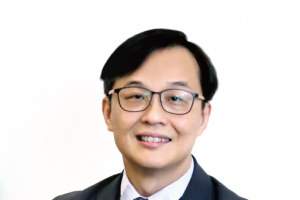
Dr Chih-Kang Chiang, Director-General of the TFDA, shares how Taiwan is redefining regulation through science, transparency, and international collaboration. Combining his backgrounds in medicine, toxicology, and law, he leads efforts to strengthen patient safety, accelerate innovation in AI and regenerative medicine, and reinforce supply resilience. This conversation offers insight into how TFDA is shaping the future of biomedical governance in Taiwan and beyond.
What elements of your professional and academic experience have best prepared you to lead the Taiwan Food and Drug Administration (TFDA)?
Before assuming the role of Director-General in February 2025, I spent much of my career at National Taiwan University (NTU), serving as Professor and Director of the Graduate Institute of Toxicology and as Deputy Vice President for Academic Affairs. Clinically, I am a practising nephrologist at National Taiwan University Hospital (NTUH), where my work in patient safety, quality management, and Joint Commission International (JCI) accreditation shaped my approach to regulation, grounded in scientific rigour, clinical relevance, and the protection of public health.
My background in toxicology, pharmacology, and clinical medicine provides a strong scientific basis for regulatory decision-making, while my master’s degree in law from National Chengchi University deepened my understanding of how sound legal frameworks reinforce transparent and accountable governance. At TFDA, we apply a structured risk-assessment approach across all domains – pharmaceuticals, medical devices, and food safety – encompassing hazard identification, exposure assessment, dose-response characterisation, and risk communication. This ensures that regulation remains both scientifically robust and practical in real-world healthcare.
I often use the example of ractopamine – a feed additive used to promote leanness in livestock – to explain that risk is determined not by the hazard itself but by dose and exposure. For instance, a vegetarian who does not consume pork or beef has no exposure and therefore no risk. This simple illustration helps the public understand how toxicology works in practice and why scientific assessment must guide regulatory decisions. As an academic, communicating such principles came naturally; as a regulator, it requires collaboration and precision to maintain clarity and public trust. Bridging science, law, and social understanding remains central to how I lead TFDA, with every decision guided by evidence, transparency, and a steadfast commitment to protecting the health of the Taiwanese people.
How do you define your strategic priorities as Director-General, and how do you maintain focus across TFDA’s many competing demands?
At TFDA, we operate under a risk-based regulatory framework that weighs both urgency and public health impact to determine where attention and resources are most needed. This principle guides our response to emerging challenges, such as the African swine fever (ASF) outbreak detected in Taichung in late 2025. While ASF does not pose a direct risk to human health, it carries significant implications for animal health, agricultural stability, and food supply. In coordination with the Ministry of Agriculture, we strengthened border inspections, market surveillance, and product testing while communicating transparently with the public to distinguish between animal-health and food-safety risks. This evidence-driven approach reflects our broader goal of ensuring responsiveness and sustaining public trust through clarity, coordination, and scientific rigour.
I am privileged to lead a team of about 1,500 dedicated professionals whose expertise and commitment form the backbone of TFDA’s effectiveness. Many of them have worked with me for years, allowing for an exceptionally cohesive and agile organisation. Real-world regulatory cases often serve as the foundation for internal training, helping us continuously refine our practice. My legal background has also been instrumental in shaping our approach. My master’s thesis, Regulation and Law Enforcement of Food Safety in Taiwan, examined how laws are implemented in practice and reinforced the importance of inter-ministerial collaboration, particularly in combating food- and drug-related offences. This dual perspective, scientific and legal, enables me to guide TFDA with balance and precision, ensuring that our regulatory actions remain both evidence-based and grounded in transparent governance.
How is TFDA evolving its regulatory approach to support innovation in AI, cell and gene therapies, and other advanced technologies?
TFDA, operating under the Ministry of Health and Welfare, oversees four key divisions – Pharmaceuticals, Medical Devices and Cosmetics, Food, and Controlled Drugs – working in concert to ensure consistent regulatory quality across all health-related sectors. Building on Taiwan’s renowned expertise in artificial intelligence and semiconductor technology, we are integrating these strengths into healthcare to advance personalised medicine and smart medical devices, extending innovation from hospital care to home-based health management. This progress is reinforced by Taiwan’s single-payer National Health Insurance (NHI) system, which covers over 99% of the population and provides a strong foundation for equitable access, comprehensive data collection, and evidence-based policymaking.
To enable innovation while maintaining safety and quality, we have established dedicated support structures such as the Smart Medical Device Office, also known as the AI Medical Device Consulting Team, which provides one-stop regulatory guidance for developers of AI- and machine-learning-based technologies. Working in coordination with three national AI centres that connect 16 hospitals, this office ensures regulatory alignment, data integrity, and the safe clinical integration of AI tools, while maintaining consistency with international frameworks, including those of the US FDA, Japan’s PMDA, and IMDRF. Our official guidance on AI/ML Software-as-a-Medical-Device (SaMD) and the Predetermined Change Control Plan (PCCP) framework exemplify how we balance regulatory flexibility with scientific rigour.
These efforts align with TFDA’s broader strategic priorities, ensuring safety and quality, accelerating access to innovation, and reinforcing supply resilience. Through active participation in global platforms such as PIC/S, ICMRA, and ICH, we are deepening regulatory convergence and reliance, reducing duplication, and facilitating faster access to innovative products without compromising oversight. Complementary initiatives, including accelerated review pathways, greater use of real-world evidence, and strengthened post-marketing surveillance, support a lifecycle approach to regulation.
Under the Healthy Taiwan policy, we continue to cultivate an ecosystem where innovation and patient safety progress together. Programmes such as the Diverse Support System, the AI Support Team, and the Taiwan Drug Relief Foundation provide end-to-end regulatory guidance and post-market protection. Through these combined efforts, TFDA is shaping a forward-looking, transparent, and trusted regulatory environment that enables emerging technologies to reach patients efficiently while upholding the highest standards of safety, efficacy, and quality.
How is TFDA advancing the regulatory framework for regenerative medicine while ensuring both innovation and patient safety?
Taiwan first introduced a Special Act for Regenerative Medicine to regulate hospital-based clinical applications, particularly for severe or rare conditions where conventional therapies offered limited benefit. As the field evolved, it became clear that a more comprehensive, product-based framework was needed to support industrial growth and safeguard patients.
In June 2024, the Legislative Yuan passed two complementary laws: the Regenerative Medicine Act and the Regenerative Medicinal Products Act. The first governs clinical practice, while the second – administered by TFDA – regulates the development, manufacturing, and commercialisation of regenerative medicinal products, including cell and gene therapies. Together, they establish a dual-track system for clinical and industrial advancement. The Regenerative Medicinal Products Act also introduced a conditional approval mechanism, enabling innovative therapies for serious or rare diseases to reach patients earlier while post-market data continue to be collected. These approvals, valid for up to five years, can be converted to full authorisation if the accumulated evidence confirms benefit.
The framework is reinforced by seven detailed regulations covering manufacturing, clinical research, pharmacovigilance, and quality assurance. TFDA applies regulatory flexibility and reliance pathways consistent with international best practices to accelerate access without compromising oversight. Several local pharmaceutical and CDMO facilities already certified under PIC/S GMP standards now provide a bridge between academic discovery and compliant production.
Our guiding principles remain safety, efficacy, and quality. Clinical trials and real-world evidence define therapeutic value, while TFDA ensures that every evaluation is conducted with scientific integrity and transparency. In parallel, we are building robust post-marketing pharmacovigilance and traceability systems for regenerative and cell-based therapies to monitor long-term safety and effectiveness. Through this framework, Taiwan is nurturing a dynamic regenerative medicine ecosystem that encourages innovation while maintaining the highest standards of patient protection and public trust.
How is TFDA engaging internationally to enhance alignment and cooperation with global regulatory partners?
Although Taiwan is not a member of the World Health Organization, TFDA plays an active and respected role within the global regulatory community through a broad network of partnerships. Since becoming an Associate Member of the International Coalition of Medicines Regulatory Authorities (ICMRA) in February 2024, we have taken part in several working groups covering both pharmaceuticals and medical devices, contributing to scientific dialogue and alignment on global standards. TFDA has also been a Participating Authority of the Pharmaceutical Inspection Co-operation Scheme (PIC/S) since 2013, a Regulatory Member of the International Council for Harmonisation (ICH) since 2018, and an Affiliate Member of the International Medical Device Regulators Forum (IMDRF) since 2023. Together, these memberships reinforce our commitment to harmonised, science-based regulation and mutual reliance among trusted authorities.
Even where formal participation is restricted, we focus on substance rather than status, ensuring that our frameworks remain transparent, evidence-based, and interoperable. This practical approach allows TFDA’s regulatory decisions to be recognised internationally through reliance and cooperation mechanisms.
Regionally, TFDA contributes to convergence through the APEC Life Sciences Innovation Forum, Regulatory Harmonization Steering Committee (APEC LSIF-RHSC) and the ASEAN+3 Forum, sharing best practices and building collective resilience in oversight. Taiwan also serves as an APEC-recognised Medical Devices Centre of Excellence and a founding member of the Global Harmonization Working Party (GHWP), where TFDA currently chairs the working groups on in vitro diagnostics and software as a medical device. Through these efforts, TFDA continues to strengthen Taiwan’s role as a trusted and forward-looking regulatory partner committed to advancing global health and innovation.
What forms of collaboration are you pursuing with both domestic manufacturers and multinational pharmaceutical companies to accelerate access to innovation?
Since assuming office in February 2025, I have placed strong emphasis on constructive and continuous dialogue with stakeholders. Between April and June, TFDA held a series of targeted workshops and consultations across different sectors to better understand industry expectations and identify areas where closer cooperation could advance public health objectives. Our role extends beyond granting approvals; we aim to guide manufacturers, especially domestic ones, in aligning with scientific and regulatory standards so that innovation is pursued responsibly and sustainably.
On the international front, I maintain regular engagement with the International Research-Based Pharmaceutical Manufacturers Association (IRPMA), the American Chamber of Commerce in Taiwan (AmCham), and the European Chamber of Commerce Taiwan (ECCT). These exchanges allow us to address regulatory bottlenecks, align practices with international frameworks, and facilitate the timely introduction of new therapies to Taiwanese patients. My experience in clinical medicine and academia helps ensure that these discussions remain anchored in science, transparency, and patient benefit.
Our position is clear: if a product meets the highest standards of quality, safety, and efficacy, TFDA will review it with rigour and, when appropriate, approve it swiftly to ensure timely access. Once patent protection expires, we also authorise generics and biosimilars that demonstrate equivalence, reinforcing competition and affordability. While TFDA focuses on scientific and regulatory review, pricing and reimbursement fall under the remit of the National Health Insurance Administration (NHIA).
For local manufacturers, our goal is to help capable Taiwanese firms expand internationally. Many already export across Southeast Asia and neighbouring markets, supported by TFDA’s alignment with global standards under frameworks such as PIC/S and ICH, and through reliance mechanisms that promote international recognition. In this way, we are building an environment where innovation and quality coexist, enabling both global and domestic stakeholders to contribute meaningfully to better health outcomes.
What do you see as the main challenges and opportunities shaping Taiwan’s biomedical and regulatory landscape in the years ahead?
A central priority for the future is ensuring that regenerative medicine and biomedicine become deeply embedded within Taiwan’s healthcare ecosystem. Our ambition is for innovation to originate here rather than be primarily imported. Taiwanese physicians are highly skilled, yet establishing lasting confidence in locally developed therapies will require time, consistency, and demonstrated results.
A recent example highlights this need. In October 2025, Bayer withdrew Aspirin and Glucobay from the Taiwan market. Although some described this as a shortage, equivalent generics remained available. The issue was commercial rather than regulatory or safety-related, underscoring the importance of redefining our national drug strategy and reinforcing supply-chain stability. Drug shortages are now a global challenge, and no single regulator can tackle them in isolation. To strengthen resilience, TFDA is deepening collaboration through international frameworks such as ICMRA, PIC/S, and ICH, ensuring regulatory convergence and supply continuity. Domestically, we are creating a cohesive platform that brings together biomedical manufacturers, regenerative medicine developers, and medical device innovators to foster cooperation and shared growth.
At the same time, Taiwan’s ageing population presents growing healthcare challenges. TFDA is working with local governments and pharmacists’ associations to expand medication review and counselling services aimed at reducing polypharmacy risks among older adults. With aligned efforts across institutions, industry, and healthcare professionals, Taiwan is well-positioned to anchor its biomedical innovation at home while contributing meaningfully to global health progress.
How does TFDA contribute to the Healthy Taiwan 2030 vision and to building greater resilience across Taiwan’s healthcare and biomedical supply chains?
In September 2025, I presented TFDA’s progress under Healthy Taiwan for All (Healthy Taiwan 2030), a national initiative led by the National Development Council and supported by the Ministry of Health and Welfare. The strategy outlines five priorities – policy and legislative support, technical and regulatory guidance, industrial engagement, market facilitation, and resource integration – designed to reinforce Taiwan’s biomedical ecosystem and ensure equitable access to high-quality healthcare.
At the Bio Taiwan Committee meeting a month earlier, experts from Taiwan and abroad stressed that innovation must be matched by implementation. TFDA plays a central role in this process by maintaining scientific integrity while introducing regulatory flexibility that helps innovative products reach patients faster in Taiwan and move efficiently toward international certification with authorities such as the US FDA, EMA, Japan’s PMDA, and Korea’s MFDS.
Our ongoing efforts include advancing the Regenerative Medicinal Products Act and using national data assets – such as the National Health Insurance system, the Taiwan Biobank, and the Taiwan Precision Medicine Initiative – to foster evidence-based regulation and precision healthcare. Collaboration with the National Health Research Institutes on the National Infectious Disease Bank further enhances Taiwan’s research infrastructure and preparedness.
To strengthen supply resilience, TFDA manages the Drug Shortages Management System, coordinating substitute sourcing, special imports or manufacturing approvals, and real-time reporting by marketing authorisation holders. A similar framework for medical devices is being developed to expand local production capacity and ensure continuity of essential products.
Beyond regulation, TFDA supports innovators through guidance and capacity-building. Following the establishment of the AI Medical Device Office five years ago, we are now preparing a Regenerative Medicine Support Office to assist developers from early research to clinical application. Together with continued investment in talent development and international collaboration, these efforts reflect our broader vision: to position Taiwan as a trusted hub for next-generation biomedical innovation, grounded in quality, safety, and scientific excellence.