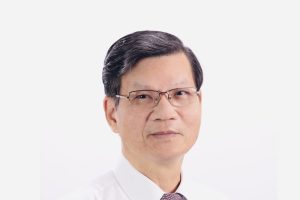
Professor Chi-Huey Wong serves as President of the Institute for Biotechnology and Medicine Industry (IBMI) in Taiwan, bringing decades of distinguished experience from top-tier US research institutions including MIT, Scripps Research and his tenure as President of Academia Sinica. With a unique vantage point spanning both American and Taiwanese scientific ecosystems, Professor Wong discusses how Taiwan is forging a distinctive path in biotechnology by integrating its world-leading semiconductor and AI capabilities with biomedical innovation, precision health initiatives, and translational research excellence.
Professor Wong, you have a remarkable career trajectory – from US top-tier research institutions to Taiwan’s most influential scientific body, Academia Sinica. Looking back, which moments proved most impactful, and what guided your journey?
I was born and raised in Taiwan, where I completed my master’s degree in biochemical sciences. My research there on protein science and peptide chemistry – specifically the total synthesis of snake venom proteins – gave me a solid foundation before I proceeded to MIT in 1979 to pursue a PhD in chemistry. At MIT, I was fortunate to study the use of enzymes in organic synthesis under the renowned chemist Professor George Whitesides. After receiving my PhD in 1982, I moved with Professor Whitesides to Harvard for a postdoctoral year before launching my independent career.
During my time in the US, I observed both differences and similarities between Taiwan and the US regarding education and research. Drawing from my own experience and observations of my children’s education, I can say that whilst both Taiwan and the US emphasise creativity and innovation, American education tends to encourage independent thinking, risk-taking, and creative expression – particularly in oral and written presentation skills and practical applications such as show-and-tell. The key lesson I took from the US is the importance of accepting failure as part of the process and using capital structures to encourage disruptive innovation.
Taiwan’s education, by contrast, emphasises rigorous foundational knowledge acquisition, discipline, written examinations, and dedication to hard work. These two approaches are actually quite complementary. Having been in the US since 1979, I have had sufficient time to appreciate both the distinctions and commonalities in these educational philosophies.
What motivated you to extend beyond your scientific background into policy work and Taiwan’s national competitiveness strategy?
Policy was not originally within my sphere of interest or expertise. I was primarily focused on academia, and throughout my US career I never engaged with industry or government. However, I was recruited by Taiwan to undertake administrative responsibilities. Following my election as President of Academia Sinica in 2006 and IBMI in 2019, I began to understand how Taiwan approaches science and technology development and biotech industry cultivation.
One striking observation from my US experience is that most professors maintain close associations with companies, either as founders or scientific advisors to start-up ventures. The linkage between academia and industry is remarkably robust. In Taiwan, we traditionally did not regard industry-academia collaboration favourably. Upon my return to Taiwan, I began reconsidering this cultural stance and working to transform it. That has become central to my work in Taiwan, though I have never relinquished my research activities.
I should note that my involvement with IBMI extends back to its inception in 2002, when it was founded by Mr. Jin-Pyng Wang, then President of the Legislative Yuan. The institution’s founding mission was to promote biotech development for national health in Taiwan. Over the years, it has evolved to play a pivotal role in advancing biomedical innovation, supporting early-stage start-ups, and recognising excellence in biomedical-related endeavours.
Following my assumption of the presidency in 2019, I concentrated on integrating what I regard as Taiwan’s core strengths – semiconductors, AI chip manufacturing, and universal healthcare – into the biomedical sector. A key part of our current strategy is strengthening software capability to develop AI-assisted biomedical R&D. IBMI’s leadership now encompasses heads of Taiwan’s premier hospitals, ICT industry leaders, semiconductor companies, biotech firms, and financial institutions. This composition positions IBMI as a critical interface between Taiwan’s bio industry and the global biomedical community.
As a not-for-profit, how is IBMI funded, and how does it differ from organisations such as Taiwan Bio or IRPMA?
IBMI is largely funded by organizing activities like Taiwan EXPO with a small portion from the government. The principal differentiator lies in Taiwan’s exceptional strength in semiconductors and AI – sectors where we account for over 60 percent of the global market and a dominant 90 percent of advanced chips. The strategic integration of these capabilities into biotech development represents the cornerstone of government policy and, I believe, our distinctive positioning.
In terms of discovery or fundamental research, I do not believe Taiwan can compete directly with major economies such as the US, which can deploy significantly more time and resources. However, Taiwan’s translational capabilities are exceptionally robust. That said, translational research also represents a systemic challenge. Bridging academic discovery and commercial execution requires coordination across regulation, funding, and market access – areas where IBMI plays a catalytic role. We excel at taking discoveries and converting them into commercial opportunities. This capacity is genuinely formidable in Taiwan. With the convergence of the ICT industry and biotechnology, I believe Taiwan is poised to develop a truly unique biotech sector.
What tangible outcomes do you anticipate from the intersection of high-tech and biotech, or perhaps have already witnessed?
Within the biotech domain, the government has clearly recognised the opportunity and is leveraging our high-tech industrial strength to integrate these technologies into the biotech sector. This is timely, as global healthcare spending is projected to grow from roughly USD 12 trillion to an estimated USD 15 trillion by 2030, with over a quarter of that investment driven by significant growth in early detection and prevention.
The government has prioritised precision health – and I must emphasise precision health – signifying a fundamental shift from disease treatment towards early detection and preventive medicine. We employ the term precision health because predicting future disease susceptibility is considerably more complex than treatment. This requires vast quantities of information.
Taiwan possesses distinct advantages in this domain owing to our semiconductor and AI chip industries, as AI is essential for analysing the extensive databases generated from individual omics data, as well as the big data derived from universal healthcare. Taiwan occupies a unique position to advance precision health, which has been designated as one of six core strategic industries within Taiwan’s 2030 biotech development vision.
Recent initiatives include enhanced IBMI budgets and specific programmes such as TPMI – the Taiwan Precision Medicine Initiative. This large-scale endeavour, which I helped establish during my tenure as President of Academia Sinica, collects genetic and clinical data from over half a million participants to enable detailed analysis of personalised data. The objective is to facilitate personalised precision medicine and biotech research and development.
The complementary initiative is TBMC – Taiwan Bio Manufacturing Operations – which concentrates on manufacturing services for advanced biologics including cell and gene therapies, thereby strengthening Taiwan’s position in the global supply chain. Alongside this, the “Drug Resilience Program” is a key policy priority, focusing on strengthening domestic capacity for critical medicines to ensure supply stability. These represent the high-tech strategies the government emphasises within biotech industry development. I personally witnessed the implementation of both major projects. From all of this, one can observe that Taiwan harbours considerable ambition in biotech development. Combined with ICT industry integration, I believe we are developing a genuinely distinctive trajectory in the field.
Following the transition from President Tsai to President Lai, has Taiwan’s biotech policy direction remained consistent?
In my assessment, examining Taiwan’s presidential history, I believe President Tsai was instrumental in elevating TSMC to global leadership. She devoted enormous energy to supporting this industry. It was also President Tsai who strongly supported – whilst I served as President of Academia Sinica – policies such as the Biotech and Pharmaceutical Act. This legislation, which I initiated, mirrors the US Bayh-Dole Act, enacted in 1980, which catalysed the transformation of American biotech into a genuine industry during the 1980s.
This occurred following the discovery of recombinant DNA technology and genetic engineering. At that juncture, industry remained largely unaware of academic developments. Scientists could insert, for instance, insulin genes into E. coli and utilise E. coli to scale production of human insulin for diabetes treatment. This marked the genesis of US biotech, with the first such drug approved in 1982. Taiwan similarly initiated biotech ventures quite early, also in the 1980s, with consistent government support.
During my Academia Sinica presidency, I collaborated with Tsai – she was Vice Premier at the time – to enact new legislation encouraging biotech development. She made substantial contributions. President Lai, being a physician, possesses even deeper understanding of biotech fundamentals. He launched the Healthy Taiwan Plan, serving as chair whilst I serve as a vice chair of the committee. Our objective is threefold: to enhance the health of Taiwan’s population, to strengthen the nation, and to cultivate a more competitive biotech industry producing innovations that benefit global health. His vision is that through this, the world will embrace Taiwan – a highly ambitious goal. He is determined to realise this vision.
He convenes monthly meetings, requiring the three vice chairs to attend at his office alongside other government officials to discuss subsequent actions. Quarterly, we hold expanded meetings encompassing all committee members, including leaders and representatives from hospital sectors, biotech sectors, and healthcare providers to examine improvements to Taiwan’s universal healthcare system. Both presidents have demonstrated exceptional support for biotech, and I am confident that with this robust backing, Taiwan will develop a unique biotech industry. I anticipate this keenly. It is simply a matter of time.
Where would you place Taiwan today in its biotech development journey, and what are its key strengths and gaps?
Taiwan’s forte, as I have indicated, lies in translational research. Whilst the original technology may not originate from Taiwan, we excel at refinement and product development execution. Our speed and efficiency are exceptional. As you know, more than 15 drugs have secured FDA approval to date, alongside numerous medical devices.
What we require is accelerated progress. Consider, for example, that we lack effective therapeutics for Alzheimer’s disease – indeed, even the US lacks such treatments. Given Taiwan’s rapidly super-ageing society, I believe we shall inevitably confront these substantial challenges. The government has recognised both the importance and the opportunity within fields such as neurodegenerative disease and oncology. Currently, the government invests considerably in cancer care, emphasising early detection. I am confident that the research sector will yield new discoveries, with the semiconductor industry and AI chip manufacturing facilitating drug development based on novel findings emerging both from Taiwan and internationally.
Is Taiwan positioning itself as an innovation hub for healthcare in a super-ageing society?
Precisely. The imperative of biotech development within a super-ageing society creates novel opportunities for early detection, prevention, chronic disease management, and healthcare delivery. These opportunities are attracting substantial investment interest. The high-tech industry equally recognises the opportunity, as precision health requires sophisticated high-tech expertise to enhance efficiency and cost-effectiveness.
What is Taiwan’s realistic role in biopharmaceutical manufacturing compared with regional peers such as China, Korea, and Japan?
Taiwan’s manufacturing capacity remains modest compared to Korea or India. Over the past two decades, Taiwan initially emphasised manufacturing. However, given the advances in Korea, India, and China, Taiwan has strategically pivoted towards innovation rather than manufacturing. The phrase “Made in Taiwan” has been deliberately supplanted by “Created in Taiwan.” This reflects the government’s current goal to move from being a “technology follower” to a “value chain creator,” underscoring innovation, research and development, and collaboration with international pharmaceutical leaders. This represents a fundamental strategic reorientation.
That said, manufacturing remains an important pillar, particularly in advanced biologics. Through TBMC, the government supports large-scale manufacturing for cell and gene therapies, and biologics more broadly have become more prominent than small-molecule drugs. In parallel, medical devices represent a major strength, underpinned by Taiwan’s world-class ICT capabilities.
Are there particular medical device categories that exhibit particular strength?
Numerous examples exist. Medical devices increasingly incorporate advanced technology integration – high-resolution displays coupled with high-speed transmission capabilities, for instance. Let me provide a concrete example. When someone suffers a stroke, immediate diagnosis is critical to distinguish between haemorrhagic and ischaemic causes. These represent fundamentally different clinical presentations requiring distinct treatments delivered urgently. Missing the 24-hour therapeutic window significantly compromises recovery prospects.
My understanding is that within emergency medical services, when patients are transported by ambulance, on-board diagnostic equipment can monitor vital parameters and employ high-resolution imaging with high-speed transmission to receiving hospitals. This enables definitive diagnosis – bleeding versus clotting – whilst en route. Consequently, when the ambulance arrives, treatment can commence immediately without redundant diagnostic procedures. I observed this capability first-hand.
Another illustration involves mobility support devices for individuals with muscle weakness, diabetes-related complications, arthritis, or knee damage. Advanced AI-controlled support systems represent remarkable innovation. I encountered these novel medical devices at Expo Taiwan last year in December. IBMI organised Expo Taiwan to showcase emerging technologies in medicine and biotech whilst facilitating interaction with international leaders in the field. This has become a significant annual event. The progress evident there is genuinely promising based on my observations.
In an era of geopolitical and technological uncertainty, what role can Taiwan – and smaller nations more broadly – play in driving scientific innovation and resilience?
Global uncertainty, geopolitical volatility, economic vulnerability, and rapid technological transformations such as the AI revolution will influence not merely Taiwan but the entire world. Nevertheless, the general outlook for Taiwan’s life sciences remains decidedly optimistic. I maintain this optimism because Taiwan possesses leading-edge capabilities in semiconductors, AI manufacturing, and substantial healthcare data from universal coverage. These assets will undoubtedly generate novel opportunities not only for Taiwan, but for global collaboration.
I am hopeful this will introduce some measure of stability amidst uncertainty, particularly regarding high-tech development and healthcare advancement. In healthcare matters, I believe political tensions should prove minimal. The culture of hard work, combined with a freedom-loving society and strict respect for intellectual property protection, creates an innovative and resilient environment that is highly attractive to foreign partners. IBMI is positioned to fulfil a pivotal role by providing a platform across diverse disciplines – healthcare, ICT, biomedical sectors, and the AI industry – to facilitate collaborative development.