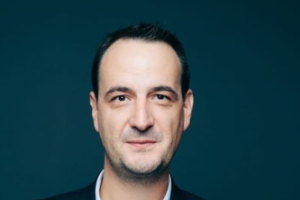
Created in the wake of COVID-19, the Agence de l’Innovation en Santé (AIS), part of the Secrétariat Général pour l’investissement – a Prime Minister department, has rapidly positioned itself at the heart of France’s health innovation strategy, driving progress in areas such as bioclusters, prevention, clinical research, and artificial intelligence. In this interview, Managing Director Charles-Edouard Escurat reflects on the agency’s early achievements and its ambition to elevate France’s innovation standing on the global stage.
What prompted the creation of the Agence de l’Innovation en Santé (AIS), and how has its role evolved since 2022?
The Agence de l’Innovation en Santé (AIS) was founded in 2022 at the request of President Emmanuel Macron, who, in the wake of the pandemic, recognised the pressing need for stronger inter-ministerial coordination. The crisis had laid bare France’s inability to deliver a vaccine in time – a sobering outcome for the country of Pasteur – and demonstrated the importance of being better prepared for future health emergencies. Within the framework of the Innovation Santé 2030 plan, part of the overall France 2030 investment plan that mobilizes 54 billion euros to sustainably transform the key sectors of our economy (energy, hydrogen, automotive, aeronautics and space) through technological innovation and industrialization, the French President commissioned a report from Grégory Emery, then Director General of Health, which set out the principles for AIS’s creation.
In November 2022, Dr Lise Alter, a physician with extensive regulatory experience, was appointed as the agency’s first Managing Director and tasked with assembling the initial team. To ensure coherence and efficiency, AIS was placed under the authority of the Prime Minister’s office, allowing it to coordinate activities across ministries. From the outset, the objective was not to create another bureaucratic layer, but to act as a catalyst within France’s already complex health ecosystem. Our main objective is to identify future breakthrough innovations and ensure that these innovations are accessible to patients as quickly and safely as possible. Three years later, with our roadmap established in 2023, AIS is fully operational and positioned as a central force in advancing innovation.
What would you highlight as the agency’s most important achievements during its first years of activity?
Perhaps our most significant achievement has been to secure recognition for AIS as a trusted partner within the healthcare and innovation landscape. It was essential for us to establish credibility quickly, not as an administrative structure, but as a team being able to guide innovation from basic research through to the hospital and, ultimately, to patients. In other words, to ensure a seamless continuum for innovations, from discovery to access to patients, faster and easier.
Beyond this recognition, several milestones illustrate our impact. France has advanced from third to second place in Europe in the field of biomedicine development, a tangible sign of progress. We have also helped launch five new health innovation bioclusters and supported the creation of 12 University Hospital Institutes (IHUs), both of which strengthen France’s international standing. Equally important, and a source of particular pride, has been the launch of a national prevention strategy at the inception of AIS. Still in development, this programme marks a decisive shift in focus and will be instrumental in ensuring the long-term sustainability of our health system.
How is AIS’s roadmap structured, and why is prevention positioned as a key priority?
AIS’s roadmap is built around four complementary missions. The first is foresight, through which we convene working groups on forward-looking themes to align government actors on a shared vision and thereby help them make decisions to anticipate healthcare system evolutions. Current studies include the operating rooms of the future, from architecture to workforce training, as well as organ-on-chip technologies, an area where France already holds recognised strengths and must position itself among international leaders.
The second mission is support. Navigating the French health ecosystem can be complex, and our role is to guide innovators so their solutions reach patients more swiftly. To achieve this, we created a one-stop shop that has already assisted around 500 projects.
The third mission is investment. Within the framework of the Innovation Santé 2030 plan, AIS coordinates five national acceleration strategies: biotherapies, infectious diseases, digital health, medical devices, and prevention. Centralising financing through AIS allows us to ensure coherence across ministries and direct resources efficiently.
Finally, our fourth mission is acceleration, which means making the journey from research to patient access as effective as possible. This includes strengthening France’s attractiveness for clinical trials and working in close partnership with the new bioclusters and University Hospital Institutes. This dimension is essential not only to attract investment but also to mobilise clinicians and researchers so that innovation can be translated into tangible outcomes.
Where does France show the strongest potential in health innovation, and what is required to turn this strength into true global leadership?
France has notable expertise in areas such as biotherapies, infectious diseases, and artificial intelligence, but now we are tasked to create the conditions that allow these strengths to be transformed into excellence. Scaling innovation is central to this ambition, and the new bioclusters have been designed precisely for that purpose – whether in neuroscience, with the Brain & Mind cluster, or in infectious diseases, with the ID cluster – to provide the environment in which the most promising projects can grow to maturity. In addition, France benefits from a particularly dynamic digital health ecosystem and a solid reputation in psychiatry and other branches of medical research.
Yet such breadth brings its own difficulty: being strong across many fields makes it harder to concentrate resources in the areas most likely to deliver global leadership. Moving from promise to preeminence, therefore, requires two decisive shifts. First, public investment must be more effectively complemented by private capital, creating a continuous relay that ensures innovations progress from research to market. At AIS, we are working with French investment funds to align expectations with market realities and strengthen this continuum. Second, France must play a more active role at the European level. Although we are the world’s fifth-largest healthcare market, this position remains modest compared with the leaders, and only through deeper integration within the European Union can our innovators access the scale they need to thrive. Such integration will not only encourage them to remain in France but will also help consolidate both national and European competitiveness.
How is AIS strengthening France’s position in clinical research, given the shifting European rankings and global competition?
Recent figures from the Leem barometer (Leem is the French pharma trade association, NDRL) indicate that France has moved from first place some years ago to third more recently, yet such numbers need to be viewed with perspective. The decline in clinical trial activity is not unique to France; it reflects a broader trend affecting Europe and the United States, while Asia is rapidly expanding. Within Europe, the picture is more nuanced: multinational trials conducted in France have risen slightly, comparable to Spain, now the leader, and Germany in second place, while Italy has seen a modest decline. In oncology, France continues to rank second, which remains an important strength.
The real issue is not defending a position in the tables but making the ecosystem more attractive and efficient. Under our acceleration mission, AIS is working closely with regulators and ministries to reduce delays and streamline procedures. Priorities include enabling decentralised trials and advancing national as well as European fast-track pathways. Some of these reforms require legislation, which is inevitably complex and time-consuming, but they are essential for long-term competitiveness. I would not characterise the current situation as a failure; it presents challenges, but also clear opportunities. Our focus is on step-by-step improvements that will ensure France remains a destination of choice for clinical research.
What tangible outcomes has AIS delivered so far, and how do they reflect its ambition to be more than just another administrative layer?
Several outcomes already demonstrate our impact. A number of enterprises we have supported are now scaling up, and while their success is not due to AIS alone, our involvement has undoubtedly contributed. Aqemia, for example, illustrates how promising projects can grow within the French ecosystem when given the right support. We have also advanced regulatory work, though some reforms remain in progress and inevitably take time to complete.
Equally important has been our commitment to rethinking clinical trial design. Through a dedicated call for projects under France 2030, we are testing innovative methodologies such as the use of real-world data to emulate patient cohorts or the creation of virtual trial arms. The strong response to this initiative confirms its relevance, and it will help regulators adopt modern tools to evaluate trials more efficiently and better adapted to emerging technologies.
Finally, prevention is a cornerstone of our roadmap. We have allocated around EUR 170 million to research in this field, including EUR 100 million to real-world evidence studies designed to demonstrate its value. The goal is to identify and validate new approaches and to establish sustainable business models capable of making the healthcare system more efficient over the long term. These efforts, which are aligned with the National Health Strategy, cover several priority areas and reflect our determination to embed prevention firmly within the innovation agenda.
How is the agency supporting the uptake of digital health tools and artificial intelligence within the healthcare system?
Although digital health policy is led by the Délégation du numérique en santé (DNS) within the Ministry of Health, AIS contributes by accelerating the uptake of innovative tools, particularly artificial intelligence, in hospitals and among healthcare professionals. To this end, we have launched targeted initiatives such as ImpactIA, a EUR 13 million programme co-funding projects with hospitals to test AI solutions under real-world conditions. The goal is to integrate these technologies into everyday clinical workflows and assess their impact not only on outcomes for patients but also on the efficiency and organisation of care delivery.
However, investing in the technology itself is only part of the equation. For AI to achieve its potential, organisations must also be equipped to adopt it, with adequate resources, training, and change management. That is why our work extends beyond supporting innovators to include preparing healthcare institutions to adapt their practices, strengthen skills, and use AI as an effective co-assistant in daily operations. At AIS, we call this Innovation Management: ensuring that promising technologies are not only identified but also implemented under the right conditions to deliver lasting value for both patients and professionals.
For an international audience, could you explain what Resah and UniHA are and why they are central to AIS’s mission?
Resah and UniHA are the two main public group purchasing organisations in France, referred to in European terms as central purchasing bodies. Resah is structured as a public interest grouping that pools procurement across hospitals and medico-social institutions, while UniHA operates as a cooperative of hospital purchasers, managing thousands of contracts and a network that extends to more than a thousand establishments. Their importance lies in their capacity to scale innovation: once a product is listed in their catalogues, it can be disseminated across a wide network of hospitals without the need for individual tenders, giving innovators rapid access to the market.
From the beginning, AIS viewed these organisations as essential partners. They are not simply procurement entities but are increasingly acting as opinion leaders in hospital purchasing, actively promoting and diffusing innovation throughout the system. In this way, they directly support our mission to accelerate the spread of new solutions across the French healthcare ecosystem and ensure that promising innovations reach patients more quickly and efficiently.
Given the global competition for top researchers, what measures is AIS taking to help France retain and attract leading scientific talent?
This is very much a collective endeavour, and with a team of just fifteen, AIS cannot act alone. Our role is to coordinate within a wider ecosystem in which retaining and attracting researchers has always been a challenge, but one that has grown more urgent in today’s highly competitive environment. An important instrument is the Chairs of Excellence in Biology and Health, launched in 2023 under France 2030 with a budget of EUR 80 million. This programme funds outstanding scientists and their teams, whether to encourage them to stay in France, to return from abroad, or to relocate here for the first time. In parallel, we work closely with Inserm’s new Agence de Programmes de Recherche en Santé, which helps to align these efforts. 37 researchers had already been selected.
More recently, Choose France for Science, introduced in early 2024 and already well received, has added a global dimension to this strategy, alongside Choose Europe for Science. Coordinated by the French National Research Agency, Inserm and other partners, these initiatives are designed to make France and Europe more attractive destinations by offering competitive funding, strong infrastructure, and international collaboration opportunities. It is important to distinguish Choose France for Science from the broader Choose France initiative, which focuses on attracting industrial investment; this new programme is specifically centred on researchers. Its timing was deliberate, as research conditions in some countries are becoming increasingly difficult, and France wanted to send a clear message that it is open and supportive. The selection process is still underway, with applications under review and projects set to be co-funded by the state and academic institutions. It is therefore too early to measure results, but the momentum is positive and will shape the programme’s impact in the years ahead.
In your view, how is France positioned today on the international health innovation map, and what needs to be done to strengthen its visibility abroad?
France’s challenge lies less in the strength of its assets than in how little we promote them abroad. The country has world-class scientists, a dynamic innovation ecosystem, and some of the best hospitals in Europe, yet we do not market these advantages with the visibility they deserve. To address this, we work closely with Business France and the French Healthcare initiative. French Healthcare brings together public and private stakeholders under one banner, while Business France supports the internationalisation of French companies and helps attract foreign investment.
This effort is already visible in practice: a colleague recently represented us at the BIO International Convention in Boston and will also attend the EU-Japan Biotech & Pharma Partnering Conference in Osaka during the French Healthcare Days. Without an active international presence, there is a real risk of being overlooked, which is why other countries and investors must understand what France is achieving, whether in accelerating clinical trials, building bioclusters, or creating the right conditions for companies to thrive. In truth, France is better positioned than we sometimes allow ourselves to believe. Too often, we dwell on what is missing when we should also recognise our progress and present it with greater confidence on the global stage.
Looking ahead three to four years, what are your key objectives for AIS, and what message would you share with the international community?
Over the coming years, I would like to see France more firmly anchored within Europe, with companies looking not only to the FDA as a reference but also to a more integrated European framework. Such harmonisation would provide our innovators with the scale they need to succeed and would allow France to strengthen its position, particularly in clinical trials, where our ambition must be to move from participation to leadership. I would also like us to make visible progress in artificial intelligence. Too often, the discussion remains at the level of potential; in the next few years, I hope we will be able to demonstrate that AI has been effectively embedded in practice and has become a genuine driver of efficiency and innovation across healthcare.
To our international audience, especially investors and companies, my message is straightforward: France has real and compelling assets to offer. We are proud of these strengths and eager to demonstrate that France is a highly attractive place to innovate, to invest, and to grow.