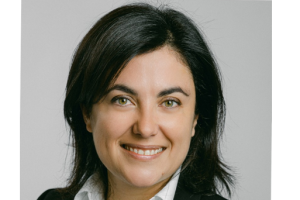
Alexion France is entering a pivotal phase as the rare-disease landscape becomes more competitive, more data driven and increasingly shaped by early access and clinical-trial performance. In this interview, Celine Khalife reflects on France’s shifting position, the evolution of complement and science, the integration of Amolyt Pharma and the growing role of patient engagement, genomics and real-world evidence. Her perspective offers a clear view of what it will take to sustain innovation and prepare for the next generation of rare-disease therapies.
What led you to Alexion, and how did your commitment to rare diseases develop over the course of your career?
I have spent nearly two decades across biotech and larger pharmaceutical organisations, and throughout that time the driving force for me has always been the impact we can have on patients, their families and the people we work with. That sense of purpose is what drew me to Alexion. From the moment I joined, I found a culture that is deeply rooted in improving the lives of people living with rare diseases, and that clarity of mission resonated strongly with me.
Since arriving, one of the achievements I value most is ensuring that every approved indication in our portfolio is now accessible to French patients. In a system as complex as the French one, making these therapies available is significant, especially given how transformative, and in many cases, they are. An equally important part of the work is the way we engage the ecosystem. We collaborate closely with scientific networks across the country to activate clinical trials quickly, not only in Paris but also in regional centres, which supports a fairer distribution of opportunities for patients. We also bring institutions, clinicians and patient groups together to ensure that rare diseases remain visible on the national agenda. Each year, we publish analyses and surveys that help highlight the remaining gaps and strengthen the patient voice, which is essential in areas where awareness and resources are often limited.
Over recent years, we have also reinforced our footprint in France. We now have a strong affiliate with specialised franchise teams, and France serves as our European regulatory hub, which I oversee. This includes responsibility for EU registration dossiers and holding the European Marketing Authorisation from France. More recently, the integration of Amolyt Pharma has further strengthened our scientific base. Their focus on rare endocrine diseases complements our strategy, and their team in Lyon now contributes to our broader work within the Alexion, AstraZeneca Rare Disease platform, reinforcing France’s position as a meaningful centre for our R&D activity.
How does Alexion position itself within AstraZeneca today, and how would you describe the contribution of France to the rare-disease business?
Alexion was founded in the United States in 1992, and since 2021, we have operated as AstraZeneca’s rare-disease business. In markets where we were already established, including France, we continue to work as Alexion, and we collaborate closely with AstraZeneca, where we can increase our mutual impact for patients, employees and the community. In countries where we did not previously have a presence, AstraZeneca’s local entities support the rare-disease portfolio. For stakeholders in France, our identity as Alexion remains clear, particularly given the advocacy and scientific engagement we lead here.
France has played a longstanding and influential role in rare diseases. It was one of the first countries to recognise the specific needs of this field and to implement structured national plans, which in turn created highly effective networks that map expertise across the country. These networks offer a clear view of patient pathways and enable efficient clinical-trial recruitment because physicians already know where patients are. This ability to overcome administrative complexity has often been viewed as an example to follow, and several European countries now look to replicate it.
For many years, France ranked among the leading rare-disease markets worldwide, both scientifically and organisationally. The environment is now changing, with increased competition, pricing constraints and operational hurdles challenging the position France once held. At the same time, several emerging markets are investing heavily to strengthen their own capabilities. Preserving France’s role in this landscape will require sustained attention to competitiveness, responsiveness and the conditions that allow research and innovation to move at pace.
How are you working to secure timely access to innovation in France, and how does your portfolio illustrate Alexion’s scientific direction in rare diseases?
Facilitating early access to innovation is a central part of our work, beginning with our involvement in global clinical development. Trial competition has intensified, as several European and emerging markets have become more attractive for research, so maintaining France’s participation is essential. Today, we run more than twenty clinical trials in the country and work with over eighty investigators, which places France in a strong position as we prepare to introduce five new rare-disease assets in France and BeLux by 2030, in line with AstraZeneca’s broader ambitions.
Once data begin to mature, France’s Early Access and Direct Access pathways become critical. We use them whenever appropriate because they allow patients to receive treatment sooner than the standard regulatory sequence would permit. Over the past two years, for three recently launched indications, these mechanisms have resulted in roughly 1,400 additional patient-days of access. In rare diseases, where time often shapes outcomes, this makes a meaningful difference.
Our portfolio is grounded in complementary science. The complement system is a highly regulated component of the immune response, and when it becomes overactive, it can cause rapid and severe organ damage. We first entered this field through haematology with Paroxysmal Nocturnal Haemoglobinuria (PNH), a condition where uncontrolled complement activity leads to haemolysis, thrombotic events and significant reductions in life expectancy
Building on this foundation, our research expanded into nephrology and neurology, where complement dysregulation also drives disease. In all of these indications, the science Alexion developed has led to life-saving and transformant for the patients.
While complement biology remains central to our identity, we are advancing programmes beyond this pathway. Our Beyond Complement strategy includes work in metabolic diseases, particularly bone and fat metabolism, as well as early development in rare oncology, focusing on paediatric tumours with exceptionally high unmet need. Our expansion into rare endocrinology, strengthened by the integration of Amolyt Pharma, reflects this broader scientific evolution. Across these therapeutic areas, we currently support fewer than 1,200 patients in France.
How can genomic initiatives and stronger data infrastructure support earlier diagnosis and faster access to innovation in rare diseases, and how prepared is France to adopt this approach?
Genomics is becoming a critical part of rare-disease care. Because a large majority of rare diseases are linked to identifiable genetic mutations, wider use of sequencing can help identify patients earlier, guide trial recruitment with greater precision and strengthen understanding of who is likely to benefit from a specific therapy. Biomarkers offer an additional layer of insight, and together these tools can contribute to a more targeted and efficient pathway from diagnosis to treatment.
France has made real progress over the past decade. Advances in sequencing technology now make it possible to analyse large volumes of samples quickly and at lower cost, which will help address some of the concerns around reimbursement. The more complex challenge today lies in the management and integration of data. At Alexion, we have built and supported global registries to generate natural-history data, which are often missing in rare diseases. France also has several national and hospital-based databases, but they remain fragmented and do not yet communicate seamlessly.
This fragmentation limits how effectively existing data can support early diagnosis, trial design or timely access. Real-world evidence is increasingly important in pricing and reimbursement discussions, and companies are structured to generate and provide it, but a unified national system would allow these insights to be used more consistently. France has the scientific expertise and the technological base to move in this direction. The next step is building a more connected, sustainable data ecosystem that allows these advances in genomics to translate into faster and more equitable access for patients.
How is France’s fourth national plan for rare diseases (PNMR4) shaping the future of care, and what challenges could influence its implementation?
The priorities in the new plan are well established. Earlier national strategies already identified the essential needs in rare diseases and delivered meaningful progress, particularly through the creation of specialised networks that have strengthened diagnosis pathways and care coordination. The fourth plan builds on this foundation, with a continued focus on early diagnosis, access to innovation and the long-term organisation of patient pathways. The question now is not so much about redefining priorities but about sustaining them in an environment with significant financial pressure.
Funding will determine how far the plan can go. The healthcare system is facing growing economic constraints, and there is a real risk that limited resources could undermine progress achieved over previous cycles. Access to innovation illustrates this tension clearly. The early access pathway has been invaluable for rare diseases because it enables treatment as soon as there is sufficient evidence of benefit. Ongoing budget discussions suggest that some of the criteria may become more restrictive, which would limit the availability of a mechanism that has been crucial for patients.
It is also important to recognise that rare-disease investment competes with a wide range of national priorities. From a rare-disease perspective, the urgency is evident, but it must coexist with many other pressures on the system. Alternative funding models seen in other countries are difficult to replicate here. The pharmaceutical sector already carries a substantial tax burden, and new contributions are being introduced. In this context, it is hard to imagine a parallel stream of private funding emerging to support rare diseases. That said, our commitment does not change. We have several new indications approaching, and our objective is to bring them to France and make them available. Timelines may vary depending on the environment, but when a clear unmet need exists, we continue to pursue access and do not step away. That responsibility remains constant, regardless of the broader economic landscape.
How does the acquisition of Amolyt Pharma illustrate Alexion’s commitment to French scientific excellence, and what does it add to your rare-disease strategy?
The acquisition of Amolyt Pharma is a meaningful milestone for us and a strong affirmation of the scientific capability that exists in France. We completed the deal last year and finalised the transition this year, with the French affiliate closely involved. Since August, Amolyt has been fully integrated under Alexion France. The company is based in Lyon, has a phase III programme in rare endocrinology and additional assets in the same field. Around fifty specialised researchers have now joined our Lyon site, which has become an important R&D centre supporting our work in bone metabolism and rare endocrine diseases.
The transaction, valued at up to 1.05 billion USD, stands among the most significant biotech acquisitions in France in recent years. It reflects our willingness to invest in high-quality science and support French innovation when it aligns with our rare-disease strategy. It also highlights the global potential of French research. Amolyt’s programme was already international, recruiting patients in France but also far beyond, and its team now contributes to a global development effort within Alexion. This integration strengthens our scientific depth and reinforces our long-term ambition to expand our portfolio with late-stage, high-impact rare-disease assets.
How do you maintain a strong sense of purpose within your team, especially given the distinct demands of working in rare diseases?
What anchors us is the proximity between our work and the lived reality of people with rare diseases. I try to ensure that everyone, regardless of role, understands the influence they have. A colleague in finance or regulatory may never meet a patient, but their decisions determine how quickly a treatment reaches a hospital and when a patient finally receives it. That sense of consequence gives direction to the organisation and helps the team remain focused even when the external environment feels uncertain.
We reinforce this through sustained engagement with patient representatives. Our annual “Journée Rencontres” opens the doors of the affiliate to associations that want to understand what happens between a clinical trial and market availability. Each edition focuses on a different theme, which helps clarify processes that can otherwise feel opaque. We also organise speed-meeting sessions that bring employees and patients together in short, direct conversations. These moments help humanise the work and counter the negative perceptions often associated with pharma by making our standards and responsibilities more visible.
Supporting patient associations is also essential. Many are volunteer-led, often by parents managing care, family responsibilities and advocacy. Their capacity varies, and part of our role is to provide structure so they can contribute at the same level as clinicians or institutional stakeholders. France has made progress here. HAS now requires patient groups to contribute to product assessments, which has encouraged associations to recognise the value of their experience. Their participation has grown steadily over the past decade and continues to strengthen the ecosystem.
We also involve patients much earlier in clinical development. They review protocol elements that may add unnecessary burden and help refine how diseases are described. Several global protocols have been amended following their feedback. This early involvement makes trial design more realistic and helps the broader ecosystem understand the expectations behind upcoming studies. When patients are engaged from the outset, they feel part of the process, and the science ultimately benefits from their insight.
All of this helps sustain a shared sense of purpose across the team. When employees hear directly about misdiagnosis, long travel distances or the disruption caused by treatment schedules, they see the immediate link between their work and a patient’s daily life. It keeps the mission close, reinforces commitment and ensures that every function contributes to a culture where the patient perspective remains central to how rare-disease care evolves.
As you look to the years ahead, what progress do you hope to see for Alexion in France and for rare-disease care more broadly?
2026 will mark twenty years of Alexion’s presence in France. We entered the market in 2006 with a clear mission and made an immediate difference for patients with PNH. Reaching this milestone naturally prompts us to reflect on the progress made, but it also sharpens our ambition for what the next twenty years should deliver. We want to continue expanding the portfolio while advancing towards gene and cell therapies that have the potential to transform, and in some cases cure, rare diseases. Since joining AstraZeneca, investment in these platforms has grown significantly, supported by a strong scientific culture and a consistent allocation of around twenty-five percent of our revenue to R&D. This level of reinvestment is uncommon in our industry and speaks to our conviction that science must remain the foundation of everything we do.
At the same time, we need the system around us to remain capable of supporting innovation. Rare diseases are often viewed through the lens of cost, yet their real impact extends far beyond the price of treatment. When patients receive appropriate care, they regain the ability to study, work and participate fully in society. A recent European survey we conducted, which included France, makes this very clear. When a treatment becomes available in a rare disease, the diagnostic pathway can shorten by a factor of four because the entire ecosystem becomes more adept at recognising and managing the condition. The challenge is that only about five percent of rare diseases currently have an approved therapy, so this benefit still reaches a small fraction of patients.
The survey also highlights persistent inequities. People living outside major cities face longer routes to diagnosis. Women often encounter delays because symptoms are attributed to stress or family responsibilities, an issue already well recognised in cardiovascular care. Misdiagnosis itself affects outcomes and imposes a heavy burden. On average, individuals with rare diseases lose around sixteen weeks of productivity each year, partly due to the need to travel to specialised centres and the recovery time required after treatment.
All of these points lead to the same conclusion. Rare-disease care should be understood as a long-term investment in health, social participation and economic resilience. As we prepare to celebrate two decades of work in France, I hope that we continue to push scientific boundaries while helping build a system that recognises the full value of timely diagnosis, equitable access and sustainable care for years to come.